October 29, 2026
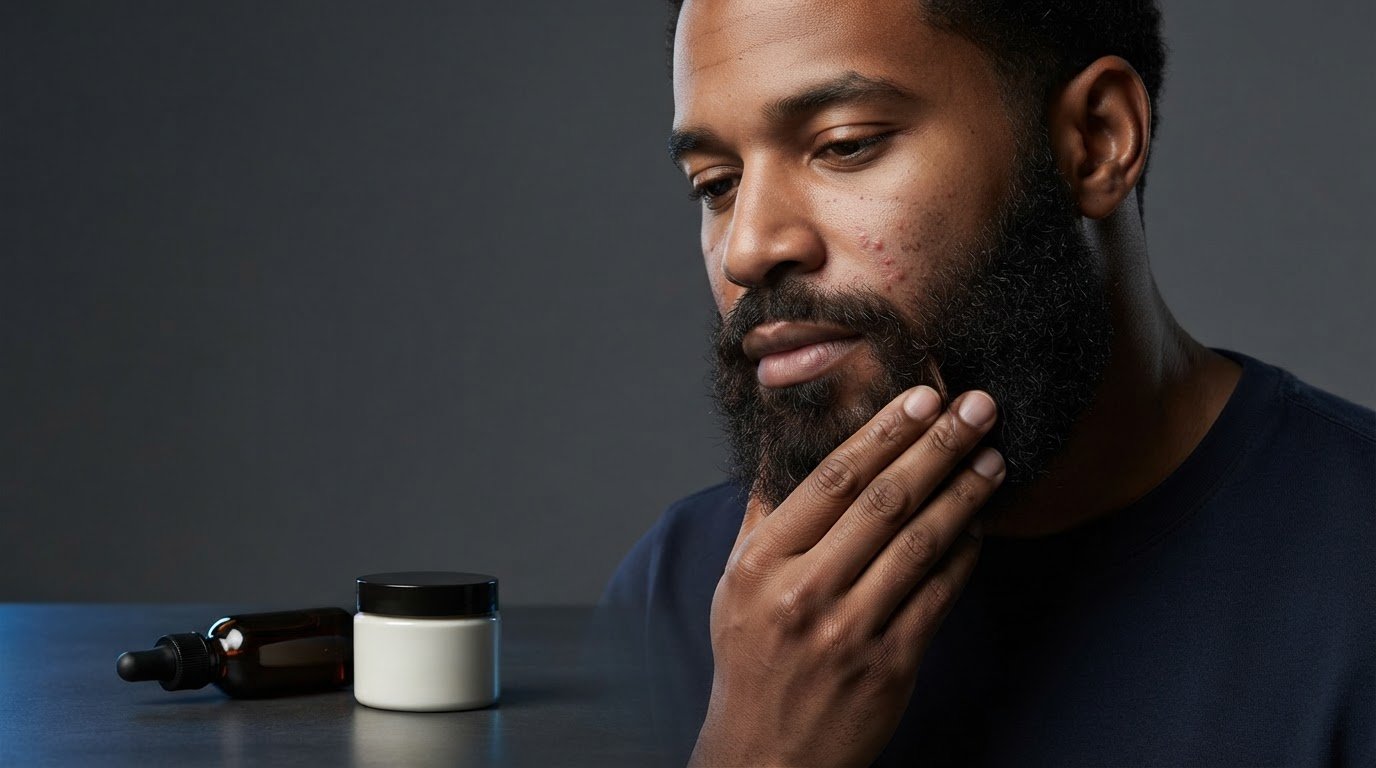
Beard oil isn’t always the right move for acne-prone skin. For avoiding beard acne from products, skip beard oil while treating active acne and use a small amount of non-comedogenic beard conditioner instead. Heavy or fragranced formulas can also irritate sensitive skin or contribute to clogged pores, so a careful routine matters as much as the product itself.
It makes sense to reach for oil when your beard feels dry or rough, but adding more product isn’t always the best fix for skin that’s breaking out. This guide will help you spot how beard-care products, fragrance, and residue may affect your skin, and when it’s smarter to pause the oil. You’ll also learn what beard acne can look like, how to wash beneath your beard without aggravating it, and how to make more considered choices when you bring products back into your routine.
Key Takeaways
- A beard itself doesn’t cause acne, but oil, dead skin, and residue trapped beneath the hair can contribute to clogged pores.
- Wash the skin beneath your beard gently, rinse thoroughly, and avoid scrubbing or using hot water that can aggravate irritation.
- Clean brushes, combs, and trimmers regularly to reduce the transfer of bacteria during grooming.
- Review your routine as well as your products: buildup, fragrance, and older oils or balms can all affect how your skin responds.
1. Fragrance-free products for sensitive or acne-prone skin
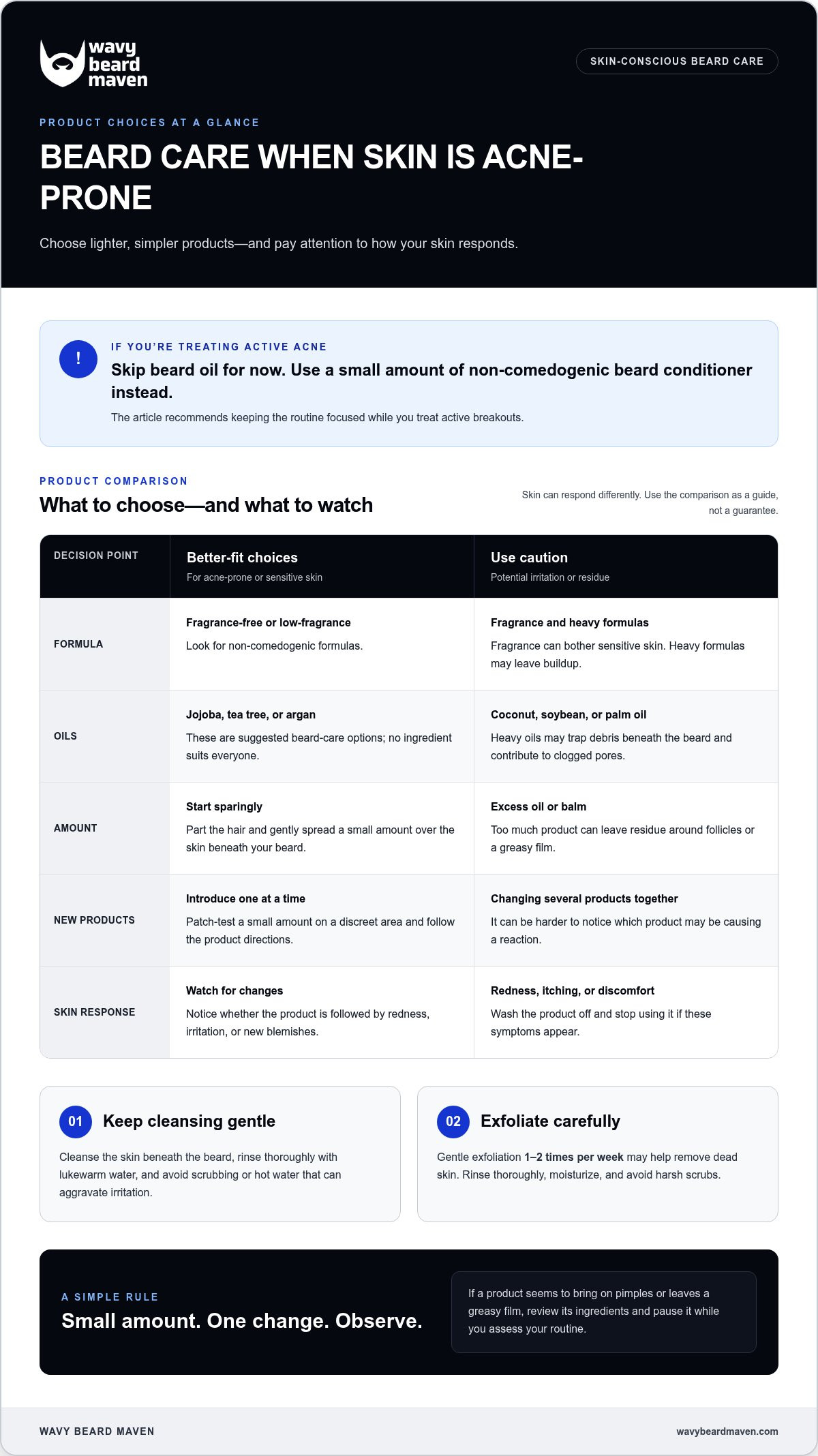
Which ingredients in beard products are most likely to irritate skin or contribute to breakouts? Fragrance can bother sensitive skin, and heavy oils such as coconut, soybean, and palm oil may trap debris beneath the beard. To avoid beard acne from products, watch for redness, irritation, or new blemishes after using a formula.
How can you patch-test a new beard product? Apply a small amount to a discreet patch of skin and follow the product directions. Watch for irritation before applying it across your beard area. If redness, itching, or discomfort appears, wash it off and stop using it.
For acne-prone skin, choose fragrance-free or low-fragrance products and look for non-comedogenic formulas. Jojoba, tea tree, and argan oils are suggested options in beard care, but no ingredient suits everyone. Introduce one new product at a time, so you can notice whether it causes inflammation or breakouts.
Apply products to the skin beneath your beard, not just the visible hair. Part the hair with your fingers and gently spread a small amount over the skin. Excess product can leave residue around follicles, so start sparingly, especially if your skin is oily or sensitive.
After washing, use a lightweight moisturizer if your skin feels dry. A fragrance-free formula may suit you better if scented products have caused discomfort. Keep conditioning products light, and avoid coating your skin with excess oil or balm.
Dead skin can combine with oil and contribute to clogged pores. Exfoliate gently 1-2 times per week, then rinse thoroughly and moisturize. Avoid harsh scrubs that can worsen irritation. For avoiding beard acne from products, keep the routine simple and observe how your skin responds as you make changes.
2. Does having a beard help or hurt acne?
A beard doesn’t cause acne by itself, but beard hairs can trap oil, dead skin, and bacteria. When cleansing misses the skin underneath, buildup may clog pores. Wash your face and beard gently with a cleanser intended for facial skin. The National Institute for Occupational Safety and Health (NIOSH), CDC, recommends facial skin care products intended for the face to help avoid irritation.
How often should you wash your beard and the skin underneath to help prevent acne? Wash your face and beard with a gentle face wash once or twice a day, and gently cleanse the skin beneath the hair. A mild beard wash two to three times per week can clean beard hair. Rinse well with lukewarm water to remove residue without adding heat-related dryness.
For a practical routine, wet your beard, work cleanser down to the skin with your fingertips, then rinse thoroughly. Don’t scrub, because friction can worsen irritation. Pat the beard dry instead of rubbing it, then moisturize if washing leaves your skin dry. If you’re treating beard acne, gently cleanse both the skin and beard.
Can beard products cause folliculitis or ingrown hairs, and how can you tell the difference from acne? Product residue and bacteria transferred by grooming tools can irritate follicles. An ingrown hair forms a bump around a follicle when hair becomes trapped beneath the skin. Acne can also appear as bumps, so look for a visible trapped hair rather than assuming every spot is acne.
What skincare routine helps prevent acne under a beard? Cleanse gently, rinse away product residue, and moisturize after washing if your skin feels dry. For an ingrown hair, use a warm washcloth and mild cleanser, and don’t tweeze it. Keep your routine simple and clean grooming tools regularly to reduce the transfer of bacteria.
3. What Causes Beard Acne and Pimples?
Beard acne can develop when sebum, dead skin, product residue, and bacteria collect around pores. Grooming tools can transfer bacteria back onto clean skin if brush bristles, comb teeth, or trimmer heads carry grime. Wash your hands before grooming, and clean your tools regularly to prevent buildup from spreading across the beard area.
Make tool cleaning part of your routine. Remove loose hairs from your beard brush and comb, then clean them according to their care instructions. Clear hair and visible residue from a trimmer after use. Don’t share tools while your skin is irritated. Clean equipment helps prevent residue from being transferred as you distribute products or shape facial hair.
Cleanser ingredients matter, too. Salicylic acid can help dissolve pore clogs, while water-based or gel formulas can reach into pores without benzoyl peroxide’s oxidizing properties. A benzoyl peroxide face wash around 4% strength is described as sufficient. These ingredients can irritate some skin, so keep the cleanser away from beard hair when possible and rinse thoroughly.
Dermatologist Sheira Weider recommends hypochlorous acid as an antimicrobial, anti-inflammatory alternative to benzoyl peroxide that doesn’t bleach hair. For acne-prone skin, salicylic acid or retinol may help prevent dead skin and oil from combining with bacteria. Choose one active ingredient at a time, follow its directions, and stop if it causes irritation.
Use a gentle cleanser to loosen residue before it settles around follicles. Harsh scrubbing can leave skin more irritated. Rinse the beard and skin thoroughly after washing, then pat dry with a clean towel. A healthy routine also means keeping your hands clean and avoiding frequent face-touching, which can transfer grease, grime, dirt, or bacteria.
4. Avoiding beard oil
Beard oil can soften coarse hair, but it isn’t essential for every skin type. If you’re treating active acne, skip beard oil and use a small amount of non-comedogenic beard conditioner instead. This keeps your grooming routine focused while reducing the chance that added oil will worsen blemishes beneath the beard.
Take particular care with heavy oils. Coconut, soybean, and palm oils may trap dead skin and bacteria beneath facial hair. Fragrance may also irritate inflamed skin. Check ingredient labels, and pause products that leave a greasy film or seem to bring on pimples after application.
Don’t assume every beard oil will affect your skin the same way. If you aren’t treating active acne and choose to use oil, select a lightweight, non-comedogenic formula and apply it sparingly. If your skin is oily, you might try using beard oil every other day rather than adding it daily. Stop if blemishes or irritation increase.
Age matters, too. Replace beard oils and balms that have been open for more than 12 months, since they can oxidize and irritate skin. Keep the container closed between uses, and don’t apply an old product to freshly shaved or irritated skin.
Shaving over active pimples can aggravate the skin and increase inflammation. If shaving is necessary, avoid dragging the blade across blemishes. After washing, rinse away residue and pat your beard dry. If you suspect an ingrown hair, don’t dig or tweeze at the bump, as this can irritate it further.
Make the choice based on your skin’s current condition: pause beard oil while treating acne, then reassess your routine once breakouts settle. If you’re refining your beard-care habits, explore beard-care guidance for practical ways to maintain your style.
Wavy Beard Maven: Beard Oils
Wavy Beard Maven helps you build a considered beard-care routine with educational guidance and grooming essentials. If active acne makes beard oil a poor fit right now, focus first on gentle cleansing and keeping your skin comfortable. When you’re ready to reassess, compare how different products fit your beard and skin needs.
Wavy Beard Maven offers beard oils, beard butters, beard balms, and beard brushes to support your grooming practice. Keep your approach disciplined: introduce products thoughtfully, apply them as directed, and pause anything that seems to aggravate your skin. Beard care should fit your routine, not add unnecessary steps.
Explore Wavy Beard Maven’s beard-care resources and offerings, or visit Wavy Beard Maven to continue refining your routine.
Make your next grooming choice with intention
Let your routine evolve with your skin instead of treating every new product as an upgrade. Avoiding beard acne from products means choosing care you can use consistently and paying attention to how your skin responds. Keep your routine manageable, and refine it as needed instead of chasing a flawless beard overnight.
That steady mindset can make grooming feel more deliberate and less like guesswork. If you want to keep building your beard-care practice, contact Wavy Beard Maven for a natural next step. Keep learning, stay consistent, and take pride in the routine you shape.
Frequently Asked Questions
What Causes Beard Acne and Pimples?
Beard acne can develop when pores become clogged with oil, dead skin, and product residue. Bacteria on grooming tools or hands may add to irritation, while a trapped hair can create a bump that resembles a pimple. Notice whether flare-ups follow a new product or grooming habit, and change one routine step at a time to help identify a possible trigger.
Does having a beard help or hurt acne?
A beard doesn’t cause acne by itself, but hair can hold oil, dead skin, and grime near the skin. That can make cleansing beneath facial hair especially important if you’re prone to breakouts. During washing, remember the skin under the beard instead of focusing only on the visible hair. You can keep a beard while adjusting how you care for the skin beneath it.
How do I stop my boyfriend’s beard from acne?
Encourage him to simplify his routine rather than adding several new products at once. He can wash gently beneath his beard, rinse thoroughly, and pause products that seem to irritate his skin. Avoid picking or squeezing spots. If acne is painful, cystic, or hasn’t improved after a few weeks of care, the research advises consulting a dermatologist for guidance on next steps.
How do you clean your beard without drying it out?
Use lukewarm water and a mild cleanser, working it through the beard to reach the skin without scrubbing. Rinse until the product residue is gone, then pat the hair dry instead of rubbing. Hot water and vigorous friction can worsen dryness or irritation. Choose a cleanser intended for facial skin, and adjust how often you wash if your beard or skin feels dry afterward.
Should you use moisturizer under your beard?
Yes, a lightweight moisturizer can help rehydrate skin that feels dry after washing. Part your beard with your fingers and spread the moisturizer onto the skin beneath the hair, rather than coating the beard itself. This targets the area that feels tight or uncomfortable. If a product seems to trigger irritation or new blemishes, stop using it and simplify your routine.
What ingredients help prevent breakouts?
Salicylic acid can help clear clogged pores, while benzoyl peroxide and retinoids are also used in acne treatments. These ingredients don’t suit every skin type, so introduce an active product cautiously and follow its directions. Benzoyl peroxide can bleach beard hair, so take care during application. Avoid combining several new acne treatments at once, which can make it harder to identify irritation.