October 31, 2026
Beard grooming mistakes can make growth seem stalled, but breakage is often a length-retention problem, not proof that facial hair has stopped growing. The beard care mistakes that cause breakage often involve excess friction, harsh cleansing, or insufficient moisture and conditioning. Adjusting your routine can help protect beard hair and keep it softer and easier to manage.
If your beard feels dry, catches on a comb, or keeps snapping at the ends, your daily habits may be working against the length you’re trying to build. The good news is that you don’t need a complicated routine: gentler detangling, mild cleansing, regular conditioning, and beard oil can help reduce dryness and friction. This guide breaks down the habits that can contribute to breakage and shows you how to adjust your care, from how you wash and brush to how you lock in moisture. Build the routine with patience and consistency, and give your beard a better chance to retain its length.
Key Takeaways
- Condition longer or coarse beards to soften hair and make tangles easier to manage.
- Work through knots gently, starting at the ends, instead of forcing a brush or comb through resistance.
- Choose mild cleansing and lukewarm water to help avoid stripping away the beard’s natural oils.
- Apply beard oil to the skin beneath your beard, then smooth what remains through the hair to support moisture.
1. Conditioning longer or coarse beards
Conditioning can soften longer or coarse beard hair, making it easier to detangle without pulling. Normal shedding usually involves a full-length hair, while breakage leaves shorter fragments or uneven, snapped ends. Compare shed hairs with the shorter pieces caught in your brush to tell the difference.
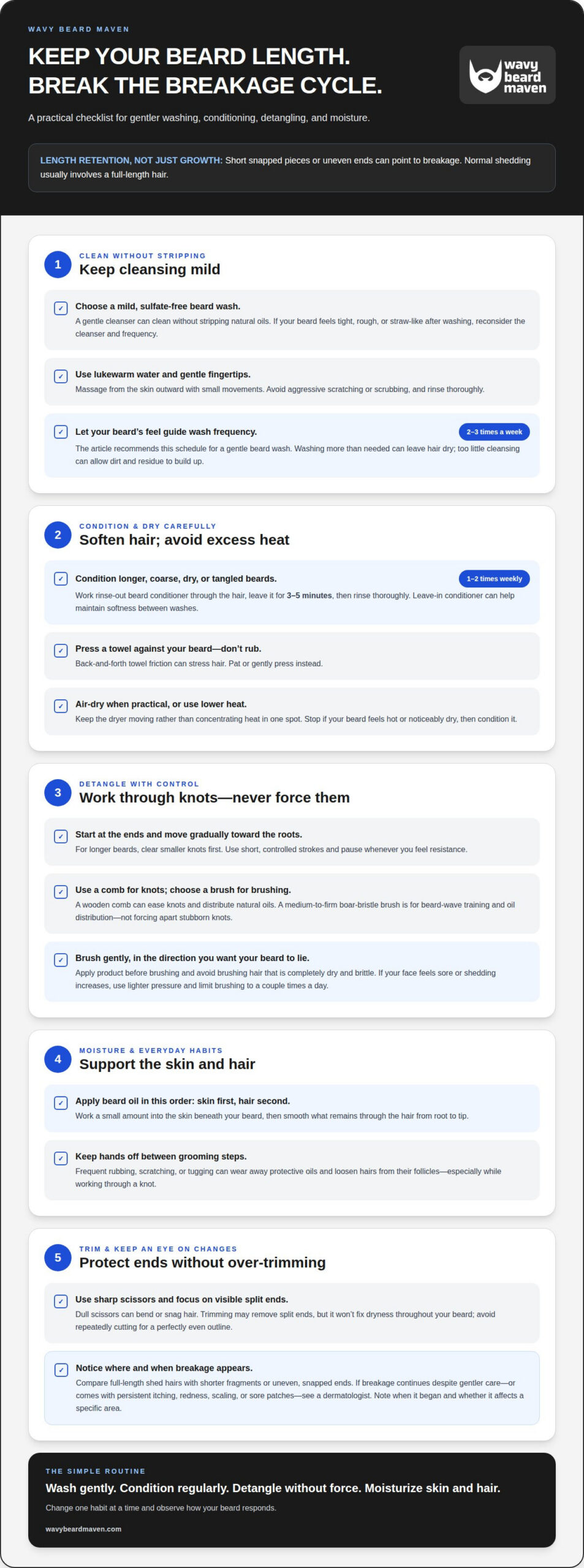
For a longer, coarse, dry, or difficult-to-detangle beard, use rinse-out beard conditioner about 1 to 2 times per week. Work it through the hair, then leave it in for 3 to 5 minutes before rinsing. Don’t rush the rinse: leftover conditioner can weigh hair down, while skipping conditioning may leave tangles harder to manage. A leave-in beard conditioner can also help maintain softness and manageability between washes.
Excessive heat styling can dry beard hair and contribute to breakage. A blow-dryer held close can concentrate heat on one section, especially while you brush or stretch the hair. Air-dry when practical, or use a lower heat setting and keep the dryer moving. Stop if your beard feels hot or noticeably dry, then condition it.
Trimming mistakes can leave rough ends that catch on a comb. Dull scissors may bend or snag hair instead of making a clean cut, so use sharp scissors and trim carefully. Focus on visible split ends rather than repeatedly cutting to chase a perfectly even outline. Trimming can remove split ends, but it won’t fix dryness throughout your beard. Avoid over-trimming, which can slow progress toward your desired length.
See a dermatologist if breakage continues despite gentler conditioning and grooming, or occurs alongside persistent itching, redness, scaling, or sore patches. Note when the change began and whether it affects a specific area. Those details can help explain the pattern during your visit.
Keep your routine simple: condition regularly, detangle gently, and limit heat exposure. If shorter broken hairs keep appearing, adjust one habit at a time, such as reducing blow-drying or applying beard butter for softness and control. Then observe how your beard responds.
2. Gentle brushing and detangling to reduce breakage
Yes. Rough towel drying, aggressive brushing, and forcing a comb through knots can stress beard hair and contribute to breakage. After washing, gently press a towel against your beard instead of rubbing it back and forth. If a brush catches, pause and loosen the knot rather than pulling harder.
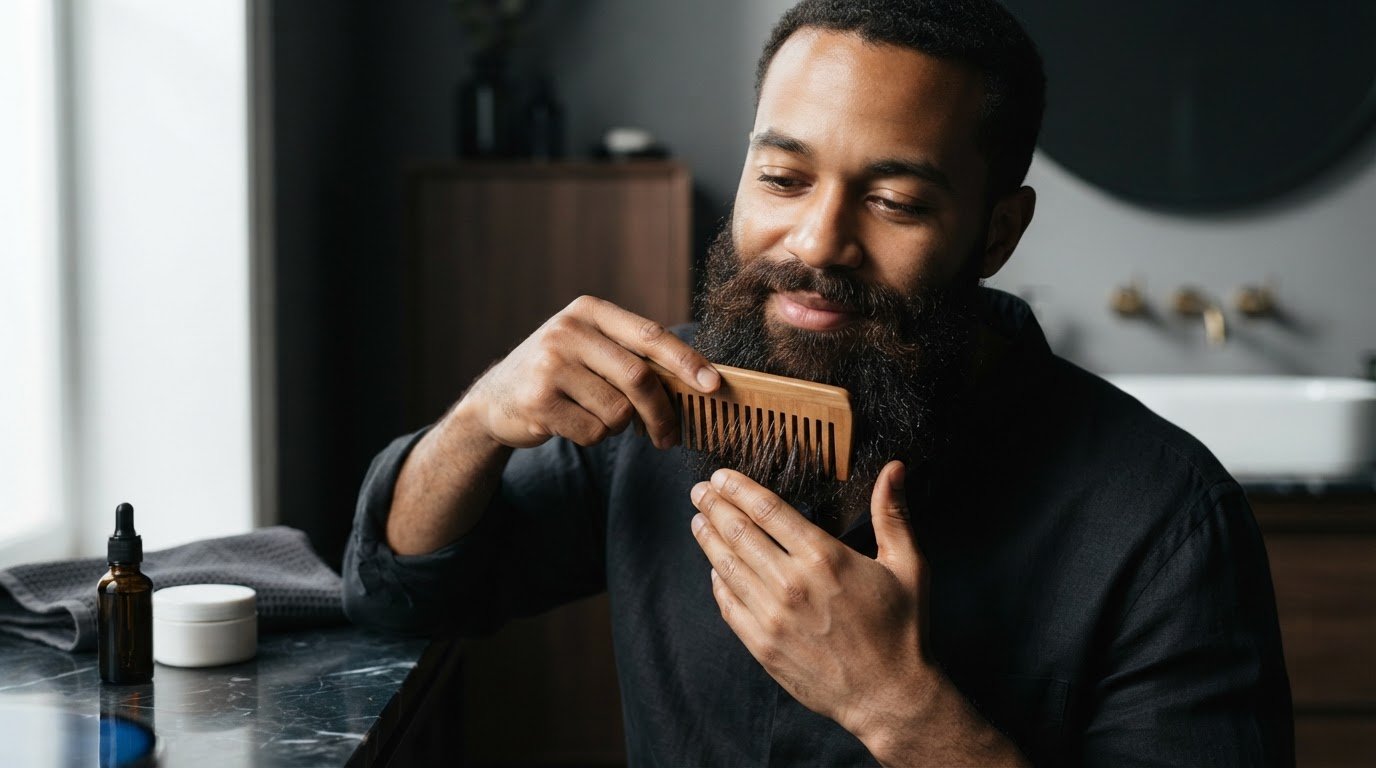
For longer beards, detangle from the ends first, then work gradually closer to the roots. This clears smaller knots before the comb reaches tighter tangles near your face. A wooden comb can help ease through knots and distribute natural oils along the hair. Use short, controlled strokes, and stop whenever you feel resistance.
Choose your brush for the task. A medium-to-firm boar-bristle brush is the primary tool for beard-wave training and can help distribute natural oils. It isn’t meant to force apart stubborn knots, so detangle with a comb first. Apply product before brushing, and brush gently in the direction you want your beard to lie. Avoid brushing completely dry, brittle hair.
Frequent rubbing, scratching, or tugging can wear away protective oils and loosen hairs from their follicles. Keep your hands off your beard between grooming steps, especially when you’re working through a knot. If brushing leaves your face sore or you notice more shedding than usual, limit brushing to a couple times a day and use lighter pressure.
A steady routine helps prevent more damage, though a broken hair shaft can’t be mended by brushing. Detangle gently, avoid towel friction, and pay attention to where snags recur. For a structured approach, use this guided beard-care routine to build consistent habits without overworking your beard.
3. Harsh cleansers and dryness
A cleanser that leaves your beard tight or rough may be stripping away natural oils. Dry beard hair can become brittle, making everyday friction more likely to snap the strands. If your beard feels coarse after washing, reconsider the cleanser and how often you use it.
Choose a mild beard shampoo that cleans without stripping natural oils. A gentle, sulfate-free beard wash is recommended 2-3 times a week. Washing more often than your beard needs can leave hair feeling dry, while too little cleansing can allow dirt and residue to build up. Let your beard’s feel guide your routine.
Use lukewarm water rather than hot water, then massage cleanser through the beard with your fingertips. Work from the skin outward, using small, gentle movements. Don’t scratch aggressively beneath the hair or scrub the beard as if removing a stain. Rinse thoroughly so cleanser doesn’t remain trapped near the skin.
Notice how your beard responds after each wash. A rough, straw-like feel or increased tangling can signal that your routine is leaving hair too dry. Try a milder cleanser, reduce unnecessary washing, and avoid scalp shampoo if it leaves your beard feeling stripped. Keep changes simple so you can identify what helps.
After cleansing, pat your beard dry and apply beard oil to moisturize the skin and hair. Use a small amount, work it into the skin beneath the beard, then distribute it through the hair. This step can help when cleansing leaves your beard feeling dry. Don’t rely on stronger shampoo to fix an itchy, flaky beard; harsh cleansing can worsen dryness.
Keep the routine consistent: wash with lukewarm water, massage in a gentle beard wash, rinse well, and follow with moisture. If you wash 2-3 times a week, observe whether your beard stays comfortable between washes. Adjust the routine based on dryness, buildup, and how easily your hair detangles.
4. Beard oil and moisture
Beard oil moisturizes beard hair and the skin beneath it. Dry hair can feel rough, tangle more easily, and become prone to breakage. Treat the skin as part of your beard-care routine, not as an afterthought. Dead skin buildup beneath facial hair can contribute to dandruff and itchiness, which may tempt you to scratch or tug.
Apply oil in order: start with the skin beneath your beard, then spread the remaining oil through the hair from root to tip. Part longer sections with your fingers so the oil reaches the skin instead of coating only the outer layer. Massage gently; pulling at knots adds friction when your beard needs careful handling.
Make daily beard oil part of your routine to help prevent dryness, itch, and breakage. A small amount worked evenly through the beard is more useful than leaving some areas dry while others feel coated. Adjust how much you apply based on your beard’s length and texture, then check whether the hair feels moisturized without feeling heavy.
Weather can change how your beard feels. Cold, dry, or harsh conditions may strip away natural oils, leaving hair less comfortable and more vulnerable to friction. Before heading into rough weather, apply oil to your skin and hair, then use a beard wrap as a protective layer when appropriate. Afterward, check for dry patches around your cheeks, chin, and mustache.
Oil supports moisture, but it won’t mend split or broken strands. Keep your hands gentle, avoid scratching itchy skin, and watch for recurring flakes or dryness. A light massage while applying oil can stimulate blood circulation, while steady care supports a healthy-looking beard. For a straightforward moisture step, explore beard oils for daily care and work application into your regular routine.
Wavy Beard Maven: Beard Oils
Wavy Beard Maven offers beard oils to support a consistent moisture routine. If dryness or roughness makes your beard harder to manage, apply oil to the skin beneath the hair, then smooth the rest through your beard. Pair it with gentle detangling to avoid adding friction as you distribute moisture.
Choose the product that fits your grooming goal. Beard butter provides leave-in conditioning and softness without hold, while beard balm offers medium styling hold. A beard brush can help distribute natural oils through facial hair, but use it gently and don’t force it through knots.
Keep the routine focused on comfort and care, not quick fixes. Visit Wavy Beard Maven to explore beard oils and build a moisture routine that suits your beard.
Build a Routine You Can Stick With
Start by noticing how your beard feels after washing, detangling, and styling. A brief routine note can reveal patterns, such as roughness after cleansing or snags in the same area. Adjust one habit at a time instead of changing everything at once. That makes it easier to identify which beard care mistakes that cause breakage are affecting your routine.
Consistency is a skill. Give gentle care time to become second nature, and treat persistent changes in your beard or skin as a reason to seek professional guidance. Your goal is not to control every strand, but to create conditions that help your beard stay comfortable and manageable as it grows. For support with your grooming routine, contact Wavy Beard Maven for beard care help. Keep refining your approach, stay patient, and take pride in the care you put in.
Frequently Asked Questions
Can Beard Grooming Mistakes Actually Stop Beard Growth?
Grooming mistakes can make a beard look as if it has stopped growing when breakage prevents length retention. Hair may continue growing while damaged ends snap off, leaving its visible length much the same. Compare your beard’s overall shape over time and look for uneven, shortened ends. If persistent skin changes accompany hair loss, seek guidance from a dermatologist.
What are the most common beard care mistakes that cause hair breakage?
Common beard care mistakes that cause breakage include pulling at knots, rubbing the beard roughly with a towel, frequent scratching, and using excessive heat. The damage can add up during everyday grooming. Repeatedly tugging a snagged section, for example, may leave it shorter than the rest. Notice which step catches or stresses your beard, then change that habit first.
Can overwashing or harsh beard shampoos cause beard hair to break?
Yes, frequent washing with a harsh cleanser can leave beard hair dry and brittle, making it more vulnerable to snapping. A practical starting point is a gentle beard wash 2-3 times a week. If your beard feels rough soon after washing, reduce unnecessary cleansing and choose a mild formula. Rinse thoroughly, since cleanser residue can also leave hair feeling uncomfortable.
How do beard oils, conditioners, and balms help prevent breakage, and how should they be used?
Beard oil helps moisturize hair and the skin beneath it; conditioner supports softness, while balm adds medium styling hold. Apply oil to the skin first, then smooth it through the hair. Use conditioner when your beard needs extra softness, and choose balm when you want hold. Before brushing, apply product and avoid brushing completely dry, brittle hair.
Does beard length, curl pattern, or hair texture affect breakage risk?
Yes. Longer or coarse beards can be harder to detangle, so knots may lead to more pulling during grooming. Curved or tightly curled strands can cross and catch against one another, making patient detangling especially useful. Work through small sections with a comb and never force a brush through resistance. Match your approach to how easily your beard tangles, not just its length.