September 30, 2026

A sharper beard routine can come from buying less, not adding another product to your shelf. Beard care on a budget starts with a simple rule: choose the basics that meet your needs, then use them consistently and as directed. You don’t need a crowded lineup to build a look you’re proud to wear.
Premium kits, bold grooming claims, and advice that makes every product sound essential can make it hard to know what’s worth buying. An inconsistent routine can also lead to overapplying products, forgetting what works, or buying duplicates. A focused set of steps is often easier to follow and review.
In this guide, you’ll learn how to choose useful grooming basics, compare products by purpose, and build a repeatable routine around your beard goals. You’ll also see how to approach wavy beard training without turning your bathroom shelf into a project.
Key Takeaways
- Make beard care on a budget about your beard’s current needs, not the size of your product shelf.
- Choose grooming basics by the job they do, and add only the categories that fit your routine.
- Compare product purpose, directions, and ingredients instead of relying on dramatic claims.
- Follow a simple wash, condition-if-needed, groom, and style-if-desired sequence, using products as directed.
- Before you rebuy, review what you have, how you use it, and whether your routine is consistent.
Beard Care on a Budget Starts with Knowing What Your Beard Actually Needs
Good beard care starts with observation, not a shopping list. Beard care on a budget means choosing useful basics for your beard’s current needs and applying them consistently. You can take pride in a well-kept beard without buying every oil, butter, balm, brush, and styling aid you see. Before adding an item, name the need it would address or the goal it would support.
Beard grooming is personal, shaped by individual style as well as care habits. For a broader look at the history and cultural significance of beards, consider how facial hair can carry meaning beyond appearance. Your daily routine, though, should reflect what you notice and want to maintain, not a trend or someone else’s full product lineup.
Start with your beard, skin, and grooming goal
Check in with your beard: does it feel dry, catch on itself, or need help staying in place? Notice its length, how your skin feels beneath it, and how much time you want to spend grooming. A short beard with few tangles may call for different care than a longer, coarser beard. Texture, washing habits, and time spent outdoors can also affect what feels useful.
Keep three questions separate: What do you need for comfort and care? What shape or level of neatness are you aiming for? Do you want to guide the beard’s texture, such as by training waves? Wave styling is a preference, not a universal requirement. If it’s your goal, choose steps you can repeat. A structured starting point can help you stay on track without making extra products mandatory.
Why a long product list is not a routine
A shelf full of options can blur the difference between care and styling. Give each category a specific job: a beard brush can help with grooming, while oil, butter, or balm may suit different conditioning or styling preferences. None belongs in every routine by default. Start with a need you can name, then decide whether an item addresses it.
Before replacing or adding anything, look at what you already own. If a suitable product still serves its purpose, use it according to its directions and notice how it fits your routine. Avoid doubling up just because two products make similar promises. A minimal beard-care routine is a repeatable set of steps, with only the products that serve a clear need.
- Condition: Notice dryness or discomfort before adding a conditioning product.
- Groom: Consider whether tangles or an untidy shape are actual concerns.
- Style: Add a styling step only if it supports the look you want.
This needs-first approach gives you a practical starting point. Next, match grooming basics to the job each one does, and add only what your beard or goals call for.
Which Beard-Care Basics Deserve a Place in a Low-Cost Routine?
A useful routine doesn’t require every grooming category. Start with the jobs you need done: cleansing to wash your beard, conditioning to support its care, brushing to groom it, and styling to shape the finish you prefer. Hygiene matters, but more products don’t automatically mean better care. The University of Utah Health discusses the health implications of beard hygiene, a useful reminder to treat cleansing as a practical need rather than a reason to overcomplicate your routine.
Choose categories that fit your habits. If your beard feels comfortable and you don’t want a particular style, you may not need to add conditioning or styling products. If you’re working on wavy definition, you might choose tools or products that fit that goal. The right starting point depends on your needs, not a kit’s product count.
Choose grooming basics by function, not by hype
Beard oil is a conditioning product. A beard brush is a tool for grooming, shaping, and routine maintenance. Styling products serve a different purpose: beard butter and beard balm aren’t interchangeable with oil or with each other, so consider their intended role and the finish you want. Follow product directions, and don’t add a category unless it addresses a need or preference you can name.
Use this quick function check before choosing:
- Cleansing: Is washing part of your current beard and skin-care needs?
- Conditioning: Do you want a conditioning product in your routine? For oil-specific guidance, explore this beard oil guide for waves.
- Brushing: Would a brush help with grooming or maintaining your preferred shape?
- Styling: Are you aiming for a particular finish or hold?
Decide what can wait until your needs change
A beard wrap may suit a specific wave-training practice, but it isn’t a default requirement for every beard. Additional styling products can wait if you’re satisfied with your current finish. Revisit your choices when your beard’s length, condition, daily habits, or style goal changes. Until then, use suitable products you already own as directed rather than adding another item out of routine or curiosity.
Essentials meet a current grooming need; optional products support a particular preference. That distinction keeps your choices focused without making any one item mandatory for everyone. For focused beard-wave guidance, explore beard-wave grooming resources and choose the steps that fit your practice.
How to Compare Beard Products Without Paying for Claims You Don’t Need
Compare products by what they’re meant to do and how they fit your routine, not by the boldest promise on the label. For beard care on a budget, consider a product when it addresses a current need and you can use it as directed. A suitable product you reach for consistently may be more practical than several overlapping options sitting unused.
Use this comparison to assess a category before adding it. “Frequency” means how often it fits your own routine, not a universal schedule. Follow the directions on the product you choose.
| Category | Purpose | Frequency to consider | Ask yourself |
|---|---|---|---|
| Cleansing | Washes the beard as part of hygiene | As appropriate to your routine and directions | Do I have a cleansing need this addresses? |
| Beard oil | A conditioning product category | Only as directed and useful to your routine | Does this fit how I want to condition my beard? |
| Beard brush | Grooming and shaping | When brushing suits your maintenance habits | Would this tool serve a purpose I currently need? |
| Styling product | Supports a chosen finish or hold | When styling is part of your goal | Does it add a function I don’t already have? |
Use the table as a decision filter, not a shopping checklist. If you already have a product that serves the role, compare the new option with it before buying. Beard oil, beard butter, and beard balm have distinct roles; don’t assume one can replace another simply because all appear in beard-care routines. For styling-specific detail, consult this beard balm guide for hold and styling.
Read labels and directions before choosing
Read the ingredient list with your preferences and any known sensitivities in mind. Check the directions for intended use and amount. Marketing language can describe a product attractively, but it doesn’t tell you whether the formula fits your preferences or how to use it. If you’re unsure whether a product belongs in your routine, return to its stated role and the need you want it to meet.
Recognize overlapping products and unnecessary upgrades
Before choosing an upgrade, ask what distinct job it adds. Compare the intended roles of products you already own with the new option, rather than judging by packaging, dramatic claims, or a “premium” label alone. If two items appear to serve the same step, hold off on buying both until you can identify a practical difference that matters to you.
Value is personal. A product used regularly and according to its directions may suit you better than a more elaborate option you rarely reach for. Keep a simple note of what you use, what role it serves, and whether it meets your needs. That makes your next comparison clearer and helps you refine your routine without chasing a universal ranking.
Build a Simple Beard-Care Routine That Makes Every Product Count
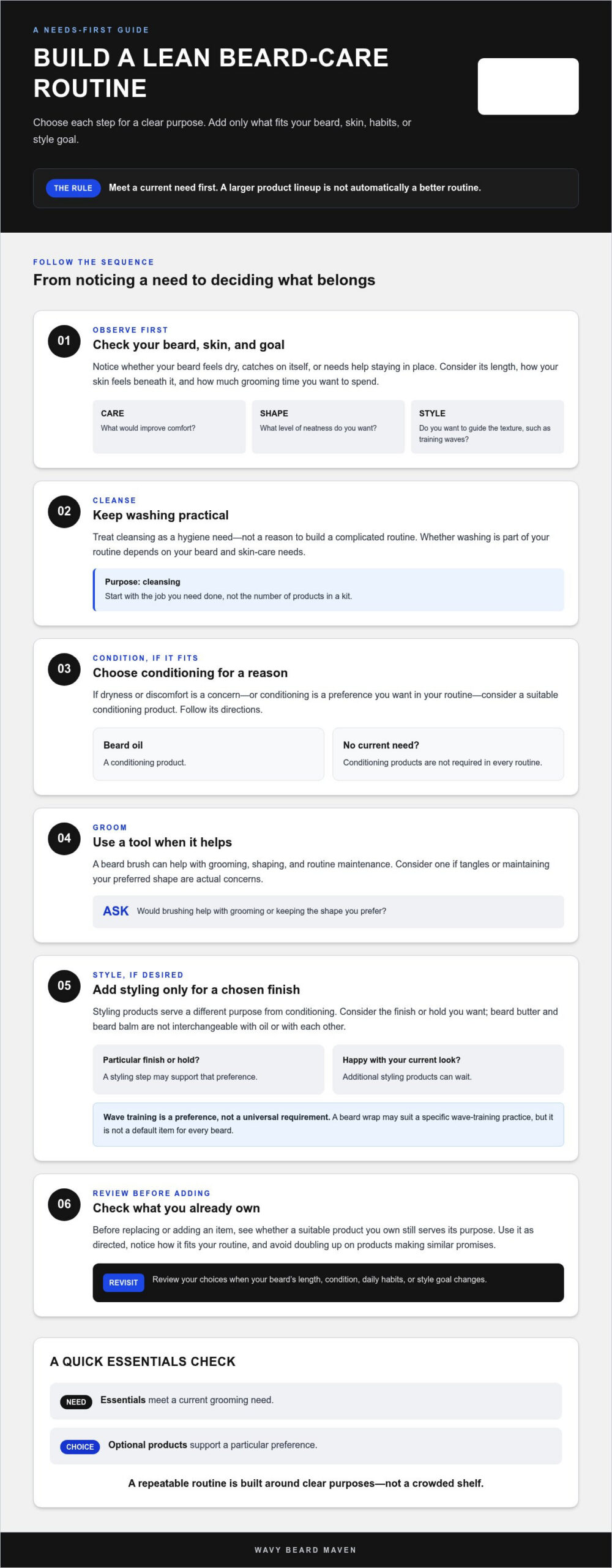
A repeatable routine turns product choices into useful habits. Keep the sequence straightforward: wash when it suits your cleansing needs, condition if needed, groom, then style if desired. The right steps may vary from day to day. Know why you’re using each product and follow its label, rather than applying more or repeating a step automatically.
A practical routine for ordinary days
Start with clean hands, then prepare your beard for the step you’ve chosen. Use products only as directed on their labels. How often you use a product and how much you use are separate decisions: a step may belong in your routine regularly, but that doesn’t mean you should use more than directed each time. Keep the order easy to remember and adjust based on how your beard responds.
- Wash: Cleanse as needed for your hygiene routine. Follow the directions for the product you use.
- Condition: Add this step if it serves your needs, using the product as directed.
- Groom: Brush or otherwise maintain your beard in a way that fits its length and your preferred shape. A beard brushing guide for waves can help you explore technique beyond this budget overview.
- Style: Use a styling product only if you want a particular finish or hold, and follow its instructions.
Then pause. Give each step a clear purpose instead of applying several products back-to-back by habit. If you’ve already completed a step, don’t repeat it unless the product directions and your routine call for it. Notice whether your beard feels and looks the way you want, and make one adjustment at a time. This makes it easier to tell which habits are working for you.
Make wave training part of the routine without adding clutter
If wave training is one of your goals, begin by making grooming consistent with the tools and products you already use. Patient practice matters more than immediately adding new items. Keep the same basic sequence and let your styling preference guide whether a styling step belongs in it. This section focuses on a budget-minded care routine, while the dedicated guides cover technique in more depth.
For dedicated technique, the complete beard-wave training guide explores the process in more depth. Keep your routine practical as you learn: follow product directions, avoid duplicate applications, and change your approach only when you have a clear reason.
Consistency is the skill you’re building. A structured starting point, such as the 7-Day Beard Wave Starter Routine™ Checklist, can help you follow a repeatable practice. Start your beard-wave routine with the checklist and make each step intentional.
Keep Beard Care Affordable by Reviewing Your Routine Before You Rebuy
A repurchase is a good moment to check whether your routine still fits. Don’t replace an item simply because it’s popular, newly advertised, or part of a trend. Consider how you actually use it, what its directions say, and whether it still serves a purpose in your beard-care practice. This quick review grounds the decision in your needs rather than impulse.
When to keep your routine simple, and when to adjust it
If your current products address your needs and your routine feels manageable, stay consistent. A minimal routine can be the right fit for as long as it continues to work for your goals. You don’t need to add a step just because it exists.
Reassess when something meaningful changes, such as your beard length, skin comfort, or styling goal. A new preference may call for a different step, but first identify the specific job it needs to do. Add a product only when it addresses that need, and give yourself room to learn how it fits. There’s no universal schedule for changing a routine or promise that one adjustment will produce a particular result.
Choose a useful next step for your beard goals
Before you rebuy, walk through this short checklist:
- Current needs: What do you want your routine to address now?
- Products on hand: What do you already own, and what role does each item serve?
- Usage directions: Are you following the label’s guidance for use?
- Routine consistency: Have you been using suitable products regularly enough to understand how they fit your practice?
Then weigh simplicity against a specific new need. Keeping the routine minimal means fewer steps to manage, while adding a product may make sense if your beard or styling goals have changed and the new item has a distinct purpose. Replace products based on your actual use and their directions, not pressure to upgrade or buy a full lineup. If an item still suits your routine, there may be no reason to replace it just because another option is being promoted.
For men training wavy beard styles, the 7-Day Beard Wave Starter Routine™ Checklist offers an educational starting point for building a structured practice. Beard oils, butters, balms, brushes, and wraps are categories to explore according to your goals, not a required shopping list. Choose guidance or a grooming category that supports the next step you’ve identified, then keep your routine focused.
Ready to explore at your own pace? Explore beard-care guidance and products that can help you shape a routine around your beard goals.
Keep Building a Routine That Fits Your Beard
Your beard and grooming goals can change, so let your routine change with intention too. Make your next step small: choose one habit to keep consistent, then review whether it still serves you before adding anything new. That steady approach keeps beard care on a budget grounded in what works for your daily life, not pressure to chase every new claim or trend.
For men refining wavy beard styles, practical instruction can make the process easier to follow. Wavy Beard Maven offers educational resources focused on beard-wave training and maintenance, including the 7-Day Beard Wave Starter Routine™ Checklist. Its shop features beard oils, butters, brushes, balms, and wraps, so you can explore options in line with your goals rather than treating every item as essential.
Choose guidance that meets you where you are, keep practicing with purpose, and let consistency shape your progress. Explore beard-care guides and products to find a useful next step for your routine. You’ve got this: build your look one intentional habit at a time.
Frequently Asked Questions
Can I take care of my beard without buying beard oil?
Yes. Beard oil is optional, not a universal requirement. If your beard feels comfortable without it, keep your current routine and focus on the steps you already use, such as washing and grooming. For beard care on a budget, don’t treat a popular product as an automatic refill. Reconsider oil only if you identify a conditioning need and its intended use suits your preferences.
Are beard-care kits worth buying on a budget?
They can be useful if the items match needs you already have. Before choosing a kit, compare its contents with the products at home. For example, if you already have a brush and only want to try a styling product, a set with multiple grooming tools may not fit your situation. A kit is a format, not a guarantee that every included item will earn a place in your routine.
Can I make beard-care products at home to save money?
You can make grooming mixtures at home, but don’t assume a DIY formula is safer or more economical for your skin. Ingredients, cleanliness, and storage can affect whether a homemade mixture is suitable for your use. If you’re unfamiliar with an ingredient or have known sensitivities, avoid experimenting on your face. For any product, review its ingredients and directions, and keep your routine focused on items you understand.
How often should I wash my beard?
There isn’t one washing schedule that suits every beard, skin type, and daily routine. Follow the cleanser’s label and notice how your beard and skin feel afterward. If your routine includes activities that leave visible dirt or residue, consider whether your usual cleansing step still meets your needs, without assuming more washing is always better. Persistent irritation or discomfort calls for appropriate professional advice.
Do I need a special brush for beard care?
No. A special beard brush isn’t necessary for everyone. Whether one suits you depends on your beard’s length and texture, the tools you already own, and how you like to groom. If your current tool feels comfortable and helps you manage your beard, there may be no need to replace it. Avoid using a tool that pulls or causes discomfort, and choose another only for a clear grooming purpose.
What should I do if a beard product irritates my skin?
Stop using the product that seems to be causing irritation, and don’t reapply it just to test your reaction. Review its ingredient list and directions, and avoid introducing several new products at once, since that can make a possible trigger harder to identify. If the irritation is severe, persistent, or concerning, seek advice from a qualified healthcare professional. Grooming products aren’t a substitute for diagnosing or treating a skin condition.