November 25, 2026

A stiff beard doesn’t automatically need more protein. To tell if your beard needs protein or moisture, start with how it feels: limp, overly soft, stretchy strands may need protein, while dry, rough, brittle hair may need moisture. Stiffness and brittleness can also signal protein overload, so don’t rush to add another protein product.
When your beard feels off, it’s easy to assume it needs more conditioning or a stronger treatment. First, read the signs, then adjust your routine with purpose. Protein and moisture address different needs, and choosing the wrong one can make your beard less manageable.
Learn to recognize signs of protein deficiency, protein overload, and moisture deficiency, and how each can feel different. You’ll also find a practical way to assess your beard’s texture and elasticity, so your next care choice reflects what your hair is telling you.
Key Takeaways
- Use how a beard strand feels and responds to a gentle stretch to distinguish between a need for protein and a need for moisture.
- Recognize when stiffness and brittleness may signal protein overload, and why adjusting your routine matters.
- Look for clusters of texture and breakage clues rather than relying on one symptom alone.
- Choose beard care that supports the need you’ve identified, and reassess how your hair responds over time.
WHAT DOES PROTEIN OVERLOAD ACTUALLY FEEL LIKE?
Protein overload can leave beard hair stiff, rough, and brittle instead of flexible. Compare that with limp, overly soft hair, which may point to too much moisture.
Brittleness from Protein Overload
Protein overload occurs when repeated protein care leaves strands stiff and less elastic. Brittle hair can snap instead of bending during brushing or styling. If your beard feels rough after protein treatments and has lost its usual flexibility, pause those treatments. Use moisture-focused care and observe how the strands respond over the next washes.
Don’t treat one rough day as a diagnosis. Dryness can also make hair feel stiff, so consider the overall pattern: texture, flexibility, and whether brittleness appeared after protein care. Healthy hair stretches slightly and returns to shape; rigid strands that break easily respond differently.
Buildup from Protein Overload
A coated or heavy feeling may suggest product buildup, but it doesn’t prove protein overload. Several layered products can coat strands and change how your beard feels. Look at the other clues: stiffness and brittleness after protein care point toward overload, while a heavy surface feel alone may indicate residue or layering.
Review what you’ve applied and simplify your routine before adding another treatment. If your beard became brittle after protein care, pause it and return to moisture-focused care for a few washes. Protein overload typically eases within one to two washes after stopping protein treatments and using a moisturizing product.
Moisture overload feels different: strands may seem overly soft, damp, or mushy, and the beard can look limp. That softness isn’t the same as healthy flexibility. Healthy hair yields slightly and springs back; over-moisturized hair may lack shape and feel weighed down. A beard that goes limp after moisture-heavy care needs a different adjustment than one that feels brittle after protein.
Use the contrast to guide your next step. Stiff, rough, brittle strands suggest pausing protein and emphasizing moisture. Mushy, limp strands suggest reducing moisture-heavy care. Track how your beard feels across a few washes, since one sensation alone can’t distinguish overload from dryness or product layering.
Signs of protein-deficient hair
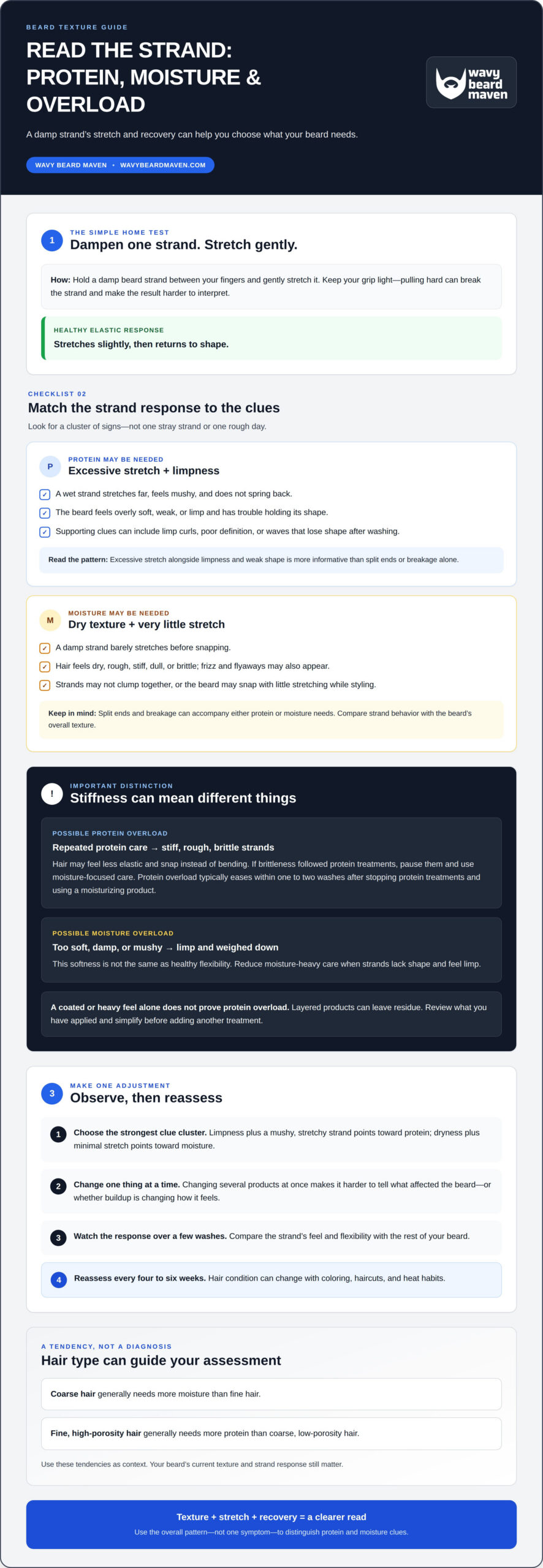
Protein-deficient beard hair can feel overly soft, limp, or weak and may not hold its shape. A wet strand that stretches far, feels mushy, and doesn’t spring back usually needs protein. If a damp beard hair pulls long between your fingers and stays stretched, that response points to reduced elasticity.
Look for a pattern, not one stray strand. Split ends, breakage, limp curls, poor definition, and waves that lose their shape after washing can signal insufficient protein. A cluster of these signs may make protein care worth considering. One flyaway or uneven wave alone doesn’t establish that pattern.
Moisture deficiency feels different. Beard hair may seem dull, brittle, or rough, with frizz, flyaways, split ends, and strands that won’t clump together. A beard that feels dry and stiff while styling, then snaps with little stretching, may need moisture rather than more protein.
Some signs overlap. Breakage and split ends can result from insufficient protein or moisture, so consider strand behavior alongside texture. A mushy, highly stretchy wet strand points more toward a need for protein; one that barely stretches before snapping points more toward a need for moisture. Compare those responses with how the rest of your beard feels.
A protein treatment is more relevant when weak definition and limpness occur alongside excessive stretch. Moisture-focused care is a better fit when dryness, brittleness, and frizz dominate. Coarse hair generally needs more moisture than fine hair, while fine, high-porosity hair generally needs more protein than coarse, low-porosity hair. These tendencies can guide your assessment, but your beard’s current condition matters too.
Keep the goal simple: identify the strongest cluster of clues before changing your routine. Limp waves plus a mushy, stretchy strand point toward protein; roughness plus minimal stretch points toward moisture. Healthy hair stretches slightly and returns to shape, giving you a useful comparison.
Distinguishing protein deficiency from moisture deficiency
Knowing how to tell if your beard needs protein or moisture starts with comparing a damp strand’s stretch and feel. Texture alone can mislead: product buildup, for example, may leave hair coated or rough without showing whether the strand needs protein or moisture. Consider how the beard behaves when damp, not just how it looks after styling.
For a simple home test, dampen one beard strand and gently stretch it between your fingers. Healthy hair stretches slightly, then returns to its original shape. Keep your grip light; pulling hard can break the strand and make the result harder to interpret.
Notice how the strand responds. If it stretches far, feels mushy, and doesn’t spring back, protein may be needed. If it barely stretches before snapping, moisture is the stronger clue. A strand that gives slightly and recovers shows a healthier elastic response, rather than a clear sign of either deficiency.
Compare the result with the rest of your beard. Limpness and weak shape alongside excessive stretch support protein-related clues. Dry, stiff strands that barely stretch point more toward moisture. Split ends and breakage can accompany either condition, so don’t use them alone to choose your next care step.
Keep your routine consistent while assessing your beard. Changing several products at once makes it difficult to tell whether the strand’s response has shifted or buildup is affecting its feel. Make one adjustment, then observe your beard over a few washes. Reassess protein and moisture needs every four to six weeks, as hair condition can change with coloring, haircuts, and heat habits.
The cuticle is the strand’s outer layer, and conditioners or treatments can temporarily coat it. This surface effect may change softness without addressing the strand’s underlying need. A coated beard, for example, might feel smoother but still stretch excessively when wet. Use both the damp-strand response and the broader texture pattern to guide your choice. That comparison helps you tell if your beard needs protein or moisture without relying on a single clue.
Are protein treatments safe and effective for beard hair?
Protein treatments can temporarily coat hair strands and fill gaps in the cuticle. Hair isn’t alive, so treatments don’t feed or permanently repair it. A protein product may improve how damaged beard strands feel, but it won’t reverse the cause of damage. Treat it as temporary support, not a cure.
Use protein only when your beard shows signs it needs it, such as excessive stretch, limpness, or weak shape. Apply a protein treatment once, then assess how the strands respond after the next wash. If they feel more resilient, it may suit your routine. If they turn stiff or lose bounce, stop protein care and shift toward moisture.
Frequency matters. Use protein treatments less often than moisture treatments, and only while signs of protein need remain. If your beard becomes stiff or loses bounce after protein care, reduce use to once every ten days. Don’t stack multiple protein products in one routine; doing so makes it harder to identify what changed the texture.
If protein overload leaves your hair brittle, pause protein treatments and use a moisturizing product. The overload typically resolves within one to two washes after that change. Watch for softness and flexibility to return instead of adding more protein at the first sign of breakage. Persistent damage may need more than a surface treatment can provide.
Keep the goal practical: match treatment to strand behavior, then reassess after washing. For example, a limp, highly stretchy beard may respond better to protein support, while stiff strands call for moisture-focused care. Explore beard-care guidance and routine tips to build a more consistent approach.
Wavy Beard Maven
Wavy Beard Maven helps turn beard-care observations into a deliberate routine with educational guidance and grooming essentials. Once you’ve identified whether your beard feels dry, limp, or brittle, focus on consistent care rather than adding products without a clear reason.
Beard oil, beard butter, beard balm, and a beard brush can support everyday grooming. Choose according to your beard’s needs, using the strand’s response and overall texture to guide your routine. Then pay attention to how your beard feels as you maintain it.
For more guidance on a consistent beard-care routine, contact Wavy Beard Maven.
Make Your Next Beard-Care Move With Confidence
Your beard-care routine doesn’t need to be complicated. Base your next move on what your strands show, then give that adjustment time to become part of a consistent practice. Knowing how to tell if your beard needs protein or moisture helps you choose with intention instead of layering on products and hoping for a change.
Keep observing how your beard responds during washing, drying, and styling. If its texture shifts, revisit your approach rather than treating yesterday’s solution as permanent. That steady attention turns grooming into a skill you build, one considered choice at a time.
Ready to take a more deliberate approach to your beard routine? Start a conversation with Wavy Beard Maven and keep refining your care with purpose.
Frequently Asked Questions
What are signs a beard needs more moisture?
A beard that looks dull and feels rough or brittle may need more moisture. Notice whether strands become frizzy, develop flyaways, or resist clumping after washing. If your beard feels dry while styling and breaks with little bending, moisture may be the better focus. Look for several clues together, since split ends and breakage can also accompany protein-related issues.
What are signs a beard needs protein?
Protein may be needed if damp beard strands stretch excessively and don’t recover their shape. Weak definition, limp waves, and difficulty holding a style after washing can add context. A beard that loses its pattern soon after washing and feels unusually stretchy when wet may show a stronger pattern of protein need than one that mainly feels rough and dry.
How can you tell if beard hair is dry versus protein deficient?
Compare how the strand feels with how it responds to a gentle stretch. Dry hair tends to feel rough, stiff, or brittle; protein-deficient hair may feel soft and overly stretchy when damp. If a wet strand extends easily but stays elongated, protein may be the issue. If it barely gives before snapping, moisture is the stronger clue.
What does beard hair feel like when it has too much protein?
Too much protein can make beard hair feel rigid, rough, and brittle, with less flexibility during grooming. Consider when that texture appeared: did it follow the addition of protein treatments to your routine? If your beard then feels harder to bend or loses its usual bounce, pause protein care rather than layering on another treatment.
What causes brittle, rough, or limp beard hair?
These textures can point to different imbalances. Rough, brittle strands may reflect dryness or protein overload, while limp hair can accompany excess moisture or insufficient protein. Product layering can also leave the surface feeling coated, complicating your assessment. A limp beard with an overly stretchy damp strand suggests a different need from a rough beard that barely stretches.