November 5, 2026
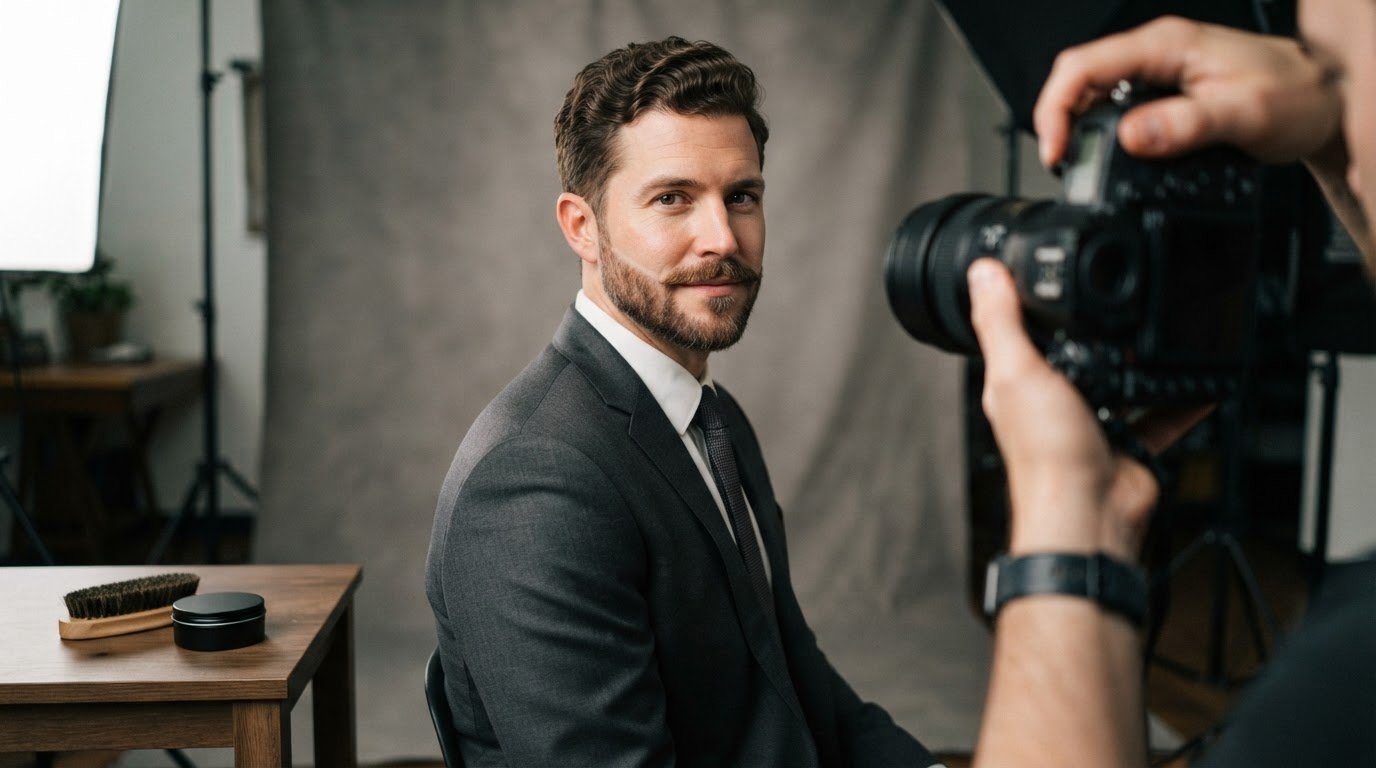
You don’t have to shave for a professional headshot. A full beard can look polished when it’s neatly shaped, with defined cheek lines and a mustache trimmed clear of the lip. For a corporate look, keep it short and close to the face, no more than half an inch out. The best beard styles for corporate jobs balance personal style with clean edges and consistent upkeep.
It’s natural to wonder whether facial hair will look too casual in a formal workplace or on camera. The right choice depends on your workplace’s expectations, your beard’s shape, and how consistently you maintain it. This guide compares polished short beards, tapered styles, goatees, and stubble, then explains how to keep stubble even and decide whether to keep a full beard for a headshot. Use these pointers to choose a look that feels like you and appears deliberate.
Key Takeaways
- Match your beard’s length and shape to your workplace, keeping the outline intentional and the finish tidy.
- For clean stubble, aim for an even length and sharpen the edges so it looks deliberate rather than overdue for a trim.
- A well-maintained beard can suit professional settings; workplace expectations and consistent grooming help shape the impression.
- You can keep a full beard for a business headshot. Choose a controlled shape and prepare it so the final look feels polished and true to you.
1. What Are Some Appropriate Beard Styles for Work?
In finance, law, and consulting, a short corporate beard, even stubble, or a neat goatee often suits conservative expectations. A practical starting point among beard styles for corporate jobs is a close shape that stays within half an inch of the face. Define the cheek lines and keep the neckline tidy. A classic goatee, Van Dyke, or anchor beard gives facial hair a deliberate outline without a full beard.
Match the shape to your features as well as your workplace. For a round face, keep the sides closer and leave a little length at the chin for definition. For a longer face, fuller sides and a shorter chin can create balance. A square face can suit softened edges, while an oval face can carry several shapes. Treat these as styling guides, not strict rules.
In creative settings, a fuller beard or tapered shape may fit the culture if it stays well groomed. A taper blends closely trimmed upper sideburns into the beard. More conservative settings often favor shorter styles. Avoid scraggly ends, and trim a full beard’s mustache so it doesn’t cover the lip. Choose among beard styles for corporate jobs by considering your workplace’s dress code and the upkeep you’re comfortable with.
In the United States, employers may set grooming standards that include shaving requirements. Religious or medical exemptions may give employees the right to maintain facial hair under workplace grooming policies.
To shape your beard, define the cheek lines, then set the neckline just above the Adam’s apple. Check the outline from the front and both sides, and trim stray hairs that disrupt its symmetry. A short, tidy style can be a sensible choice for a conservative office. In a creative workplace, a distinctive outline can express individuality while still looking intentional.
2. Clean stubble and five o’clock shadows
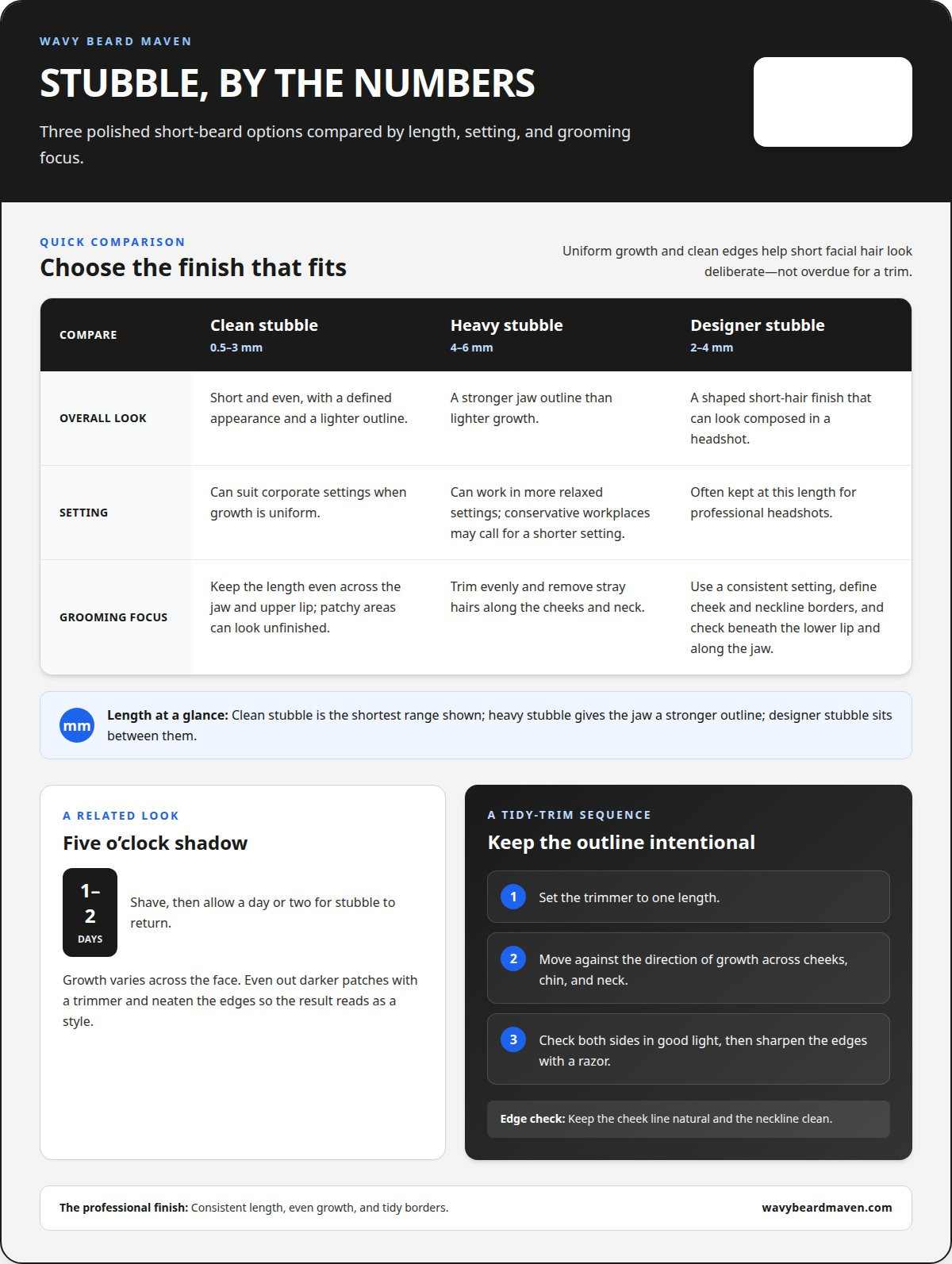
Stubble is facial hair kept short and even, usually 0.5–3 mm long. That range creates a defined appearance without the heavier outline of a beard. For corporate settings, uniform growth matters more than simply choosing a short guard. Patchy lengths around the jaw or upper lip can make an executive look seem unfinished.
Set your trimmer to one length, then move against the direction of growth across your cheeks, chin, and neck. Check both sides in good light before sharpening the edges with a razor. Keep the cheek line natural and the neckline clean. This sequence helps maintain a deliberate style while preserving individuality.
Heavy stubble sits around 4–6 mm, giving the jaw a stronger outline than lighter growth. It can work in relaxed settings, but it needs careful keeping: trim evenly and remove stray hairs along the cheeks and neck. If your workplace leans conservative, choose a shorter setting. The extra length is most effective when its shape looks intentional.
A five o’clock shadow is the early growth that appears after shaving. You can create the look by shaving, then allowing a day or two for stubble to return. Since growth varies across the face, use a trimmer to even out darker patches rather than letting one area dominate. Neaten the edges so the result reads as a style, not missed grooming.
Designer stubble is a shaped version of short facial hair, often kept at 2–4 mm for professional headshots. Use a consistent trimmer setting, then define the cheek and neckline borders. Before an important meeting or photograph, check the area beneath your lower lip and along the jaw. A clear outline keeps the appearance composed without removing all visible growth.
To soften rough stubble and make daily grooming more comfortable, beard oils and balms can support your routine. Apply a small amount, then brush the hair into place; keep the finish light for close-up settings.
3. What Is the Impact of Professional and Well-Groomed Beards in the Workplace?
Workplace attitudes toward facial hair have shifted over time. Clean-shaven faces were the norm in corporate America in the early 20th century, and that preference continued through the 1950s and 1960s. Mustaches became more common among professionals in the 1970s; clean-shaven looks returned to prominence in the 1980s. The working world took a more relaxed approach to grooming in the 1990s, while neatly trimmed beards and goatees gained acceptance into the 2000s.
A clean-shaven face and a short beard can both look professional. The impression depends on the workplace, the role, and the care behind the style. A defined short beard can look deliberate; an evenly maintained mustache can communicate the same care. In creative settings, a distinctive shape may fit the culture, provided the outline stays tidy. A confident appearance comes from consistency, not from choosing one universal style.
Are beards allowed in corporate workplace dress codes? Some employers set grooming standards that permit or restrict facial hair. Religious or medical exemptions may give employees the right to maintain facial hair despite a workplace grooming policy.
For a polished office look, wash your beard with a mild cleanser, comb it in its growth direction, and trim uneven hairs. Define the cheek and neckline edges, and keep the mustache from covering the lip. A short beard usually needs tidying every 3–4 days, depending on growth. That routine helps prevent stray hairs from changing the shape between trims.
How often should a professional beard be trimmed? Tidy a short beard every 3–4 days, adjusting for how quickly your hair grows. If your beard grows slowly, focus on stray hairs and clean edges rather than removing length unnecessarily.
Perceptions vary between teams and industries, so consider the setting as well as the dress code. A client-facing finance role may call for a restrained shape, while a creative office may welcome more individuality. Neither facial hair nor a shaven face guarantees a positive impression; a well-kept routine makes either choice look intentional.
4. Can I have a full beard in a business headshot?
Yes. Facial hair can look polished in a business headshot when its shape is controlled and neatly trimmed. A classic corporate beard is about half an inch or a quarter-inch long, while a short beard may measure 3–7 mm. For a formal portrait, beard styles for corporate jobs usually favor a close, defined outline. A beard longer than 12 mm enters medium- or full-beard territory, so keep its silhouette intentional.
A full beard doesn’t need to disappear for LinkedIn. Let it grow uniformly for several weeks before shaping, then trim uneven areas without removing its natural fullness. Keep the mustache clear of the lip, and check that both sides look balanced from the camera’s angle. Among beard styles for corporate jobs, a shaped full beard can feel authentic while framing your face professionally.
Plan the final grooming with enough time to avoid a freshly cut outline. Professional shaping 3–5 days before the shoot gives the beard time to settle. If you prefer a clean-shaven look, shave several hours before the photograph so redness can fade. For stubble, choose a consistent length and tidy the edges rather than making a last-minute change to your overall style.
Daily upkeep matters with a fuller shape. A full-beard routine may take about 15 minutes of daily maintenance: wash with a mild cleanser, brush out debris, comb the hair into place, and apply beard oil to soften and condition it. Check the mustache, chin, and side profile before the session. Keep scented grooming products light, since strong fragrance may distract coworkers or clients.
Choose the length that fits both your workplace and your usual look. A short corporate beard offers a close finish; a classic full beard brings more presence but needs consistent shaping. For support with a steady routine, build your beard-care routine with beard oils, balms, or a brush, and arrive at the camera looking composed rather than newly transformed.
Wavy Beard Maven
Wavy Beard Maven helps you build the skills and routine to grow, train, and maintain a polished wavy beard. Turn to its guides when you want to keep your chosen workplace style looking intentional between trims, whether you wear close stubble or a fuller shape. Step-by-step tutorials offer practical grooming guidance, while Beard Oils, Beard Butters, a Beard Brush, and Beard Balms support everyday care. Choose a routine you can maintain consistently, then refine the shape as your beard grows. For steady progress, explore the guidance and grooming tools that fit your needs. Contact Wavy Beard Maven to discuss your beard-care questions.
Make Your Grooming Routine Work for You
Your professional look doesn’t need to feel like a uniform. Choose a shape that feels authentic, then make its care part of your regular routine. Notice how your beard sits through a workday, how it looks on camera, and which areas need attention as it grows. Those observations help you refine your style without chasing every trend.
The best beard styles for corporate jobs are the ones you can maintain consistently and wear with confidence. Let your workplace guide the level of polish, while your own features and preferences shape the details. A steady routine turns grooming from a last-minute fix into a practiced part of showing up well.
If you want support building that routine around your beard, connect with Wavy Beard Maven. Keep refining your approach, and wear your look with pride.
Frequently Asked Questions
Should I shave my beard for a professional headshot?
No, shaving isn’t essential if facial hair is part of your usual professional appearance. Choose a look you can maintain confidently rather than making a sudden change solely for the camera. If you decide to shave, do it several hours before the shoot so redness can fade. A familiar, tidy appearance helps your headshot represent how colleagues and clients recognize you.
Can I have a full beard in a business headshot?
Yes. A full beard can suit a business headshot if it looks intentional and fits the professional image you want to present. Consider how its silhouette frames your face with the clothing you’ll wear, and make sure the mustache doesn’t obscure your lip. If you’re choosing between a full beard and a shorter shape, pick the one you can keep consistent beyond the photo session.
Does stubble look professional in a LinkedIn photo?
Yes, stubble can look professional in a LinkedIn photo if it appears deliberate rather than uneven. Before the session, view your face in lighting similar to the photograph; patches that seem subtle in a bathroom mirror may look more pronounced on camera. Keep the chosen length consistent across your cheeks, jaw, and chin, and avoid changing the style at the last minute.
Is It Harder to Get a Job with a Beard or Mustache?
Facial hair alone doesn’t determine whether you’ll get a job. The role, workplace expectations, and overall presentation shape how an interviewer sees your appearance. For an interview, choose a style that looks cared for and fits the organization’s setting; a neat mustache or beard makes a different impression from one with stray edges. Focus on arriving prepared and speaking confidently about your experience.
What Are Some Appropriate Beard Styles for Work?
Short beards, even stubble, and restrained goatees can suit professional settings. A classic goatee, Van Dyke, or anchor beard offers a distinct shape, while a short tapered beard blends the sideburn area into the beard. Consider your role and workplace culture before choosing. For example, a conservative client-facing position may call for a simpler outline than a creative office where personal style has more room.
What Counts as a Short Beard?
A short beard is commonly classified as 3–7 mm long. This keeps visible coverage while leaving the facial outline close and defined. For a neat finish, use a consistent trimmer setting across the cheeks, chin, and jaw, then check for uneven patches in clear light. Growth varies from person to person, so judge the result by the shape and overall neatness, not just the guard setting.