October 15, 2026
What if the beard that commands the most respect isn’t the longest one, but the one that looks chosen on purpose? It can be hard to balance a bold style with workplace expectations, especially when faces, hair patterns, and daily routines differ. Beard styles that command respect aren’t defined by length alone. A clear shape, considered proportions, and consistent grooming make a look feel intentional.
You don’t need to copy someone else’s beard or spend every morning perfecting yours. Choose a style that feels like you and build a routine you can keep. This guide compares confident options, explains how your growth pattern and daily life can inform your choice, and shows why a deliberate outline often matters more than extra length.
From close stubble to a shaped long beard, each style has its own character and upkeep needs. Learn how to assess the edges, texture, and overall silhouette, then choose a look you can maintain with practical grooming habits.
Key Takeaways
- Learn how shape, proportion, and clean transitions help a beard look considered at different lengths.
- Compare short, full, and partial beard styles by their visual character and upkeep needs, without treating one as the best choice for everyone.
- Use a practical selection process to match beard styles that command respect with your growth pattern, features, lifestyle, and preferred impression.
- Turn your chosen shape into a signature look with care habits that fit your routine and help you manage its appearance.
- Explore how grooming tools and product categories can support specific care steps as you refine your style.
What Makes Beard Styles That Command Respect Feel Intentional?
You want a beard that helps you feel confident, not a supposed status shortcut that promises to change how everyone sees you. The phrase beard styles that command respect is best understood as a question of presentation: does the style look chosen, cared for, and right for you? Length alone can’t answer that. A close trim, shaped full beard, or deliberately rugged look can each feel considered when the shape suits its wearer and receives consistent attention.
A respect-commanding beard is a personal style maintained with intention, not a particular length or trend. That leaves room for different faces, textures, growth patterns, and preferences. Beards also carry different meanings across cultures and periods; the history and cultural significance of beards offers useful context. But no cultural association can prescribe how your beard should look today. Aim for a shape you can wear comfortably and maintain to your own standards.
Grooming can influence a first impression because people notice visible details, including whether a look appears deliberate. It can’t dictate the response you receive. Respect and credibility grow from more than appearance, so let your beard express your personal style rather than stand in for character.
Can a beard style guarantee respect?
No. No beard style guarantees respect, authority, or a particular reaction. Social impressions depend on context, conduct, communication, and personal preferences, not facial hair alone. A full beard may feel right for one person, while another may feel most like himself in stubble or a partial style. Choose a beard because it suits you, not because you expect it to prove masculinity or earn automatic credibility.
The grooming cues that make a beard look deliberate
Intentional grooming comes through in the overall finish, not perfect symmetry or one approved outline. Check for details that make the shape look consistent with your chosen style:
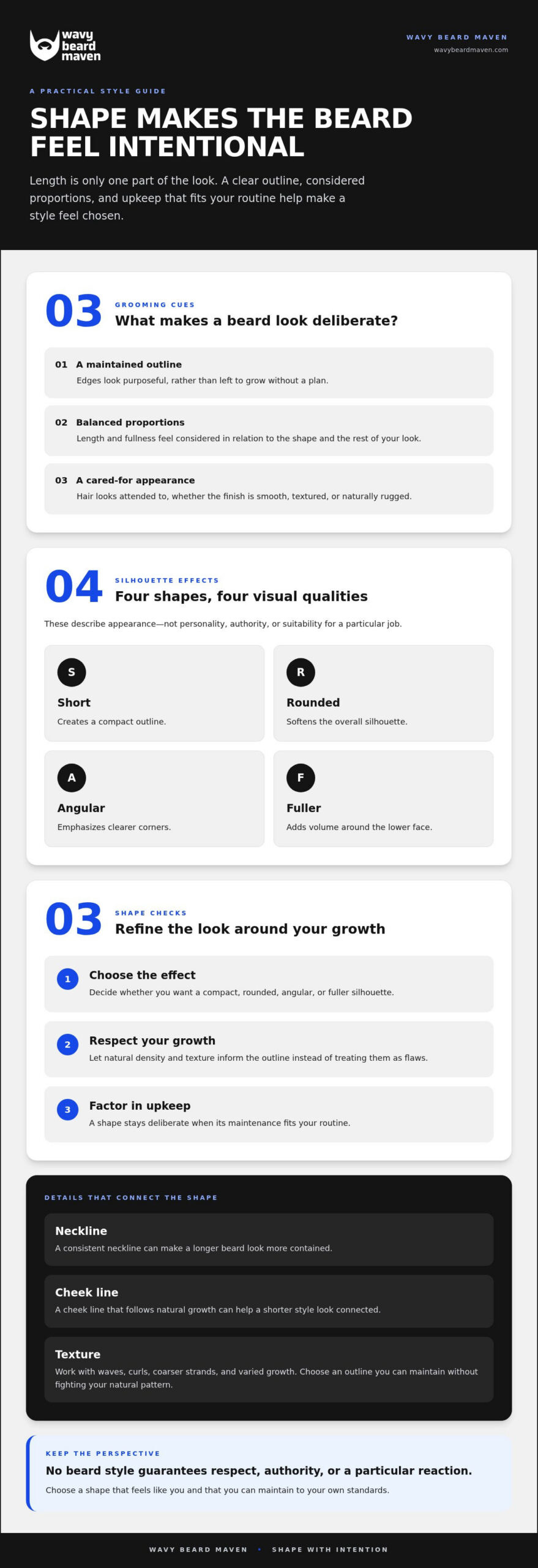
- A maintained outline: Edges look purposeful rather than left to grow without a plan.
- Balanced proportions: The beard’s length and fullness feel considered in relation to its shape and the rest of your look.
- A cared-for appearance: Hair looks attended to, whether the finish is smooth, textured, or naturally rugged.
Rugged doesn’t have to mean neglected. A looser outline or uneven growth can be part of your look when it feels intentional. The distinction is whether the overall shape reflects your preference or simply appears accidental. Don’t judge your beard by whether its texture matches someone else’s. Start with what it naturally does, then refine the presentation in a way you can sustain.
How Shape, Proportion, and Grooming Create a Confident Beard Look
A beard’s presentation comes from more than how much hair you grow. Its outline sets the visual boundary, while proportion describes how its length and fullness relate to your face and overall look. Clean transitions, such as a deliberate blend from sideburns into the beard, can make the shape feel cohesive. These details don’t make one style universally better; they help your chosen style read as a choice.
Proportion gives a beard its shape, and steady upkeep helps that shape look intentional. Use this as a practical guide, not a rulebook. The beard styles that command respect for you are the ones you can wear with confidence and maintain to your own standards.
What beard shape can communicate without defining you
A short beard creates a compact outline, while a rounded shape softens the overall silhouette. An angular shape emphasizes clearer corners, and a fuller beard adds volume around the lower face. These are visual effects, not personality labels. None reliably signals authority, suitability for a particular job, or a specific kind of character.
Notice how the neckline and cheek line contribute to the shape. A consistent neckline can make a longer beard look more contained. A cheek line that follows your natural growth can help a shorter style look connected. Choose lines that support the silhouette you want instead of copying someone else’s exact boundaries.
Why condition and outline matter across beard lengths
Upkeep makes the shape legible at any length. With short stubble, an even-looking outline can make the close-cut appearance seem deliberate. On a boxed beard, defined edges reinforce its compact form. A full beard can keep its volume while a maintained perimeter helps it look shaped rather than directionless. The aim isn’t to erase individuality; it’s to make the overall presentation feel coherent.
Neatness doesn’t mean forcing every hair into a uniform pattern. Natural waves, curls, coarser strands, and varied growth are part of how your beard behaves. Work with that texture. If your beard grows unevenly across the cheeks, for example, a shape that follows its natural coverage may look more balanced than trying to create identical lines on both sides. Choose an outline you can maintain without fighting your growth.
Use these principles to assess a shape:
- Choose the effect: Decide whether you want a compact, rounded, angular, or fuller silhouette.
- Respect your growth: Let natural density and texture inform the outline instead of treating them as flaws.
- Factor in upkeep: A shape stays deliberate when its maintenance fits your routine.
Refining a wavy beard’s pattern can also help define its overall appearance. Explore beard wave training and grooming guidance for ideas to adapt to your texture and preferred look.
Short, Full, or Partial Beard: Which Style Fits Your Goal?
Start with how you want your beard to fit your everyday life. A shorter style keeps the outline close and contained; a full beard offers more length and room to show texture; a partial style creates a distinct look through selective coverage. None is automatically more confident or professional. Compare them by considering your growth pattern, comfort, upkeep preferences, and the impression you want to create.
Use this guide to weigh the trade-offs, not rank the options. Upkeep varies with your hair growth and chosen shape, so treat each commitment as a general consideration rather than a fixed schedule.
| Style family | Visual character | Upkeep commitment | Useful considerations |
|---|---|---|---|
| Stubble or short beard | Close, compact, and low-profile | Regular shaping helps preserve the outline and even-looking length. | Consider it if you prefer a closer feel or less visible length; short doesn’t mean maintenance-free. |
| Full beard | More length, volume, and room for natural texture | More growth can mean more areas to care for and shape. | Think about how you feel wearing the added fullness and whether you enjoy maintaining it. |
| Partial beard | Coverage focused around areas such as the chin or mustache | Defined edges help keep separate areas looking intentional. | Goatees and other partial styles offer distinct ways to express personal taste and work with your growth. |
When a short or stubble style may suit your routine
Choose stubble or a shorter beard if you like a close outline, value comfort, or want a style that feels straightforward to manage. These options suit people who prefer less length around the face, but they still benefit from deliberate shaping. Consider how often you’re willing to refresh the look so it continues to match the close, defined appearance you chose.
When a full or partial style better matches your expression
A fuller beard may appeal if you enjoy visible length and the way your natural texture contributes to the shape. A goatee or another partial style can suit a preference for focused coverage. Fuller growth can call for attention across more of the beard, but the routine depends on your shape and standards. No category is a lesser alternative.
Factor in your daily setting, too. Workplace expectations vary by employer, role, and environment, so there isn’t one beard length that’s universally professional. Consider any grooming norms that apply to you, then choose a style you can wear comfortably within them. The beard styles that command respect are the ones that align with your preferences and receive the care you’re prepared to give them.
If you’re drawn to fuller, wavy growth, beard wave training and care guidance can help you explore ways to work with your texture as you settle on a style.
How to Choose a Beard Style You Can Wear with Confidence
A good choice starts with what works for you, not a photo you feel pressured to copy. Make the decision in stages: identify the look you want, understand your growth, select a shape, then wear it in real life and adjust. This gives you a practical way to choose beard styles that command respect without chasing someone else’s version of confidence.
Start with your growth pattern, features, and daily life
Take stock of where your beard grows densely, where coverage is lighter, and whether hairs grow in different directions. Consider your face proportions and what feels comfortable, but don’t assume there’s one perfect match for a particular face. Be realistic about how much time and consistency you want to give grooming. A style should fit your everyday life, not just look appealing in a reference photo.
- Define the impression. Choose a few words for the look you want, such as close, full, rounded, or sharply outlined. Use them to narrow your options, not to predict how others will respond.
- Assess your growth. Note your coverage, natural direction, and texture. This helps you focus on shapes that work with the beard you have.
- Choose a shape. Pick a style family and outline that feel comfortable and realistic to maintain. Keep your routine in mind as you decide.
- Test the look. Try the shape without treating the first result as final. Notice how it feels during ordinary activities and alongside your usual dress.
- Reassess and refine. After wearing it for a while, decide what you like, what feels inconvenient, and what you’d change. Adjust the shape to suit your preferences.
Turn a style reference into a realistic personal choice
Save a few references that share something relevant with your beard, such as a similar length, shape, or texture. Identify the features you want to adapt instead of expecting an identical result. Density, growth direction, and texture vary from person to person. Use a reference as a starting point for your own choices, not a promise of how your beard will look.
Before settling on a style, run through this quick comparison:
- Comfort: Does the length or outline feel good in your day-to-day routine?
- Upkeep: Are you willing to maintain the shape consistently?
- Texture: Does the style work with your natural pattern?
- Personal preference: Would you choose this look even without someone else’s approval?
For a wave pattern, use focused instruction to guide your approach. The complete beard-wave training guide covers training and care for readers pursuing wave definition. Keep your choice flexible: wear the style through your regular routine, then refine it as you learn what suits you. Explore beard-wave training and grooming guidance as you plan your next step.
Build a Signature Beard Look with Consistent Care
A chosen shape becomes part of your signature through the care that follows the first trim. Consistency doesn’t require a complicated schedule or making every hair behave the same way. It means noticing what your beard needs, keeping its shape in view, and choosing habits you can realistically repeat. That practice helps your style feel like part of your everyday self, not a one-time makeover.
Keep the style intentional with a manageable care rhythm
Build grooming around what you notice rather than a fixed routine that may not suit your beard. Check whether the outline still reflects the shape you chose, whether your beard feels comfortable, and whether its texture needs attention. Keep the steps simple enough to repeat, then adjust them as your beard grows or your preferences change.
Product categories can support different grooming steps, but they’re optional. A beard brush may suit a routine focused on brushing and wave definition; explore the beard brush wave guide for focused guidance. Beard oil, butter, or balm may also be part of your grooming choices. If you’re exploring oil for wave care, the beard oil guide for waves offers more information about that step. Let your needs and preferences guide what you include.
A simple check-in can keep your routine grounded:
- Look at the shape: Does the outline still match the style you want to wear?
- Notice the feel: Is your beard comfortable through your usual day?
- Review the effort: Are your care steps manageable enough to keep doing?
- Adjust with purpose: Change one part of the routine or shape when it no longer suits you.
Make confidence a practice, not a promise
Self-respect shows in the intention you bring to your choices. Pick a style that feels authentic, then care for it in a way that fits your life. That practice can support confidence in your own presentation, but it can’t guarantee how other people will respond. Keep refining your look for yourself, not to meet a universal standard or chase a promised reaction.
Consistency is the craft: a sustainable routine, thoughtful adjustments, and a style that feels like yours. For guidance as you refine wave definition and choose care steps, Explore Wavy Beard Maven’s beard-wave guides and grooming products.
Make Your Next Grooming Choice Your Own
Your next step doesn’t have to be a full style change. Choose one adjustment you’re curious about, then see how it fits your real routine. You might refine your outline, work with your natural wave pattern, or settle on care steps that are easy to repeat. Small, deliberate choices help make beard styles that command respect feel genuinely yours.
Keep learning as your beard grows and your preferences evolve. Wavy Beard Maven offers educational resources for growing and maintaining wavy beard styles, along with a free 7-Day Beard Wave Starter Routine™ Checklist to help you build consistency. Beard oils, butters, brushes, balms, and wraps are also available to support different grooming steps.
Let your standards guide the process. You don’t need to chase a trend or perfect someone else’s look; keep refining a style that feels authentic, one manageable habit at a time. Explore Wavy Beard Maven’s beard-wave guides and grooming products to find guidance and grooming essentials for your routine.
Frequently Asked Questions
Is there one beard style that everyone considers respectable?
No. Preferences differ between people and settings, so no single beard shape or length earns universal approval. Beard styles that command respect are a personal choice, not a formula. A style that feels right in one social setting may not match your workplace’s grooming expectations. Choose a look that feels authentic and manageable, and let your conduct and communication speak alongside your appearance.
Can a grey beard look confident and well-groomed?
Yes, grey or silver facial hair can look intentional in a short, full, or shaped style. Colour doesn’t determine whether a beard appears cared for. If you’re browsing photos of grey beards, focus on details you can adapt, such as the general outline or length, rather than expecting the same result. Your own texture, growth pattern, and preferred level of upkeep will shape how that idea works for you.
Can I wear a beard in a professional workplace?
Often, but expectations vary by employer, role, and work environment. If you’re unsure, check your workplace’s stated grooming policy rather than relying on general assumptions about what looks professional. A customer-facing role may have different expectations from a workplace with a more relaxed dress culture. A style that fits the relevant guidelines and your personal grooming standards can be part of how you present yourself at work.
Can an uneven beard still look intentional?
Yes. Uneven coverage doesn’t rule out a deliberate style. If one cheek grows more sparsely than the other, you could choose a shorter shape that works with your coverage instead of trying to recreate a photo of denser growth. Let your beard’s natural pattern guide the design. A realistic reference can help you decide which features to adapt and which to leave behind.
Does a longer beard automatically command more respect?
No. More length doesn’t guarantee respect or make a beard look more intentional. Consider what the added length would mean in practice: how it feels during your day, how it works with your usual clothing, and whether you want to care for its shape as it grows. Someone who enjoys a close outline may feel more confident in a shorter beard. Choose for personal fit, not status.
Can beard oil help my beard look more cared for?
Beard oil is one product category you may choose to include in your grooming routine, but it can’t guarantee a particular style, texture, or reaction from others. Consider whether it suits your personal care preferences and follow the product directions. If you’re exploring oil as part of wave care, Wavy Beard Maven’s beard oil guide for waves offers more focused information.