November 19, 2026

A beard can look polished without feeling coated. The benefits of jojoba oil for beards include softer, smoother hair, a subtle shine, and easier manageability. It moisturizes facial hair without necessarily leaving the heavy feel some men want to avoid.
If your beard feels coarse, looks dull, or resists shaping, conditioning can make a noticeable difference to its texture and finish. Jojoba oil comes from the seeds of the jojoba plant and can be used on its own or as a base in beard-oil blends.
Learn what jojoba oil is, how it compares with other beard oils, and what it can and can’t do for beard growth. Then find out how consistent use can support softness, shine, and easier grooming, and how to apply it without overloading your beard.
Key Takeaways
- Understand how carrier oils condition both beard hair and the skin beneath it, and what makes jojoba different from coconut, argan, and grapeseed oils.
- Separate beard conditioning from beard growth: jojoba’s liquid-wax makeup may support healthier-feeling hair, but it doesn’t create new follicles.
- Learn why jojoba’s lightweight, non-comedogenic feel may suit skin prone to clogged pores, and what soothing support it can offer.
- Build a consistent conditioning routine that helps beard hair feel softer, catch light, and sit more neatly over time.
How Does Jojoba Oil Compare to Other Beard Oils?
Carrier oils condition beard hair and the skin beneath it, but they differ in feel and behavior. Jojoba offers lightweight conditioning, while coconut, argan, and grapeseed oils are alternatives.
Moisturizing Beard Hair and Skin
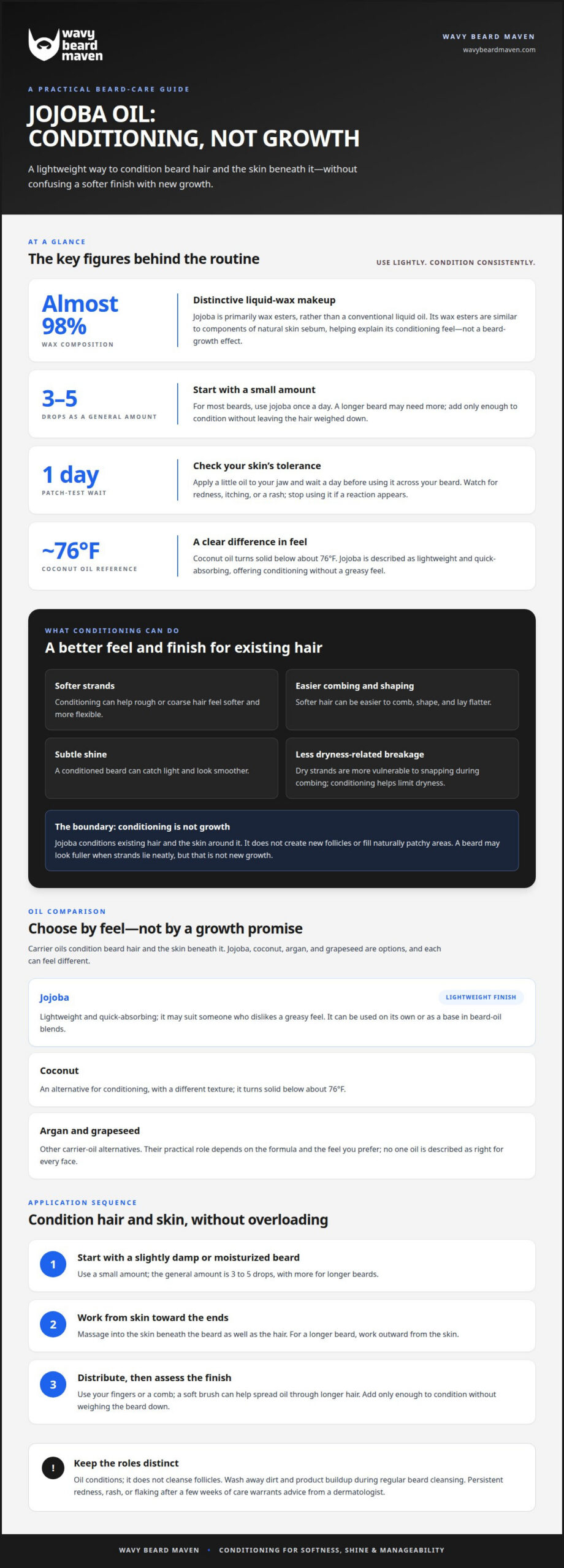
A carrier oil coats beard strands and helps limit moisture loss, while spreading across the skin beneath them. That conditioning matters when dry skin or rough hair makes a beard uncomfortable. Jojoba is lightweight and quick-absorbing, so it can moisturize without a greasy feel. Coconut oil behaves differently: it turns solid below about 76°F.
For most beards, use jojoba oil once a day; 3 to 5 drops is a general amount, with more for longer beards. Pure jojoba may be clear or slightly golden, and 100% pure oil has practically no odor. Test a new oil on your jaw and wait a day before full use.
Softness and Easier Combing
Jojoba oil conditions beard hair, helping soften strands so they’re easier to comb and shape. That can make a difference when tangles catch on your comb or your beard feels rough after washing. Apply a small amount to a slightly damp or moisturized beard, working it from the skin toward the ends.
Coconut, argan, and grapeseed oils are alternatives to jojoba for beard conditioning, and each can feel different. Consider whether you prefer jojoba’s lighter finish or another oil’s texture. With regular conditioning, your beard can feel softer and more manageable.
Conditioning Coarse Beard Hair
Coarse or wiry hair can feel less flexible and harder to shape. Jojoba oil conditions those strands, helping them feel softer and lie flatter. Apply a small amount to a slightly damp or moisturized beard, then distribute it along the hair with your fingers or a comb. This supports a smoother finish without changing your hair’s natural texture.
For a longer beard, work from the skin outward so both the beard and the skin beneath it receive conditioning. A soft brush can help distribute oil through the hair. Use only enough to condition the beard without leaving it weighed down.
Hair Shaft Strength and Follicle Cleansing
Conditioning beard hair can help reduce dryness-related breakage, since dry strands are more vulnerable to snapping during combing. Jojoba conditions the hair shaft; it doesn’t create new follicles or grow hair in areas without growth.
Oil conditions the beard but doesn’t cleanse follicles. Massage jojoba into the skin to moisturize it, then wash away dirt and product buildup during your regular beard cleansing. Conditioning can help hair feel stronger, but cleansing and growth are separate parts of beard care.
Does jojoba oil help a beard grow?
Jojoba oil is almost 98% wax, primarily wax esters, rather than a conventional liquid oil. That composition gives it a distinctive feel in a beard-care routine. Its wax esters are similar to components of natural skin sebum, the oily substance that helps condition skin and hair. This similarity supports moisturization, but it doesn’t make jojoba a beard-growth treatment.
Applied to the skin beneath your beard, jojoba helps moisturize without leaving a heavy layer of oil. Conditioning dry skin can ease tightness and help avoid a greasy feeling from excess oil on the surface. Use a small amount and massage it into the skin, rather than coating only the visible hair. Comfortable skin is part of a sound grooming routine.
Jojoba doesn’t create new follicles or fill naturally patchy areas. It conditions existing hair and the skin around it, so keep those goals separate. A softer beard may look fuller when its strands lie neatly, but that isn’t new growth. Don’t rely on oil alone to address sudden changes in beard density or persistent patchiness.
Dryness can contribute to itching and flakes, and jojoba’s moisturizing action may help ease that discomfort. For a shorter beard, massage the oil into both the skin and hair so the skin receives conditioning too. Persistent redness, rash, or flaking after a few weeks of care calls for advice from a dermatologist. Oil can support daily comfort, but it doesn’t replace care for an ongoing skin condition.
Use jojoba for conditioning, not follicle stimulation. For a routine built around beard oils, explore beard oil conditioning as one way to keep skin and hair moisturized.
Jojoba’s non-comedogenic and soothing properties
Jojoba is described as lightweight and non-comedogenic, meaning it won’t clog pores. That can matter under a beard, where oil reaches the skin as well as the hair. Its moisturizing and antibacterial properties may also help with beard acne, while conditioning can ease dryness and discomfort. Skin responses vary, so introduce any new oil with care.
To check your skin’s tolerance, apply a little jojoba oil to your jaw and wait a day before using it across your beard. Watch for redness, itching, or a rash, since facial skin can react to a new ingredient. If a reaction appears, stop using the oil. Persistent redness, rash, or flaking after a few weeks of care warrants advice from a dermatologist.
Carrier oils form the base of beard-oil blends. They spread over facial hair and skin, conditioning both and carrying the blend’s other ingredients. Jojoba is one option; argan oil is another. Their practical role depends on the formula and the feel you want, rather than any claim that one oil suits every face.
Argan oil is often discussed for its nutrients and protective qualities, but the practical comparison here is its role as a carrier oil. A blend can use a carrier to spread conditioning ingredients through beard hair and onto the skin. Jojoba’s lightweight feel may suit someone who dislikes a greasy finish, while another formula may feel different. Apply sparingly and assess the finish before adding more.
Jojoba’s appeal for soothing the skin comes chiefly from its moisturizing effect and lightweight feel, not from treating every skin concern. It may help ease dryness-related discomfort, but persistent acne or irritation needs more than beard oil. Keep your routine simple: patch-test a new oil, use a small amount, and stop if your skin reacts.
Benefits for beard softness, shine, and manageability
Jojoba oil can soften beard hair, add a little shine, and help strands lie flatter. This comes from conditioning, not from changing your beard’s natural growth pattern. For example, a coarse beard that feels rough after washing may feel smoother when oil is distributed through the hair and onto the skin beneath it. Consistency matters more than applying a heavy coating.
For an even finish, apply jojoba to a slightly damp or moisturized beard. Start near the skin, then smooth the remaining oil toward the ends, where dryness can make strands feel stiff. This sequence conditions the skin and lengths without leaving the surface overly greasy. A soft brush can help distribute oil through denser areas and settle stray hairs.
Conditioned strands can move more freely against one another, making a beard easier to comb and shape. Work through tangles gently rather than pulling. If a comb moves more smoothly, your hair may be better conditioned. Jojoba may also help reduce breakage linked to dryness, supporting a neater-looking beard without creating new growth.
Shine should look subtle, not wet or slick. If your beard catches too much light or feels coated, use less oil next time and spread it more evenly. Very dry beard hair and skin can receive a longer conditioning treatment: massage in a few drops, leave the oil for 30 minutes or overnight, then wash it out. Adjust the approach to your beard’s texture.
Give a consistent routine time to work. A visible difference in softness and shine may appear within 2 to 3 weeks, though the finish depends on your beard’s condition and how evenly you apply the oil. Check the texture after combing, not just the shine in a mirror. To refine your beard-care routine, focus on steady conditioning and a light, even finish.
Wavy Beard Maven
Wavy Beard Maven helps you turn beard-care knowledge into a consistent routine for maintaining softness, shine, and shape. Its educational resources support men learning to train, grow, and care for wavy beards, while beard oils, butters, brushes, and balms can fit different conditioning and styling needs. Consider these resources when you want practical guidance alongside products for everyday beard maintenance. Choose a routine based on your beard’s texture and how your skin responds, then keep the application light and consistent. Jojoba oil can support conditioning, but it isn’t a treatment for patchiness or ongoing skin conditions. For questions about your beard-care routine, contact Wavy Beard Maven.
Make Your Beard Routine Work for You
Good grooming comes from attention, not a crowded shelf. Treat jojoba as one part of your routine and notice how your beard responds as you adjust your application. A softer feel, easier shaping, or a more comfortable finish can help you decide whether the oil suits your regular care. The benefits of jojoba oil for beards matter most when they match your goals and routine.
Keep your approach simple: apply carefully, give your beard time to settle, and change one part of your routine at a time. That makes it easier to identify what helps and what leaves your hair or skin feeling less comfortable. If you want support shaping a consistent routine for your beard, contact Wavy Beard Maven for advice. Stay patient, refine your technique, and take pride in the care you put into your beard.
Frequently Asked Questions
What is Jojoba Oil?
Jojoba oil is a golden liquid made from the seeds of the jojoba plant, which grows in Mexico. Its composition is mostly liquid wax rather than typical oil. It may look clear or slightly golden, and pure jojoba has practically no odor. In beard care, you can apply it alone or use it as the base oil in a blend.
Can I mix in essential oils?
Jojoba can serve as the base oil in beard-oil blends, including blends with essential oils. For a straightforward routine, choose a beard oil with ingredients listed on the product and follow its directions. If you’re considering a homemade blend, don’t guess at proportions or assume every essential oil is suitable for facial use. Keep the routine simple if you’re unsure.
How do I know if I’m using enough or too much jojoba on my beard?
Your beard should feel conditioned, not slick or greasy. Start with a small amount, spread it through the hair and skin, then assess the finish by touch and in natural light. If strands still feel dry, adjust gradually with the next application. If your beard looks wet or feels coated, use less next time and distribute it more evenly.
What are the benefits of jojoba oil for beard hair and skin?
Jojoba can condition beard hair and moisturize the skin beneath it, supporting a softer feel, a little shine, and easier shaping. It may also help soothe dryness-related itch and flaky skin. For example, massage it into the skin beneath a rough or uncomfortable beard instead of smoothing it only over the visible hair. It’s a grooming aid, not a treatment for persistent skin problems.
Does jojoba oil help beard growth or prevent hair loss?
Jojoba oil conditions existing beard hair and skin, but it doesn’t create new follicles or fill naturally patchy areas. Less dryness-related breakage can help existing strands stay in better condition, but that isn’t the same as preventing every cause of hair loss. If beard density changes suddenly or patchiness concerns you, treat that as a separate issue from routine oil conditioning.
How does jojoba oil compare with argan, coconut, and beard oils?
Jojoba, argan, and coconut oils are carrier-oil options, each with a different feel in a beard routine. Coconut oil can turn solid below about 76°F, while jojoba is described as lightweight and quick-absorbing. Beard oil is a product category, not one specific ingredient: formulas may use jojoba alone or combine it with other carrier oils.