October 26, 2026

A lightweight beard oil for fine hair should be chosen by how it feels in your beard, not by scent alone. Start with 2-3 drops, then adjust to your beard’s length and density if it needs more. The right amount should soften and smooth without leaving your hair feeling overly coated.
And yes, scent matters. You’ll notice it throughout your grooming routine, but it shouldn’t distract from the oil’s feel or your beard’s needs. This guide will help you compare lightweight oils by ingredients and carrier oils, then match your choice to your beard length and grooming goals. You’ll also learn how to apply oil with control, so your routine supports a neat, comfortable finish without weighing fine hair down.
Key Takeaways
- Compare carrier oils and the overall formula to find a finish that feels comfortable on fine beard hair.
- Choose an oil based on your beard’s length, density, and main grooming need rather than scent alone.
- Use a light hand and spread the oil through your beard to soften roughness and help settle flyaways.
- Assess beard oils by their ingredients, feel, and suitability for your routine to narrow down your options in the US.
Beard oil for softening and taming flyaways
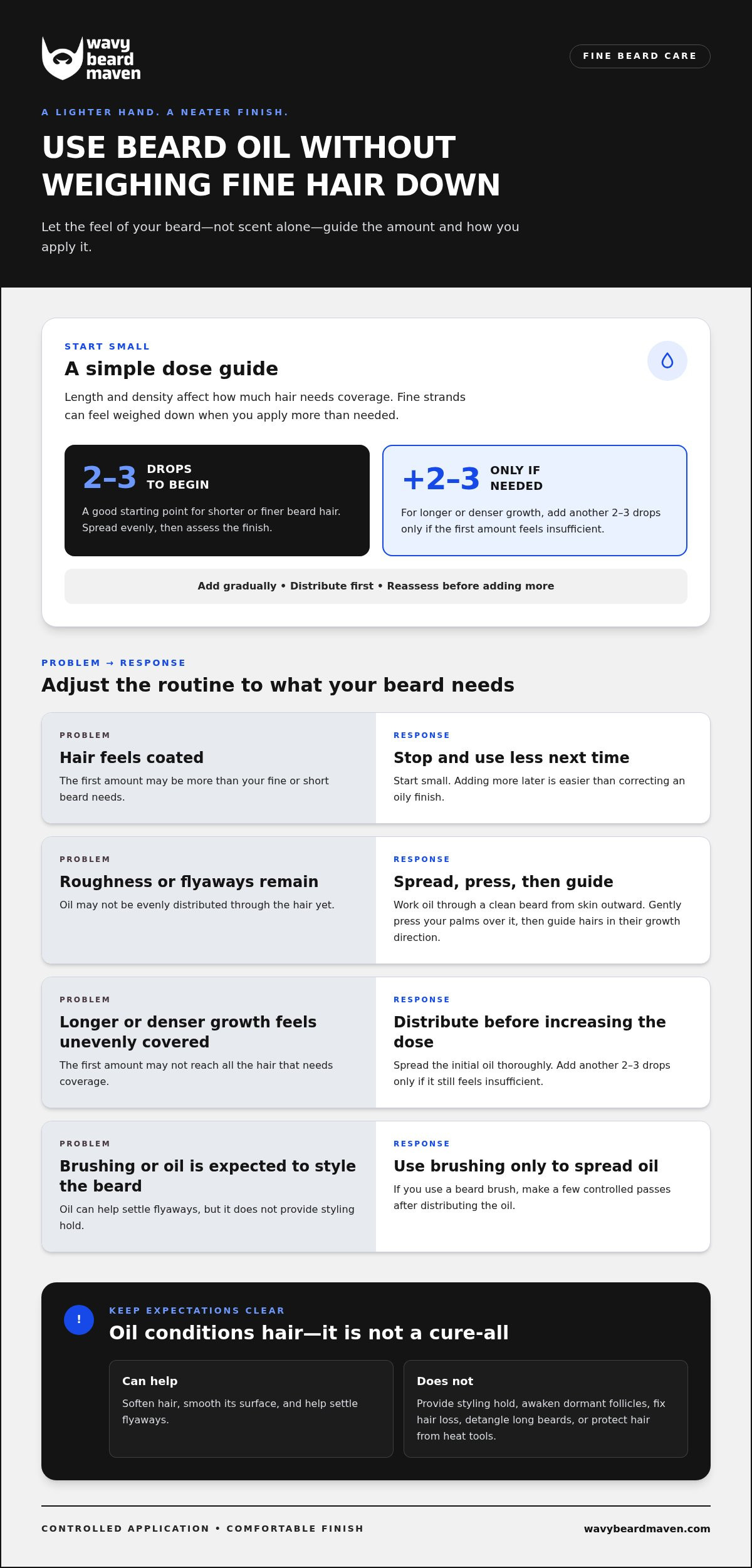
For a softer beard with fewer flyaways, use oil to condition the hair and smooth its surface. Begin with 2-3 drops, then spread them between your palms. Work the oil through a clean beard, moving from the skin outward and paying attention to rough or stray hairs. A lightweight beard oil for fine hair should feel manageable, not leave strands looking heavily coated. Start small: adding more is easier than correcting an oily finish.
Distribute the oil evenly before judging the result. Gently press your palms over your beard, then guide the hairs in their growth direction with your fingers. If you use a beard brush, make a few controlled passes to spread the oil through the hair. This can help settle flyaways, but oil does not provide styling hold. It is not a growth serum, either, and it will not awaken dormant follicles or fix hair loss.
| Option | Best fit | How to use |
|---|---|---|
| Initial 2-3 drops | Shorter or finer beard hair | Spread evenly, then assess the finish |
| Another 2-3 drops | Longer or denser beard hair | Add only if the first amount feels insufficient |
| Oil with brushing | Flyaways across the beard | Brush gently after distributing the oil |
Use the table as a starting point, not a fixed dose for every beard. Length and density affect how much hair needs coverage; fine strands can feel weighed down if you apply more than needed. If the beard still feels rough after the first application, add another 2-3 drops and distribute them before reassessing. If it already feels coated, stop there and use less next time.
Keep the goal clear: soften hair and tame loose strands rather than force a shape. For long beards, oil is not designed to detangle hair or protect it from heat tools. Choose an amount that suits your beard’s coverage, then let its feel guide your next application.
Beard oil ingredients and carrier oils
Compare carrier oils first, then consider scent and finish. Lightweight formulas often use oils such as jojoba, argan, or grapeseed, each of which can feel different on your beard. Ingredient order shows which oils feature prominently, while added fragrance affects the scent you notice throughout the day.
How do lightweight beard oils compare by ingredients, scent, and finish? Jojoba, argan, and grapeseed are common carrier-oil examples, but the blend determines the feel. Unscented options avoid added fragrance, while scented formulas can range from fresh citrus notes to warmer, woodier profiles.
For fine hair, assess the finish with a small amount before adding a formula to your routine. A lightweight beard oil for fine hair should spread easily without leaving a heavy-looking coating. If the label lists several oils, note the first few ingredients and compare how the product feels after application. Scent is personal: a strong aroma may linger, while a subtle one can be easier to pair with other grooming products.
How much do lightweight beard oils cost in the US? Prices vary with bottle size, ingredient blend, and added fragrance, so compare products by those details rather than scent alone. Choose a formula that fits your routine and the finish you prefer.
Is beard oil suitable for sensitive or acne-prone skin? It can be, but fragrance and individual ingredients may irritate some skin or feel too rich. Review the ingredient label, apply a small amount to a discreet area first, and stop using it if irritation appears.
- Carrier oils: Compare ingredients such as jojoba, argan, and grapeseed, then judge the finish on your beard.
- Fragrance: Select an unscented or scented formula based on how much aroma you want in your routine.
- Skin comfort: Read the full label and test a small amount before wider application.
Use ingredient order, scent strength, and finish as your comparison checklist. This keeps your choice focused on how the formula works for your beard and skin.
Beard oils for different beard lengths and needs
Match the formula and amount to your beard’s length, density, and hair texture. Fine or short beards need a controlled application, while longer growth may need more coverage.
Lightweight Oils for Fine Hair
For fine hair, compare lightweight formulas by how easily they spread and how much residue they leave. In the US, use the label and your beard’s finish as practical comparison points, rather than assuming every oil feels alike. A fine, short beard needs less coverage than a dense, longer beard, so prioritize control over a richer feel.
Oil Use for Fine Beards
How much beard oil should you use for a fine or short beard? Start with 2-3 drops, the starting amount recommended in the GQ review. Distribute the oil through the beard, then assess the finish; if that amount feels excessive, use less in your next application. This measured approach differs from adding oil automatically based on habit.
Length and density change how far an application reaches. A short beard has less hair to coat, while a longer or denser beard can need another 2-3 drops if the first amount proves insufficient. Add gradually and spread each application before deciding whether more coverage is needed.
Use this sequence to keep the routine consistent:
- Begin with 2-3 drops in your palm.
- Rub your palms together, then work oil through the beard.
- Check whether the hair feels coated or still needs coverage.
- Add another 2-3 drops only if the initial amount is insufficient.
For fine hair, pay attention to the finish after each step. If your beard looks or feels too coated, start with less next time. If longer growth remains unevenly covered, distribute the oil more thoroughly before adding more. Let length, density, and the result guide your choice.
What are the best lightweight beard oils for fine hair in the US?
The best choice is a formula that spreads easily through fine strands and leaves the finish you prefer. Compare the ingredient list, scent, and feel on your own beard instead of choosing by packaging or claims alone. A product described as lightweight still needs to suit your hair and skin.
Use this comparison checklist when evaluating options available in the US:
- Ingredient list: Look at the carrier oils and note their order. Compare formulas rather than assuming one familiar ingredient guarantees the same finish.
- Scent: Choose unscented or scented based on whether you want fragrance in your daily routine. For example, a citrus scent may feel different from a woodier aroma.
- Finish: Apply a small amount and check whether your beard feels soft, coated, or greasy. Fine strands can show excess product quickly.
- Application control: Prefer a bottle that lets you dispense a modest amount. Careful dosing helps prevent overapplication on a shorter or finer beard.
Compare formulas consistently. Apply each one to a clean beard in a similar amount, then assess the feel after spreading it through the hair. Note which option leaves the least residue while meeting your grooming need, such as softening dry-feeling strands. This helps you distinguish a pleasant scent from a genuinely suitable finish.
Skip products that promise results beyond beard oil’s role. Beard oil can condition hair, but it is not a growth serum, a detangler for long hair, or a styling product that holds a shape. Choose according to what you want it to do, then let the ingredient label and your experience guide your decision.
Ready to put your selection into practice? Explore beard oil options and choose a formula that fits your beard’s texture and routine.
Wavy Beard Maven: Beard Oils
Wavy Beard Maven offers beard oils for men refining a wavy beard routine. Turn to beard oil when you want to soften facial hair and support consistent grooming, choosing an amount that suits your beard’s length and feel.
Build the rest of your routine around your beard’s needs. A beard brush helps distribute product through the hair, while beard balm or beard butter can complement your grooming steps. Each has a different role, so focus on the finish and maintenance you’re aiming for.
Use the ingredient and application criteria in this guide to make a deliberate choice, then keep your routine steady and adjust based on how your beard feels. Visit Wavy Beard Maven to explore beard oils and continue shaping your grooming routine.
Build a Routine That Fits Your Beard
Make your next step a simple grooming experiment. Choose a lightweight beard oil for fine hair, use it consistently, and notice how your beard responds during your usual routine. Keep track of the finish you prefer, the scent you enjoy, and whether your beard feels comfortable. That personal benchmark will make future choices more intentional.
Shape the rest of your routine around your grooming goals. Beard oils, beard butters, and a beard brush can each help maintain your beard, depending on the feel and finish you want. Focus on steady care rather than changing several products or habits at once. Small, deliberate adjustments help you learn what works for your style.
If you’d like guidance as you choose your next step, contact Wavy Beard Maven for help. Keep refining your routine with patience and pride; your beard care is a craft you can make your own.
Frequently Asked Questions
Does Scent Matter for Beard Oil?
Yes, scent matters because it stays close to your face throughout the day. Choose a fragrance you enjoy and consider how it might combine with cologne or other scented grooming products. For example, an unscented oil can keep your routine simpler if you already wear a noticeable fragrance. Ingredients and the finished feel should still guide your choice, not aroma alone.
How do you apply beard oil?
Spread beard oil across your palms, then work it through the beard from the skin outward. Use your fingertips to reach the skin beneath thicker areas, then smooth the remaining oil along the hair. Apply product before brushing, and avoid brushing completely dry, brittle hair. Your beard should be slightly damp or moisturized before brushing.
What ingredients make beard oil lightweight and non-greasy?
No single ingredient guarantees a lightweight, non-greasy finish; the full blend and the amount applied both matter. Check the ingredient list, then judge how the oil spreads and feels in your beard. For fine hair, a lightweight beard oil for fine hair should distribute without leaving strands visibly slick. Compare formulas by applying the same small amount and assessing the finish.
Which carrier oils are best for fine beard hair?
The best carrier oil is one that suits your beard’s texture and leaves a finish you like. Jojoba, argan, and grapeseed are examples to compare, but a blend’s overall feel matters more than one name on the label. Test one formula at a time and keep your grooming routine consistent so you can tell which option feels most comfortable.
How should you apply beard oil to avoid weighing down fine hair?
Use a restrained amount and distribute it thoroughly instead of concentrating oil in one spot. Work it through the beard in sections, starting near the skin and smoothing toward the ends. Check the finish before adding more. If your hair looks slick or feels coated, use less next time and avoid layering another oil-based product over it.
What ingredients should you avoid in beard oil if you have fine hair?
There isn’t one universal ingredient list that every fine-haired beard should avoid. Focus on formulas that leave your hair feeling coated, and avoid ingredients you already know your skin doesn’t tolerate. Review the full label, especially fragrance ingredients if scented grooming products bother your skin. Testing a small area can help you assess a new formula before applying it throughout your beard.