October 27, 2026
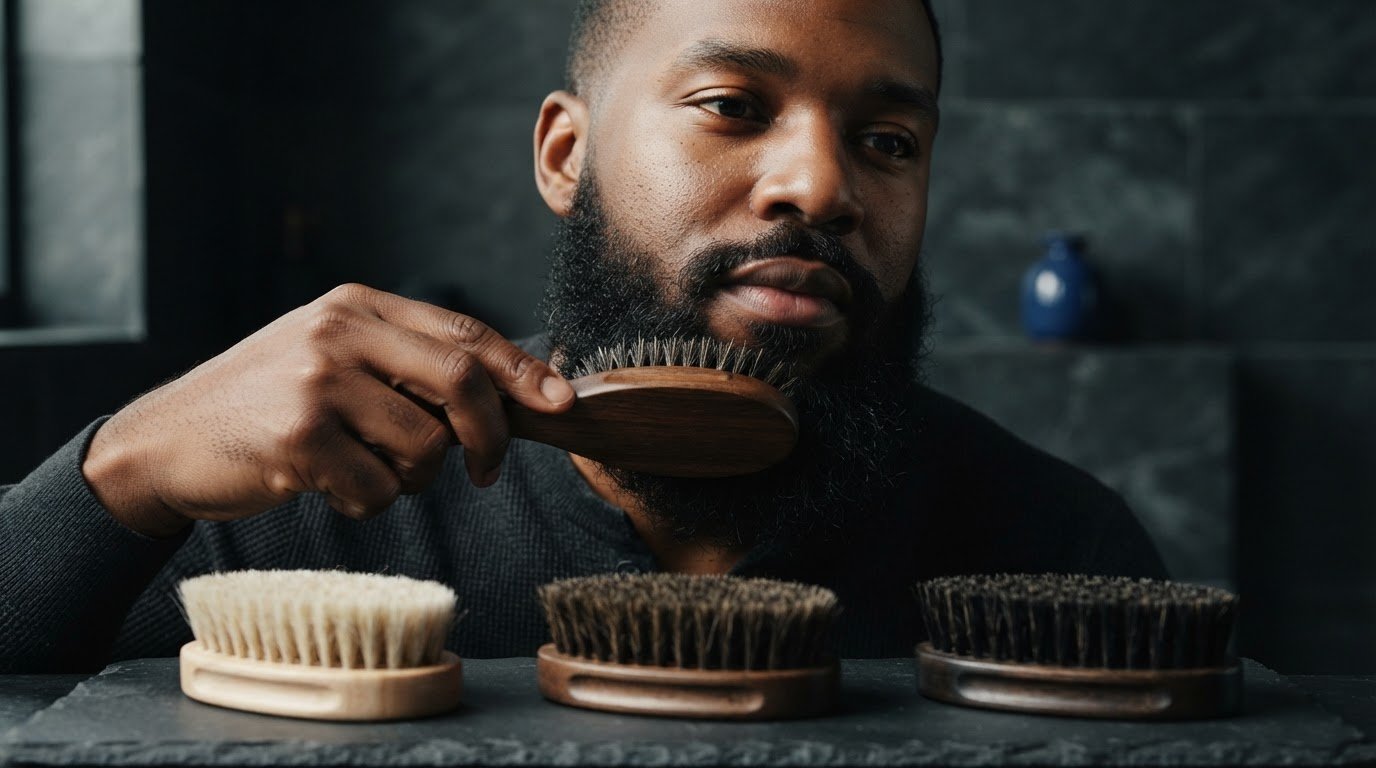
The stiffest brush isn’t automatically the best choice. To learn how to choose the right beard brush stiffness, match the bristles to your beard: medium stiffness is a practical starting point, while longer or denser growth often needs firmer bristles to reach through the hair. Choose a softer feel for a short beard or when your skin is easily irritated, and avoid bristles so soft they simply flop over the hair or so firm they feel sharp.
A beard brush is a handle fitted with natural or synthetic bristles, but the right one does more than smooth the surface. It can help loosen dirt and flakes, detangle whiskers, and spread grooming products through your beard. If you’ve found that one brush glides over your hair while another feels too harsh, length and density are useful guides, not just personal preference. This article breaks down how stiffness affects comfort and control, compares brush choices for short, medium, long, and thick beards, and ends with a simple decision guide to help you build a routine that works for your growth.
Key Takeaways
- Start with medium-stiff bristles for a balance of skin access and comfort, then adjust based on how your beard responds.
- Match brush design to growth: compact palm brushes suit shorter beards, while club or rowed brushes can help manage fuller, longer growth.
- Use gentle strokes with the grain to loosen tangles and debris, then brush downward to guide whiskers into a more orderly shape.
- Choose enough backbone to reach through dense hair without pressing hard; overly firm bristles can feel harsh on the skin beneath your beard.
What Is a Beard Brush?
A beard brush has a handle and natural or synthetic bristles, available in soft, medium, and firm feels. Brush prices vary, but price alone doesn’t reveal stiffness; assess the bristles and how they feel against your beard.
Soft Bristles
Soft bristles bend easily, making them a gentler option for fine, thin beard hair or sensitive skin. Compared with firmer options, they’re less likely to feel scratchy, but may flop over thicker hair instead of reaching through it. Use light strokes and notice whether the bristles contact the skin or only skim the surface.
Firm Bristles
Firmer bristles provide more resistance, which helps reach through dense growth. Hard brushes are for advanced training and must be used carefully, so beginners should not start with one. Apply product before brushing, use light pressure, and stop if the brush pulls or feels sharp against your skin.
Natural Boar Bristles
Natural boar bristles typically have medium stiffness, balancing beard cleaning with a less irritating feel. They can help lift dirt and flakes, and a slanted bristle layout gives you a clear direction for brushing: follow the slant gently across the beard. A wooden handle is another construction choice; judge it separately from bristle firmness.
Synthetic Bristles
Synthetic bristles can vary in stiffness, so the material alone does not tell you whether a brush suits your beard. For wave training, choose a medium-to-firm boar-bristle brush. Whatever brush you use, apply product first and avoid brushing completely dry, brittle hair.
| Option | Stiffness | Typical tradeoff |
|---|---|---|
| Soft bristles | Gentle | Comfort, less reach through dense hair |
| Boar bristles | Usually medium | Balanced cleaning and skin feel |
| Firm bristles | Strong resistance | More reach, greater risk of harsh feel |
Choose the softest bristles that still reach through your beard without scraping your skin.
Choosing brush stiffness for short, medium, long, or thick beards
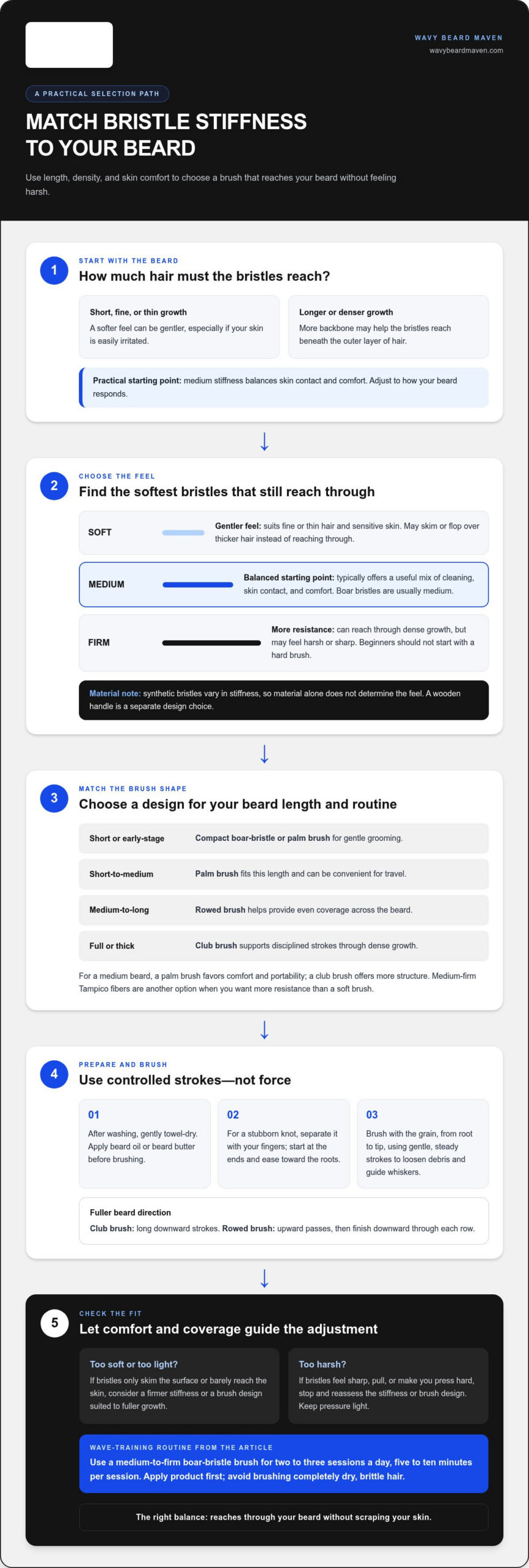
Match stiffness to the amount of hair the bristles must reach, then choose a brush shape that suits your routine. Beard length and density work together: a short beard may need gentle contact, while dense growth needs enough backbone to reach beneath the surface.
Medium-Firm Tampico Fibers
Tampico plant fibers offer a medium-firm option for people seeking more resistance than a soft brush provides. Their firmness can suit growth that needs more contact than a short beard, while remaining less rigid than a very firm brush. Compare how the fibers move through your beard, and use light pressure first to assess comfort and coverage.
Medium-Stiffness Brushes
A medium-stiffness brush is a useful starting point across different beard lengths because it balances skin contact with control. For short or early-stage growth, use gentle strokes; for a medium beard, decide whether comfort or structure matters more. Longer or thicker beards may need firmer bristles if a medium brush skims over the hair.
Choose the brush shape to match the job:
- Short or early-stage beard: Try a compact boar-bristle brush or palm brush for gentle grooming.
- Short-to-medium beard: A palm brush fits the length and can be convenient for travel.
- Medium-to-long beard: A rowed brush helps provide even coverage across the beard.
- Full or thick beard: A club brush supports disciplined strokes through dense growth.
For a medium beard, choose a palm brush when comfort and portability lead; pick a club brush when you want more structure. With long or full growth, use steady strokes and let bristle reach guide your choice. If you need to press hard or the bristles barely touch the skin, adjust the stiffness or brush design. For travel, keep your routine simple with beard grooming guidance that helps you stay consistent.
Beard detangling, dirt removal, and hair control
A beard brush works best as part of a steady grooming routine, not as a tool for forcing knots apart. Bristles pass through whiskers to loosen trapped dirt and flakes, while their contact helps distribute beard oil or balm. For mixed needs, a brush combining boar bristles and nylon fibers can clean while helping style and detangle. Use gentle pressure, especially where knots resist.
Prepare the beard before brushing. After washing, gently towel-dry it, then apply beard oil or beard butter before guiding the bristles through the hair. Start at the ends of a tangled section and work toward the roots, easing through snags rather than tugging from the skin outward. Brush with the grain, from root to tip, to reduce pulling and keep strokes controlled.
- To loosen tangles: Separate a stubborn knot with your fingers, then pass the brush through that small section.
- To clear surface debris: Use steady strokes across the beard, allowing the bristles to reach the hair beneath the outer layer.
- To polish shorter growth: Move a palm brush in gentle circles, then finish with strokes that follow the grain.
For a fuller beard, direction matters. With a club brush, use long downward strokes to align whiskers and sharpen the jawline’s appearance. With a rowed brush, begin with upward passes, then finish downward through each row for a more even lay. Pairing downward brushing with a styling product can help hair look more orderly over time.
Use light, consistent strokes instead of scrubbing or forcing the brush through tangles. For wave training, brush two to three times a day for five to ten minutes per session. Apply product before brushing, and avoid brushing completely dry, brittle hair.
Choosing a brush by beard length and density
Length tells you how far bristles must travel; density tells you how much hair they must pass through. A practical way to decide how to choose the right beard brush stiffness is to match the brush’s reach to your growth, then assess comfort.
Use this decision guide to balance coverage, comfort, and control:
| Beard growth | Brush choice | Why it fits |
|---|---|---|
| Short or early-stage | Palm or compact boar-bristle brush | Gentle grooming and exfoliation without excessive reach. |
| Short-to-medium | Palm brush | Portable shape and easy handling for shorter coverage. |
| Medium | Palm or club brush | Choose comfort with a palm brush, or structure with a club brush. |
| Medium-to-long | Rowed brush | Rows help spread strokes evenly across more length. |
| Full, thick, or long | Club or rowed brush | These shapes help manage density, distribute oil, and train growth patterns. |
For a short beard, start with medium-stiff bristles and light strokes. They can reach the skin to help remove flakes without irritating it. If the beard is sparse or your skin feels sensitive, reduce pressure rather than forcing contact.
Density changes the choice. A thick beard can hide the skin beneath its outer layer, so firmer bristles may help reach through the hair. Test the brush across one area: if it only skims the surface, consider more stiffness or a rowed design. If it pulls or feels harsh, ease pressure or choose a softer brush.
If you’re still deciding how to choose the right beard brush stiffness, check coverage first, then comfort. Long, dense growth may need a firm club or rowed brush; short, fine growth often calls for gentler contact. Choose a beard brush for your growth pattern and build your routine around controlled strokes.
Wavy Beard Maven: Beard Oils
Wavy Beard Maven offers Beard Oils for readers building a consistent beard-care routine. After choosing brush stiffness for your beard’s length and density, apply beard oil before brushing to help spread it through the hair. Use a small amount, work it across the beard, then brush gently with the grain. This pairs product application with the controlled strokes that help guide whiskers into place.
If your routine also calls for a brush or another layer of conditioning, Wavy Beard Maven offers a Beard Brush, Beard Butters, and Beard Balms. Choose based on the step you want to support, whether that’s distributing oil, softening the beard, or maintaining control as you groom. For beard-care guidance and products, visit Wavy Beard Maven.
Make Your Grooming Routine Work for You
Let your beard’s response guide the next adjustment. As your growth changes, pay attention to whether brushing feels controlled, reaches the hair beneath the surface, and leaves your beard sitting the way you want. Small refinements to pressure and stroke direction can make your routine feel more deliberate without turning grooming into a daily test of force.
Keep the goal practical: choose a brush that works with your current beard, then build consistency around it. If you’re still weighing how to choose the right beard brush stiffness or want to shape a routine with Beard Oils, Beard Butters, and a Beard Brush, Wavy Beard Maven can help you take the next step.
Contact Wavy Beard Maven for advice and keep refining your grooming practice with confidence.
Frequently Asked Questions
How do I choose beard brush stiffness for short, medium, or long beard hair?
Choose stiffness by checking how much hair the bristles can reach without uncomfortable pressure. For short growth, start gently and reassess as the beard fills in. A medium beard can use a balanced brush, while longer hair may need more backbone to guide the inner layers. After a trim or a change in growth pattern, repeat the same small-area test before adjusting.
Which beard brush stiffness works best for coarse, thick, or curly beards?
A medium-to-firm boar-bristle brush is the primary training choice for most beard types, including coarse or dense growth. Curly hair can snag, so work through small sections instead of dragging the brush across the whole beard. Hard brushes are for advanced training and require careful use; beginners should avoid starting with one. A comb can help address individual tangles before brushing.
How can I tell if a beard brush is too stiff or too soft?
Test the brush on a small section with light pressure. If it feels needle-like, pulls uncomfortably, or makes you press harder to control each stroke, it may be too firm for your current routine. If the bristles bend over the hair without guiding it, they may be too soft for the task. Judge the result by both hair movement and skin comfort.
What are the benefits and drawbacks of soft, medium, and firm beard brushes?
Soft brushes feel gentle and suit maintenance, but may not move thicker hair effectively. Medium stiffness balances comfort with useful contact, making it a versatile training choice. Firm bristles can provide stronger control through dense growth, but excessive firmness may feel harsh. Choose according to the job: daily upkeep, shaping a pattern, or working through substantial beard density.
Should beard brush stiffness change based on beard density or skin sensitivity?
Yes. Dense hair can need more bristle backbone to reach beneath the surface, while sensitive skin calls for lighter pressure and a gentler feel. You can adjust the brush or your technique as those needs change. For wave training, keep the beard at a manageable length and adjust your brushing routine as it grows.
How should I use a stiff or soft beard brush without causing irritation or breakage?
Apply product before brushing, and avoid brushing completely dry, brittle hair. Brush when the beard is slightly damp or moisturized, using light strokes rather than forcing the bristles through resistance. For training, brush regularly with gentle, controlled strokes, adjusting your routine to your beard and skin comfort. Beginners should avoid hard brushes and use medium-to-firm boar bristles carefully.