October 9, 2026
What if softness isn’t about piling on more product, but choosing the right kind of conditioning and using it with intention? When coarse beard hair feels rough or catches on a comb, a deep conditioner for coarse beard hair may help it feel softer and easier to manage. But a rich formula can also feel heavy if it doesn’t suit your beard or routine. Labels can blur the difference between rinse-out conditioners and leave-in grooming products, and a softer beard still needs control.
This guide explains what deep conditioning can and can’t do, what to look for in a formula, and how to use it without overloading your beard. You’ll also learn how to fit conditioning into a steady beard-wave routine. Beard oil and butter are optional follow-up grooming products, not substitutes for a rinse-out conditioner. Build your routine step by step: support softness, detangle gently, then shape and maintain your waves consistently.
Key Takeaways
- A deep conditioner for coarse beard hair may support softness and manageability, but it isn’t a quick fix for every rough or tangled beard.
- Follow the product directions and work conditioner evenly through damp beard hair without harsh scrubbing or pulling.
- Choose between rinse-out conditioner and leave-in products by considering each product’s role, texture, fragrance, and how it should be used.
- Keep your routine simple: cleanse, condition as directed, dry gently, then apply any styling or maintenance products you use.
- Conditioning supports comfortable grooming. Consistent brushing and compression are separate parts of maintaining a beard-wave pattern.
Deep Conditioner for Coarse Beard Hair: What It Can, and Cannot, Do
Rough beard hair that knots around itself or resists a comb can make grooming feel like a tug-of-war. You don’t need a miracle claim; you need to know what conditioning may help with and what still depends on your natural texture and routine. A deep conditioner for coarse beard hair can support softness and easier handling, but these are temporary grooming benefits, not a permanent change to your hair.
Conditioning helps soften and smooth hair. Cleansing removes buildup, styling shapes or holds the beard, and wave training uses consistent grooming practices to guide its appearance. A conditioner’s ingredients and effects vary, but its purpose is different from a cleanser or styling product. The science behind hair conditioners offers a general overview.
Why coarse beard hair can feel difficult to manage
Coarse hair may feel firm or wiry between your fingers, catch against neighboring hairs, or slow a comb rather than let it glide through. These experiences differ from person to person and can vary across one beard. The chin, cheeks, and mustache may feel or behave differently. That variation is part of working with your beard as it is, not a sign that every area needs the same product or treatment.
Texture alone doesn’t tell you why hair feels rough, so don’t treat it as proof of a particular problem. Instead, notice what happens during grooming. Does the comb snag in one area? Does the hair feel easier to arrange after washing, or harder to manage as it dries? These observations can help you decide whether conditioning makes your routine more comfortable without making assumptions based on feel alone.
What deep conditioning can realistically support
Think of deep conditioning as a step intended to support softness and manageability. Depending on the formula and your beard, it may leave the hair feeling smoother, help a comb move with less resistance, or make tangled sections easier to work through gently. These are goals, not guaranteed outcomes. A formula that feels comfortable on one beard may feel too rich or not conditioning enough on another.
Give the product a careful trial. Follow its directions, apply it as instructed, and notice how your beard feels after grooming. If combing feels easier, that’s useful feedback. If the hair feels coated or still catches, the formula or application may not suit your preferences. Don’t compensate by tugging harder or automatically layering on more product.
Conditioning may improve how your beard feels and behaves while its effect lasts. It won’t permanently alter your natural curl, coarseness, or wave pattern, and it doesn’t train waves by itself. Keep those roles distinct: a deep conditioner for coarse beard hair can support comfort and control, while grooming habits and styling choices remain separate parts of beard care.
How Beard Conditioner Works and How to Apply It
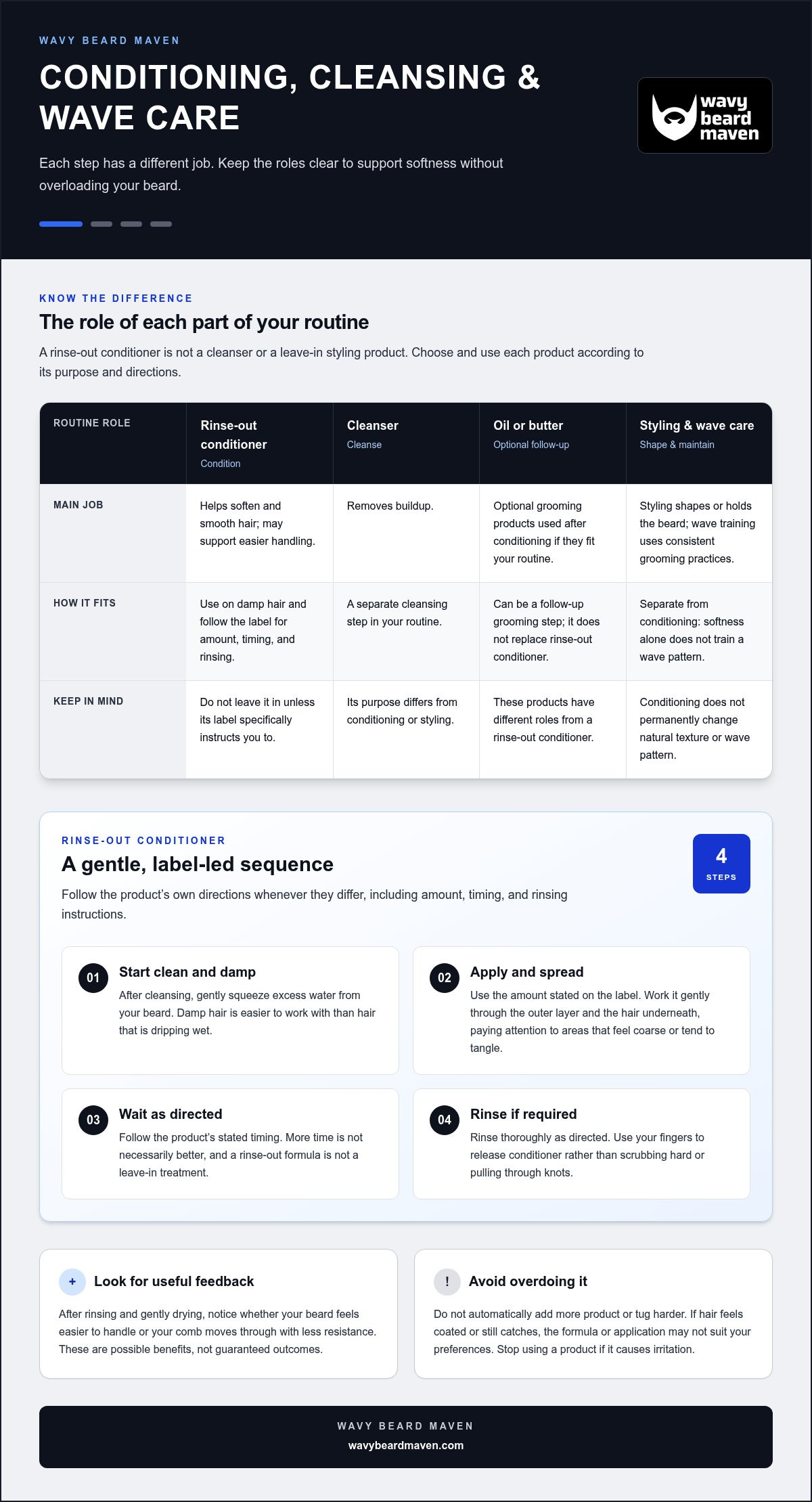
A rinse-out conditioner is a wash-day step, not a leave-in styling product. Its directions tell you how long to leave it in and whether to rinse it away. Beard oil, butter, and balm have different roles in a grooming routine. Don’t leave a rinse-out conditioner in your beard unless its label specifically instructs you to.
Quick sequence: Cleanse, dampen, distribute conditioner gently, wait only as directed, then rinse thoroughly if the label says to. Use the product’s own directions as your guide. Formulas and instructions vary, so don’t assume every conditioner uses the same timing or application method.
A practical rinse-out conditioning sequence
Use this flexible process for a product labeled as rinse-out conditioner. Follow its directions wherever they differ, including the recommended amount, timing, and rinsing instructions.
- Start with clean, damp hair. After cleansing, gently squeeze excess water from your beard. Damp hair is easier to work with than a beard that is dripping wet.
- Apply and spread. Use the amount stated on the label. Work it through your beard with your fingers, reaching the hair underneath as well as the outer layer. Pay attention to sections that feel coarse or tend to tangle, but don’t automatically add more.
- Let it sit as directed. Follow the product’s stated timing. More time isn’t necessarily better, and a rinse-out formula isn’t a leave-in treatment.
- Rinse if required. For a rinse-out product, wash it away thoroughly as directed. Use your fingers to help release the conditioner instead of scrubbing hard or pulling through knots.
Move patiently. Aggressive rubbing or forcing a comb through a snag can make grooming uncomfortable and work against gentle handling. If you use a comb to help distribute product, move slowly and ease through tangles rather than yanking.
How to assess the result without overdoing it
After rinsing and gently drying your beard, notice whether it feels easier to handle and whether your comb moves through with less resistance. Judge the result by how your beard responds, not by how much product you used. A deep conditioner for coarse beard hair should fit your routine, not leave you feeling that you need to keep adding more.
Start with the frequency on the label. If the directions allow flexibility, adjust gradually and observe how your beard feels between uses. Avoid changing several parts of your routine at once, or it will be harder to tell what’s helping. Beard oil or butter can be optional follow-up grooming products, but they don’t change the rinse-out instructions for conditioner.
Stop using a product if it causes irritation. If irritation persists or concerns you, seek appropriate professional advice. For grooming guidance beyond the shower, explore beard-wave routine guidance and build conditioning into a consistent routine.
How to Choose a Deep Conditioner for Coarse Beard Hair
Start with the product format, not the biggest promise on the label. If the directions say to rinse out a conditioner, use it as part of your wash routine. Beard oil, butter, and balm are leave-in grooming products with different roles. Choosing the right format helps you condition and manage your beard without confusing conditioning with styling or adding layers that feel too heavy.
Rinse-out conditioner versus leave-in beard products
A rinse-out conditioner is applied during washing and removed according to its label. Beard oil and beard butter are leave-in options used as part of ongoing grooming, not substitutes for a rinse-out conditioner. Balm is typically used for styling and control. If you use oil as part of your grooming routine, this beard oil guide for waves explains its separate role.
| Format | Typical routine role | Use directions |
|---|---|---|
| Rinse-out conditioner | Wash-routine conditioning step | Use on beard hair as directed; rinse if the label says to. |
| Beard oil | Leave-in grooming and finishing | Apply according to its directions; don’t rinse unless instructed. |
| Beard butter | Leave-in grooming and moisture support | Use as directed; it isn’t a rinse-out conditioner. |
| Beard balm | Leave-in styling and control | Follow the label for application and amount. |
Selection factors for coarse or tangle-prone beards
Look for clear directions for facial hair. Check whether the product is intended to be rinsed out, how it should be applied, and whether the label includes cautions relevant to you. Choose a texture that feels manageable to spread through your beard and practical to rinse away, especially if your hair tangles easily.
Next, consider fragrance. A scent you enjoy can make a grooming step easier to stick with, but preference varies, and label cautions matter. If you prefer a lighter scent or no noticeable fragrance, use that as a selection filter rather than assuming one scent suits everyone.
Ingredient lists can help you compare formulas, but an ingredient name alone can’t promise a particular result. The overall formula, directions, and your beard all affect how a product feels in use. Be cautious of claims that promise instant or permanent changes to coarseness, curl, or wave pattern. Conditioning may support a softer feel and easier handling, but it doesn’t rewrite your natural texture.
Choose an option that fits the routine you’ll actually follow. If you want a shower step you can rinse away, prioritize a clearly labeled rinse-out conditioner. If you want a leave-in product after washing, consider oil or butter for grooming, or balm when styling control is the goal. Judge a deep conditioner for coarse beard hair by its directions, feel, and fit with your routine, not by a dramatic promise on the package.
Build a Conditioning Routine for Coarse Beard Hair
A routine works best when each step has a clear job. Condition after cleansing and before drying or styling, then keep the rest of your grooming simple enough to repeat. You don’t need to add every product at once. Find a sequence that leaves your beard easier to manage without a coated or weighed-down feel.
Fit conditioning into wash day
Use this flexible order: cleanse your beard, apply conditioner if its directions call for it, rinse as directed, then dry gently before any optional styling or leave-in care. Follow the label for how often to condition and how long to leave it in. There’s no universal schedule for every product and beard.
Make your first trial easy to assess. Use the conditioner as directed while keeping the rest of your routine unchanged. Notice how your beard feels after rinsing and drying. Does it move more easily under a comb, or does it feel coated? If you change the product, amount, and frequency together, it’s harder to tell which adjustment made a difference. Change one variable at a time and keep your routine consistent as you assess it.
Maintain manageability between washes
Handle your beard gently between conditioning days. Press a towel against it to remove excess water instead of rubbing vigorously. If you meet resistance while combing, ease through the section rather than forcing the comb. Patient daily habits can make grooming more comfortable without turning every morning into another conditioning session.
Beard oil or butter can be optional leave-in grooming products after washing. Use them according to their own directions. They aren’t rinse-out conditioners, and adding more isn’t automatically the answer if your beard feels heavy. If you’re shaping a wave pattern, keep conditioning in its lane: it supports the feel and handling of your beard, while consistent grooming and compression are separate parts of pattern maintenance. These coarse beard wave tips offer further guidance for working with coarse texture.
For hold, consider balm as a separate styling step rather than another conditioning treatment. The beard balm styling guide can help you understand where balm fits when you want control.
Build steadily: cleanse, condition as directed, dry gently, then choose only the maintenance or styling steps your beard needs. Notice how it feels and adjust one thing at a time. Explore beard-wave routine guidance to keep your grooming practice consistent.
Turn Softer Beard Hair Into Consistent Wave Maintenance
Conditioning can make coarse beard hair more comfortable to handle and give you a smoother starting point for grooming. But softness alone won’t create a wave pattern. Waves come from consistent grooming habits, including deliberate brushing and compression, not from leaving conditioner in longer or applying more product.
Conditioning supports manageability; training develops pattern through repeated grooming. Keep those jobs distinct. A deep conditioner for coarse beard hair may help you work through your routine with less resistance, while brushing and compression help guide how your beard is arranged over time. Neither step replaces the other.
Pair manageability with a consistent grooming practice
After conditioning, follow the product directions, dry your beard gently, and continue with your usual grooming practice. Use steady, controlled brush strokes rather than rushing through tangles. Pay attention to how the hair lies and where it resists. That can help you adjust your approach without treating conditioner as a shortcut to waves. For a structured overview of training, explore the complete beard-wave training guide.
Brushing is one part of pattern maintenance. Consistency and gentle control matter more than forcing a brush through a section that catches. Use beard brushing techniques for waves to refine how you brush as part of your routine. Let comfort guide your pace, especially in areas where coarse hair tends to tangle.
Choose the next step in your routine
Keep your routine steady long enough to notice whether your beard feels manageable after conditioning and during regular grooming. If you make an adjustment, change one thing at a time, such as conditioning frequency within the label’s directions or how gently you detangle. That makes it easier to tell what suits your beard and helps prevent your routine from becoming a stack of products without a clear purpose.
Choose any follow-up product based on a separate grooming goal. Beard oil or butter may suit your leave-in care preferences, while balm can help when you want styling hold. These products don’t replace a rinse-out conditioner, and they don’t train a wave pattern by themselves. Let each step do its job, then repeat the habits that feel comfortable and sustainable.
Wave maintenance takes practice, not a single wash-day step. Use conditioning to support comfortable grooming, and bring the same discipline to brushing and compression. For a guided starting point, explore the 7-Day Beard Wave Starter Routine™ Checklist and carry that consistency into your beard-care routine.
Make Your Next Grooming Step Count
Let your next step be consistency, not complexity. Choose a deep conditioner for coarse beard hair that fits your grooming preferences, then give your routine time to show whether it supports comfortable maintenance. Notice what works and refine your approach with patience. The goal is a beard-care practice you can sustain, not a shelf full of products or a shortcut to a pattern.
Connect daily care with focused wave training. Structured beard-wave education and step-by-step tutorials can help turn intention into repeatable habits, while the free checklist offers a clear place to begin.
Start with the free 7-Day Beard Wave Starter Routine™ Checklist and take your next step with purpose. Stay steady and shape a routine that works for your beard.
Frequently Asked Questions
Can I use deep conditioner on coarse beard hair?
Yes, if the product is intended for beard or facial hair and its directions suit your routine. A deep conditioner for coarse beard hair may help your beard feel easier to handle, but follow the label rather than assuming a scalp product or leave-in treatment is suitable. If the package says to rinse it out, don’t leave it in while you style.
How often should I deep condition my beard?
Follow the product’s stated frequency. There isn’t one schedule that fits every formula and beard. If the label allows regular use, follow its guidance before deciding whether to adjust. Keep a simple note of conditioning days and how your beard feels afterward. If you’re also changing your cleanser or adding another product, hold those changes so you can tell what’s affecting the result.
Should beard conditioner be rinsed out or left in?
Follow the directions on the specific product. Rinse out a rinse-out conditioner as instructed; use a product labeled for leave-in use according to its own directions. Don’t decide based on the word “conditioner” alone, and don’t leave a rinse-out formula in overnight by default. Check the package for application, timing, and rinsing guidance before adding it to your routine.
What is the difference between beard conditioner and beard oil?
They’re different grooming categories with different directions. Conditioner is used according to its label, which may direct you to rinse it out after application. Beard oil is a leave-in grooming product used as part of ongoing beard care. One doesn’t automatically replace the other. Choose based on whether you want a wash-day conditioning step or an optional product for your regular grooming routine.
Can conditioner make coarse beard hair permanently softer?
No. Conditioner can change how your beard feels during grooming, but it can’t permanently alter the hair’s natural texture. The effect may vary with the formula, how you apply it, and how your beard responds. It won’t change newly grown hair. If your beard feels smoother after conditioning, treat that as a temporary grooming benefit and continue to follow the product directions.
Should I condition my beard before brushing it for waves?
If you’re using a rinse-out conditioner, apply and rinse it according to its directions before moving on to your usual grooming practice. Don’t treat conditioner as a wave-training product or use it to force a pattern. Once your beard is ready for grooming, use controlled brush strokes and your regular pattern-maintenance approach. If the brush catches, ease through the section rather than pulling hard.
What should I do if beard conditioner irritates my skin?
Stop using the product and rinse it off if its directions call for rinsing. Don’t apply more to test whether the reaction will pass, and avoid reusing it while irritation is present. Check the label for cautions and ingredients you may want to discuss with a professional. If the irritation persists, worsens, or concerns you, seek appropriate professional advice.