November 10, 2026

No single food determines how your beard grows, but a balanced diet provides nutrients that support normal hair growth. The best foods for a healthy beard include protein-rich options such as peanuts, eggs, fish, and beans, along with vitamin C sources like citrus fruits, bell peppers, and tomatoes.
When you’re working toward a fuller-looking beard, it’s natural to look for a meal-by-meal shortcut. A more practical approach is to eat a varied diet and understand what different foods provide. Here’s how protein and peanuts fit in, which fruits and vegetables provide vitamin C, and where to find nutrients such as vitamins A, D, and E, B vitamins, iron, and zinc. Use these options to plan everyday meals, without expecting one ingredient to transform your beard.
Key Takeaways
- Build meals around varied nutrient-rich foods rather than relying on one ingredient to support beard health.
- Learn how peanuts can contribute protein and nutrients associated with healthy hair fibers.
- Find practical vitamin C sources, including fruits and vegetables you can add to everyday meals.
- Explore foods that provide vitamins and minerals linked to hair and skin health, then shape a balanced routine around them.
1. What Foods Help Beard Growth?
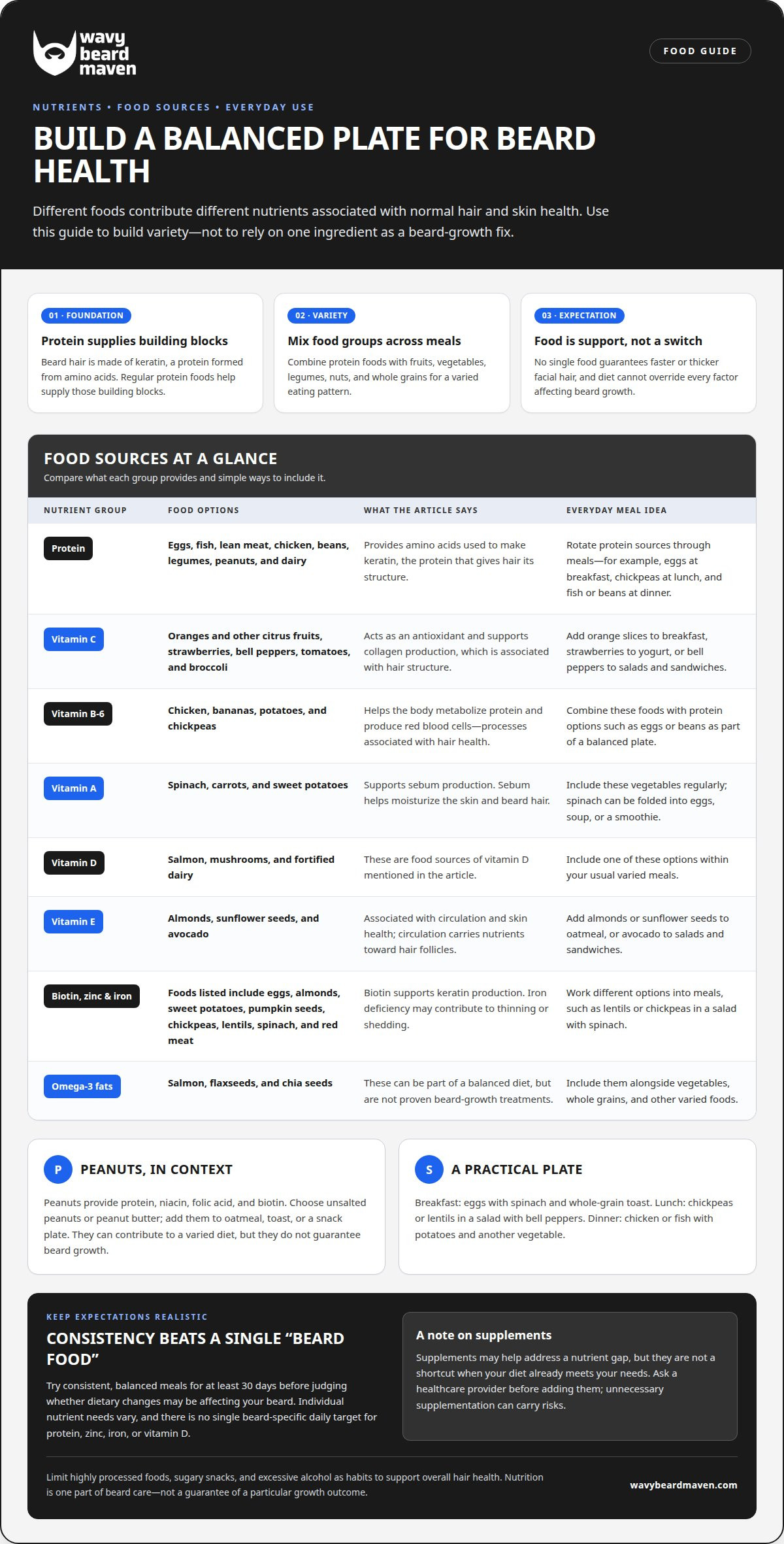
Build a balanced diet around protein, vegetables, fruit, legumes, nuts, and whole grains. Beard hair is made of keratin, a protein formed from amino acids. Regularly eating eggs, fish, lean meat, beans, and peanuts helps supply the building blocks your body uses to make protein. Diet supports normal hair growth, but it can’t override every factor that affects beard growth.
Keep your eating pattern consistent rather than relying on one “beard food.” Chicken, bananas, potatoes, and chickpeas provide vitamin B-6. Carrots, sweet potatoes, and spinach contain vitamin A, while salmon, mushrooms, and fortified dairy provide vitamin D. Vitamin E sources include almonds, sunflower seeds, and avocado. These nutrients have roles in processes associated with hair and skin health, but eating a particular food doesn’t guarantee faster or thicker facial hair.
There’s no single beard-specific daily target for protein, zinc, iron, or vitamin D. Individual needs vary with factors such as age, body size, and health. Follow general dietary guidance suited to your circumstances rather than taking extra nutrients specifically for beard growth.
For foods high in biotin, zinc, and iron, choose eggs, almonds, sweet potatoes, pumpkin seeds, chickpeas, lentils, spinach, and red meat. Salmon, flaxseeds, and chia seeds provide omega-3 fatty acids; they can be part of a balanced diet, but aren’t proven beard-growth treatments. Iron deficiency may contribute to thinning or shedding, and alopecia can obstruct natural hair growth.
Supplements may help address a nutrient gap, but they aren’t a shortcut when your diet already meets your needs. Ask a healthcare provider before adding them, since unnecessary supplementation can carry risks. Highly processed foods, sugary snacks, and excessive alcohol are habits to limit for overall hair health. Try consistent, balanced meals for at least 30 days before judging whether dietary changes may be affecting your beard.
2. Peanuts and nutrients associated with hair fibers
Peanuts are an easy addition to meals, providing protein along with niacin, folic acid, and biotin. These nutrients are associated with hair-fiber formation, while protein supplies amino acids used to make keratin. Choose unsalted peanuts or peanut butter and add them to oatmeal, toast, or a snack plate. They can contribute to a varied diet, but they don’t guarantee beard growth.
Keratin gives hair its structure, so include protein-rich foods regularly rather than relying on peanuts alone. Eggs, fish, lean meat, beans, legumes, and dairy all provide protein. Rotate them through your meals: try eggs at breakfast, chickpeas at lunch, and fish or beans at dinner. This makes protein part of a varied eating pattern that also includes other nutrients associated with hair and skin health.
Spinach offers a different mix of nutrients, including vitamin A, folic acid, iron, vitamin C, and beta carotene, which are associated with skin and hair health. Fold fresh spinach into eggs, blend it into a smoothie, or stir it into soup. Pair it with protein-rich foods such as eggs or beans for a more balanced meal, rather than treating spinach as a standalone fix.
Peanuts contain fats, but a food’s nutrient profile doesn’t prove that it directly changes beard growth. Hair fibers form as new hair grows, and nutrition supports the body’s normal processes. Include lean protein sources such as fish, chicken, and beans alongside vegetables, whole grains, and nuts. Aim for a consistent eating pattern instead of switching foods every few days.
Nutrition is one part of beard care. For the separate task of maintaining and shaping facial hair, explore a consistent beard care routine alongside balanced meals.
3. Vitamin C food sources and hair follicle support
Choose vitamin C foods such as oranges, strawberries, bell peppers, tomatoes, and broccoli. Vitamin C acts as an antioxidant, helping protect hair follicles from environmental damage. It also supports collagen production, which is associated with stronger hair. Add orange slices to breakfast, strawberries to yogurt, or bell peppers to salads and sandwiches for an easy routine.
Vitamin B-6 helps the body metabolize protein and produce red blood cells, processes associated with hair health. Chicken, bananas, potatoes, and chickpeas provide B-6. Combine them with protein foods, such as eggs or beans, rather than expecting one vitamin to promote beard growth alone. A balanced plate brings different nutrients together.
Vitamin E is associated with circulation and skin health. Almonds, sunflower seeds, and avocado are useful food sources; add them to oatmeal, salads, or sandwiches. Vitamin E supports circulation that carries nutrients toward hair follicles. Healthy skin matters too, since facial hair grows through the skin and benefits from an overall nourishing diet.
Leafy greens such as spinach provide vitamin A, which supports sebum production. Sebum helps moisturize the skin and beard hair. Carrots and sweet potatoes are other sources of vitamin A. Include these vegetables regularly, and drink water throughout the day to stay hydrated.
Think of vitamins A, B, C, D, and E as parts of a varied diet, not as individual switches for beard growth. Salmon, mushrooms, and fortified dairy provide vitamin D, while eggs, almonds, sweet potatoes, spinach, and broccoli contain biotin. Biotin supports keratin production, and keratin forms hair fibers. Rotate these foods through your meals to make variety practical and consistent.
Oranges can be eaten whole, juiced, or added to fruit salad, making them easy to include beyond breakfast. Vitamin C acts as an antioxidant and supports collagen production, which is associated with hair structure.
4. Foods containing beard-related nutrients
Make nutrient variety practical by building meals from familiar ingredients. At breakfast, pair eggs with spinach and whole-grain toast. For lunch, add chickpeas or lentils to a salad with bell peppers. At dinner, serve chicken or fish with potatoes and another vegetable. These combinations bring protein and a range of nutrients associated with hair and skin health into everyday meals.
Use potatoes as a flexible base, not a beard-growth remedy. Add a baked potato beside chicken and spinach, or serve roasted potatoes with beans and vegetables. Sweet potatoes offer vitamin A and biotin, while regular potatoes provide vitamin B-6. Switching between them adds variety without making meals complicated. Keep the plate balanced with a protein source and vegetables.
For snacks, choose nuts or seeds alongside fruit. Almonds and sunflower seeds provide vitamin E, and pumpkin seeds supply zinc. Oranges and strawberries add vitamin C; chia seeds and flaxseeds provide omega-3 fatty acids. Each choice contributes a different nutrient, so rotate options rather than relying on a single food. This is a straightforward way to make essential nutrients part of your routine.
Plan a few repeatable meals. Try eggs with spinach, chicken with potatoes, or lentils with tomatoes and bell peppers. Salmon with vegetables can bring protein and omega-3 fatty acids to the table, while fortified dairy provides vitamin D. These foods support a balanced eating pattern, but no single ingredient can promise thicker facial hair. Consistency and variety matter more than chasing a supposed superfood.
Nutrition supports your routine from within; daily grooming helps you care for the beard you’re growing. Explore beard butters for beard care as part of that maintenance practice.
Wavy Beard Maven
Wavy Beard Maven offers step-by-step education for men growing and maintaining wavy beard styles, grounded in discipline, confidence, self-respect, presentation, consistency, and community. Use the nutrition guidance above to support your overall routine, then focus on consistent care for your beard. Beard oils, butters, balms, and a brush can support grooming and shaping as your facial hair grows. Explore Wavy Beard Maven’s guides and grooming products to build a practical routine alongside balanced eating, not as a substitute for it or a promise of faster growth. Keep learning and refining your habits with patience. For guidance on beard care, connect with Wavy Beard Maven.
Build a Routine You Can Keep
Make consistency your next step rather than chasing a quick fix. The best foods for a healthy beard matter as part of an eating pattern you can sustain, alongside a grooming routine that fits your daily life. Choose manageable habits, notice what works for you, and give them time to become part of your routine. A deliberate approach makes beard care less like guesswork and more like a skill you can refine.
Keep learning, adjust your routine when your needs change, and stay patient with the process. Food supports your overall care, while thoughtful grooming helps you maintain the style you’re building. If you’d like guidance for your beard-care routine, contact Wavy Beard Maven. Take the next step with confidence, and keep showing up for the look you want.
Frequently Asked Questions
What Foods Help Beard Growth?
The best foods for a healthy beard fit into varied meals featuring protein, vegetables, fruits, legumes, and nuts. For example, make a bowl with chicken, potatoes, and spinach, then have fruit or yogurt as a snack. This approach provides nutrients used in normal processes related to hair and skin health. No single food determines beard growth, so focus on a balanced pattern you can maintain.
Which nutrients support healthy beard growth and what foods contain them?
The best foods for a healthy beard provide a range of nutrients that support processes related to hair and skin. Eggs provide protein and biotin; chickpeas offer protein and B-6; pumpkin seeds contain zinc; spinach provides iron and vitamin A. Oranges and bell peppers add vitamin C, while almonds contribute vitamin E. Combine different foods across meals instead of concentrating on one nutrient.
Best protein-rich foods for facial hair growth
Eggs, fish, chicken, lean meats, beans, lentils, chickpeas, nuts, and dairy are practical protein choices. Try eggs with whole-grain toast, or combine beans and rice for a filling meal. Rotate animal and plant sources to keep meals varied. Protein supports the body’s production of keratin, but eating more protein than you need isn’t a shortcut to thicker facial hair.
How does vitamin D affect beard growth, and which foods provide it?
Vitamin D is associated with hair-follicle function, but eating foods that contain it doesn’t ensure additional beard growth. Salmon, mushrooms, and fortified dairy are food sources. Add salmon to a meal, use mushrooms in an omelet, or include fortified dairy at breakfast. These choices contribute vitamin D as part of a balanced diet.
Can diet increase beard thickness or only support normal hair growth?
Diet provides nutrients that support normal hair growth, but it can’t reliably determine an individual beard’s thickness or pattern. Genetics, hormones, and conditions such as alopecia also affect facial hair. Eat varied meals consistently and observe changes over time rather than judging your beard by one meal. If thinning is sudden or patchy, discuss it with a healthcare provider.