September 26, 2026
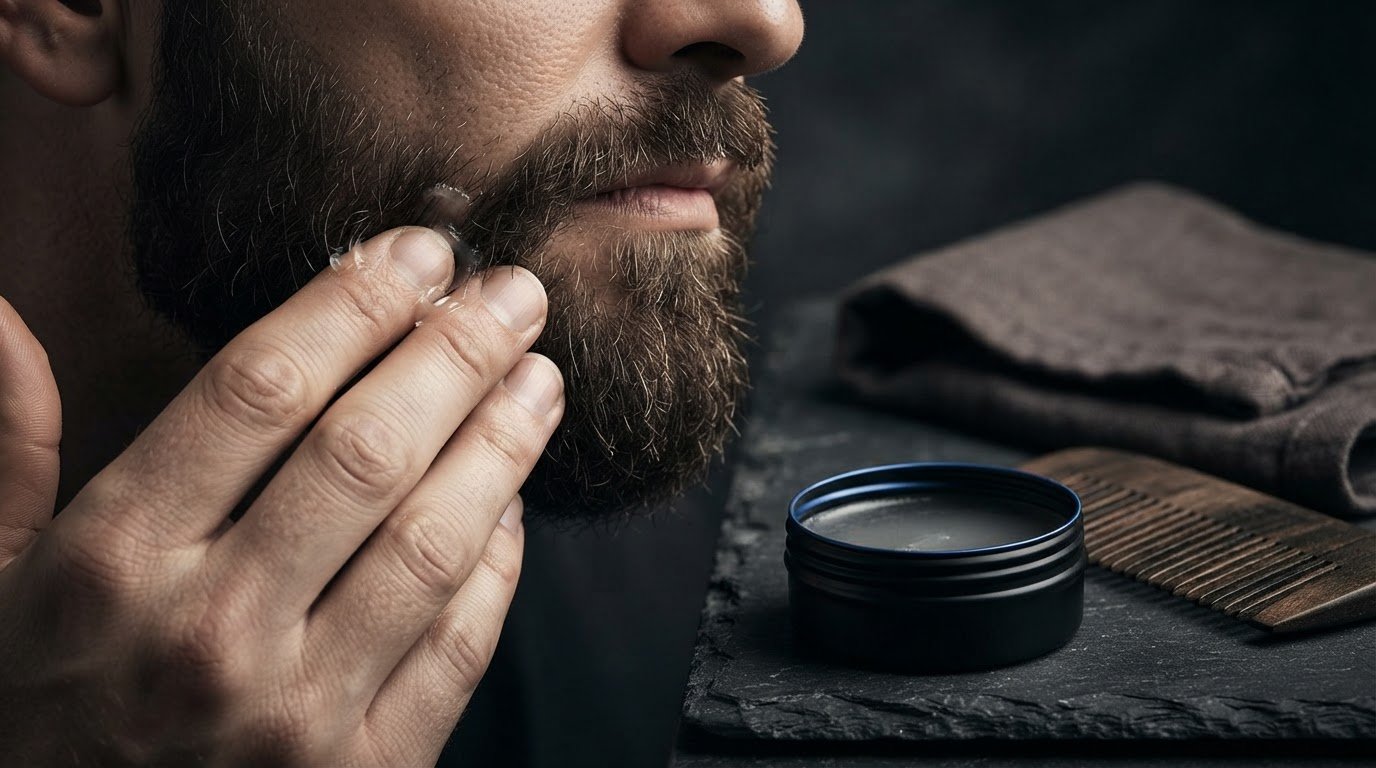
The strongest hold isn’t always the best answer for a beard that refuses to fall in line. If hairs stick out or your style loses shape during the day, it’s understandable to reach for more product. But too much balm can leave your beard greasy, stiff, or difficult to work through. Choosing a heavy duty beard balm for stubborn hair means matching the product’s hold and finish to your beard, then applying it with care.
This guide explains how to compare balms, account for your beard and skin needs, and apply a controlled amount without overloading your hair. You’ll also learn how a consistent routine, even distribution, and deliberate brushing can make styling more manageable, and when another product format may suit your goal better. Build your method step by step, and aim for a beard that holds its shape without feeling coated.
Key Takeaways
- “Heavy duty” describes a higher-control styling option, not a standardized strength rating or a permanent change to how beard hair grows.
- Compare product labels for hold, finish, texture, directions, and intended use. Ingredient examples alone don’t confirm a balm’s formula or performance.
- Strong hold doesn’t automatically mean a greasy or stiff finish. Let your preferred look and your beard’s response guide your comparison.
- For heavy duty beard balm for stubborn hair, start with a small amount, warm it between your hands, and add more only if needed.
- Use the checklist in this guide to match a balm to your desired shape, beard characteristics, finish preference, and daily routine.
What Does Heavy Duty Beard Balm Do for Stubborn Hair?
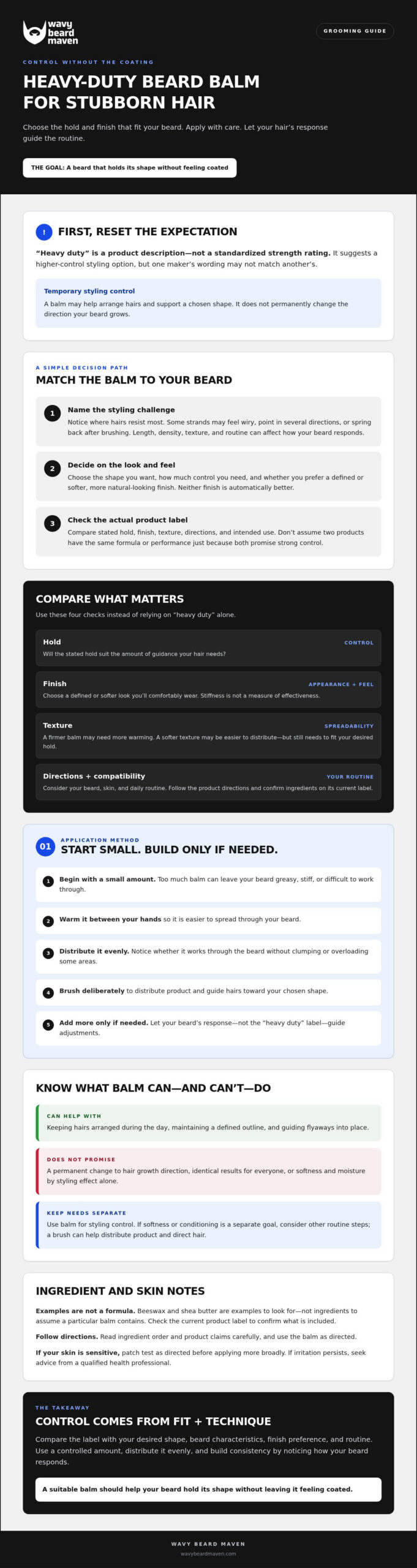
“Heavy duty” signals a balm positioned to offer more styling control, but it isn’t a standardized strength rating. One maker’s description may not match another’s. Treat the label as a starting point, then compare the stated hold, texture, finish, and directions. A balm can help arrange hairs and support a chosen shape, but it can’t permanently change the direction your beard grows.
Hair styling products can vary in their balance of waxes and softer ingredients. For context, Pomade describes how heavier pomades can contain more wax for stronger hold. That comparison doesn’t confirm the formula of any beard balm. Check the specific product label rather than assuming every balm marketed for strong control has the same ingredients or feel.
What makes stubborn beard hair difficult to style?
Some strands feel wiry, point in several directions, or spring back soon after brushing. Length, density, texture, and routine can all affect how your beard responds, so the same styling approach won’t suit everyone. Notice where hairs resist most, and whether the challenge changes as your beard grows or your routine shifts. If irritation persists, seek advice from a qualified health professional rather than assuming a styling product will resolve it.
What can a strong-hold balm realistically help with?
A styling balm may help keep hairs arranged during the day, making it easier to maintain a defined outline or guide flyaways into place. Think of this as temporary control: after washing or restyling, the hair returns to its natural growth pattern. Brushing and styling repeatedly in a chosen direction can support a consistent routine, but shouldn’t be treated as a permanent change to growth.
Separate hold from softness. A balm’s styling effect doesn’t automatically mean it will soften or moisturize your beard to the degree you want. Those goals may call for other routine steps, such as conditioning care, while a brush can help distribute product and direct hair. Identify what you want your beard to do, then assess each need separately.
Hold, finish, and hair response vary by product and person. “Heavy duty beard balm for stubborn hair” is best understood as a search for suitable control, not a promise of identical results. Use balm as one tool in a repeatable grooming routine, and let your beard’s response guide adjustments.
Which Beard Balm Features Matter Most for Stubborn Hair?
Choose by how a balm is described and how it fits your beard, not by the words “heavy duty” alone. Compare the product label for stated hold, finish, texture, directions, and intended use. Strong hold may help guide resistant strands, but the result also depends on how easily you can warm and spread the balm and whether you like the finish.
Use this checklist: compare hold, finish, distribution, and compatibility with your beard, skin, and routine. These criteria offer a more useful starting point than assuming a firm texture will automatically deliver better control.
How should you read a beard balm ingredient list?
Beeswax and shea butter are familiar examples to look for, not ingredients you should assume are in a particular balm. General guides to the key ingredients of beard balm can explain how waxes, butters, and oils may contribute to a formula. The current product label is the place to confirm what’s actually included. Read ingredient order and product claims carefully, and follow the label’s directions. If your skin is sensitive, patch test as directed before applying balm more broadly.
How do hold and finish change the result?
A controlled finish can help define your beard’s shape. A softer, more natural-looking finish may suit you if you want less visible styling. Neither is automatically better. Choose according to your preferred look and feel, and don’t use stiffness as a measure of effectiveness. A balm that keeps your hair arranged without feeling unpleasant may be a better fit than one that feels rigid.
Texture also affects application. A firmer balm may take more warming between your hands before it spreads evenly. A softer texture may be easier to distribute, but still needs to suit the hold you want. Follow the product directions and notice whether you can work the balm through your beard without clumping or leaving some areas overloaded.
Make the decision practical: picture your desired shape, consider how much control your hair usually needs, and decide what finish you’ll comfortably wear. Then check those preferences against the label. If you’re comparing options, explore beard balm options as part of building a consistent grooming routine.
How to Compare Heavy Duty Beard Balms Without Overbuying
Compare the details that affect how a balm will fit your beard, not just its “heavy duty” label. Stronger hold doesn’t automatically mean a greasy or stiff result. Finish, texture, application, and your beard’s characteristics all shape the experience. Use this guide to narrow your options before buying:
| What to compare | What to look for | Consider your priority |
|---|---|---|
| Hold description | The level of control stated on the label | Do your strands need help staying arranged? |
| Finish | How the product describes its final appearance or feel | Do you prefer a defined look or a softer finish? |
| Texture | Whether it seems firm or soft, based on product information | Will you be comfortable warming and distributing it? |
| Label directions | How much to use and how to apply it | Does the method fit your routine? |
Let beard length, density, and styling goals guide your choice. A longer or denser beard may require more attention to distribution, while a shorter beard may call for a lighter hand to avoid using more than needed. For a broader framework, explore this beard balm hold and styling guide.
Should you choose balm, butter, or oil for stubborn hair?
These formats can serve different roles, but formulas and product claims vary. Check each label rather than relying on the category alone. If your main goal is styling control, a balm may be relevant; if your priority is another kind of beard care, a different format may fit better. The American Academy of Dermatology’s dermatologist-recommended beard care offers useful context on washing and moisturizing as part of beard care. For hydration-focused product context, see this beard oil guide for waves.
What if strong hold feels too heavy?
Before ruling out the whole category, review how much you used, how evenly you distributed it, and whether the finish matches your preference. Try a smaller amount and follow the product directions. If the result still feels wrong, the texture or finish may not suit your beard or routine. No ingredient or hold level works the same for every person.
How to Apply Beard Balm to Control Stubborn Hair
More hold won’t solve every styling challenge on its own. A steady routine helps you see whether the balm, amount, and application technique are working together. Follow the product label first, since directions can differ. Then use this repeatable method to guide the hair without coating it in excess product.
- Start clean. Wash your beard as needed, then dry it to the level directed on the balm label. Avoid applying balm to a beard that’s wetter or drier than the directions recommend.
- Begin with a small amount. Follow the product’s instructions, starting with less than you think you need. You can add a little more if necessary.
- Warm the balm. Rub it between your palms until it softens and spreads more easily. If it remains firm, take time to warm it rather than pressing a clump into your beard.
- Distribute evenly. Work the balm through your beard, paying attention to areas where strands resist your desired shape. Aim for even coverage instead of concentrating product on the outer surface.
- Guide and assess. Brush in the direction you want the hair to sit. Check the shape and feel, then add a small amount only if needed and permitted by the label.
How much balm should you start with?
There isn’t one useful amount for every beard. Length and density affect how much hair you’re styling, so start conservatively and adjust gradually. Residue, a weighed-down feeling, or a finish you dislike can signal that you’ve used too much or haven’t distributed it evenly. If that happens, don’t immediately add more to fix the shape. Reassess your technique and the product directions.
How do brushing and compression fit the routine?
Brushing helps spread balm and guide hairs into position. Use controlled strokes rather than forcing resistant strands. For technique details, follow this beard brushing guide for waves. Compression may fit if it’s already part of your grooming routine, but it isn’t required for every beard or balm application. Focus on even coverage and comfortable direction, not pressure.
Use the same method consistently so you can judge what’s helping. If you’re ready to put the routine into practice, explore beard balms and check each product’s directions before applying it.
Choose a Beard Balm That Fits Your Routine, Then Build Consistency
A stronger-control balm may suit you if your beard regularly resists its intended shape or you want to guide unruly strands into a more defined style. If you prefer a lighter feel, need only modest shaping, or dislike the finish of a firmer product, a softer styling approach may be a better match. The goal isn’t maximum hold at any cost. It’s control you can wear comfortably and apply consistently.
Before choosing a heavy duty beard balm for stubborn hair, check these points:
- Desired shape: What are you trying to guide or keep in place?
- Beard characteristics: Consider length, density, texture, and the areas that resist styling.
- Finish preference: Decide whether you like a more defined look or a softer, more natural appearance.
- Label directions: Check the product’s stated hold, use instructions, and current details.
- Routine: Choose an option you can work into your regular grooming practice.
Wavy Beard Maven offers beard balms alongside grooming education. Explore the category to compare options, and use each current product listing to assess its stated features rather than assuming a particular hold or finish.
When should you reassess your balm choice?
If the finish consistently feels too heavy or the balm doesn’t meet your styling needs, review your application before switching products. Consider whether you used more than needed, missed areas while distributing it, or chose a finish that doesn’t suit your preference. Adjust the amount and technique in line with the label. If the result still isn’t right, revisit your choice and verify current product details and directions before buying another balm.
How does consistency help refine your results?
Keep your routine steady and observe how your beard responds. Note the amount used, how you applied and brushed the balm, and how your beard looked and felt during wear. This helps you make deliberate adjustments instead of expecting one application to create a lasting change in hair growth. Wavy Beard Maven also offers a free 7-Day Beard Wave Starter Routine™ Checklist to help structure your grooming practice. It’s a guide, not a promise of results.
Build your method with patience, then refine it based on what you see and feel. Explore beard grooming products and guides to continue shaping a routine that fits your beard.
Build a Beard Routine That Works for You
The right heavy duty beard balm for stubborn hair isn’t simply the one with the strongest-sounding claim. Choose by hold, finish, and how the texture works with your beard, then apply it sparingly and evenly. If the result feels too heavy or doesn’t give you the control you want, review your amount and technique before reassessing the product.
Consistency helps you learn what suits your beard. Pay attention to how your style looks and feels through the day, and adjust your routine with care. Wavy Beard Maven offers beard balms and related grooming products, along with step-by-step beard-wave education and a free 7-Day Beard Wave Starter Routine checklist.
Explore beard grooming products and build your routine. Keep practicing, notice how your beard responds, and shape your style with confidence.
Frequently Asked Questions
What is a heavy duty beard balm?
A heavy duty beard balm is a styling balm positioned to offer more control over beard hair. “Heavy duty” isn’t a standardized strength rating, so descriptions can differ between brands. Check the product’s stated hold, finish, texture, and directions rather than relying on the label alone. Balm can help arrange hairs and maintain a chosen shape during wear, but it won’t permanently change your beard’s growth pattern.
Is heavy duty beard balm good for coarse or stubborn hair?
It may help if coarse or stubborn strands resist brushing or quickly spring out of your preferred shape. The best fit depends on your beard’s length, density, texture, and the finish you want. Check the product’s hold description and directions, then try a small amount and assess how your beard responds. Stronger control can be useful, but it doesn’t guarantee a specific result or feel.
Can beard balm train stubborn hair to grow in a different direction?
No. Beard balm can temporarily style hair in a chosen direction, but it doesn’t permanently change how hair grows. Brushing consistently may help you arrange your beard as part of a regular grooming routine, and balm can support that styling while it’s worn. Treat the result as temporary control, not a lasting change to your growth pattern. Adjust your method based on how your beard responds.
How much beard balm should I use for a thick beard?
There isn’t one amount that suits every thick beard. Follow the product label and start with less than you think you need, adjusting gradually for your beard’s length and density. Warm the balm between your hands, distribute it evenly, and check the result before adding more. Residue, a weighed-down feeling, or an unwanted finish can indicate that you’ve applied too much or spread it unevenly.
What ingredients should I look for in a strong-hold beard balm?
Use ingredient examples as prompts, not guarantees. Beeswax is commonly associated with hold, while shea butter is a familiar conditioning ingredient, but formulas differ and no ingredient alone proves how a balm will perform. Read the current product label for the full ingredient list, ingredient order, claims, and directions. If your skin is sensitive, follow the label’s patch-testing guidance before applying the balm more broadly.
Can beard balm make my beard feel greasy or stiff?
Yes. A balm can feel greasy, stiff, or too heavy if you use more than your beard needs, distribute it unevenly, or choose a finish you don’t enjoy. Product texture and formula also affect how it feels. Try a smaller amount and work it through evenly before deciding the product isn’t right for you. If the result still feels uncomfortable, reassess the balm’s stated finish and intended use.
Should I use beard balm or beard butter for stubborn hair?
Choose based on your main goal and check the product directions, since formulas and claims vary. If you want styling control, a beard balm may be relevant; if you’re prioritizing a different kind of conditioning feel, beard butter may be worth comparing. Neither category guarantees the same result for every beard. Consider your desired shape, preferred finish, and how the product feels in your routine, then adjust based on experience.