November 9, 2026
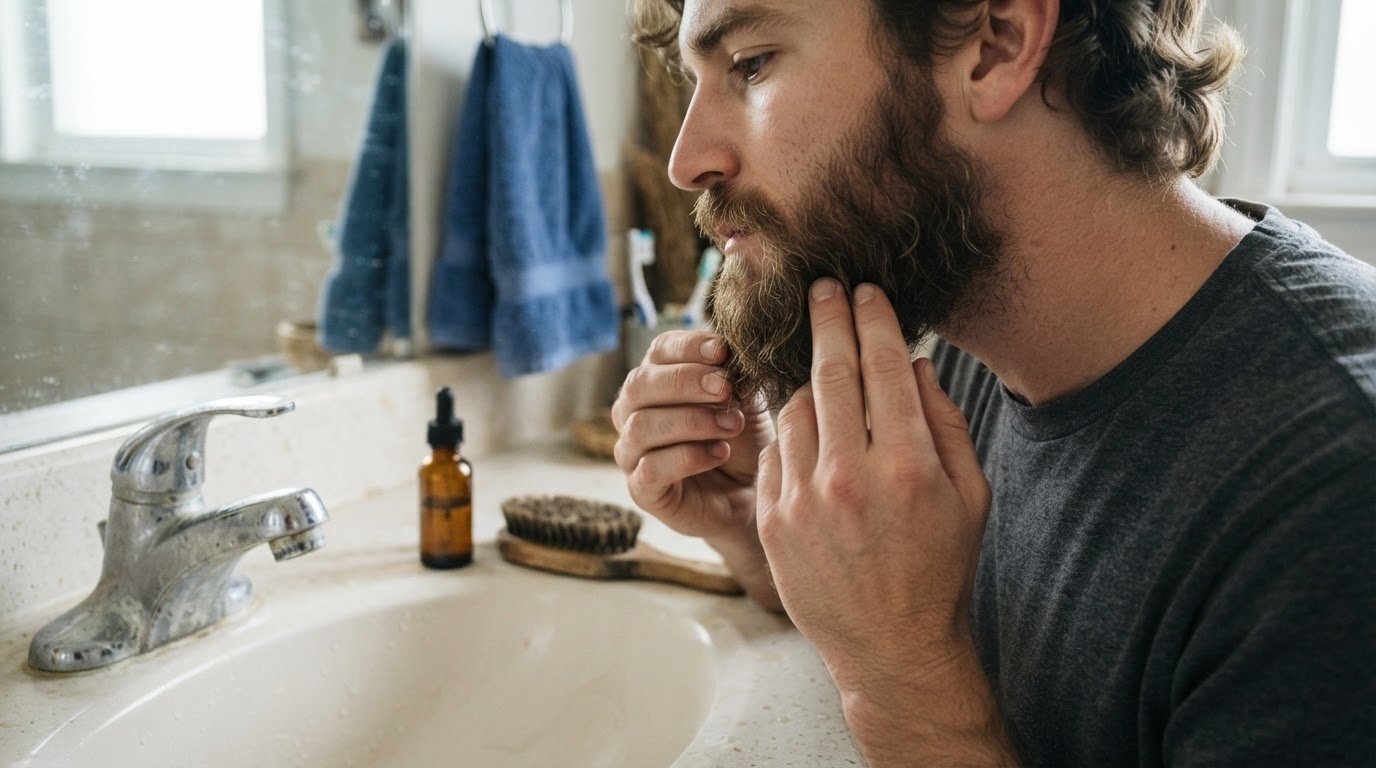
Hard water can leave a mineral film that works against the natural oils protecting your beard. Water above 3.5 grains per gallon is considered hard, and calcium and magnesium are the main minerals behind that buildup. Understanding how water hardness affects your beard starts with knowing what those minerals can leave on facial hair and the skin beneath it.
If your beard feels rough after washing, water quality may be part of the picture. Hard water can make soap and shampoo harder to lather and rinse away, while mineral residue may affect the beard’s natural sebum barrier.
Learn what water hardness means, how calcium and magnesium contribute to buildup, and how hardness categories are defined. This gives you a clearer way to understand your water and its role in your beard-care routine.
Key Takeaways
- Use rough-feeling hair, poor lather, or scale on shower fixtures as clues that your water may be hard.
- Learn how dissolved calcium and magnesium can leave mineral residue on beard hair and affect the skin’s natural oil barrier.
- Use the U.S. Geological Survey’s hardness categories to understand what a water test reading means.
- Match your beard-care routine to your needs: Wavy Beard Maven’s oils, butters, balms, and brush support ongoing beard maintenance.
1. What is hard water?
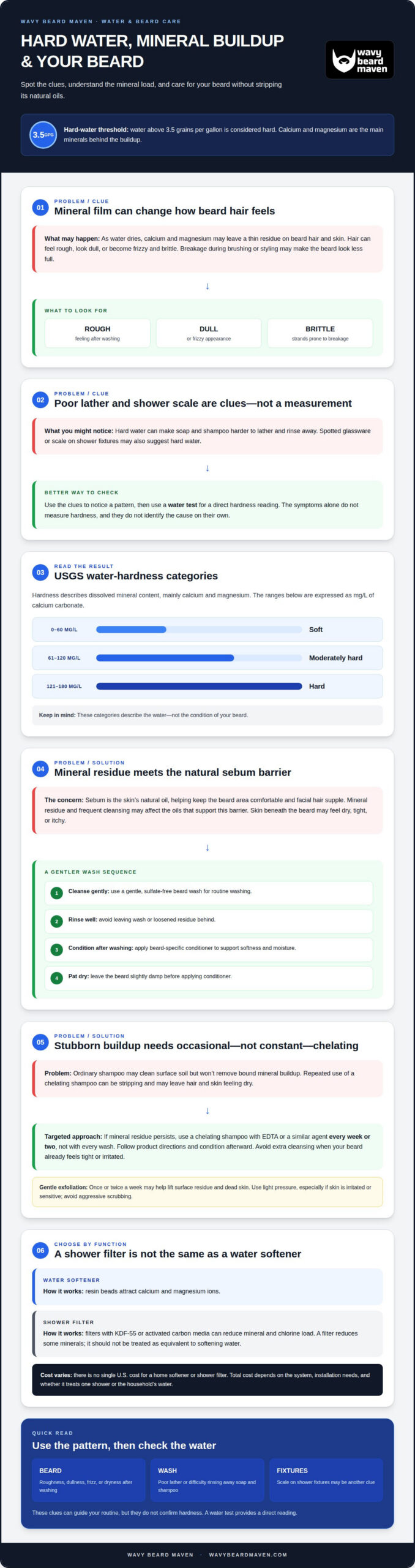
Hard water contains dissolved minerals, mainly calcium and magnesium. Water above 3.5 grains per gallon is considered hard. These minerals can cling to hair shafts, especially where the outer cuticle is damaged.
As water dries, calcium and magnesium may leave a thin residue on beard hair and skin. That film can roughen the hair’s surface, dull its appearance, and make strands feel dry or frizzy. Over time, buildup may make beard hairs more brittle and more prone to breakage during brushing or styling.
Hard water can make shampoo and soap harder to lather and rinse away. You may notice rough-feeling facial hair after washing, spotted glassware, or scale on shower fixtures. These signs may suggest hard water, but they don’t measure its hardness.
Mineral residue can interact with the skin’s natural oils. Beneath your beard, that may leave skin feeling dry, tight, or itchy. Buildup around follicles may also interfere with the skin’s normal oiling process. Hard water doesn’t cause pattern hair loss, but breakage can make a beard look less full.
A shower filter and a water softener work differently. A softener uses resin beads to attract calcium and magnesium ions, while shower filters with KDF-55 or activated carbon media can reduce mineral and chlorine load. A filter reduces some minerals; it shouldn’t be treated as equivalent to softening water.
There’s no single cost for a home water softener or shower filter in the United States. The total depends on the system, installation needs, and whether it treats one shower or the household’s water.
To understand how water hardness affects your beard, look for a pattern: roughness, dullness, frizz, or dryness after washing, alongside poor lather or shower scale. These clues can guide your beard-care routine, while a water test provides a direct hardness reading.
2. Hard water and dissolved calcium and magnesium
Calcium and magnesium are dissolved minerals that determine much of water’s hardness. A hardness reading helps distinguish water with a light mineral load from water carrying more dissolved material. The U.S. Geological Survey classifies water with hardness from 0–60 ppm as soft. The U.S. Geological Survey classifies water with hardness from 61–120 ppm as moderately hard. The U.S. Geological Survey classifies water with hardness from 121–180 ppm as hard.
Hardness categories describe the water, not the condition of your beard. As calcium- and magnesium-rich water runs over facial hair, minerals may remain on the shafts after washing. This film can leave strands rough, dull, or brittle. Repeated stress from combing may then contribute to breakage, especially when beard hair already feels dry.
Hard water can also leave minerals on skin, where they may affect natural oils and hydration. The result can be tightness, dryness, or itchiness beneath the beard. Sensitive skin may feel more discomfort, and existing dryness associated with eczema or psoriasis can worsen. These effects can make a beard-care routine feel less effective, even when your products and washing habits haven’t changed.
Winter dryness has a different starting point. Cold outdoor air and heated indoor spaces can leave skin and facial hair feeling parched, while hard water adds mineral exposure during washing. If roughness appears year-round after rinsing, water hardness may be one factor; if it worsens in cold weather, seasonal conditions may also contribute. Neither clue alone identifies the cause.
Use the reading as context, then notice how your beard and skin respond after washing. A gentle routine that avoids excessive cleansing can help limit additional oil loss. For practical guidance on maintaining waves, explore this beard care routine alongside your water-hardness results.
3. Mineral buildup versus the natural sebum barrier
Sebum is the skin’s natural oil, helping keep the beard area comfortable and facial hair supple. Hard-water minerals can leave residue on hair and skin, while frequent cleansing may remove some of the oils that support this barrier. The goal is to clear buildup without making every wash an oil-stripping step.
For routine washing, use a gentle, sulfate-free beard wash and rinse thoroughly. If mineral residue persists, a chelating shampoo with EDTA or a similar agent can help loosen bound minerals. Use it every week or two, not with every wash, because it can be stripping. Follow with conditioner to replenish moisture and soften facial hair.
To care for your beard when you have hard water, cleanse gently, rinse well, and condition after washing. Pat the beard dry, leaving it slightly damp, then apply a beard-specific conditioner. This sequence helps manage residue while supporting softness and the skin’s natural oils.
Mineral film around follicle openings may interfere with normal oiling, but avoid aggressive scrubbing. Gentle exfoliation once or twice a week can help lift surface residue and dead skin. Use light pressure beneath the beard, and be especially gentle if your skin is irritated or sensitive.
Soft water contains less calcium and magnesium, reducing exposure to the minerals behind hard-water buildup. One routine risk is overusing chelating shampoo: repeated stripping can leave beard hair and skin feeling dry. Follow the product directions, condition afterward, and avoid adding cleansing steps when your beard already feels tight or irritated.
Ordinary shampoo may clean surface soil, but it won’t remove bound mineral buildup. Keep your routine focused: use a gentle beard wash for regular cleansing, chelate occasionally for stubborn residue, and condition afterward to restore softness.
4. Mineral content and water-hardness categories
Hardness describes dissolved mineral content, mainly calcium and magnesium. Water hardness is typically measured in parts per million (ppm); higher readings mean harder water. The U.S. Geological Survey expresses its general categories as milligrams per liter (mg/L) of calcium carbonate:
- 0 to 60 mg/L as calcium carbonate is classified as soft.
- 61 to 120 mg/L as calcium carbonate is classified as moderately hard.
- 121 to 180 mg/L as calcium carbonate is classified as hard.
- More than 180 mg/L as calcium carbonate is classified as very hard.
These general classification guidelines come from the U.S. Geological Survey. The U.S. Geological Survey also considers water above roughly 120 mg/L calcium carbonate hard. That threshold is approximate, while the category bands give a practical way to interpret a reading. A result of 120 mg/L sits at the upper end of moderately hard; 121 mg/L falls into hard.
Calcium and magnesium are the minerals that make water hard. A hardness test summarizes their contribution as calcium carbonate, so the result is a consistent measure rather than a direct count of each mineral. For example, a shower reading of 80 mg/L falls in the moderately hard category, while 150 mg/L falls in the hard category. Higher readings indicate a greater mineral load, not a guaranteed level of beard dryness or damage.
Use the category as context for grooming, not as a diagnosis of your beard’s condition. Compare the reading with what you notice after washing, such as rough-feeling facial hair or dry-feeling skin. A water test identifies hardness; your routine should respond to both the reading and your beard’s condition. This keeps your care plan grounded in evidence rather than guesswork.
Put the information into practice with a consistent beard grooming routine, adjusting cleansing and conditioning to your needs.
Wavy Beard Maven
Wavy Beard Maven helps you turn what you’ve learned about hard water into a consistent beard-care routine. Its educational guides focus on training, growing, and maintaining wavy beard styles, while Beard Oils, Beard Butters, Beard Balms, and a Beard Brush support everyday grooming. These products don’t change your water’s mineral content, but they can be part of caring for facial hair and the skin beneath it.
Turn to Wavy Beard Maven when you’re refining your routine and want guidance centered on wavy beard care. Observe how your beard feels after washing, then make steady, practical adjustments rather than adding unnecessary steps.
For guidance with your beard-care questions, contact Wavy Beard Maven.
Build a Routine That Responds to Your Beard
Understanding how water hardness affects your beard gives you a useful starting point, but consistency turns insight into practice. Notice how your beard feels after regular washes, and make one manageable adjustment at a time. This helps you identify what feels comfortable and sustainable instead of changing everything at once.
Let your routine serve the style you’re working toward. A steady approach can help you care for your beard with intention, even when your water is part of the challenge. If you’d like guidance with your next steps, contact Wavy Beard Maven.
Keep learning, stay consistent, and take pride in the grooming habits you build day by day.
Frequently Asked Questions
What is hard water?
Hard water contains elevated levels of dissolved minerals, chiefly calcium and magnesium. A professional water test can assess hardness alongside chlorine, total dissolved solids, and iron, helping distinguish mineral content from other water factors. For beard care, compare the reading with what you notice after washing; rough-feeling hair alone can’t identify hardness. For example, consider how the result relates to how soap lathers and rinses at home.
Does hard water make beard hair dry, coarse, brittle, or tangled?
Yes, mineral residue can make beard hair feel drier, coarser, and rougher, while repeated buildup may contribute to brittleness and breakage. A rough surface can also make strands harder to detangle. Work patiently through knots with a beard brush when your hair is slightly damp or moisturized, rather than brushing brittle hair when it’s completely dry. Conditioning after cleansing can help restore softness.
Can hard water cause beard itch, dandruff, or skin irritation?
Hard water can contribute to dry, itchy, or uncomfortable skin beneath the beard. Mineral residue may affect skin hydration and pH, and can aggravate dryness for people with sensitive skin, eczema, or psoriasis. Flakes may be visible, but they don’t by themselves establish dandruff. Notice whether discomfort follows washing, and keep cleansing gentle to avoid adding irritation.
Can beard oils, conditioners, or chelating shampoos reduce hard-water buildup?
Chelating shampoo can help remove minerals bound to hair; beard oils and conditioners don’t remove that residue. Use a chelating formula with EDTA or a similar agent every week or two, then condition afterward because chelating shampoo can be stripping. Oils can support softness and hydration after washing, but use them as conditioning steps, not as a substitute for removing mineral buildup.
How can I check my local water-hardness level in the United States?
Use a water test for a direct hardness reading. A professional water test can assess hardness levels. Readings are typically measured in ppm, and higher readings indicate harder water.