November 7, 2026

Creating a minimalist beard care routine starts with matching your tool to your beard: use a bristle brush for a short beard and a wide-tooth comb for a longer one. Wash with a gentle beard-specific cleanser two to three times a week, then keep daily care focused on a few useful essentials. Simple beats complicated when you can stick with it.
If you’re deciding whether to brush or comb your beard and mustache, consider your grooming goal and how much detangling you need. You don’t need a crowded shelf or a long ritual to care for facial hair, but training beard waves does require daily, purposeful brushing and consistency.
This guide breaks down which tool to reach for, how often to wash, and how to use beard oil, butter, or balm without turning your routine into a chore. You’ll get a practical sequence for daily grooming, plus clear guidance on when each essential earns its place. Build the routine around your beard, keep the steps consistent, and let the results come from steady care.
Key Takeaways
- Brush when your beard is dry or slightly damp, and use a wide-tooth wooden comb to detangle longer growth gently.
- Choose a gentle beard-specific cleanser and rinse with warm water; pat your beard dry instead of rubbing it.
- Apply beard oil after washing while facial hair is slightly damp, then add butter or balm only if your beard needs extra softness or shaping.
- Keep your kit focused: choose tools and products for your beard’s length and texture, and add only what serves a clear purpose.
Should I use a brush or a comb for my beard and mustache?
Use a boar-bristle brush for a short or medium beard; choose a wide-tooth wooden comb for longer growth. Basic shaping tools include a comb, scissors or trimmer, and brush. Tidy stray hairs and neckline once a week; a barber trim every 8-12 weeks can refresh the shape.
- Match the tool to your beard length. A boar-bristle brush helps spread natural oils through short facial hair and smooth rough areas. For a longer beard, use a wide-tooth wooden comb to detangle gently and reduce breakage. A mustache comb can guide hairs away from your mouth.
- Brush with control. Start when growth is long enough to grip, generally after 2-3 weeks. Work on dry or slightly damp hair, never soaking wet. Brush upward first to loosen tangles and add lift, then downward to shape your beard and mustache.
- Hydrate underneath the hair. After a shower, apply beard oil while facial hair is slightly damp. Massage it down to the skin underneath, then through the hair. Oil hydrates; moisturizing cream can also hydrate beard hair and skin if that suits your routine.
- Layer products by purpose. Apply oil first, then beard butter for softness and deep moisture. Use beard balm last when you want hold, control, and added moisturizing. Balm helps shape flyaways; butter focuses on softness, so you may not need both every day.
- Use a small, deliberate amount. Spread oil between your palms, then work it through your beard before brushing. Smooth balm over the surface and shape with your hands or comb. Add product gradually, since your beard’s length and texture affect how much it needs.
Beard washing frequency and beard-specific cleanser
Choose a gentle beard wash based on how your skin feels after cleansing. Start with washing two to three times per week, then adjust for mess, oiliness, or dryness.
-
Set a Washing and Conditioning Frequency
Wash your beard with a beard-specific cleanser two to three times per week. If your work leaves dirt or residue in your facial hair, daily washing may suit your routine. Otherwise, frequent cleanser use can dry the beard. Pay attention to tightness or a rough feeling after washing, then adjust the schedule.
Condition according to texture: use conditioner daily when your beard feels dry or rough. For a short or oily beard, try every other day instead. Rinse between wash days as needed, but use cleanser when buildup or dandruff needs attention. Keep the neckline clean without scrubbing sensitive skin.
-
Wash With a Gentle Beard Cleanser
Select a gentle beard wash that removes residue without stripping natural oils. For sensitive or dry skin, avoid a cleanser that leaves your face feeling tight. Regular shampoo can dry facial skin and hair because it isn’t designed for the face. A beard-specific formula is the proper starting point for cleansing facial hair.
Wet your beard with warm, not hot, water. Work cleanser through the hair and down to the skin, then rinse thoroughly. Pat dry with a towel instead of rubbing, which can rough up the hair. Once the beard is slightly damp, apply beard oil if it feels dry.
- Finish with a gentle reset. Detangle only after drying, using your brush in a consistent direction. If dandruff or residue remains, review cleanser frequency and make sure you’re washing underneath the full beard, especially near the neckline. A steady routine makes changes in skin feeling easier to notice.
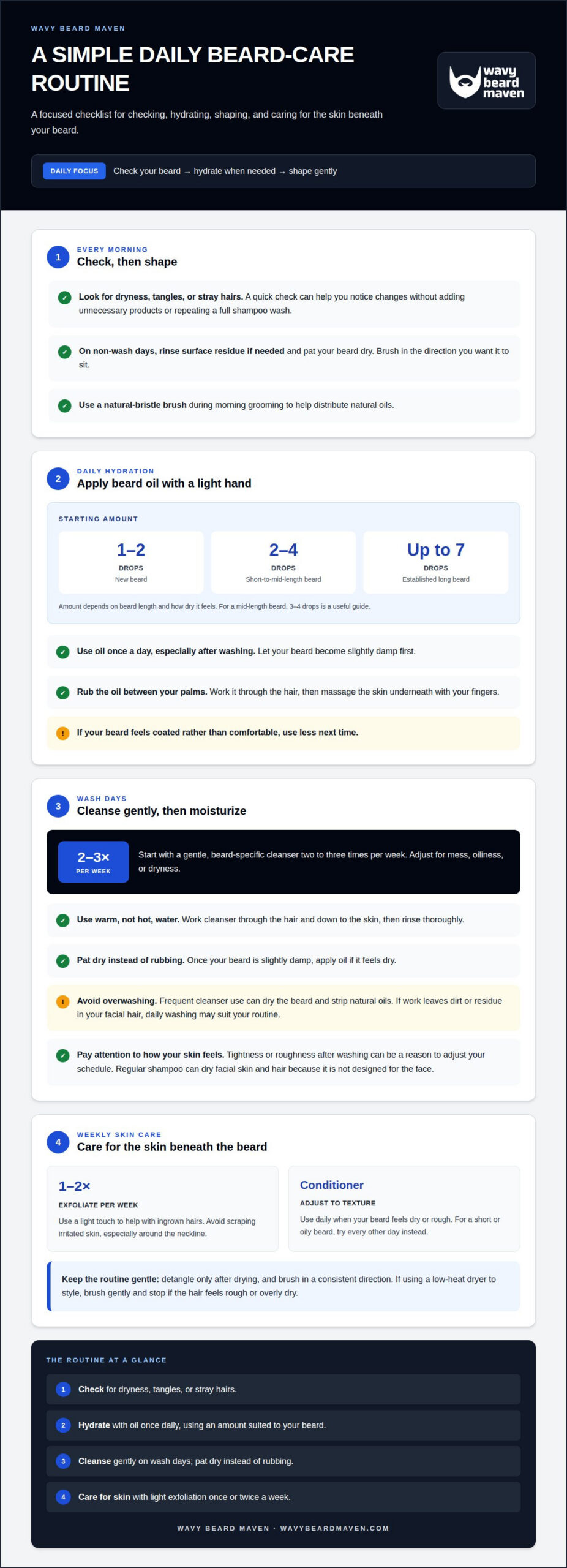
A simple daily beard-care routine
Keep daily care focused: check your beard, hydrate it, and shape it. Common mistakes include washing too often, rubbing hair roughly, and skipping skin exfoliation, which can contribute to dryness or ingrown hairs.
-
Follow a Daily Care Checklist
Start each morning by checking for dryness, tangles, or stray hairs. On non-wash days, rinse away surface residue when needed, then pat your beard dry. Brush it in the direction you want it to sit. This quick check helps you spot changes without adding unnecessary products or repeating a full shampoo wash.
After washing, let your beard become slightly damp before applying oil. Use your fingers to reach the skin underneath, then spread the remainder through your facial hair. A natural-bristle brush can help distribute natural oils during morning grooming.
-
Use Beard Oil Daily
Apply beard oil once a day, especially after washing. For a short-to-mid-length beard, start with 2-4 drops; a new beard may need 1-2 drops. Rub the oil between your palms, work it through the hair, and massage the skin beneath. The right amount depends on beard length and how dry it feels.
Oil hydrates the beard and skin, helping beard hair feel soft. If your beard feels coated rather than comfortable, use less next time. For a mid-length beard, 3-4 drops is a useful guide; an established long beard may need up to 7 drops.
- Keep the wash-day routine gentle. Use beard shampoo only on scheduled wash days, rather than repeating washes each morning. Pat dry instead of rubbing, then apply oil while hair remains slightly damp. Overwashing can strip natural oils and leave facial hair dry, so follow the washing schedule established for your beard.
- Care for the skin beneath your beard. Exfoliate once or twice a week to help with ingrown hairs. Use a light touch, especially around the neckline, and avoid scraping irritated skin. If you use a low-heat dryer to style, keep brushing gently and stop if the hair feels rough or overly dry.
Essential products for a minimalist beard routine
A focused kit covers cleansing, conditioning, detangling, and occasional trimming. In the United States, routine cost depends on which products and tools you already own and choose to add. Build around essentials first; add another item only to solve a specific beard problem.
- Choose one beard wash. Keep a gentle beard wash for scheduled cleansing, rather than buying several cleansers with overlapping jobs. A face-friendly formula helps remove residue without making the skin underneath feel stripped. Use it as directed, and avoid adding a second shampoo unless your routine has a clear reason.
- Make one moisturizer your daily staple. Beard oil hydrates skin and facial hair, so it can cover everyday conditioning. Apply it after washing or whenever your beard feels dry. Start with the amount suited to your beard’s length, then adjust if hair feels coated. Don’t add butter or balm automatically; choose based on softness or hold needs.
- Keep one grooming tool within reach. A beard brush can detangle, shape, and help distribute natural oils during your morning routine. Choose a comb instead if longer hair needs careful detangling. One well-matched tool is more useful than several brushes that perform the same task.
- Reserve trimming tools for shaping. Scissors or a trimmer help remove stray hairs and maintain clean lines. Trim only what disrupts the shape you want, and work on a clean, dry beard. For detailed shaping, a barber can refine the outline without requiring extra daily products.
- Build the kit around a clear job. Keep your beard wash, moisturizer, and chosen tool together. Review each item by asking what task it handles: cleansing, conditioning, shaping, or detangling. If two products solve the same problem, keep the one that fits your routine and leave the duplicate out.
Wavy Beard Maven: 7-Day Beard Wave Starter Routine™ Checklist
Wavy Beard Maven’s 7-Day Beard Wave Starter Routine™ Checklist gives you a structured way to put these grooming steps into practice. Use it when you want a clear sequence for training and maintaining a wavy beard, rather than deciding from scratch each morning.
Pair the checklist with only the essentials your beard needs. Beard Oil can support hydration, Beard Butter adds softness, and a Beard Brush helps with grooming and shaping. Choose by function, then keep your routine consistent; you don’t need every product for every beard.
If you’re ready to build a steady wave-care practice, contact Wavy Beard Maven.
Make Your Routine a Practice You Can Refine
Let your beard guide the next adjustment. A routine isn’t a fixed script; refine it as your style and preferences change. Notice what feels comfortable, what helps you shape your beard, and which steps you can repeat consistently. That steady attention is the craft behind creating a minimalist beard care routine that works for you.
Keep changes deliberate. If your beard feels different or your grooming goals shift, adjust one part of your routine at a time. This makes it easier to see what works and keep your care focused, rather than adding products or steps without purpose.
Ready to take your next step with wavy beard care? Start a conversation with Wavy Beard Maven and build your grooming practice with intention. Stay consistent, trust your eye, and keep refining your own style.
Frequently Asked Questions
What is the difference between oil, balm and wax for my beard?
Oil hydrates beard hair and the skin beneath it, while balm adds control and hold. Wax is generally used for firmer shaping, such as directing mustache ends, so apply it selectively rather than across the whole beard. For example, use oil for everyday comfort and reserve a styling product for areas that won’t stay in place.
Which products make my beard softer and easier to style?
Beard butter can soften facial hair, while beard balm helps control its shape. Beard oil supports hydration, and a brush or comb helps guide hairs into place. For a coarse-feeling beard that also needs styling, use butter for softness and add balm where extra control matters. Choose products for the result you want.
What are the essential products for a minimalist beard care routine?
Creating a minimalist beard care routine starts with the essentials: a way to cleanse, a moisturizing product, and a suitable brush. Beard oil supports hydration, butter adds softness, and balm provides hold and structure. Choose what serves your needs, and add another product only when it has a distinct purpose.
How often should you wash and condition your beard?
Wash with beard cleanser two to three times weekly, adjusting for dirt or residue from your workday. Condition daily if your beard feels dry or rough; for a short or oily beard, conditioning every other day may suit it better. Treat these as separate choices: washing cleans, while conditioning addresses how the hair feels afterward.
Is beard oil or beard balm better for a simple routine?
Choose beard oil for hydration, or beard balm when you also want hold and control. Neither is automatically better: the right choice depends on whether your priority is moisture or shaping. If your beard already sits neatly, oil may meet your needs. Add balm when you want more structure, rather than layering products by default.
How much beard oil should you use, and how should you apply it?
Use 1-2 drops for a new beard, 3-4 for mid-length growth, and up to 7 for an established long beard. Start with less if you’re unsure. Rub the oil between your palms, massage it into the skin beneath clean, slightly damp facial hair, then smooth what remains through the beard. Adjust based on length and feel.