November 4, 2026

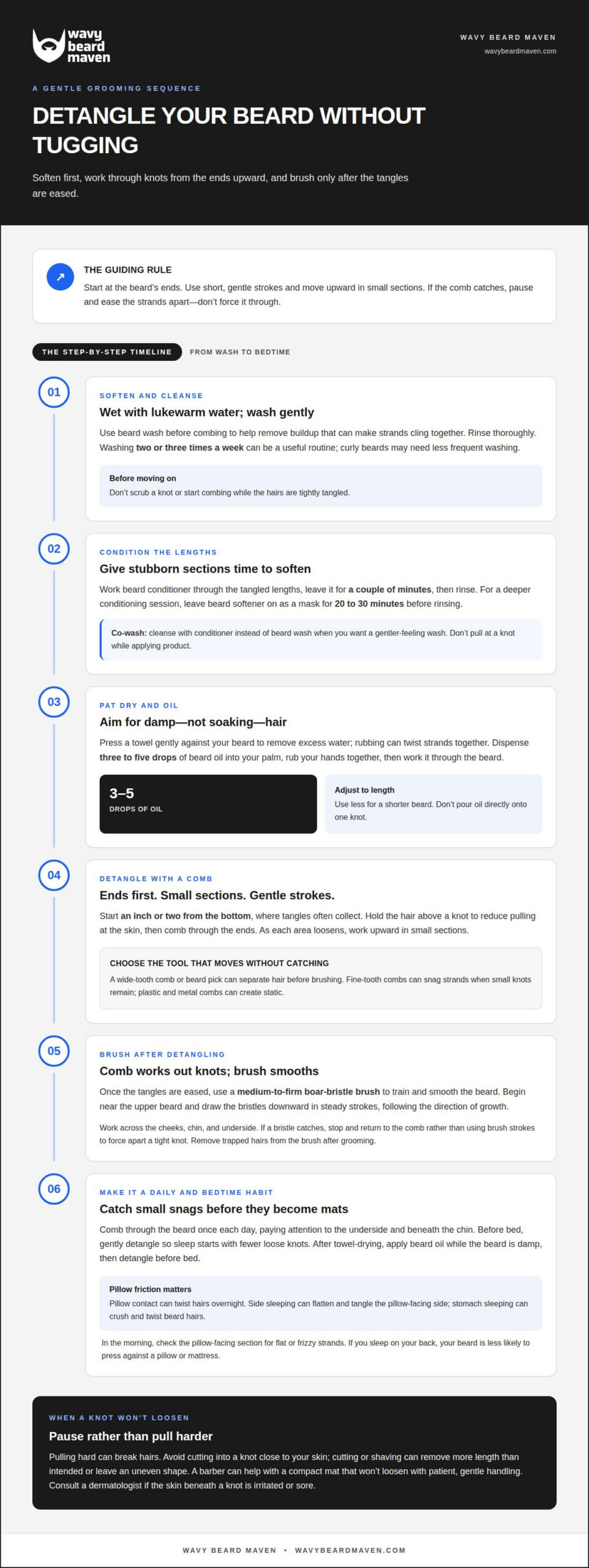
Loosen matted beard hair with patience: start at the ends, use short, gentle strokes, and work upward instead of pulling through a knot. After towel-drying, apply beard oil while your beard is damp, then detangle before bed to help reduce overnight knots. A brush can help smooth and shape the beard once the tangles are eased.
It’s frustrating to wake up with beard hair twisted, flattened, or harder to manage than it was the night before. The answer isn’t to tug harder. Gentle, consistent care helps you work through knots without putting unnecessary strain on your beard.
Learn how to spot tangles, loosen stubborn sections with your fingers and a comb, and apply beard oil before brushing. Then build a simple pre-bed routine to help keep your beard more manageable by morning.
Key Takeaways
- Spot early signs of knots and learn why they often collect near the beard’s ends.
- Use a careful wash-and-condition routine to make stubborn sections easier to manage.
- Choose the right order for combing and brushing to smooth your beard without snagging hairs.
- Build a simple evening grooming routine with oil to help keep your beard more manageable overnight.
What Are the Signs You’ve Got a Tangled Beard?
- Check your beard in bright light before combing. Look for clumped strands, loops, rough patches, or ends that catch against your fingers. A small knot may feel like resistance in one spot, while a mat holds several hairs together. Notice whether the tangle sits near the tips, under the chin, or where your beard rubs against clothing.
- Look for habits that create friction. Pillow contact can twist beard hairs overnight, and rubbing your beard dry with a towel can leave strands crossed. Stomach sleeping can crush and twist beard hairs, making knots harder to comb out. Side sleeping can flatten and tangle the beard on the side pressed against the pillow.
- Start combing an inch or two from the bottom of your beard, where tangles often collect. Hold the hair above a knot to reduce pulling at the skin, then use short, gentle strokes through the ends. Move upward in small sections as each area loosens. If the comb catches, pause and ease the strands apart instead of forcing it through.
- Make daily grooming part of your routine to keep small snags from building into larger mats. Comb through the beard once each day, paying attention to the underside and the area beneath your chin. Use a slow pass rather than rushing from root to tip. Check the ends with your fingers afterward. A snag you catch today is easier to address than a tight knot later.
- Before bed, gently detangle your beard so sleep starts with fewer loose knots. If you sleep on your back, your beard is less likely to press against a pillow or mattress. If you sleep on your side, check the pillow-facing section in the morning for flat, frizzy strands. Avoid stomach sleeping when possible, since pressure and twisting can leave tangles and breakage.
What Are the Best Tips for Detangling Your Beard?
Use water and conditioning to soften knots before working through them. Apply beard oil before brushing, and stop if detangling starts pulling painfully at your skin.
-
Wash Before Detangling
Wet your beard with lukewarm water, then wash it with beard wash before combing. Cleansing first helps remove buildup that can make strands cling together. Washing two or three times a week can be a useful routine; curly beards may need less frequent washing. Rinse thoroughly, then pat with a towel rather than rubbing. Check that the knot is damp and pliable before detangling, and apply beard oil before brushing.
-
Condition or Co-Wash the Beard
Work beard conditioner through the tangled lengths, then let it sit for a couple of minutes before rinsing. For a deeper conditioning session, leave beard softener on for 20 to 30 minutes as a mask, then rinse it out. Co-washing means cleansing with conditioner instead of beard wash; use it when you want a gentler-feeling wash. Don’t pull at a knot while applying product.
A barber can help if a compact mat won’t loosen with patient, gentle handling. Pulling hard can break hairs, while cutting or shaving can remove more length than intended or leave an uneven shape. Avoid cutting into a knot close to your skin, and don’t over-trim, since that can slow progress.
-
Wash and Rinse in the Morning
Rinse your beard in the morning to loosen and settle hairs before styling. If it needs cleansing, wash it gently, then apply conditioner and rinse it out fully. Don’t scrub a knot or start combing while the hairs are tightly tangled. Let excess water drain, pat the beard, and check the problem area before beginning a careful detangling pass. Apply beard oil before brushing.
Ask a barber about a knot you can’t gently loosen; consult a dermatologist if the skin beneath it is irritated or sore. For a consistent routine, beard detangling guidance can help you keep washing and conditioning steps in order.
Using a beard brush to distribute natural oils
- Choose a wide-tooth comb or beard pick to separate facial hair before brushing. Fine-tooth combs can snag strands, especially where small knots remain. Avoid plastic and metal combs, which can create static. Start with the tool that moves through your beard without catching, and use it to identify any sections that still need gentle detangling.
- Detangle first, then use the brush. A comb works through knots; a medium-to-firm boar-bristle brush is the primary tool for training and smoothing the beard. Apply beard oil before brushing, and don’t use brush strokes to force apart a tight knot. If the bristles catch, return to the comb and ease the strands apart before continuing.
- Use a boar’s hair brush to guide beard hairs from top to bottom. Begin near the upper beard and draw the bristles downward in steady strokes, following the direction of growth. Keep the pressure controlled so the bristles pass through the hair rather than tugging at the skin. Work across the cheeks, chin, and underside for even coverage.
- Brush in sections to distribute oils through the full beard. Move from one side of the face to the other, then check beneath the chin, where longer facial hair can hide missed areas. If a bristle catches, stop and separate that spot with your comb. Finish with a downward brush pass to settle the hairs into place.
- Keep the brush clean so old product and loose hairs don’t collect between the bristles. Remove trapped strands after grooming, then look over the bristle bed before storing it. A clean brush can move through facial hair more smoothly, while combing before brushing helps you catch tangles before they tighten.
Applying beard oil to damp hair
- Towel-dry your beard first to remove excess water. Press the towel gently against the hair instead of rubbing, which can twist strands together. Aim for damp, not soaking, hair and skin. Apply beard oil before brushing, and spread it evenly through the beard rather than brushing waterlogged or completely dry, brittle hair.
- Dispense three to five drops of beard oil into your palm. This amount is typically enough even for a longer beard. Rub your hands together to spread the oil across your palms and fingers, then work it through the beard. Add less for a shorter beard, and avoid pouring oil directly onto one knot.
- Massage the oil into the skin beneath your beard, then smooth it through the hair. The skin needs attention too, so use your fingertips to reach beneath the outer layer. Spread the oil along the mid-lengths and ends, where strands can feel dry, rather than concentrating it at the roots.
- Separate a stubborn knot gently with your fingers after applying oil. Don’t pull the whole beard through the snag. Ease apart a few hairs at a time, and add another drop if the knot still resists. Once loosened, use a comb to work through that section, then distribute any remaining oil with a brush.
- Make beard oil part of your regular grooming routine, applying it daily to damp hair after towel-drying. Notice how your beard feels and adjust how thoroughly you spread the oil across its length. For a nighttime routine, apply oil before bed and gently smooth the beard into place; consistent care can help keep facial hair feeling healthy and easier to manage.
Wavy Beard Maven: Beard Oils
Wavy Beard Maven offers beard oils to support a consistent grooming routine after washing and detangling. Apply oil to a damp beard, work it through the mid-lengths and ends, and massage the skin beneath your facial hair. Pair it with a medium-to-firm boar-bristle beard brush after knots are loosened, or include beard butter and beard balm in your care routine.
Use these grooming essentials to care for your beard between washes and before bed. Build the habit through steady, gentle maintenance rather than pulling at stubborn knots, and apply product before brushing.
Contact Wavy Beard Maven to learn more about its beard oils.
Make Gentle Beard Care a Lasting Habit
Think of a recurring knot as feedback from your routine, not a reason to force your comb through. Notice where the snag returns and what your beard was doing beforehand, such as catching beneath clothing or getting handled while you’re rushed. That observation can help you adjust how you protect and handle your facial hair instead of repeating the same frustrating fix.
Keep your next grooming session calm and deliberate. If a section resists, pause, separate what you can without pulling, and return to the rest of your beard later. Consistency comes from choosing care you can repeat, not from trying to make every strand behave in one sitting. Treating matted beard hair gently can become part of how you maintain your style and confidence.
If you’d like help shaping a routine around your beard, get in touch with Wavy Beard Maven. Keep showing up for your grooming practice, one careful session at a time.
Frequently Asked Questions
Is There Anything I Can Do Before Bed to Avoid Bed Beard?
Yes. Detangle before sleep, then use a beard wrap if you want to reduce product transfer onto your pillowcase. If you wake with one side flattened, check how that section meets your pillow and adjust your beard before bed. A consistent nighttime routine gives you a chance to catch loose knots before they tighten overnight.
Why Should You Care About Beard Knots?
Knots can catch when you dress, wash, or run your fingers through your beard, making routine grooming uncomfortable. Pulling at a snag can also strain the hairs and contribute to breakage. Addressing a small knot while it’s still loose helps you keep more control over your beard’s shape and avoid turning a minor tangle into a difficult mat.
What causes beard hair to become matted?
Matting happens when beard strands cross, wrap around each other, and tighten with repeated friction or movement. Pillow contact, collars, scarves, and a rushed towel rub can all disturb the direction of the hairs. Missed grooming lets small tangles collect and join together, especially in longer sections beneath the chin or along the jawline.
How do you safely detangle a matted beard at home?
Work in a small section rather than trying to pull through the entire beard at once. Separate loose strands around the knot with your fingers, and apply beard oil if the hairs resist. Use a comb only after the section begins to loosen. If it catches, stop and ease the strands apart before continuing.
What tools and products work best for matted beard hair?
A wide-tooth comb or beard pick helps you work through tangles without the close spacing of a fine-tooth comb. Once the knots are loosened, use a beard brush to smooth the hair. Beard oil can add slip during grooming, while beard butter or balm can fit into your regular care routine. Avoid forcing any tool through a snag.
How do you detangle a severely matted or knotted beard without cutting it?
Take your time and loosen the mat in small sections with your fingers, adding beard oil when the strands resist. Brush smaller loosened areas carefully, then use a comb to find knots the brush may miss. Don’t tug, cut into the knot, or shave over it. If it remains compact and painful to loosen, seek help from a barber.