November 20, 2026
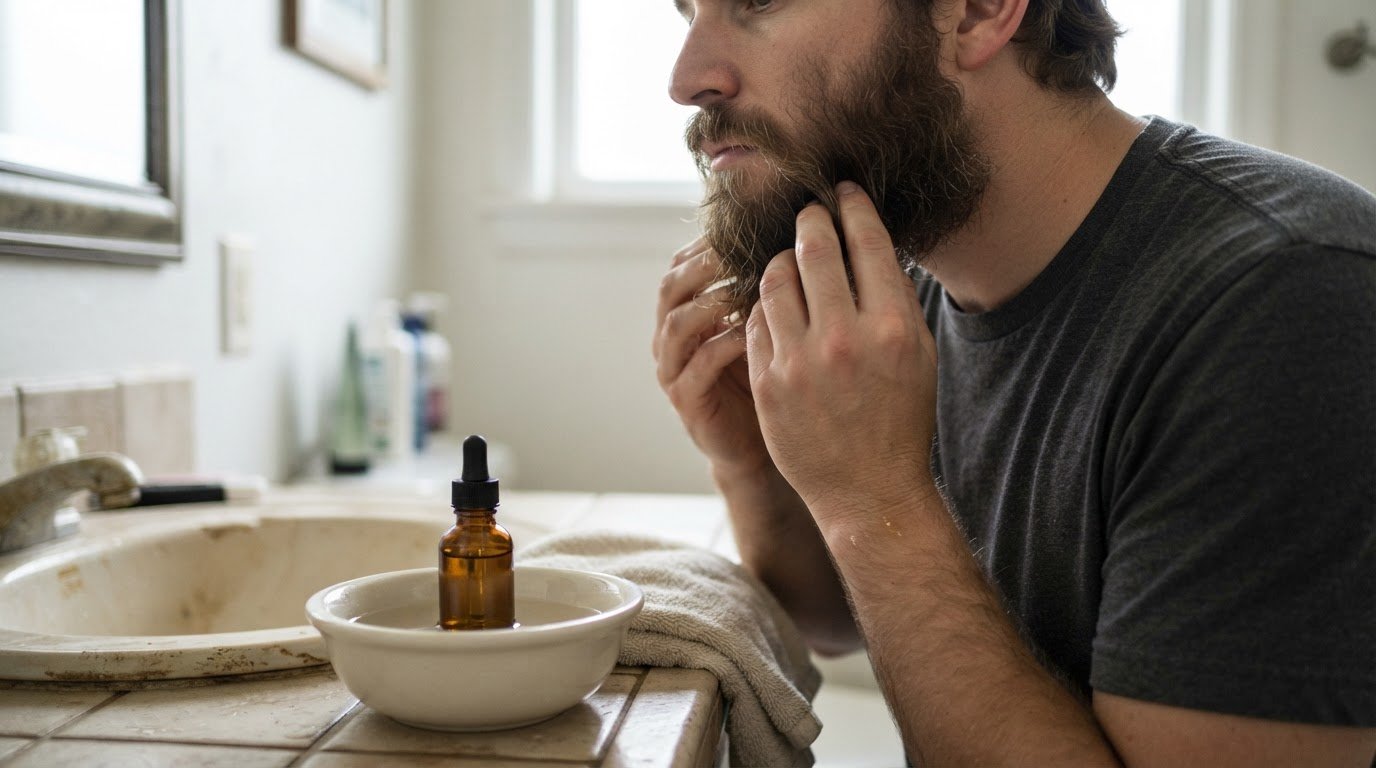
A hot oil treatment isn’t essential for every beard, especially short beards and stubble. Daily beard oil may be enough for shorter growth; for an especially dry or damaged beard, a weekly treatment is one option. Learning how to do a beard hot oil treatment starts with choosing an oil blend that suits your beard, warming it gently, and applying it carefully.
It’s fair to wonder whether a longer, warmer routine is worth adding to your grooming practice. This guide explains what the treatment involves, how to choose an oil blend, and how to patch test for sensitivities before applying it to your beard. You’ll also learn the hot-towel method and ways to keep the process comfortable and controlled.
Think of it as a focused care step, not a requirement for every beard. Consider your beard’s condition, take a gentle approach, and build a routine around your growth and grooming goals.
Key Takeaways
- Learn how to apply warmed oil through your beard and onto the skin beneath it without overloading your hair.
- Choose an oil blend that suits your beard’s feel and grooming preferences.
- Use a patch test to spot possible sensitivity before applying a new blend across your beard.
- Build a simple care routine that supports softer-feeling, shinier-looking beard hair.
What Is a Hot Beard Oil Treatment?
A hot beard oil treatment pairs beard oil with gentle warmth, helping spread it through the hair and across the skin beneath. At home, use a warm towel or a double boiler, and keep the oil comfortably warm, never hot.
-
Make the Beard Oil Treatment
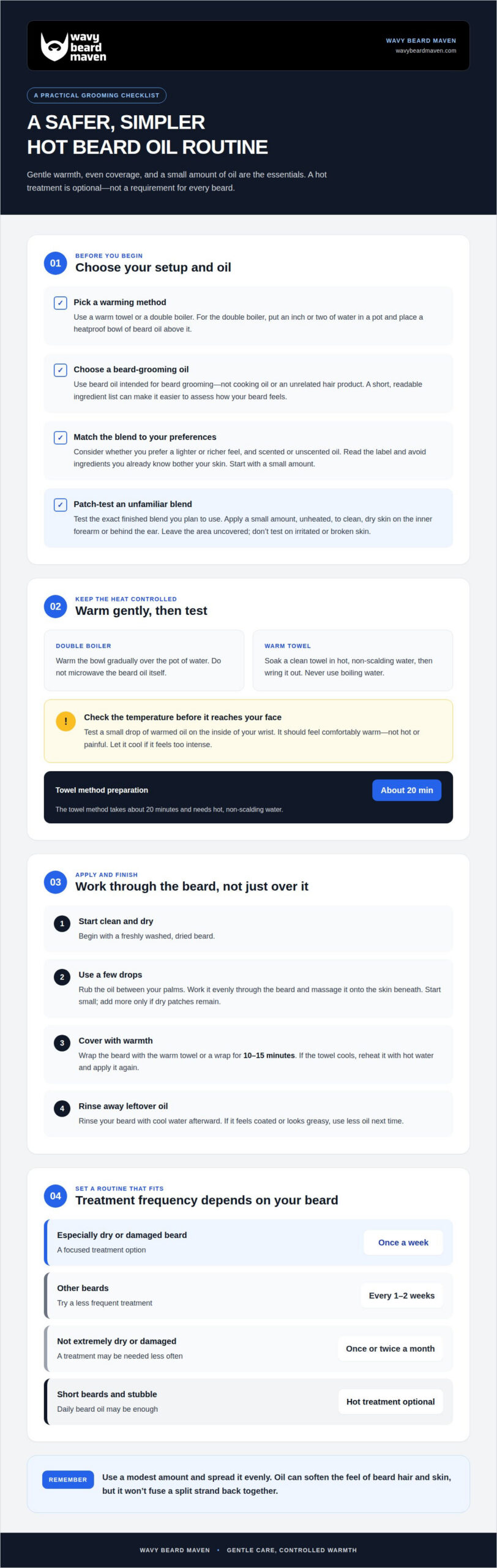
Prepare beard oil and a clean towel, then choose the towel method or a double boiler. For the double boiler, place an inch or two of water in a pot and set a heatproof bowl of beard oil above it. Warm the bowl gently; don’t microwave the beard oil itself. The towel method takes about 20 minutes and needs hot, non-scalding water.
-
Warm and Safely Test the Oil
Warm the oil gradually, then test a small drop on the inside of your wrist before applying it to your face. It should feel comfortably warm, not hot or painful; let it cool if it feels too intense. For the towel method, soak a towel in hot, non-scalding water, then wring it out. Keep the heat controlled and never use boiling water.
-
Apply Oil to Beard Hair and Skin
Start with a freshly washed, dried beard. Rub a few drops of oil between your palms, then work it evenly through the beard and massage it onto the skin beneath. Cover your beard with the warm towel or a wrap for 10-15 minutes. When the towel cools, reheat it with hot water and apply it again; rinse your beard with cool water afterward to remove leftover oil.
For an especially dry or damaged beard, try this treatment once a week. For other beards, try it every 1-2 weeks; a beard that isn’t extremely dry or damaged may need it only once or twice a month. Short beards may do well with daily beard oil instead.
Benefits for dryness, softness, shine, and split ends
- Focus on dry-feeling areas. Work the oil through coarse sections and down to the skin beneath your beard. Beard hair can feel rough when it lacks surface lubrication, while dry skin may feel tight or flaky. A light coating can soften the feel of both hair and skin. Start with a small amount, adding more only if dry patches remain, rather than leaving your beard heavy or greasy.
- Improve softness with even coverage. After applying oil, use your fingers to separate dense sections and smooth the strands in their natural direction. This distributes the product instead of concentrating it on the outer layer. Softer-feeling hair is easier to shape and less likely to snag during grooming. If your beard feels coated, use less next time rather than adding another layer.
- Bring out a cleaner-looking shine. Oil can smooth the surface of beard hairs, helping them catch light more evenly. Start with a modest amount and assess the finish in natural light. Even coverage may make a dull, rough-looking section appear more polished, while excess oil can make your beard look slick. Adjust the amount to your beard’s length, density, and feel.
- Manage split ends without expecting a repair. Oil can soften frayed tips and make them look less unruly, but it won’t fuse a split strand back together. Check the ends after grooming; trim visibly split tips to prevent them from catching and worsening. Keep oil focused on the lengths and ends for a smoother appearance. For practical beard-care routine guidance, build habits around consistent, gentle grooming.
Choosing an oil blend
- Start with a simple blend. Choose a beard oil with a short, readable ingredient list. A straightforward formula makes it easier to notice how your beard feels after use. If you’re new to hot oil treatments, avoid combining several unfamiliar products in one session. Keep the blend consistent while assessing its texture, scent, and finish.
- Match the texture to your beard. Consider how your hair responds to oil during regular grooming. If a heavier finish leaves your beard feeling coated, try a lighter-feeling formula. If your beard still feels rough after application, a richer blend may suit your preference. Follow the product’s directions and start with a small amount before deciding whether the finish works for you.
- Choose scent deliberately. Fragrance can linger close to your face, so consider whether you prefer a scented or unscented blend. Read the ingredient label rather than choosing by scent alone. If you know a particular ingredient bothers your skin, avoid blends that contain it. A natural fragrance or essential oil won’t suit everyone.
- Keep your routine compatible. For a hot treatment, use beard oil intended for beard grooming, not cooking oil or an unrelated hair product. Avoid adding ingredients simply because they’re already in your bathroom. A dedicated blend makes it clearer what you’ve applied and easier to repeat the same routine if the result suits your beard.
- Compare the finish, not just the label. Once the oil has settled, note whether your beard feels soft, weighed down, or still dry. Use that observation to guide your next choice. Change one factor at a time, such as scent or texture, rather than switching several products at once. Patch test an unfamiliar blend before using it for a full treatment.
Patch testing for sensitivities
- Choose the exact blend you plan to use. Test the finished beard oil, not a single ingredient from its label. Formulas can contain several oils, fragrances, or other components, so testing a different product won’t show how this blend feels on your skin. If you switch formulas later, patch test the new blend separately.
- Pick a small, discreet area of skin. Choose a spot on your inner forearm or behind your ear, where you can observe the skin without spreading oil across your beard. Make sure the area is clean and dry. Avoid applying the product to irritated or broken skin, which can make it harder to judge the result.
- Apply a small amount without warming it. Dab a little beard oil onto the chosen spot and leave the area uncovered. Don’t spread it over a larger area or add other grooming products there. Keeping the test simple makes it easier to notice an unwanted response to the blend.
- Observe the test area before using the oil on your face. Watch for changes such as redness, itching, swelling, or a burning sensation. Follow the product label’s testing directions, and don’t proceed with a full beard treatment if the area reacts. Rinse the spot gently and stop using that blend.
- Keep the result tied to the product tested. A comfortable test with one blend doesn’t establish how your skin will respond to a different formula. Note the product and any reaction, especially if you’re comparing scented and unscented options. If the test feels comfortable, you can use the blend as directed, while staying alert to how your beard area responds. Explore beard oil blends and patch test any new formula before use.
Wavy Beard Maven
Wavy Beard Maven offers step-by-step beard-care education to help you build a routine around your beard’s needs. Keep your grooming consistent after a treatment with guidance and essentials such as Beard Oil, Beard Butter, a Beard Brush, or Beard Balm. A brush can help distribute product through the hair, while oil, butter, and balm offer different options for routine grooming. Choose what suits your preferred finish and feel, and patch test unfamiliar blends before full use. For guidance on your beard-care routine, explore Wavy Beard Maven’s educational resources and products.
Make Your Beard Care Routine Your Own
Learning how to do a beard hot oil treatment is a practical skill, but lasting care starts with paying attention to your beard’s needs. Notice how your hair feels after grooming, keep your routine simple, and adjust when your beard or skin responds differently. Consistency doesn’t mean repeating every step on a fixed schedule. It means choosing care deliberately and giving your beard room to show you what works.
Use that mindset as you refine your routine. Keep notes on the oil blend and grooming steps you use, so you can make thoughtful adjustments instead of changing everything at once. If you’d like support with your beard-care questions, contact Wavy Beard Maven.
Stay patient, keep learning, and take pride in caring for your beard.
Frequently Asked Questions
Is This Suitable for Short Beards or Stubble?
Yes, but short beards and stubble may not need a hot treatment. Daily beard oil can be enough for shorter growth, so consider whether your beard feels dry before adding a warmed-oil step. If you treat short growth, use a small amount and work it onto the skin as well as the hair. Avoid letting oil pool on the skin.
Should I Rinse Out the Oil or Leave It In?
After the hot-towel treatment, rinse with cool water to remove remaining oil. That doesn’t mean every beard oil application needs rinsing: regular grooming oil may be used according to its product directions. Keep the distinction clear by treating warmed oil as a dedicated routine, then check the label before deciding whether to leave any product in your beard.
What oils are best for a beard hot oil treatment?
Choose a beard oil blend that suits your skin and the finish you want, rather than focusing on a particular ingredient name. If you’re learning how to do a beard hot oil treatment, read the ingredient list, especially if you know an ingredient irritates your skin. Patch test the exact blend before wider use, and consider whether its feel suits your beard.
What are the step-by-step instructions for applying a hot oil treatment to a beard?
To learn how to do a beard hot oil treatment, wash and dry your beard, then warm the oil gently in a heatproof bowl over a pot of water. Test a drop before applying. Work a few drops through beard hair and onto the skin, then cover with a warm towel or wrap for 10-15 minutes. Rinse with cool water afterward.
How long should you leave beard oil in, and how do you rinse it out?
For the warm-towel method, keep the towel or wrap over your beard for 10-15 minutes, then rinse with cool water to remove leftover oil. A treatment kit with single-dose vials takes a few minutes; follow its directions. For everyday beard oil, use the product label to guide whether to leave it in or rinse it out.
What are the benefits of a hot oil treatment for beard hair and skin?
A treatment can help beard hair feel softer and look shinier, while oil applied to the skin can support a more comfortable-feeling grooming routine. It may also make rough ends look smoother, but it won’t mend split hairs. Treat it as grooming and conditioning, not repair. For split ends, trimming the damaged tips is the practical next step.