November 21, 2026

More washing isn’t always the answer to a dry, brittle beard. Fixing a dry and brittle beard starts with gentle cleansing and consistent conditioning. Beard butter can add softness and control when your whiskers feel rough. Treat a three-day conditioning routine as a starting point, not a way to repair damaged hair.
If your beard feels coarse, looks dull, or catches when you comb it, that discomfort is real. Daily care and changing outdoor conditions can both affect how your beard feels, so a consistent routine matters more than scrubbing harder or piling on products.
Here, you’ll learn how to adjust your wash and conditioning habits, respond to weather, sweat, and friction, and use beard butter as part of a simple routine. Follow the steps, pay attention to how your beard responds, and build a care practice that keeps it feeling softer and more manageable.
Key Takeaways
- Build morning and evening habits around what your beard needs, using a few drops of oil and brushing to spread natural oils through the hair.
- After swimming, rinse thoroughly and condition if your beard feels dry; use low heat rather than very hot air when blow-drying.
- Swap scalp shampoo and harsh cleansers for beard wash to avoid stripping oils from facial hair and the skin beneath it.
- Add beard butter when your whiskers need extra conditioning, while remembering that conditioning won’t undo existing hair damage.
How should you adjust care after outdoor activity?
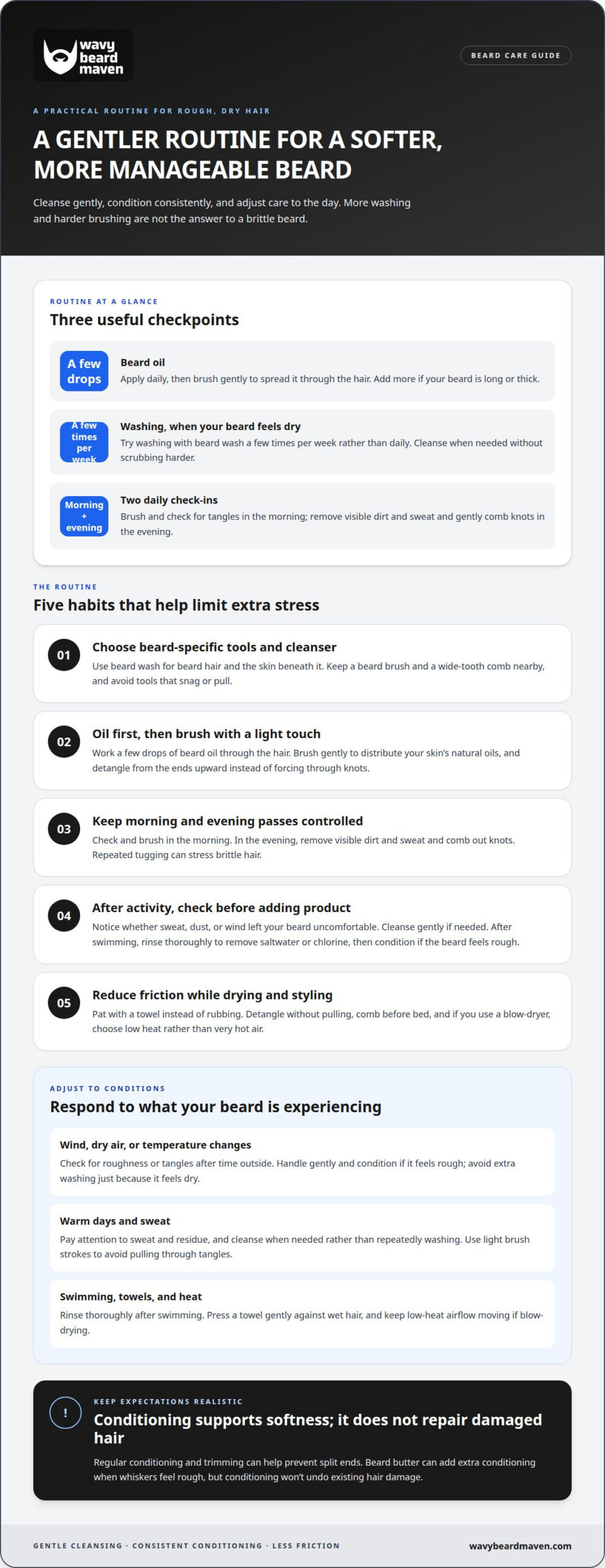
To soften a dry, brittle beard, cleanse gently, apply a few drops of beard oil, then brush from skin to ends. Prevent breakage and split ends with regular conditioning, slow detangling, and trims for damaged ends.
-
Choose Beard-Care Products and Tools
Choose beard wash, beard oil, and a beard brush for your routine. Beard wash cleans beard hair and the skin beneath it. If your beard feels dry, try washing a few times per week rather than daily. Keep a wide-tooth comb nearby for knots, and avoid tools that snag or pull hair.
-
Soften Dry, Brittle Hair and Prevent Breakage
Apply a few drops of beard oil daily, then add more if your beard is long or thick. Work it through the hair and brush gently to distribute your skin’s natural oils. For less breakage, detangle from the ends upward, easing through knots instead of forcing the brush. Regular conditioning and trimming can help prevent split ends.
- Set a morning and evening routine. In the morning, brush through your beard, apply oil, and check for tangles before styling. In the evening, remove visible dirt and sweat, then gently comb out knots. Keep each pass controlled; repeated tugging can stress brittle hair. Adjust the routine to your surroundings and how your beard feels that day.
- After outdoor activity, pause before reaching for more product. Check whether sweat, dust, or wind has left your beard uncomfortable, then clean it gently if needed. If you’ve been swimming, rinse thoroughly afterward; saltwater or chlorine can contribute to dryness. Condition afterward if your beard feels rough, and let it dry without aggressive rubbing.
- Reduce friction during daily care. Pat your beard dry with a towel instead of rubbing it briskly, and guide a brush through the hair without pulling. Before bed, comb out tangles so they don’t tighten overnight. If you use a blow-dryer, choose low heat rather than very hot air, and keep the airflow moving.
How can weather, sweat, and daily friction affect beard texture?
Weather, sweat, and repeated rubbing can leave beard hair feeling rough or tangled. Adjust your routine to the conditions, then use gentle handling to limit added stress.
-
Recognize Weather and Temperature Effects
Notice when your beard feels different after moving between outdoor and indoor conditions. Wind, dry air, or temperature changes can make the hair feel less comfortable, so adapt care to your surroundings rather than following the same routine automatically. Check for roughness or tangles after time outside, and avoid responding with extra washing if the beard simply feels dry.
- Match your routine to the day. After time in cold or windy weather, handle the beard gently and condition if it feels rough. On a warm day, pay attention to sweat and residue instead of repeatedly washing. A brush can help distribute natural oils along the hair, but use light strokes to avoid pulling through tangles.
-
Reduce Dryness From Weather, Swimming, and Heat
After swimming, rinse your beard thoroughly to remove saltwater or chlorine, then condition if it feels dry. Don’t rub wet hair hard with a towel; press gently to remove moisture. If you use a dryer, choose low heat instead of very hot air, and keep it moving. These adjustments help reduce extra drying and rough handling.
- Keep your beard clean without overdoing it. After activity, cleanse when needed and moisturize if the hair feels rough. Pat rather than scrub with a towel, and avoid repeated friction from clothing when your beard already feels brittle. Apply product before brushing, then use gentle strokes.
- Make one adjustment at a time. Note whether wind exposure, swimming, heat, or fabric friction preceded the change in texture, then tailor the next routine accordingly. For a simple framework, use this environment-aware beard care routine as a guide to matching daily care with conditions.
Why Does Your Beard Feel Dry and Brittle?
Dry, brittle beard hair can follow harsh cleansing, inconsistent conditioning, or repeated friction. Hair texture and skin needs vary, so notice what affects your beard before changing several parts of your routine at once.
-
Identify Cleansing and Conditioning Effects
Replace scalp shampoo and harsh all-body cleansers with beard wash; strong surfactants and some alcohol-based products can strip natural oils. Don’t assume every ingredient called alcohol behaves the same: cetyl alcohol is a fatty alcohol used in conditioning ingredients, unlike some fast-evaporating alcohols. If you need softness and shape, beard balm can condition facial hair, while its beeswax provides moderate hold.
-
Consider Genetic and Lifestyle Factors
Notice whether dry skin and coarse hair are familiar patterns for you, then focus on manageable care habits. Natural hair and skin tendencies differ, but extra water doesn’t replace conditioning beard hair and skin. Don’t treat vitamins as a quick fix; focus on gentle cleansing and conditioning rather than adding supplements without a clear reason.
- Change one routine factor at a time. If scalp shampoo leaves your beard rough, switch to beard wash and observe how the hair and underlying skin feel. If flakes or itch keep returning, consider that a skin condition may be involved rather than simple dryness.
- If persistent skin symptoms such as flakes, redness, burning, or itch keep returning, see a dermatologist. These signs may point to a skin condition that needs different care, so don’t respond by scrubbing harder or layering on more products.
- Track what helps you build a consistent routine. Notice whether your beard feels different after cleansing, moisturizing, or styling, and make one adjustment before assessing the effect. Beard oil helps hydrate whiskers, but it won’t make beard hair grow faster or reverse split ends.
Using beard butter for extra conditioning
- Use beard butter when your whiskers still feel rough after regular care. A practical step in fixing a dry and brittle beard is adding targeted conditioning without changing every part of your routine. Treat butter as an added care step, not a replacement for cleansing or gentle handling. Work it through the beard instead of coating only the outer layer, and keep the routine simple so you can notice how your hair responds.
- Start with a clean beard and spread a modest amount of butter between your fingers. Work it through the hair from near the skin toward the ends, distributing it evenly rather than concentrating it in one patch. If your beard feels coated afterward, use less next time and adjust gradually. Consistent application matters more than loading on product.
- Try a three-day conditioning routine as a starting point for a rough-feeling beard. Use beard butter consistently during that period, then assess whether your hair feels softer and easier to manage. This routine won’t magically repair damaged hair or reverse split ends. Conditioning can improve feel and manageability, but damaged ends may still need trimming.
- Pair beard butter with careful brushing. Apply product before brushing, and work through tangles gently with a soft brush for maintenance or a medium brush for training. Don’t force the brush through snags. If your beard feels weighed down, adjust your routine rather than adding more product.
- Make the routine purposeful. Use butter when dryness or roughness calls for extra conditioning, then observe how your beard responds during the three-day starting routine. Fixing a dry and brittle beard takes consistent care, not a rush to apply more product. For a steady conditioning practice, build your beard-butter routine around careful application and patient upkeep.
Wavy Beard Maven
Wavy Beard Maven helps you turn beard-care advice into a steady routine for wavy facial hair. Its educational guides and step-by-step tutorials can help you refine cleansing, conditioning, and low-friction handling when dryness keeps disrupting your progress.
For daily care, beard oil, beard butter, beard balm, and a beard brush support different parts of your routine. Oil hydrates, butter adds softness and control, and balm offers hold and structure. Choose a soft brush for maintenance or a medium brush for training. Apply product before brushing, and keep your routine consistent.
Explore Wavy Beard Maven’s guides and grooming essentials to build a consistent beard-care routine that fits your goals.
Make Your Beard Routine a Lasting Practice
Better beard care is built through attention, not a single product or quick reset. Treat fixing a dry and brittle beard as a steady practice: notice how your beard feels, keep your routine manageable, and make thoughtful adjustments as your needs change. With discipline and patience, you can develop a style that reflects your confidence, self-respect, and presentation.
Give your routine time to become familiar. A deliberate grooming practice can support confidence and self-respect, while patience keeps the focus on consistent care. If you want guidance as you shape your next steps, contact Wavy Beard Maven for beard care help.
Keep showing up for the craft. Each deliberate choice is a chance to refine your routine and wear your beard with confidence.
Frequently Asked Questions
Can washing and drying habits leave beard hair feeling rough?
Yes, frequent washing, harsh cleansers, and rough towel-drying can leave facial hair feeling coarse. For example, if your beard feels rough after a hot shower, consider whether the cleanser or vigorous drying is contributing. Use beard wash and press a towel gently against the hair instead of rubbing. If you use a dryer, choose low heat and keep the airflow moving.
How can you tell whether a routine change is helping?
Look for practical changes in how your beard feels and behaves during grooming. It may feel softer, snag less when you brush, or become easier to shape. Change one routine element at a time, such as how often you wash, and notice the result. Making several changes together makes it harder to tell what helped.
What Are Some Tips for Choosing the Right Products for Your Dry Beard?
Choose products by their purpose and how your beard responds, not by adding every available step. Use beard wash for cleansing, then consider a leave-on conditioner such as oil or butter if your whiskers feel dry. Read ingredient labels and avoid products that leave your facial skin uncomfortable. Remember that cetyl alcohol is a fatty alcohol used in conditioning ingredients, unlike some fast-evaporating alcohols.
What is the difference between beard oil, balm, and butter?
Beard oil is a leave-on grooming step that conditions whiskers and can make dry skin feel more comfortable. Beard balm can condition and soften facial hair, while beeswax provides moderate hold for shaping. Beard butter is another conditioning option for a rough-feeling beard. Choose according to your routine’s need: conditioning, added softness, or shaping with hold.
What beard oils and conditioners work best for dry facial hair?
The right choice depends on what feels lacking in your routine. Beard oil can condition whiskers and help dry skin feel more comfortable; start with a few drops, adding more for a long or thick beard. Butter can provide extra conditioning when hair feels rough. Neither oil nor conditioner makes beard hair grow faster or reverses split ends.
How often should you wash and condition a dry beard?
If daily washing leaves your beard feeling dry, try washing a few times per week and adjust based on sweat, dirt, and comfort. Beard wash cleans both facial hair and the skin beneath it. Condition after cleansing when the beard feels rough, rather than forcing a rigid schedule. A simple routine makes it easier to notice how your beard responds.