November 6, 2026

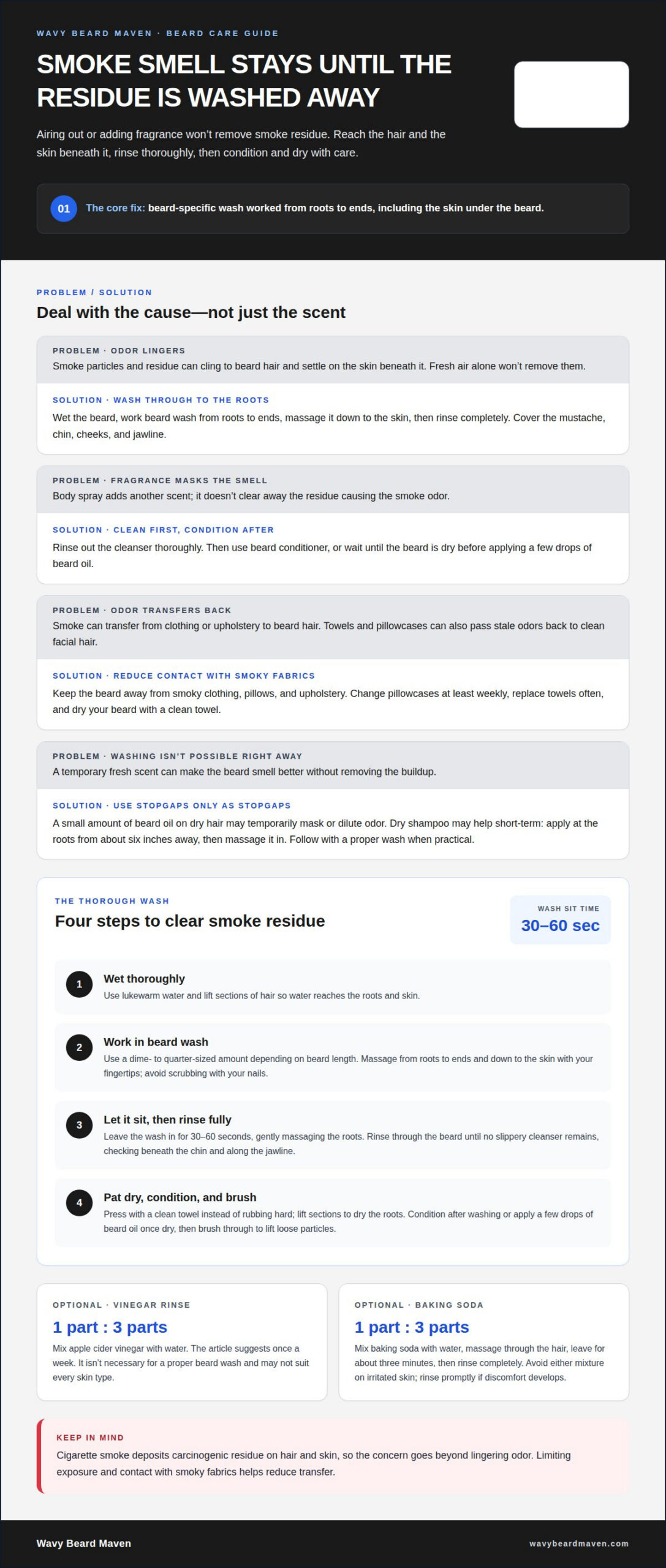
Washing is the most reliable way to get smoke smell out of your beard: work beard wash through the hair and down to the skin, then rinse thoroughly. Follow with conditioner or beard oil once the beard is dry, and brush through to lift trapped particles. Simply airing it out won’t remove the odor.
A smoky beard can be frustrating, especially when the smell lingers after you leave the smoky environment. Smoke and other residue can settle on beard hair and the skin beneath it, so masking the scent with body spray won’t remove what’s causing it.
This guide covers a thorough wash, care for the skin beneath your beard, and brushing to clear loose debris. You’ll also learn how conditioning and a simple maintenance routine can help your beard feel clean and smell fresh.
Key Takeaways
- Spot how smoke, sweat, and leftover residue can contribute to beard odor, then address the source rather than covering it with another scent.
- Use beard-specific wash and conditioner to refresh the hair while helping it feel soft and manageable.
- Reach the skin beneath your beard during washing so residue and trapped moisture don’t get overlooked.
- Make brushing part of your routine to lift particles and keep your beard looking orderly between washes.
Causes of beard odor, including trapped moisture, sweat, residue, and smoke
Smoke smell can cling because beard hair absorbs odors, while smoke residue settles on both hair and skin. Limit exposure and avoid letting your beard rub against smoky clothing or upholstery. If the smell lingers, wash your beard rather than relying on fresh air alone.
- Identify what’s building up. Sweat, moisture, food, and grooming-product residue can all contribute to an unpleasant beard smell. After eating, wipe your beard with a clean napkin and rinse it with water if possible. During washing, work beard wash through the hair to clear residue instead of layering another scent over it.
- Reduce smoke transfer. Keep a smoky beard away from clothing, pillows, and upholstery, where odors can transfer and linger. If you smoke or spend time in places with strong odors, consider a protective beard cover. Smoke particles cling to hair, so airing out alone won’t remove the smell.
- Refresh fabrics that touch your beard. Change pillowcases at least weekly and replace towels often to prevent stale odors or bacteria transferring back to clean facial hair. After washing, use a clean towel rather than one that has already absorbed moisture and everyday smells.
- Use beard oil only as a temporary fix. If you can’t wash your beard right away, smooth a small amount of beard oil over dry hair. It may temporarily mask or dilute the smoke odor, but it won’t remove the residue causing it. Wash your beard when you can, then use oil as part of your regular grooming routine.
- Try dry shampoo when washing isn’t possible. Dry shampoo can help reduce cigarette odor in hair as a short-term option. Apply it to the roots from about six inches away, then massage it in. A fresher scent doesn’t mean your beard is clean, so follow with a proper wash when practical.
Cigarette smoke deposits carcinogenic residue on hair and skin, so the concern goes beyond lingering odor. Hair can absorb cigarette smoke odor in a smoky environment, and contact with clothing or upholstery can transfer smoke to a beard. Avoiding that contact helps limit transfer.
Shampooing and conditioning beards and mustaches
For anyone learning how to get smoke smell out of your beard, start with a thorough wash using beard-specific cleanser. Rinse completely, then condition and dry the hair carefully.
-
Wash the Beard and Mustache
Wet your beard and mustache, then spread beard wash from roots to ends. Use a dime- to quarter-sized amount, depending on beard length. Massage through the hair and let the wash sit for 30-60 seconds before rinsing. Cover the mustache, chin, and jawline rather than washing only the most visible hair. Rinse thoroughly to prevent cleanser residue from building up.
-
Consider Baking Soda or Vinegar Safely
A diluted apple cider vinegar rinse uses one part vinegar to three parts water, with a suggested frequency of once a week. Another option is one part baking soda mixed with three parts water. Massage it through the hair, leave it for about three minutes, then rinse completely. These mixtures aren’t necessary for a proper beard wash and may not suit every skin type. Avoid applying them to irritated skin, and rinse promptly if discomfort develops.
-
Condition After Washing
After rinsing out beard wash, use beard conditioner or wait until your beard is dry before applying a few drops of beard oil. Conditioning helps keep the hair manageable after washing. Gently pat your beard with a clean towel instead of rubbing hard, then let the roots dry. This routine supports a clean feel without relying on extra fragrance to cover lingering odor.
-
Wash Again After Smoke Exposure
If you’re figuring out how to get smoke smell out of a beard after heavy exposure, use beard-specific shampoo and rinse thoroughly. Work it through the mustache and dense growth beneath the chin, then condition after washing or apply beard oil once the beard is dry. Body spray adds another scent rather than removing smoke odor. A careful wash is the practical first step.
Applying beard wash to the skin beneath the beard
Smoke odor can settle on facial hair and the skin beneath it. Reach the roots during washing, not just the visible outer layer.
- Wet the beard thoroughly. Use lukewarm water to separate the hair and expose the skin beneath it. Move your fingers through the beard, lifting sections so water reaches the roots around your chin, cheeks, and mustache. This first rinse helps loosen surface particles before you apply beard wash.
- Work beard wash down to the skin. Spread the cleanser through your beard, then massage it in with your fingertips using small circles. Don’t scrub with your nails. Move from one cheek to the other, then cover your chin and the area beneath your jaw. Smoke smell can linger close to the skin, so don’t stop at the hair’s surface.
- Give the wash time to work. Let it sit in the beard for 30-60 seconds before rinsing. During that time, keep gently massaging the roots, especially in dense areas where product or odor may linger. Avoid letting the wash dry in place; move directly to rinsing when the time is up.
- Rinse completely. Direct water through your beard while separating the hair with your fingers. Check beneath the chin and along the jawline, where suds can hide. Continue until the water runs clear and no slippery wash remains on your hair or skin. Leftover product can become residue instead of leaving your beard feeling clean.
- Dry the roots as well as the ends. Gently press a clean towel against your beard, then lift sections to absorb moisture near the skin. Don’t rub hard or leave the roots damp beneath thick hair. Careful drying helps keep the skin beneath your beard clean and comfortable after washing.
Keep the purpose of the wash in mind as you work through each area: the cleanser needs to reach the skin, not just the visible hair. Pay attention to places where your beard lies close against your face, and guide the wash through to the roots with your fingertips. A deliberate, even pass helps include the skin beneath your beard throughout the cleaning process.
Brushing and combing to remove trapped debris
Brushing helps lift particles caught in beard hair, including dust and loose debris from the day. Brush after washing and make a bedtime pass part of your routine, but remember that brushing supports cleaning, it doesn’t replace washing.
- Choose a beard brush or comb. Use a beard brush to work through your hair in controlled strokes. A comb can help separate longer or tangled sections first. Choose a tool that moves through your beard without pulling, and keep your strokes steady and gentle around the chin and mustache.
- Start at the outer layer. Brush from your cheeks toward your chin, following the direction you want the hair to sit. This first pass loosens surface particles and helps you spot areas the brush hasn’t reached. Avoid forceful strokes: tugging can tighten knots and irritate the skin beneath your beard.
- Reach the lower layers. Lift sections of hair with your fingers, then brush from near the roots outward. Work across the jawline and beneath the chin, where debris can hide in dense growth. Keep the brush moving through the hair instead of repeatedly scraping it against your skin.
- Brush before bed. Make a careful pass at bedtime to remove particles gathered during the day. If you’ve been outdoors or around smoke, pay attention to your mustache, chin, and the underside of your beard. Brushing clears loose material, but washing is what removes smoke odor from hair.
- Clear debris from your tool. After brushing, remove visible hair and particles from the bristles or comb teeth. A clean tool helps prevent debris from being carried back through your beard during your next grooming session. If your beard feels dry after brushing, don’t use warm water as a quick odor fix; it won’t wash away smoke residue.
Build a consistent brushing routine with a beard brush for daily grooming, and pair it with washing when smoke odor remains.
Wavy Beard Maven
Wavy Beard Maven combines practical grooming guidance with tools to help you build a consistent beard-care routine. After washing away smoke odor, use its resources to structure daily care, from brushing and conditioning to maintaining wavy growth. Beard oils, beard butters, beard balms, and a beard brush support different parts of that routine, but they don’t replace a thorough wash when smoke lingers.
Turn to Wavy Beard Maven when you want to refine your beard-care habits beyond a single wash and keep your beard manageable between cleanings. Choose the steps and grooming tools that fit your routine, then stay consistent. For help finding a useful next step in your beard-care journey, contact Wavy Beard Maven.
Make a Fresh Beard Routine Your Next Move
Knowing how to get smoke smell out of your beard is useful, but consistency turns a quick fix into a dependable grooming habit. Notice how your beard feels after washing and how it responds to your usual routine. If the odor keeps returning, consider what your beard encounters during the day and adjust your care accordingly. The goal isn’t to mask every scent with another one. It’s to build a routine that leaves your beard clean, comfortable, and ready for what comes next.
For guidance that supports your beard-care practice, contact Wavy Beard Maven for beard care help. Keep refining your routine one step at a time, and wear your beard with confidence.
Frequently Asked Questions
Why does your beard smell bad?
Beard odor often comes from trapped sweat, moisture, food, grooming residue, or smoke. For example, damp hair beneath the chin can hold stale smells, while smoke can cling after time around cigarettes or a campfire. Notice whether the odor appears after eating, exercise, or exposure to smoke. If it persists alongside itching, redness, flaking, or pain, consult a dermatologist.
Best beard shampoo for removing smoke odor
Use a beard-specific wash or shampoo, working it from roots to ends and down to the skin. Rinse thoroughly to remove smoke residue and prevent product buildup.
How often should you wash a beard after smoke exposure
Wash your beard after heavy smoke exposure, especially if the smell lingers. Work beard wash down to the skin and rinse thoroughly.