November 1, 2026
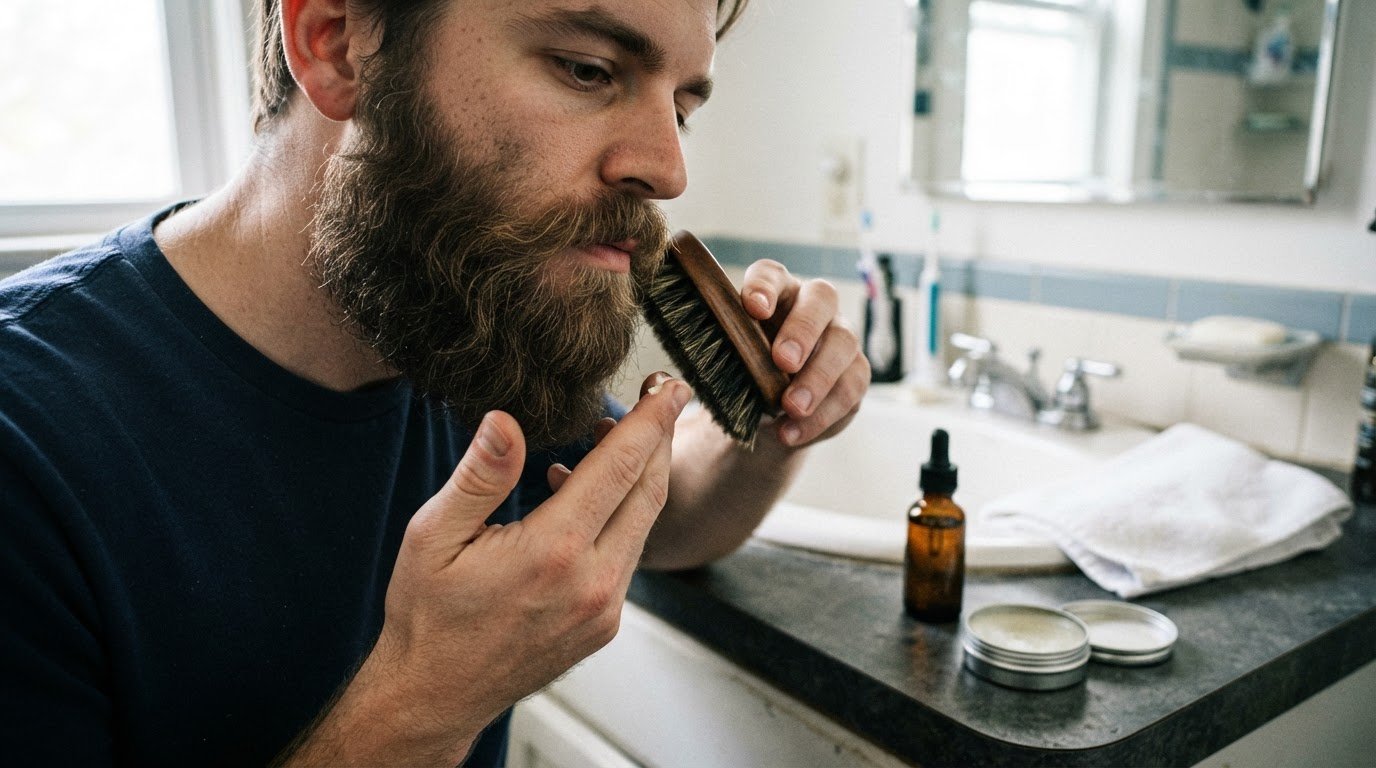
Yes, you can layer beard products. Layering beard products for best results starts with beard oil, worked through the hair and into the skin beneath it. Add beard butter for softness and hydration, or finish with beard balm when you want light hold and help taming flyaways.
It makes sense to want moisture, shape, and a healthy-looking beard without piling on product. Choose each layer for a clear purpose, start with a small amount, and add more only if your beard needs it.
Learn how to prep your beard, choose combinations for hydration or styling, and distribute products from roots to ends. We’ll also explain what a product routine can do for your beard’s appearance, and how to build steady care without expecting topical products to create growth on their own.
Key Takeaways
- Layer products by purpose: use oil for moisture, butter for softness, and balm when you want light hold.
- Start with a small amount and build gradually to help avoid a greasy or weighed-down beard.
- Use brushing or combing to work product through your beard and smooth it into shape.
- Choose a routine around your beard’s needs, separating hydration and styling goals from expectations about growth.
Product combinations for hydration, styling, and growth
Apply products to a clean beard that’s towel-dried and slightly damp, not dripping wet. Layer by purpose: condition first, then add hold only where your style needs it.
-
Prepare Facial Hair Before Styling
Wash with beard shampoo and conditioner, rinse thoroughly, then pat your beard dry instead of rubbing. Slight dampness makes a practical base for applying products; if you prefer working on fully dry hair, use that approach and keep the amount light. Before trimming, finish your usual styling routine and let the beard settle for a few hours. Check its natural shape and growth direction before cutting.
-
Layer Moisturizer and Styling Products
Work beard oil through the hair and into the skin beneath it, then add beard butter when softness and hydration are the priority. For styling, smooth a small amount of balm over the conditioned beard to tame flyaways and provide mild hold. Add product gradually, distributing each layer before reaching for more. If you have sensitive or acne-prone skin, avoid ingredients you already know trigger a reaction; fragrance-free products with soothing ingredients are a sensible choice.
-
Build a Beard Styling Routine
Choose one goal for each layer: oil for moisture, butter for softness, and balm for shape and light hold. Start with a small amount and spread it evenly instead of stacking several heavy applications. Layering can leave greasy buildup, and products that irritate your skin may cause discomfort. Reduce the amount or stop using a product if you notice a reaction. Treat conditioning as beard care, not a way to promise faster growth.
When should you use beard balm vs butter vs wax?
Choose each layer for its job: cleanse and condition first, add oil for moisture, then use butter, balm, or wax to match your finish. Wash with beard shampoo a couple times a week, and condition during washing before applying leave-in products.
-
Apply Beard Oil Before Balm
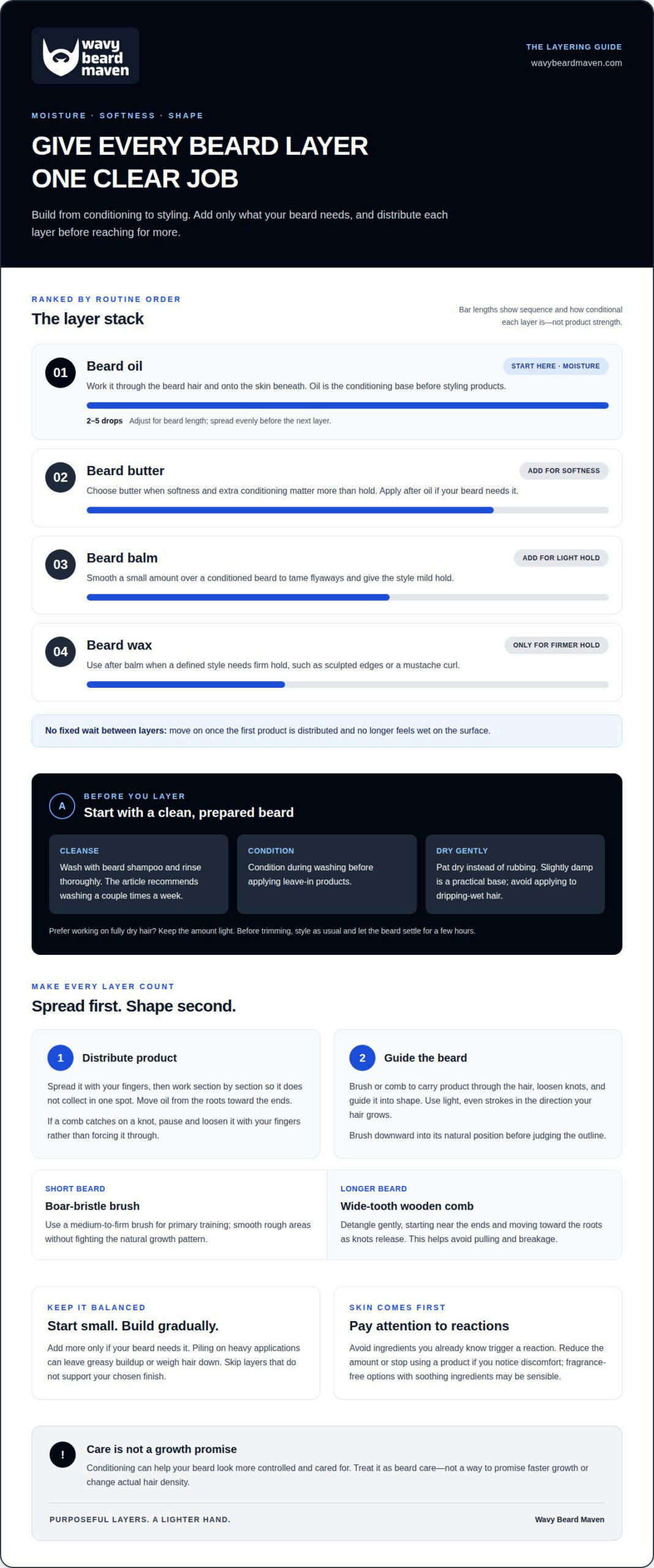
Work 2 to 5 drops of beard oil through the hair and onto the skin beneath it, adjusting for beard length. Let the oil settle before smoothing on balm; the oil supports moisture, while balm adds mild hold and helps tame flyaways. There’s no fixed wait between layers: move on once the first product is distributed and no longer feels wet on the surface. Yes, oil goes before balm.
-
Add Butter, Balm, or Wax for Styling
Choose beard butter when softness and conditioning matter more than hold. Reach for balm when you want light styling control, a neater appearance, or help managing a longer beard. Apply wax after balm for firm hold on a defined style, such as sculpted edges or a mustache curl. A beard cream can condition while providing hold; keep the finish lighter if heavy products weigh your hair down. Explore beard balms for styling control as one option for that final layer.
- Follow the cleanser-and-conditioner step with oil, then butter if you want extra softness, and balm or wax only when your style needs hold. Use a serum only as directed on its label, rather than assuming it replaces oil or styling products. Allow each layer to distribute before adding another; piling products on quickly can leave residue or a greasy finish. The neckline is a separate shaping detail, so apply styling products evenly before refining its outline.
Combing and brushing to distribute products
Use a brush or comb after applying product to carry it through the beard, loosen knots, and guide the hair into shape. Choose a medium-to-firm boar-bristle brush for primary training, and use a comb to detangle.
- Start with clean, detangled hair, then spread product with your fingers before reaching for a tool. After washing, apply oil across the skin and hair, then use a comb to move it from roots toward the ends. Work section by section so product doesn’t collect in one spot, especially beneath a dense mustache or along the jaw.
- Choose a boar-bristle brush for a short beard. Brush in the direction your hair grows to distribute product and smooth rough areas without fighting its natural pattern. Use light, even strokes across the cheeks and chin; pressing hard won’t create a straighter finish. For shaping, brush the hair downward into its natural position before judging its outline.
- Switch to a wide-tooth wooden comb for a longer beard. Guide it gently through knots, starting near the ends and moving toward the roots as tangles release. This approach helps avoid pulling and breakage while spreading oil or balm through thicker growth. If the comb catches, pause and free the knot with your fingers instead of forcing it through.
- Finish by brushing downward and checking how the beard sits from the front and sides. This reveals its length and growth patterns, helping you spot uneven areas before shaping. A brush can align the hairs into a fuller-looking outline, but it won’t change their actual density. Use a mirror to compare both sides, then make small adjustments with your brush or comb rather than repeatedly adding product.
Benefits of layering beard products
Layering works best as a targeted routine, not a contest to use every jar. Match each product to one need, such as moisture, softness, or hold, and apply it evenly. This helps different beard styles look more controlled without relying on one product to do every job.
- Address hair and skin separately. Apply beard oil to the hair and the skin underneath, then choose another layer only if your beard needs it. This focused approach cares for both the visible strands and the skin beneath them, rather than leaving oil concentrated on the beard’s surface.
- Build a finish around your style. For a softer, natural appearance, use oil with beard butter. For more control, place balm over the conditioning layer; add wax when a mustache curl or sculpted edge needs firmer hold. Each layer has a distinct role, so skip anything that doesn’t support your chosen shape.
- Improve consistency across the beard. Spread each product through small sections, then brush or comb into the shape you want. For example, distribute balm through the cheeks before shaping the jawline. Even application helps prevent one area from looking slick while another remains dry or unruly.
- Adjust without overloading. Start with a small amount, check how your beard feels and looks, then add only what’s needed. Too much product can weigh hair down or leave buildup. Layering lets you adjust your routine to beard length, texture, and desired hold instead of applying a heavy styling product everywhere.
- Keep growth expectations grounded. Conditioning and styling can help your beard look softer, more orderly, and healthy, but topical products don’t make facial hair grow faster. Build a routine around comfort and appearance, and explore beard-care products to put those steps into practice.
Wavy Beard Maven: Beard Oils
Wavy Beard Maven offers Beard Oils for a hydration-focused beard routine. Add Beard Butters when softness is your priority, or choose Beard Balms when you want styling control. A Beard Brush can help spread product through facial hair and guide it into shape.
Start with the need you identified: oil for moisture, butter for conditioning, or balm for hold. Use only the layers that serve your beard, then brush through to distribute them. This keeps your routine purposeful rather than piling on products in pursuit of faster growth.
Explore Wavy Beard Maven’s beard-care offerings and choose what fits your routine. Visit Wavy Beard Maven when you’re ready to put your layering approach into practice.
Make Your Beard Routine Your Own
Turn your routine into a practice you can refine. Notice how your beard feels after washing, how it responds to conditioning, and whether your chosen style holds comfortably through the day. Change one part of the routine at a time, so you can tell which step supports the look and feel you want. A routine for layering beard products for best results should fit your beard, not become a checklist of products to apply automatically.
Beard oils and butters can support conditioning, while a brush can help distribute product through facial hair. Choose what matches your needs, then keep your application deliberate and consistent.
Ready to shape your routine around your beard? Contact Wavy Beard Maven for beard care. Keep refining your technique, and take pride in every step of your grooming craft.
Frequently Asked Questions
Can you layer beard products together?
Yes, you can combine products when each has a distinct role in your routine. For layering beard products for best results, pair products that meet separate needs rather than applying everything at once. For example, use oil and butter when your beard feels dry, then add balm if you need help controlling its shape. If your beard already feels comfortable and stays in place, skip the extra layer.
How much should you apply?
Start with a small amount, spread it across your palms, and work it through one section at a time. To layer beard products for best results, check your beard after distributing each layer. If the hair looks shiny, feels tacky, or clumps together, use less next time. Add more only when sections still feel dry or won’t settle into your style.
What results should each one give?
Beard oil moisturizes facial hair and can help reduce itch. Butter is intended to soften and hydrate, while balm adds mild hold and helps manage flyaways. Wax offers firmer control for sculpted edges or mustache curls. These products support conditioning and styling; they don’t make facial hair grow faster or guarantee a particular beard shape.
How much beard oil or balm should you use based on beard length?
Use 2 to 5 drops of oil, adjusting the amount to your beard’s length. For balm or butter, a short beard may need half a fingernail, while a medium beard may take about a pea-sized amount. A long or dense beard may need a dime-sized amount of balm or butter. For wax on long or dense growth, start with just a fingertip.
How do beard oil, beard balm, beard butter, and beard wax differ?
Think of these products as different tools, not interchangeable versions of the same step. Oil moisturizes hair and skin; butter conditions and softens. Balm combines conditioning with mild styling control, while wax gives firmer hold for defined details. Choose butter for a soft finish, for example, or wax when a mustache curl needs to stay shaped.
How should you layer products for short, long, curly, or coarse beards?
Let length, texture, and how easily your beard holds a shape guide your choices. A short beard may need only a light layer, while longer growth can benefit from conditioning followed by targeted hold. Curly or coarse hair may need careful distribution through separate sections. For fine or straight hair, choose lighter products to avoid a greasy or weighed-down appearance.