October 22, 2026
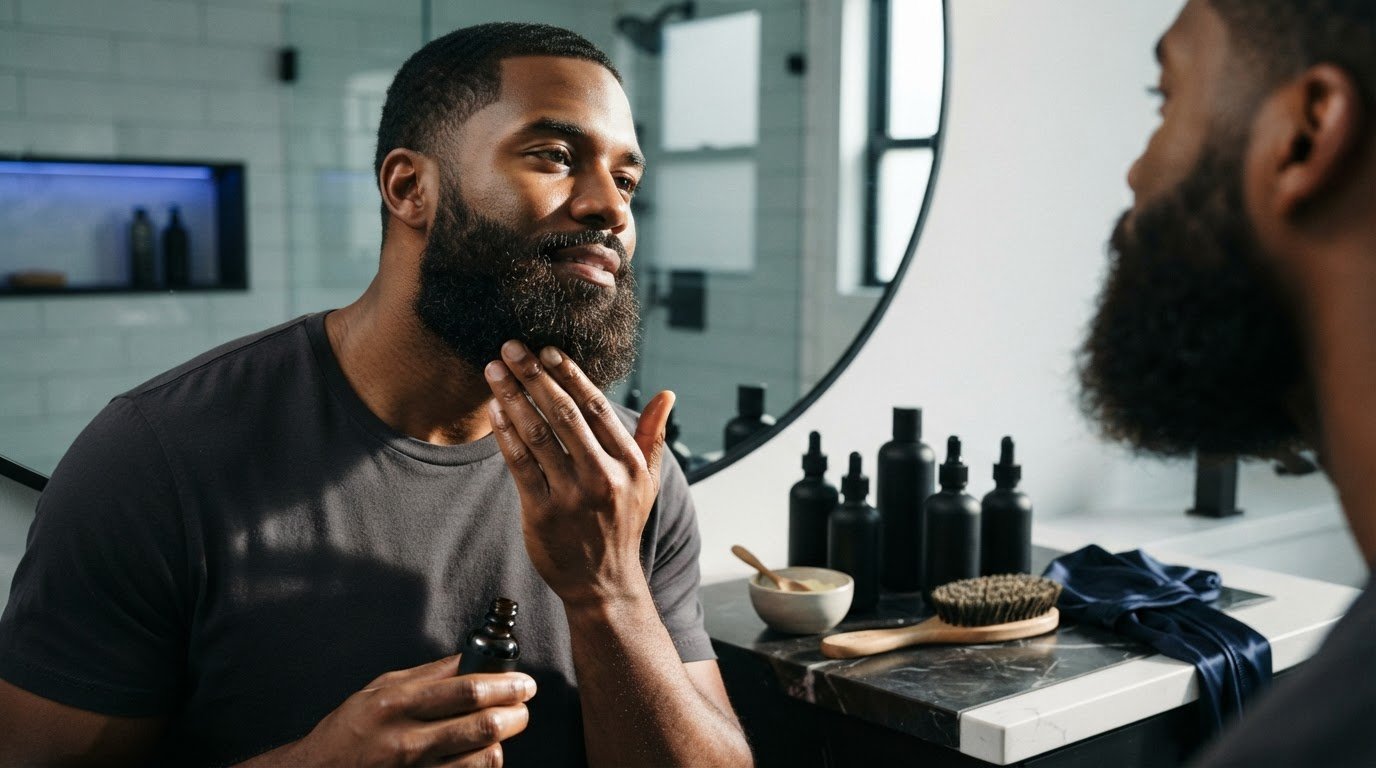
A consistent beard routine can make your beard cleaner, softer, and easier to manage, which may help you feel more comfortable and confident wearing it. One of the benefits of a consistent beard routine is that regular care helps manage dryness, tangles, and flaking while keeping your beard looking intentional. A practical foundation is gentle washing, applying beard oil, and brushing daily.
It’s easy to assume a beard will take care of itself once it grows in. But facial hair and the skin beneath it need steady attention, especially when dryness or itch affects your comfort. This guide explains how to build a moisturizing routine, choose between oil, balm, and butter, and adapt your approach to your beard’s texture and growth pattern. Start with simple steps, then refine them based on what keeps your beard comfortable and manageable.
Key Takeaways
- Build confidence through steady upkeep: clean and brush your beard regularly to keep it fresh, neat, and easier to manage.
- Use gentle cleansing and moisturizing to help ease dryness, itchiness, and flaking beneath your beard.
- Notice how your beard’s texture and growth pattern respond to grooming, then adjust your approach to suit them.
- Choose between beard oil, balm, and butter based on whether you want moisture, shaping control, or both.
- Keep your routine simple and consistent, and refine the steps as your beard changes.
Can A Beard Routine Make You More Confident?
Yes, steady grooming can make your beard cleaner, softer, and easier to manage, supporting comfort and confidence. Monthly cost depends on which products you use and how often you replace them; a basic daily routine is washing as needed, applying beard oil, then brushing or combing.
-
Build a Daily Beard Care Ritual
Set aside 3 to 5 minutes each day for beard care, and treat the routine as a small personal win. Check your beard in the mirror after brushing: note tangles, flyaways, or areas that feel rough. A repeatable sequence turns grooming into a clear habit, not another chore. Avoid judging progress by one morning; watch how manageable your beard feels over time.
-
Hydrate Your Beard and Care for Skin
After washing, apply beard oil through the hair and down to the skin beneath. Beard oil can soften facial hair and moisturize the underlying skin, helping your beard feel more comfortable. Use a gentle cleanser rather than harsh soap, which may dry the skin. Check for tightness or flakes and adjust how you cleanse and moisturize accordingly.
- Wash your beard two to three times a week with a gentle cleanser to lift dirt and oil buildup. Use lukewarm water, then gently towel-dry instead of rubbing roughly. Sweat and everyday debris can collect in facial hair, so cleansing helps it feel fresh. Avoid washing more often simply to chase a polished look, as frequent harsh cleansing can leave beard hair and skin feeling dry.
- Brush your beard daily to help prevent tangles and spread natural oils along the hair. Move steadily through the beard rather than pulling at snags, which can tug hairs and irritate skin. Regular combing also helps dislodge trapped dirt, food, and dry skin. A cleaner, more orderly beard can look intentional, making your daily grooming effort visible without demanding a complicated routine.
- Care for the skin beneath your beard, not just the hair you see. Gently exfoliate once or twice a week to help clear dry skin near the roots. Notice whether flakes appear after cleansing, brushing, or applying a product, then adjust that step. Dry skin can contribute to itching and irritation, so a comfortable beard routine attends to both skin and hair.
Consistency can also build discipline and self-respect: each completed step is a small daily win. Keep the routine simple, then refine it around what your beard and skin show you. Beard hair can become brittle when dry, making breakage more likely; regular cleansing, moisturizing, and brushing help keep it softer and easier to manage. Over time, that care supports a polished appearance you can wear with confidence.
Dryness, itchiness, flaking, and uneven growth
Dry skin beneath facial hair can cause itching, irritation, and beard flakes. Regular, gentle care helps keep skin more comfortable, while dryness and tangles can make beard length look uneven.
-
Prevent Irritation With Regular Beard Care
Cleanse with a gentle beard wash two to three times a week to remove dirt and oil buildup. Use lukewarm water, then check whether your skin feels tight or itchy after washing. Dry skin can contribute to irritation and flakes, so avoid harsh soaps and rough scrubbing. Gently exfoliate the skin beneath your beard once or twice a week.
-
Avoid Overwashing and Irritating Products
Keep cleansing gentle, and notice how your skin responds after each wash. Washing too often or using drying products can strip away moisture, leaving facial hair coarse and skin uncomfortable. Regular shampoo may contain drying ingredients, so choose a sulfate-free beard wash instead. Avoid very hot water, which can make it harder to retain natural moisture.
- Moisturize beard hair and the skin underneath after cleansing. Beard oil can soften coarse facial hair and help moisturize the skin beneath it. Work it through the beard toward the roots rather than coating only the visible outer layer. If flakes or itch persist after washing, review your cleansing and moisturizing steps instead of scrubbing more harshly.
- Detangle patiently to reduce pulling and irritation. Start at the ends, then work through snags gradually; tugging hard can pull beard hairs and stress the skin. A wide-tooth comb can help detangle long or very thick beards. Dryness can make hair brittle, while knots can make its length appear inconsistent, so use slow strokes and avoid forcing the comb.
- Distinguish natural growth patterns from a dryness-related appearance. Beard hair grows from roots beneath the skin, so trimming the ends doesn’t change its growth rate. Dryness, tangles, and flyaways can make some areas look shorter or less full. Keep your beard comfortable with moisture and careful detangling, then assess its natural shape before deciding whether uneven areas need trimming.
Build a simple sequence: wash gently, dry without rubbing, moisturize, then detangle. Change one step at a time if discomfort follows a particular product or wash. That makes it easier to identify what may be irritating your skin. A careful beard routine supports skin comfort and manageable hair, but it can’t change your natural growth direction or pattern.
Learning individual beard hair types and growth patterns
For natural beard length, trim every two to four weeks, adjusting for growth and shape. A consistent routine has no single results timetable: track changes in softness, tangles, and manageability as your facial hair responds.
- Observe your beard before changing your care routine. Note where growth looks dense, sparse, straight, or wavy, and check how each area responds to moisture. For example, coarse hair may feel dry sooner than softer sections. Inherited traits influence your growth pattern, while length and grooming affect how that pattern appears.
- Give each growth stage the attention it needs. Early growth can feel itchy or look uneven; the middle stage may seem wild, while longer growth often needs shaping and control. Adjust your care to your beard’s current stage, and track changes in a mirror rather than expecting every area to fill in evenly.
- Comb slowly to learn the direction your hair naturally follows. Start at the bottom, then move from the neck toward the chin and cheeks, working upward and outward. Ease through snags instead of pulling hard, which can remove hairs. Combing can also help distribute natural oils and dislodge debris, supporting a tidy appearance.
- Trim to maintain shape, not to make beard growth faster. Beard hair grows from roots beneath the skin, so cutting the ends doesn’t change its growth rate. For natural length, trim every two to four weeks, and adjust based on your growth and preferred outline. Remove small amounts gradually to preserve the shape you’re building.
- Compare your beard under similar conditions as you maintain your routine. Check whether dryness, tangles, or flyaways are changing, and note which sections respond best to moisture and brushing. Manageability can improve before changes in length are apparent. This helps you distinguish normal variation in your growth pattern from issues related to dryness or rough grooming.
Use those observations to refine your routine, one adjustment at a time. Your natural pattern sets the foundation; patient care helps you maintain its shape and support beard health.
Learning your beard’s hair type, growth patterns, and response to moisture and grooming can help you understand what’s normal for it. Treat those observations as a guide to care, not as a reason to expect every area to behave alike. Compare how different sections respond to a consistent, gentle approach, and use what you notice to maintain the outline. Paying attention to your own pattern can help distinguish ordinary variation from changes linked to grooming choices.
Combing can stimulate blood flow to the skin and hair follicles, providing them with nutrients for growth. Comb your beard up and out, starting at the bottom and moving from the neck to the chin and then the cheeks. If the comb catches, work slowly through the snag rather than pulling hard, since force can rip out beard hairs. Occasional trimming can maintain the beard’s shape and prevent split ends. Pairing careful grooming with attention to texture and moisture gives you a practical way to care for your beard while preserving the outline you prefer.

Moisturizing beard hair and underlying skin
Wash your beard two to three times a week, then condition once or twice a week after washing. Follow with beard oil to moisturize the skin underneath and soften facial hair.
- Apply conditioner after washing on your conditioning days. Work it through the beard, reaching the hair near the roots without scrubbing your skin. Conditioner can soften hair, improve texture, and make combing easier. If your beard feels rough after cleansing, conditioning may help with moisture and dryness-related brittleness.
- Use beard oil to moisturize both hair and the skin underneath. Start with a small amount in your palms, then work it through the beard toward the skin. Oil supports moisture and adds shine. Focus on dry or coarse areas, but don’t apply more simply because the beard looks dull. Consistent care means noticing how your hair responds.
- Reach the skin, not only the outer layer of hair. Gently part thicker sections with your fingers, then massage oil into the skin beneath. This matters because dry skin can feel itchy and contribute to flakes caught in facial hair. If your skin feels comfortable after application, keep the amount steady; if your hair feels heavy, use less next time.
- Detangle after moisturizing, using a brush or comb suited to your beard’s length and texture. Begin at the ends and ease through snags before moving closer to the roots. Conditioning can make hair easier to comb and style, while moisture helps limit brittle, tangled strands. Avoid yanking through knots, since forceful grooming can pull hairs and disrupt your shape.
- Use beard butter when you want conditioning with light hold and control. Smooth a small amount over areas that feel dry or look unruly, then shape the beard with your hands or brush. Beard balm also offers moisture and hold. Choose based on the finish you want, and avoid layering products without a clear need.
- Track changes as you maintain your routine. Note whether your skin feels less dry after washing or hair becomes easier to comb after conditioning. Split ends can contribute to further breakage, so keep your beard moisturized and handle it gently. Adjust one step at a time, such as changing how much oil you apply or when you condition.
Pair cleansing, conditioning, and oil with careful detangling. That sequence helps maintain moisture in beard hair and skin without making the routine complicated.
Beard oils, balms, and butters
Choose beard products by the finish you need: oil supports moisture, balm adds hold, and butter conditions with light control. The right fit depends on your beard’s texture, appearance, and place in your grooming routine.
- Start by identifying the main issue you want to address. Choose oil when your beard hair or the skin underneath feels dry; choose balm when flyaways need more hold. Beard butter suits hair that needs conditioning and light control. A beard that feels soft but looks unruly may need shaping, not another layer of oil.
- Apply beard oil to support moisture in the hair and skin. Spread it through the beard, reaching the skin underneath instead of coating only the surface. Oil helps retain moisture and adds shine. If your beard already feels comfortable, don’t keep adding product for a glossier appearance. Deliberate application keeps your routine focused.
- Choose beard balm when you want moisture alongside hold. Work it through areas that lose their shape, then guide the hair into place. Balm can help control flyaways while giving the beard a more deliberate outline. Use it for shaping rather than expecting it to replace cleansing or conditioning in your regular beard care.
- Use beard butter when conditioning and softer control are the priority. It can tame flyaways, reduce puffiness, and help the beard look fuller and more intentional throughout the day. Smooth it over sections that feel rough or appear unruly. This option can be useful while growing your beard, when uneven texture makes the overall shape harder to manage.
- Keep each product’s role clear before layering. Oil supports moisture and shine; balm offers moisture and hold; butter conditions with light control. Start with the product that addresses your main need, then assess the result in the mirror. Combining everything by default can leave your beard feeling heavy rather than easier to manage.
- Judge the result by feel and appearance, not by product count. Check whether your beard feels softer, less frizzy, and easier to shape during the day. Conditioning can help manage frizz and support a well-groomed look. If the finish feels weighed down, simplify your routine and use only the product suited to that day’s grooming goal.
Build a focused routine around the finish you want, then explore beard oils, balms, and butters to support your beard-care practice.
A natural boar bristle brush can distribute natural oils evenly through coarse beards. Use it as part of grooming when you want to spread those oils through the beard. A basic beard routine can consist of washing and conditioning, applying beard oil, and finishing with beard butter. Keeping that sequence in mind can make it easier to pair cleansing and conditioning with the products that follow, while maintaining a simple approach to beard care.
Wavy Beard Maven: Beard Oils
Wavy Beard Maven shares guidance and grooming products for men building a beard care routine. Use beard oil when your facial hair or the skin beneath it feels dry, applying it through the beard toward the roots. Beard butter and balm offer different conditioning and hold, while a medium-to-firm boar-bristle brush is the primary tool for wave training. Apply product before brushing, and avoid brushing completely dry, brittle hair.
Choose based on what your beard needs that day. Use oil to focus on moisture, butter for conditioning with light hold, or balm when you want moisture and shaping control. Keep the routine simple, then pay attention to how your beard feels and looks.
Visit Wavy Beard Maven to explore beard care options and continue refining your routine.
Make Your Next Grooming Step Count
Your next move is to make the routine your own. Notice how your beard responds, then choose one practical adjustment and stick with it long enough to assess the result. The benefits of a consistent beard routine come from matching care to your hair and skin, not from adding more steps or products.
If you’re ready to put that approach into practice, Wavy Beard Maven offers beard oils, beard butters, and a beard brush to support your grooming routine. Choose the option that fits your current needs, and keep refining your technique with intention. For help choosing your next beard-care step, contact Wavy Beard Maven.
Stay patient, stay consistent, and take pride in the care you put in. Your routine is yours to shape, one deliberate step at a time.
Frequently Asked Questions
How Often Should I Brush My Beard?
Brush daily for general upkeep; for beard-wave training, Wavy Beard Maven recommends at least 2-3 sessions per day, lasting 5-10 minutes each. Apply product before brushing, and avoid brushing hair that’s completely dry and brittle. A medium-to-firm boar-bristle brush is the primary training tool. Use a soft brush for maintenance, while hard brushes require careful handling and aren’t recommended for beginners.
What are the benefits of a consistent beard-care routine?
The benefits of a consistent beard routine include a more manageable appearance and a clearer sense of how your beard responds to care. Tracking roughness or tangles after grooming, for example, can help you spot when your approach needs adjusting. Repeating a few deliberate steps also makes upkeep easier to remember, so you can maintain your preferred shape instead of reacting only when your beard feels unruly.
Does beard oil or balm improve beard softness and appearance?
Beard oil can moisturize the skin beneath facial hair and soften the beard, while balm adds moisture and hold for shaping. Choose oil if your main concern is dry-feeling hair or skin; use balm when flyaways disrupt your outline. Beard butter is another option for softness with light control. Choose the product that matches your goal rather than automatically layering all three.
What tools and products are essential for a beard-care routine?
Start with a beard brush or comb and choose products based on your grooming goal. A comb helps work through tangles, while a brush distributes product and shapes the hair. Beard oil supports moisture; beard butter adds conditioning and light control; balm provides hold and structure. For wave training, apply product before brushing, and never brush completely dry, brittle hair.