November 12, 2026

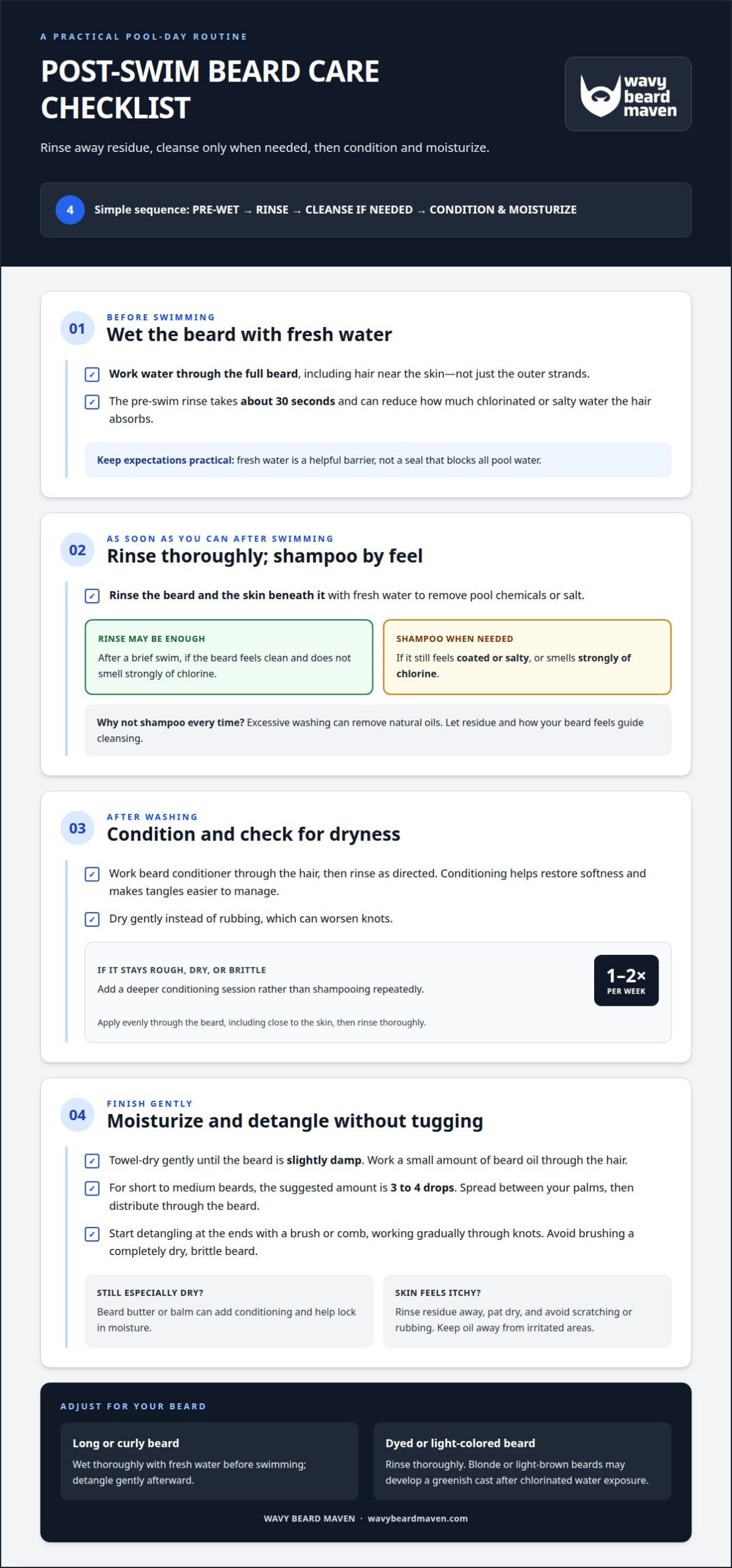
A quick swim doesn’t always call for shampoo. For beard care after swimming in chlorine, rinse thoroughly with fresh water as soon as you can. Shampoo only if your beard still feels coated or salty, or smells strongly of chlorine. After a brief swim, a thorough rinse may be enough.
Rinsing is essential, but it’s only the first step. Pool water can leave beard hair dry, rough, or tangled, so condition after washing and apply beard oil to slightly damp hair to help keep it soft and manageable. If your beard still feels especially dry, beard butter or balm can add conditioning.
This guide walks you through a practical post-swim routine: when to shampoo, how to detangle without tugging, and how oils such as jojoba, argan, and coconut may fit. Keep the steps simple: rinse away residue, cleanse when needed, condition, and moisturize. A consistent routine can help your beard feel comfortable and stay easier to shape after swimming.
Key Takeaways
- Chlorine can leave beard hair dry and rough by stripping away its natural oils, so make post-swim care part of your routine.
- Use shampoo when your beard still feels coated or salty, or smells strongly of chlorine; a thorough rinse may be enough after a quick swim.
- Condition after washing, then apply oil to slightly damp hair to support softness and easier detangling.
- Explore how jojoba, argan, and coconut oils can play different roles in replenishing moisture and caring for your beard.
Why would a swimming pool damage my beard?
Pool chemicals can leave beard hair and the skin beneath it feeling dry. Build a simple routine around your exposure, starting by wetting your beard with fresh water before swimming.
-
Understand Pool Chemical Effects
Pay attention to how your beard and skin feel after swimming. Chlorine and bromine can strip natural oils, leaving beard hair rough or harder to manage. Repeated exposure to pool water may also contribute to discoloration or damage over time. Check for dryness or irritation, then rinse your beard and the skin beneath it thoroughly with fresh water to remove residue.
-
Recognize Dryness and Oil Loss
After swimming, check for roughness, tangles, or increased frizz. Chlorine can remove some of the oils that keep beard hair soft, while repeated exposure may weaken hair fibers and make breakage or split ends more likely. Saltwater can also dehydrate beard hair. As salt dries, crystals may pull moisture from the strands and contribute to brittleness and tangling.
- Before entering the pool, thoroughly wet your beard with fresh water. This can reduce how much chlorinated or salty water the hair absorbs. Treat the rinse as a practical barrier, not a seal that blocks all pool water. Work water through the full beard, including the hair near your skin, rather than wetting only the outer strands.
- Make the pre-swim rinse part of your regular pool routine. It takes about 30 seconds to wet your beard with fresh water, giving you a quick step to repeat before each swim. After time in a chlorinated pool or saltwater, rinse again thoroughly. Don’t leave pool chemicals or salt sitting in the beard; removing residue helps limit the exposure that can leave hair and skin feeling dry.
Deep conditioning for regular swimmers
Good beard care after swimming in chlorine includes conditioning after cleansing. Adjust the routine to your beard’s texture and how often you swim.
-
Condition After Swimming and Washing
After swimming, rinse your beard, then shampoo if it feels coated or smells strongly of chlorine. Follow washing with beard conditioner, working it through the hair before rinsing as directed. Conditioning helps restore softness and makes tangles easier to manage. Dry gently rather than rubbing, which can worsen knots. Use a beard conditioning routine to keep the post-swim steps consistent.
-
Add Conditioning for Dry Beards
Check how your beard feels after conditioning. If it remains rough, dry, or brittle, add a deeper conditioning session instead of shampooing repeatedly. Deep condition a swimmer’s beard 1-2× per week. Apply conditioner evenly through the hair, including close to the skin, then rinse thoroughly. Excessive washing can remove natural oils, so let dryness guide conditioning rather than adding unnecessary cleansing.
-
Adapt Care to Beard Type and Swim Frequency
No single swim frequency prevents dryness for every beard. Notice how your beard responds after pool days and adjust your care accordingly. If your beard is long or curly, wet it thoroughly with fresh water before swimming and detangle gently afterward. Rinse dyed or light-colored hair thoroughly; blonde or light-brown beards may develop a greenish cast after exposure to chlorinated water.
- Build your schedule around pool days and your beard’s condition. Rinse after each swim, shampoo only when residue remains or the chlorine smell is strong, and condition after washing. Reserve deeper conditioning for 1-2× per week. For beard care after swimming in chlorine, prioritize conditioning when hair feels rough or brittle instead of increasing shampoo use. Keep the routine steady and adapt it as your beard’s texture changes.
Using beard oil or balm to lock in moisture
After rinsing and washing, apply oil or balm to help your beard feel softer and easier to manage. Apply products in sequence, and remember the skin beneath your beard.
-
Moisturize and Detangle After Swimming
After showering, gently towel-dry until your beard is slightly damp. Work a small amount of beard oil through the hair, then use a brush or comb to distribute it. Start at the ends and detangle gradually instead of pulling through knots. Avoid brushing a completely dry, brittle beard. If residue remains after rinsing, cleanse first rather than covering it with oil.
-
Apply Beard Oil or Balm
Use beard oil on slightly damp hair to help soften it and improve manageability. For short to medium beards, the suggested amount is 3 to 4 drops. Spread it between your palms, then work it through the beard and brush gently. If your beard still feels especially dry, finish with balm to help lock in moisture. Consider the product’s ingredients and use a small amount first.
-
Address Itchy or Irritated Skin
If your beard or skin feels itchy after swimming, rinse thoroughly with fresh water to remove pool residue. Pat the area dry instead of scratching or rubbing it. Keep your routine simple while irritation is present, and avoid adding a product if it seems to make the discomfort worse. Once your skin feels comfortable, apply oil sparingly through the beard, not directly to irritated areas.
- Moisturize your face separately after swimming. Rinsing and washing the beard may leave nearby facial skin feeling dry later in the day, so apply facial moisturizer to clean skin. Keep it distinct from beard oil: use oil through the beard hair, and facial moisturizer on exposed skin. For a practical routine, explore beard oil and balm care and choose the step that suits your beard’s post-swim feel.
Natural oils for post-swim beard care
Choose an oil based on how you want it to support your routine. After rinsing, consider how your beard feels, then apply the oil lightly to slightly damp hair.
- Jojoba oil is one option for moisturizing beard hair. It resembles sebum, the oil produced by skin, and can help balance moisture. After rinsing, smooth a small amount over slightly damp beard hair. Work it through from the skin outward for even coverage. Use a light touch; aim for a comfortable feel, not an oily finish.
- Argan oil is another option for moisturizing beard hair. It contains vitamin E and antioxidants. After swimming, use it only once pool residue has been rinsed away. Spread the oil between your palms before smoothing it through your beard, which helps distribute it more evenly than applying a concentrated drop in one spot.
- Coconut oil is one option for helping your beard retain moisture after rinsing. Apply a light coating to clean, slightly damp hair, then comb gently to spread it. Focus on dry-feeling lengths rather than layering it heavily at the roots. Coconut oil can help seal in moisture, but it doesn’t replace rinsing away pool chemicals.
- Consider castor oil for its potential role in strengthening the hair shaft. Use it as part of your post-swim routine after the beard is clean. Apply sparingly and distribute it through the hair instead of leaving a thick layer in one area. Pair careful application with gentle detangling, especially if exposure has left strands feeling rough.
- Adjust the finish to your beard’s condition. Start with one natural oil, then notice whether your beard feels softer or remains dry. For an especially dry beard, finish with beard butter for deeper conditioning. Keep the sequence simple: rinse, dry until slightly damp, apply oil, and add butter only when extra conditioning is needed. Explore beard oils and butters to build this moisture-focused routine.
Wavy Beard Maven
Wavy Beard Maven teaches practical grooming routines and offers products to support beard care. After swimming in chlorine, follow the steps in this guide: rinse, cleanse when needed, condition, and moisturize. Beard oils, beard butters, beard balms, and a beard brush can support your routine between swims. The brand’s education-first approach is grounded in discipline, confidence, self-respect, presentation, consistency, and a culture-driven community.
Use Wavy Beard Maven’s grooming guidance and essentials when your beard feels dry, tangles easily, or needs a more reliable post-swim routine. Keep the focus on consistent care: remove pool residue first, then condition and shape your beard gently.
For guidance on maintaining your beard routine, contact Wavy Beard Maven.
Make Your Post-Swim Routine Your Own
Treat each swim as a chance to refine a routine that fits your beard and schedule. Make beard care after swimming in chlorine a steady habit, not an occasional fix. Let your beard’s condition guide the care you add, and keep the routine simple enough to repeat.
After your next swim, notice how your beard feels as it dries and settles. Use what you observe to shape a routine you can maintain, rather than adding steps without purpose. Consistent care comes from small choices repeated over time, making grooming feel intentional rather than like another task.
If you’d like practical guidance as you shape your routine, contact Wavy Beard Maven for beard care. Bring your questions about your grooming goals and keep building a routine that supports your style. Stay consistent, trust your process, and keep your beard-care practice moving forward.
Frequently Asked Questions
When should you use beard shampoo?
Use beard shampoo if your beard still feels coated or salty after rinsing, or smells strongly of chlorine. After a quick swim, fresh-water rinsing may be enough, so shampoo isn’t automatically necessary every time. If your beard feels clean and has no lingering pool smell after a thorough rinse, skip the extra wash to avoid cleansing more than needed.
How does chlorine affect beard hair and the skin underneath?
Chlorine can strip natural oils, leaving beard hair and the skin beneath it dry or uncomfortable. After exposure, hair may feel rough, frizzy, or more prone to tangles and breakage. Lighter beards, such as blonde or light brown, may develop a greenish cast. Notice how your beard feels after pool days and use those signs to guide how carefully you rinse and condition.
Should you rinse your beard before swimming in a chlorinated pool?
Yes. Wet your beard thoroughly with fresh water before entering the pool. This takes about 30 seconds and helps reduce how much chlorinated water the hair absorbs. Work the rinse through the full beard, including the hair near your skin, rather than wetting only the outer layer. It’s a useful preparation step, though pool water can still reach your beard while swimming.
What is the best way to wash a beard immediately after swimming in chlorine?
Shower as soon as practical and rinse your beard thoroughly with fresh water to clear pool residue. If it still feels coated or smells strongly of chlorine, wash with a gentle, preferably sulfate-free beard shampoo. Massage it gently through the hair and rinse well; avoid rough scrubbing or pulling at knots. Pat your beard dry with a towel instead of rubbing it vigorously.
Should you use a clarifying shampoo or regular beard wash after swimming?
Choose a gentle beard wash when cleansing is needed; clarifying shampoo isn’t necessary after every swim. Let your beard’s condition guide you: lingering residue, a coated feeling, or a strong chlorine smell are reasons to wash. After a brief swim and thorough rinse, skip shampoo if your beard feels clean. Avoid body wash or face soap, which aren’t made for beard hair.
How can you moisturize and condition a beard after pool exposure?
After washing, condition your beard, then apply a small amount of oil while the hair is slightly damp. Brush or comb gently to distribute the product and loosen tangles. If your beard still feels especially dry, add beard butter or balm for extra conditioning. If the skin beneath your beard feels dry, apply facial moisturizer to clean skin separately from beard products.