November 23, 2026
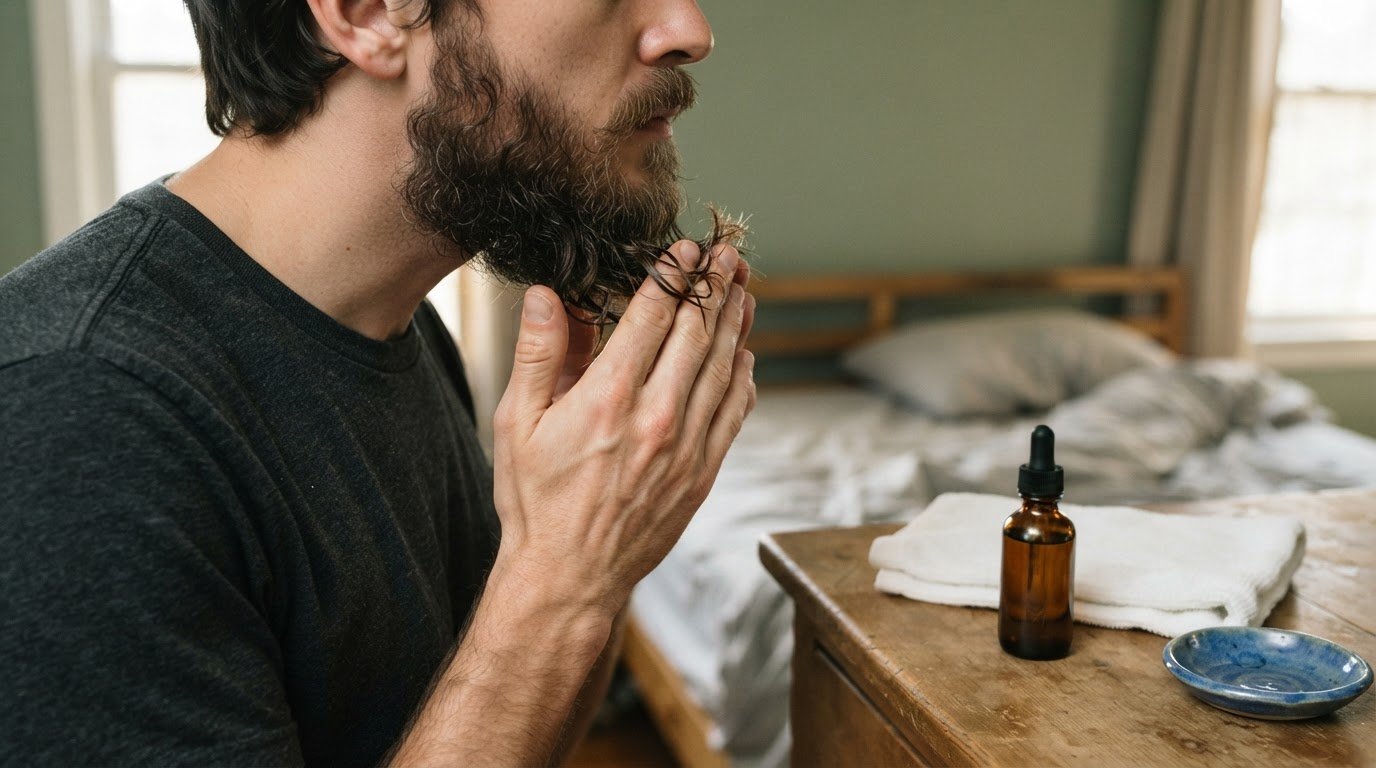
More oil isn’t the whole answer. For sealing moisture in a high porosity beard, gently cleanse first, apply hydration to a slightly damp beard, then use a light layer of beard oil or butter to help retain moisture. High-porosity hair can take in moisture quickly and lose it quickly, so the order matters.
If your beard feels dry again soon after conditioning, that can be frustrating. The goal isn’t to pile on product; it’s to build a steady routine that hydrates, seals, and keeps the hair feeling manageable. You’ll learn how to recognize high porosity, choose products by their role, and apply them without leaving your beard heavy.
This guide covers a practical moisture routine, explains how beard oils fit in, and shows how to balance hydration with strengthening care. Stay consistent, notice how your beard responds, and adjust your approach as needed.
Key Takeaways
- Layer hydration onto a clean, damp beard, then use a sealing product to help slow moisture loss.
- Apply oils with a light hand, paying particular attention to dry beard ends.
- Choose ingredients by their role: some help attract hydration, while oils and butters help seal it in.
- Balance moisture-focused care with strengthening treatments, and adjust the routine if your beard feels stiff or weighed down.
High Porosity Hair: What Is It & How Do I Care for It?
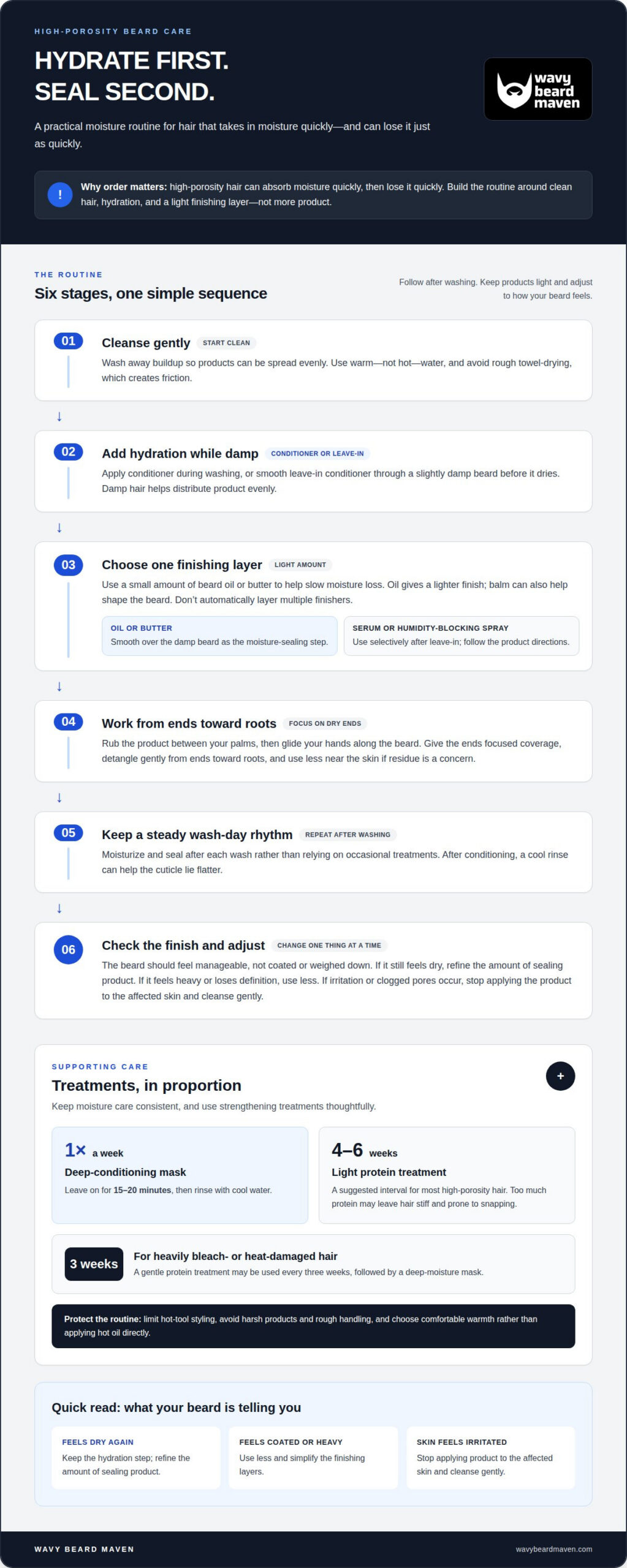
- High-porosity hair has a raised, uneven cuticle, so water enters and escapes quickly. The beard may air-dry fast, tangle easily, or feel rough. To moisturize and seal a high-porosity beard, cleanse gently, apply conditioner or leave-in to slightly damp hair, then finish with a light layer of beard oil or butter.
- Keep the routine consistent, especially after washing. Moisturize and seal after each wash rather than relying on occasional treatments. Use warm, not hot, water to cleanse. After conditioning, a cool rinse can help the cuticle lie flatter. Avoid rough towel-drying, which creates friction.
- Apply leave-in conditioner to a slightly damp beard and spread it through the hair for even coverage. Follow with a small amount of beard oil or butter to help retain moisture. Detangle gently from the ends toward the roots, and use less product near the skin if residue is a concern.
- Use a deep-conditioning mask once a week and leave it on for 15 to 20 minutes, then rinse with cool water. Deep conditioning can support softer, more manageable hair; a hot oil treatment isn’t required for the moisture-then-seal sequence. Choose comfortable warmth rather than applying hot oil directly.
- Balance moisture with strengthening care. Protein-containing treatments can support damaged hair, but too much protein may leave it stiff and prone to snapping. For most high-porosity hair, a light protein treatment every four to six weeks is sufficient; heavily bleach- or heat-damaged hair may benefit from a gentle treatment every three weeks, followed by a deep-moisture mask.
- Notice how your beard and skin respond to oils or balms. Too much product can cause buildup and leave hair feeling heavy. If you notice irritation or clogged pores, stop applying the product to the affected skin and cleanse gently. Use a lighter layer next time, focusing on dry beard ends.
Sealing moisture with oils, serums, or anti-frizz sprays
For sealing moisture in a high porosity beard, apply a finishing layer over leave-in conditioner while the beard is slightly damp. Beard oil offers a lighter finish, while beard balm can also help shape the beard. Use one, rather than layering both automatically.
- Start with clean hair. Gently cleanse your beard, then apply conditioner and rinse. This removes product buildup that could otherwise sit on the hair and interfere with an even routine.
- Apply leave-in to damp hair. Smooth it through your beard before it dries. A slightly damp beard helps you distribute product evenly. Don’t brush or work brittle, completely dry hair.
- Choose one sealing layer. Use a small amount of beard oil or butter and smooth it over the hair. These products help slow moisture loss. Add more only if your beard still feels dry, since excess can leave buildup.
- Work from ends toward roots. The ends may feel drier, so give them focused coverage. Rub the product between your palms, then glide your hands along the beard. This helps avoid concentrating too much product on one spot or directly on the skin.
- Use a serum or spray selectively. An anti-frizz spray designed to block humidity can be applied after leave-in, following its directions. Humidity may make porous hair swell unevenly and look frizzy. Don’t stack spray, serum, oil, and balm automatically; adjust the pattern to your beard’s feel.
- Review the finish. If hair feels coated or loses definition, use less product next time. A beard oil routine should leave the beard manageable, not weighed down.
Keep the sequence straightforward: leave-in conditioner comes first, followed by an oil, serum, or anti-frizz humidity-blocking spray. The page recommends this finishing step to help seal in moisture, so apply the chosen option after the conditioner rather than treating it as a replacement. If using oil, give the hair ends particular attention; they are more prone to dryness than the scalp and roots, making them the priority for coverage.
Hydrating and moisture-sealing ingredients
- Separate hydration from sealing. Conditioner or leave-in provides the hydration step; beard oil or butter is the finishing layer that helps slow moisture loss. Apply them in that order after cleansing. This matters for porous hair because moisture can enter quickly, then escape before the beard feels comfortable for long.
- Start with conditioning. Apply conditioner while washing, or work leave-in through a slightly damp beard after cleansing. Follow with beard oil or butter. Aim for a balanced routine, not a heavy coating. If your beard feels coated, simplify the products instead of adding another layer.
- Use beard oil or butter as a finishing layer. Choose based on how your beard feels and the finish you prefer. Apply a small amount over a slightly damp beard, then see how it feels after drying. Too much may leave the hair greasy or weighed down.
- Read product roles, not just front labels. Look for a conditioner or leave-in for hydration, then an oil or butter for sealing. Avoid assuming that every styling product adds moisture. A humidity-blocking anti-frizz spray can serve as a finishing layer after leave-in, especially when humidity disrupts the beard’s shape.
- Adjust based on the finish. If your beard feels dry soon after grooming, keep the hydration step and refine the amount of sealing product. If it feels heavy or loses definition, use less. Change one part of the routine at a time so you can identify what works for your beard.
- Protect the cuticle from further stress. Frequent heat styling, harsh products, and rough handling can lift or damage the cuticle. Cleanse gently and limit hot-tool styling. Products support moisture care, but a routine that reduces friction and avoids repeatedly drying out your beard matters too.
What products seal moisture in high-porosity beard hair?
- Begin with conditioner or leave-in. These products provide the hydration step before you choose a finishing layer. Apply conditioner during washing, or smooth leave-in through a slightly damp beard after cleansing. This gives beard oil or butter moisture to help retain, rather than asking a finishing product to hydrate dry hair on its own.
- Choose beard oil for a lighter finish. Oils help slow moisture loss when applied over damp, conditioned hair. Shea, castor, and argan oils are commonly recommended for high-porosity hair. Use one oil at a time, spread it between your palms, and distribute it through the beard instead of saturating one area.
- Try a butter when you want a richer layer. Beard butter can serve as a sealing product over leave-in conditioner. Start with a modest amount and work it through the hair, especially dry ends. If the beard feels greasy, coated, or heavy afterward, reduce the amount or use a lighter oil next time.
- Use balm for a shaped finish. Beard balm can provide a finishing layer while helping shape the beard. Apply it after hydration and notice whether your beard remains manageable. Oil, butter, and balm are options, not layers to stack together; combining them may leave excess product behind.
- Match the product to the result. If your beard feels dry after conditioning, try a small amount of beard oil, butter, or balm over a slightly damp beard. If it feels weighed down or loses definition, simplify the routine. Change one product at a time to find the texture and finish that suit you.
- Build a routine you can repeat. Pair a conditioner or leave-in with one sealing product after cleansing. Keep the application even, then adjust according to how your beard feels as it dries. Explore beard moisture-sealing products to choose a practical finishing layer.
Balance moisture with protein: protein-containing products can help strengthen and repair high-porosity hair, but overuse may leave it stiff and prone to snapping.
Wavy Beard Maven
Wavy Beard Maven offers practical beard-care education and grooming products for building a consistent routine. Turn to its guidance when you want to apply moisture-sealing steps with more discipline, or choose between a lighter oil and a richer butter or balm. A beard brush can help distribute product through the hair, so your finishing layer reaches more than the outer surface. Keep the routine simple: hydrate first, apply one sealing product, then adjust based on whether your beard feels dry, coated, or manageable as it dries. The goal is a repeatable approach that suits your beard, not stacking every product at once. For guidance on choosing a routine and products, contact Wavy Beard Maven.
Build a Routine You Can Refine
A steady approach to sealing moisture in a high porosity beard relies on observation, not constant product changes. Notice how your beard feels after it dries, then keep the routine that feels balanced. That gives you a clear basis for your next adjustment. Consistency matters more than chasing a perfect finish in one session; thoughtful refinements make the routine your own.
Your grooming routine can evolve with your preferred beard style. Wavy Beard Maven offers Beard Oils, Beard Butters, and a Beard Brush to consider as you refine how you apply and distribute products. Choose deliberately, keep the process manageable, and give each change time to show how it works for your beard.
Ready to take the next step? Contact Wavy Beard Maven about moving forward with your beard-care routine. Stay consistent, keep learning your beard’s response, and wear the work with confidence.
Frequently Asked Questions
What does high-porosity beard hair mean, and what causes it?
High-porosity beard hair has a raised, uneven cuticle, allowing moisture to enter and escape quickly. Chemical processing, frequent heat styling, physical wear, and aging can damage the cuticle; genetics can also play a role. If your beard has been exposed to repeated coloring or rough handling, focus on gentle cleansing and avoid extra friction when drying and styling.
How can you tell if beard hair has high porosity?
Look for several signs rather than relying on one test. High-porosity hair may air-dry quickly, tangle easily, or feel rough when you run your fingers along a strand from end to root. You can also mist dry hair with water: quick absorption may indicate high porosity. A float test is one possible way to assess hair porosity, but it is best considered alongside other signs.
What ingredients should you look for in beard moisturizers and sealants?
Choose a moisturizing conditioner or leave-in, then look for an oil or butter as the sealing layer. Humectants help draw in hydration, while shea butter, castor oil, and argan oil are commonly recommended for high-porosity hair. Introduce one finishing ingredient at a time. That makes it easier to notice whether your beard feels soft and manageable or heavy and coated.