October 20, 2026
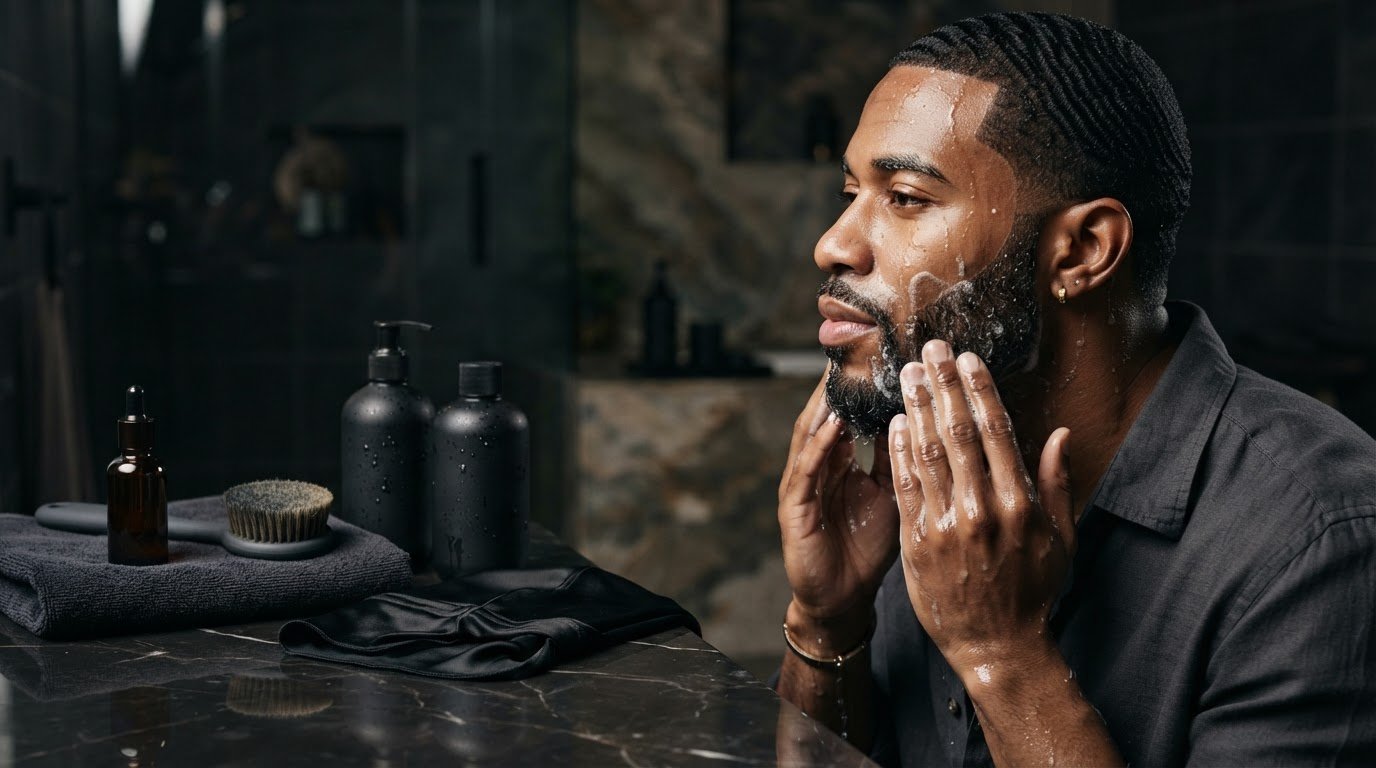
Beard flakes don’t always mean your skin is simply dry. A beard dandruff treatment for wavers starts with washing the skin beneath the hair with a dandruff shampoo, rinsing thoroughly, and moisturizing afterward. If you add salicylic acid exfoliation, use it once or twice per week to help lift dead skin without overdoing your routine.
Flakes in your beard or on your wave pattern can be frustrating, especially when you’re already working to keep your style sharp. But the cause matters: beard dandruff is often linked to the skin’s response to Malassezia yeast, while dry skin results from a lack of moisture. Treating them as the same issue can leave your routine off track.
This guide explains what beard dandruff is, how to wash and use medicated shampoos, and where salicylic acid exfoliation fits. You’ll also learn how to moisturize beneath your beard and adjust your routine to keep your skin comfortable while maintaining your waves.
Key Takeaways
- Learn to tell yeast-related beard dandruff apart from dry or sensitive skin so you can choose a routine that fits the cause.
- Work dandruff shampoo through the beard to reach the skin beneath, follow the product directions, and rinse thoroughly.
- Use salicylic acid exfoliation gently, starting once or twice per week to help lift dead skin without overdoing it.
- Moisturize after washing or exfoliating to care for the skin under your beard without leaving it feeling greasy.
- Adjust your beard-care routine to your skin and beard length while keeping your wave maintenance consistent.
WHAT IS BEARD DANDRUFF?
Before choosing a routine, identify whether flakes are linked to dandruff or dry skin, since each has a different cause. Clean wave caps and durags according to their care labels, then let them dry completely before wearing them again.
-
Distinguish Dandruff From Dry Skin
Check the flakes and the skin beneath your beard before changing your routine. Dry skin lacks moisture and can shed dead-skin flakes, while dandruff is mainly linked to yeast growth in oilier areas, including the face. Sensitive skin may also become irritated by products or washing. Avoid assuming every white flake has the same cause; note whether the skin feels dry or looks red and inflamed.
-
Recognize Irritation Under the Beard
Look for itching, redness, and flakes together, especially beneath dense beard hair. Malassezia is a yeast present on everyone’s scalp and face; under the right conditions, its growth can contribute to dandruff. Malassezia globosa feeds on sebum, the skin’s natural oil, and breaks it down into oleic acid. Sensitivity to oleic acid can trigger irritation and skin-cell shedding.
-
Check for Dry-Skin Clues
Notice whether your skin feels tight or dry after washing, and consider whether your cleanser leaves it uncomfortable. Dry skin results from a lack of moisture, while dandruff is associated with yeast growth in oilier areas. The distinction matters: repeatedly scrubbing dry, sensitive skin can cause more irritation rather than address the cause. Track changes when you switch products or adjust your washing routine.
-
Moisturize Beneath the Beard
After washing or exfoliating, apply a moisturizer that doesn’t irritate your skin. Work it through your beard so it reaches the skin beneath, rather than coating only the hair. The aim is to hydrate without leaving the area greasy. For longer facial hair, distribute the moisturizer carefully through the growth; for a shorter beard, focus on the skin where flakes appear.
-
Keep Wave Gear Clean
Wash wave caps and durags according to their care labels, and dry each item fully before wearing it again. Clean gear is a practical part of grooming because fabric can collect skin oil, hair products, and shed skin. Keep used items separate from clean ones, and avoid pulling damp fabric over your beard or scalp.
-
Track the Pattern Before Adjusting
Note where flakes appear, whether they itch, and how your skin responds after moisturizing. Beard dandruff can also occur with seborrheic dermatitis, which may cause red, inflamed skin and affect the scalp, eyebrows, or sides of the nose. If those areas show similar symptoms, record the pattern instead of treating every flake as simple dryness.
Washing and medicated dandruff shampoos
A beard dandruff treatment for wavers should clean beneath the beard without rough handling that disrupts your pattern. Medicated shampoos can dry or irritate facial skin, so follow the label and moisturize after washing.
-
Choose a Dandruff Shampoo
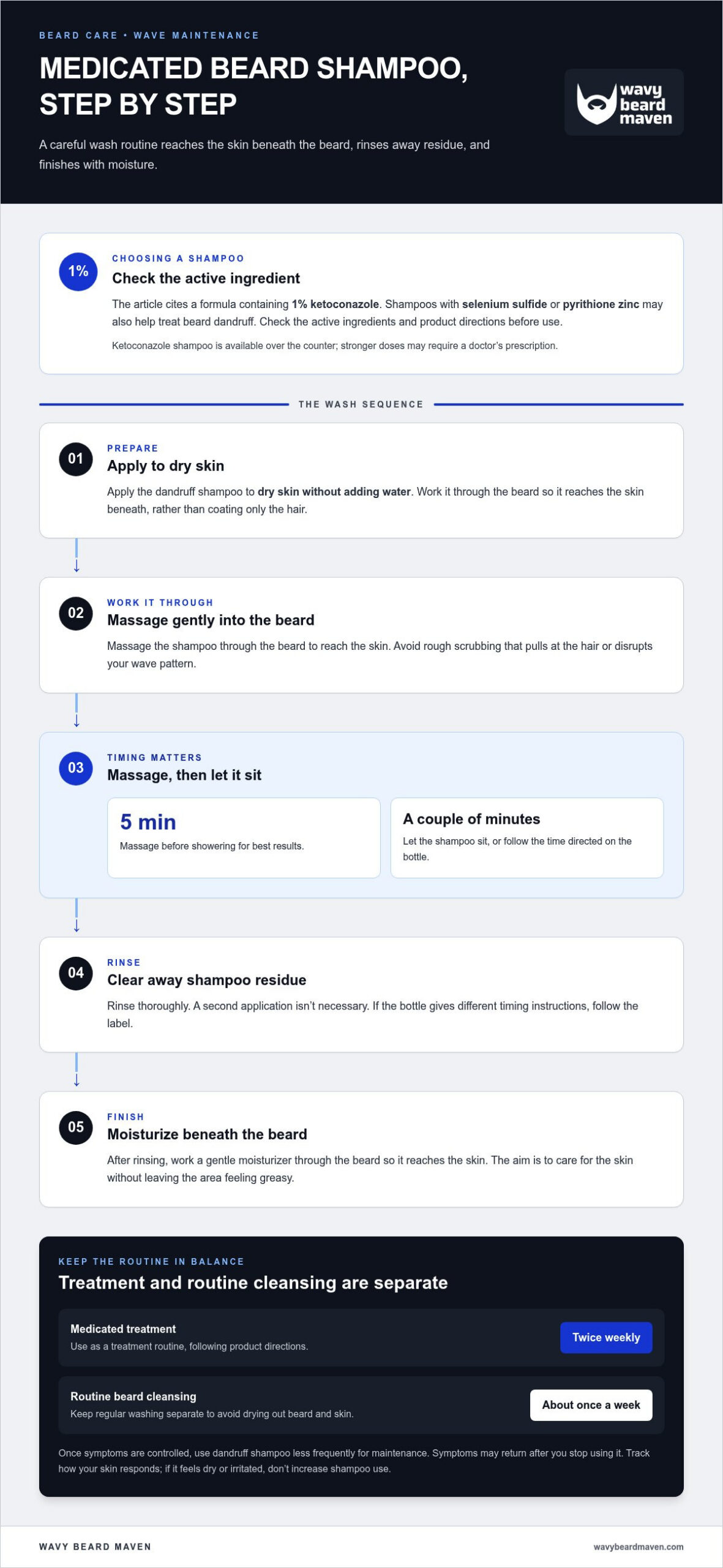
Choose a proven dandruff shampoo rather than relying on a specialist beard shampoo. WebMD recommends looking for a formula containing 1% ketoconazole. Shampoos with selenium sulfide or pyrithione zinc may also help treat beard dandruff. Check the active ingredients and directions before use. Ketoconazole shampoo is available over the counter, while stronger doses may require a doctor’s prescription.
-
Set a Beard-Washing Routine
Use medicated shampoo twice weekly as a treatment routine, while keeping other beard washes gentle. Wash your beard regularly, adjusting the routine to what your skin and hair tolerate. If your beard is longer, cleanse it like the hair on your head so water and cleanser reach the skin beneath. Keep your wave pattern in mind, and avoid rough scrubbing that pulls at the hair.
-
Apply and Rinse the Shampoo
Apply dandruff shampoo to dry skin without adding water, then massage it through the beard to reach the skin. Massage for five minutes before showering for best results. Let the shampoo sit for a couple of minutes or follow the time directed on the bottle. Rinse thoroughly to clear residue; a second application isn’t necessary.
- After rinsing, moisturize the skin beneath your beard. Work a gentle moisturizer through the hair so it reaches the skin, rather than coating only the beard’s surface. This helps prevent the cleansing routine from leaving your skin feeling dry. If you notice irritation or dryness after using a medicated shampoo, follow the label directions and reassess how often you use it.
- Build your beard dandruff treatment for wavers around consistency, not aggressive washing. Symptoms may return after you stop using dandruff shampoo, so once the condition is controlled, use it less frequently for maintenance. Track how your skin responds after each wash. If your beard feels dry or irritated, don’t increase shampoo use; keep rinsing thoroughly and moisturizing consistently.
Keep routine beard cleansing separate from medicated treatment: the page recommends washing a beard about once a week to avoid drying out the beard and skin. On a treatment day, massage the shampoo into the beard for five minutes before showering for best results, then let it sit for a couple of minutes or for the time directed on the bottle. This keeps application aligned with the stated treatment steps while limiting unnecessary washing. If the label gives different timing instructions, follow the bottle and rinse thoroughly afterward.
What beard dandruff is and what causes it
Track the pattern of flakes, itching, and redness before changing your routine. Understanding the likely cause helps you choose the next step instead of treating every beard flake alike.
-
Identify Possible Causes
Inspect where flakes appear and whether redness or itching accompanies them. Seborrheic dermatitis is the most common cause of beard dandruff and can affect the scalp, eyebrows, and sides of the nose. Dry skin has a different cause: lack of moisture. Note where symptoms appear instead of assuming flakes always mean dryness.
-
Consider Fungal and Microbial Causes
Account for Malassezia, a yeast present on everyone’s face and scalp. Under the right conditions, its growth can contribute to dandruff. Malassezia globosa feeds on sebum, the natural oil produced by skin, and breaks it down into oleic acid. The yeast’s presence alone doesn’t explain every flare; the skin’s response matters.
- Watch for the skin’s response to oleic acid. About half of the world’s population is sensitive to it, and that sensitivity can trigger irritation, redness, itching, and skin-cell shedding. Dead skin then becomes visible as beard flakes. Track whether those signs occur together, because flakes alone don’t identify the cause.
- Distinguish dandruff from simple dryness before adjusting products. Dry skin results from a lack of moisture, while dandruff is mainly linked to yeast growth in oilier areas such as the face. If your beard feels dry after washing, dryness may be part of the picture. Don’t treat that clue as proof of dandruff.
- Review the ingredients in products you apply near your beard when irritation appears. Note the product and where redness or itching develops, and avoid adding several new products at once. A simple record can help show whether discomfort follows a product change or appears alongside flakes in other areas, such as the scalp or eyebrows.
- Consider the timing if you’re growing a beard. Itching during the first few weeks can be a normal part of beard growth, but persistent itching after the first 2 months may point beyond that initial stage. If redness, inflammation, and flakes also appear on the scalp or sides of the nose, speak with a doctor about possible seborrheic dermatitis.
Exfoliating with salicylic acid
Add salicylic acid exfoliation carefully to loosen dead skin beneath facial hair. Use a measured schedule, gentle technique, and moisturizer afterward.
-
Exfoliate Gently With Salicylic Acid
Choose a salicylic acid product suited to the skin beneath your beard, then follow its directions. Apply it gently to the skin, not just the visible hair, and avoid vigorous rubbing. Salicylic acid can help remove dead skin cells, but aggressive scrubbing may irritate the area. After exfoliating, moisturize the skin beneath your beard.
-
Set an Exfoliation Frequency
Start with salicylic acid once per week, then assess your skin’s response before adjusting. People prone to beard dandruff may use it once or twice per week. Don’t exfoliate more than three times per week. If your skin is especially dry or sensitive, limit exfoliation to once per week.
- Use your fingertips to spread the product across the skin under your beard. Work in small sections so facial hair doesn’t block contact with the skin. Keep pressure light, especially around areas that already look red or feel sensitive. Follow the product’s directions for application and removal rather than extending contact time.
- Keep exfoliation separate from rough brushing. A soft- to medium-density beard brush can gently move from root to tip, helping lift flakes and exfoliate the skin. Use light strokes instead of repeated forceful passes. The goal is to loosen surface flakes while keeping facial hair in place, not to scrub until the skin feels raw.
- Moisturize after each exfoliation session. Apply lotion, beard oil, or another moisturizer that doesn’t irritate your skin, working it beneath the hair. Hydration helps keep the skin comfortable after dead-skin flakes are lifted. Avoid leaving your skin greasy, and adjust the amount based on how your beard and skin feel.
- Keep a simple grooming record of exfoliation days and skin reactions. For example, note whether redness or extra dryness follows a salicylic acid session. Change one part of your routine at a time, such as the product or frequency, so you can identify what affects your skin. Don’t increase exfoliation just because flakes remain after one use.
- Make the routine consistent rather than aggressive. The epidermal cell turnover cycle lasts approximately 30 days, so assess your skin over time instead of repeating exfoliation too soon. Keep to the once- or twice-weekly schedule, stay within the three-times-weekly maximum, and moisturize after each session to support comfortable beard grooming.
What beard dandruff is
Beard dandruff is flaking that develops where facial hair grows, including beneath a beard. Identify what’s happening at the skin level before choosing products, because visible flakes can have different causes.
- Look closely at your beard and the skin beneath it. White flakes on facial hair or clothing, often with itching, are common signs of beard dandruff. Dandruff can occur wherever hair grows, so check your scalp and eyebrows too. Note whether flakes appear in one area or several, and whether redness accompanies them.
- Understand the role of Malassezia, a yeast that lives on everyone’s face and scalp. It feeds on sebum, the natural oil produced by skin. Malassezia globosa breaks that oil down into oleic acid. For people sensitive to oleic acid, the skin’s response can include irritation, itching, and shedding.
- Recognize that flakes are shed skin cells, not dirt trapped in your beard. Irritation can speed up their visible shedding, leaving white specks among facial hair or on a durag. Avoid scraping flakes out of your skin with your fingernails. A gentle wash is a better first step than picking at irritated patches.
- Compare beard dandruff with dry skin before changing your routine. Dry skin stems from insufficient moisture; dandruff is mainly associated with yeast overgrowth in oilier areas. Tightness after washing can point to dryness, while itching and recurring flakes may suggest dandruff. These clues help you decide whether cleansing or moisturizing needs attention.
- Check for seborrheic dermatitis if flakes appear alongside red, inflamed skin. This condition can affect the beard, scalp, eyebrows, and sides of the nose. Look for that broader pattern rather than treating one patch as an isolated beard issue. Persistent inflammation calls for attention to the underlying skin condition.
- Build a steady routine around the pattern you observe. Cleanse facial hair and the skin beneath it, rinse away residue, and moisturize after washing. Use gentle brushing from root to tip to loosen surface flakes. Avoid hard scrubbing, which can add irritation without addressing the cause.
- Keep notes on symptoms as you adjust your care. Record where flakes appear, whether itching or redness occurs, and which routine changes affect your skin. For example, a pattern across your beard and scalp differs from flakes limited to dry-feeling skin. Use those observations to guide your next grooming step.
For a more consistent grooming routine, explore practical beard-care guidance.
Wavy Beard Maven: Beard Oils
Wavy Beard Maven offers Beard Oils to support the moisturizing step in your beard-care routine. After washing or exfoliating, apply moisturizer beneath the beard to help keep the skin hydrated without leaving it greasy. Beard oil can be part of that grooming step, especially when you’re maintaining longer facial hair. It doesn’t replace medicated shampoo or treat an underlying skin condition.
For a fuller routine, Beard Butters, Beard Balms, and a Beard Brush are also available. Choose the tools that fit your grooming habits, and pay attention to how your skin responds as you build consistency.
Visit wavybeardmaven.com to explore beard-care guidance and offerings.
Build a Routine You Can Keep
Make consistency your next step. Choose a beard-care routine that fits your wave maintenance and feels manageable on ordinary days, not only when flakes appear. A beard dandruff treatment for wavers works best as part of steady grooming, with attention to how your skin responds as you care for your beard.
As you refine your routine, Wavy Beard Maven offers Beard Oils and Beard Butters for beard care, along with a Beard Brush for grooming. These products can support everyday care after washing and exfoliation, while medicated shampoo remains the treatment step for dandruff.
Make the routine your own, stay attentive to your skin, and keep building with patience. For help choosing a practical next step for your beard-care routine, contact Wavy Beard Maven. Stay consistent, keep your waves sharp, and take pride in the work you put in.
Frequently Asked Questions
What about other home remedies?
Keep home care simple: for a shorter beard, a gentle face wash infused with tea tree oil is an option. Brush softly from root to tip to help lift loose flakes, then moisturize. Avoid trying several new remedies at once, since that makes it harder to identify what irritates your skin. Skip harsh scrubbing; it can make sensitive skin more uncomfortable.
What causes dandruff in beards, especially for people who wear wave caps or durags?
Beard dandruff is linked to the skin’s response to Malassezia yeast, not simply to wearing a wave cap or durag. The yeast feeds on sebum and produces oleic acid, which can trigger irritation in sensitive skin. Keep your cap or durag clean according to its care directions, and notice whether flakes also appear on your scalp or eyebrows.
How can you tell beard dandruff from dry skin or seborrheic dermatitis?
Compare how your skin feels and looks. Dry skin is caused by a lack of moisture; dandruff commonly involves flakes and itching. Seborrheic dermatitis can bring red, inflamed skin, sometimes affecting the beard, scalp, eyebrows, or sides of the nose. If those areas show a similar pattern, describe it to a doctor rather than treating each patch as unrelated dryness.
How often should you wash and moisturize a beard with dandruff?
A practical routine is to wash a maintained beard two to three times per week and use medicated dandruff shampoo twice weekly when treating flakes. Use a gentle cleanser for other washes, and moisturize after cleansing so the skin beneath your beard doesn’t feel dry. Adjust the routine if washing irritates your skin, and follow the shampoo label directions.
Can beard oils or pomades worsen beard dandruff or clog pores?
Heavy products can leave the beard and skin feeling greasy, so choose a lightweight beard oil and use only enough to reach the skin beneath the hair. Beard oil can moisturize, but it doesn’t replace dandruff shampoo. Petroleum jelly may make beard dandruff worse. If a product seems to trigger irritation, pause its use and observe whether your skin settles.
When should someone see a dermatologist for persistent beard dandruff?
Arrange medical advice for persistent itching, ongoing flakes, or red, inflamed patches, especially when the scalp, eyebrows, or sides of the nose are affected too. Itching that continues after the first 2 months of beard growth may point beyond the initial growing stage. A doctor can assess the skin pattern and discuss treatment for an underlying condition such as seborrheic dermatitis.
What do beard dandruff treatments cost in the United States, and which are available over the counter?
Ketoconazole shampoo is available over the counter; stronger doses may require a doctor’s prescription. The material gives no treatment prices for the United States.