September 27, 2026

What if the best way to get more control from beard pomade is to use less of it? If you’re unsure how much to scoop, where to apply it, or how to avoid greasy buildup and stiffness, you’re not alone. Learning how to use beard pomade correctly starts with treating it as a measured finishing step, not a shortcut that should coat every hair. The right amount can help shape your beard while preserving its natural texture and wave pattern.
This guide walks you through the process, from preparing your beard and warming a small portion if the label directs you to, to distributing the product evenly and checking the finish. You’ll learn how to adjust your approach for beard length, texture, and styling goals, plus where pomade fits alongside oil, balm, brushing, and compression. We’ll also cover common issues like visible residue or a beard that feels too stiff, so you can make a simple adjustment instead of starting your routine over. Work with your beard, keep your hand light, and build control through consistency.
Key Takeaways
- Understand what beard pomade is designed to do, and check the label because formulas and hold can vary.
- Learn how to use beard pomade correctly by starting with a clean beard and a small amount, following the product’s directions.
- Use a five-step application method, working in sections to distribute pomade evenly before shaping your beard.
- Recognize how excess product or a mismatched formula can affect your beard’s feel and appearance, including its waves.
- Build a routine around your styling goal, then track what works so you can refine your technique over time.
How to Use Beard Pomade Correctly: Dos and Don’ts
Beard pomade is a styling product, not a cleanser or a substitute for conditioning. Its main job is to help arrange facial hair and support a chosen shape. Formulas and levels of hold vary, so learning how to use beard pomade correctly begins with reading the product label. Check that it’s intended for beards and follow its directions. A pomade made for scalp hair isn’t automatically suitable for facial hair, which sits close to the skin around your mouth and cheeks.
The word pomade covers products with different compositions and finishes. Don’t assume every formula will feel or perform the same. Choose based on the product’s stated use and your styling goal, then start cautiously rather than applying a large amount across your beard.
What does beard pomade do for facial hair?
A small amount may help guide flyaways and bring your beard into a neater silhouette. Think of the result as temporary styling control: pomade can support the shape you create, but it can’t guarantee waves, change your growth pattern, or train a beard on its own. Results depend on the formula, your hair texture, and how you apply it. Use it to refine your look, not as a promise of a particular texture.
How is pomade different from beard oil and balm?
These products have different primary roles, although formulas can vary. Beard oil is commonly used for conditioning, while pomade emphasizes styling and hold. Beard balm is generally positioned as a conditioning product with some styling support. For a closer look at how oil fits into wave care, see this beard oil guide for waves. Choose each product for the job you want it to do, rather than treating them as interchangeable.
Do: check the label, use a beard-intended formula, and assess the finish before adding more. Don’t: expect pomade to cleanse your beard, replace conditioning, create waves by itself, or deliver the same hold as another formula. If a product feels too heavy or changes how your beard sits, pause and reassess the amount and directions before making it part of your routine.
Prepare Your Beard and Choose the Right Amount of Pomade
A controlled application starts before you open the container. Begin with a clean beard so you’re styling facial hair rather than layering pomade over leftover product or debris. Good hygiene is part of beard care; the University of Utah’s Beard Health resource discusses caring for facial hair and the skin beneath it.
Next, check the pomade label. Some formulas are intended for dry hair, while others may be applied to slightly damp hair. Follow the maker’s directions rather than assuming one method suits every product. Dampness can affect how a formula spreads and feels, but the finish depends on the specific pomade and your beard. If you’re unsure, test a small area first and assess how it feels as it settles.
Should beard pomade go on wet, damp, or dry hair?
Use the condition specified on the label. If it allows damp application, make sure your beard isn’t dripping wet, since excess water may change how the pomade distributes. For a first try, apply a small amount to an inconspicuous section and check whether it spreads evenly and leaves the finish you want. Adjust the beard’s dampness only after you’ve seen how the product behaves.
How much pomade should you start with?
Start with less than you think you need. Beard length, density, texture, and the formula’s hold all affect the amount required, so a universal scoop size can lead to overapplication. Take a small amount, then add more only if your beard still needs control after you’ve checked the coverage and feel.
If the label permits warming, rub the pomade between your fingertips or palms as directed. This can make it easier to handle, but don’t assume every formula should be warmed the same way. Work patiently, and resist adding more just because one area looks unfinished before you’ve checked the rest of your beard.
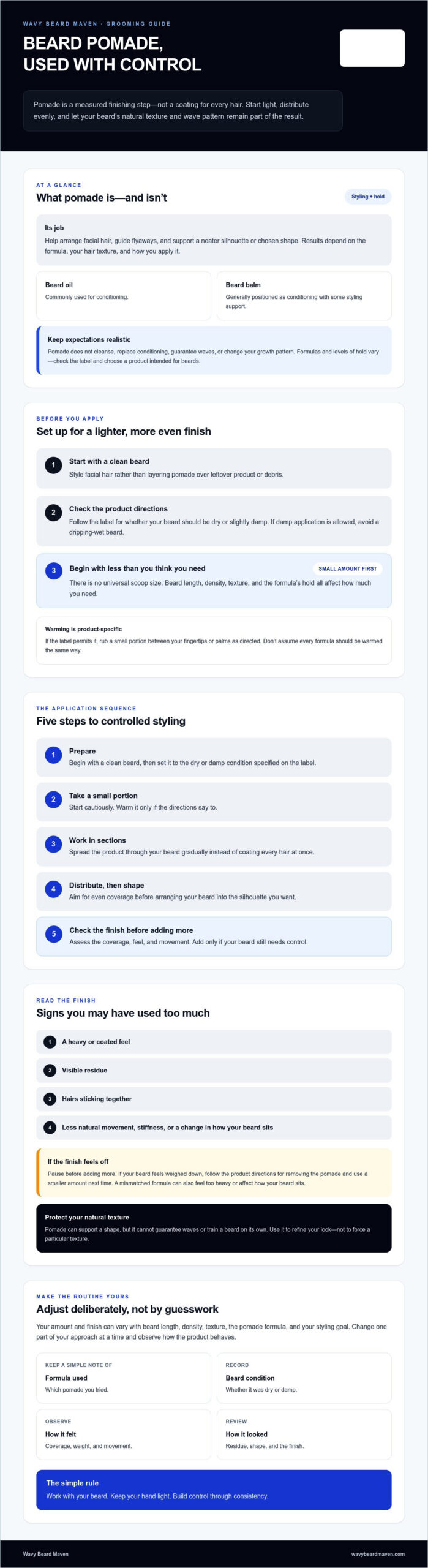
Watch for signs you’ve used too much: a heavy or coated feel, visible residue, hairs sticking together, or less natural movement. Pause before layering on more. If the beard feels weighed down, follow the product directions for removing it and use a smaller amount next time. Keep a simple note of the formula, whether your beard was dry or damp, and how the finish looked. That record helps you refine how to use beard pomade correctly for your own beard instead of guessing each time.
For more guidance on building a steady routine, explore beard-wave care resources and use the same deliberate approach for each step.
How to Apply Beard Pomade Correctly in Five Steps
Use a deliberate sequence: prepare, portion, warm if directed, distribute, then shape and assess. Working in sections gives you more control than sweeping product across your whole beard at once. Aim for even coverage and enough hold for your chosen shape, without coating the hair or skin unnecessarily.
- Step 1: Prepare. Start with a clean beard in the condition specified on the pomade label. Gently separate tangles so the product can reach the hair more evenly.
- Step 2: Portion. Take a small amount, then pause. You can add more later, but it’s harder to correct an overloaded section once pomade is worked through it.
- Step 3: Warm, if directed. If the instructions allow it, rub the product between your fingertips or palms as directed. Don’t warm it by default if the label gives another method.
- Step 4: Distribute. Use your fingertips to place pomade where you need control, such as an outer area with flyaways. Work through one section at a time with gentle, even strokes, then lightly spread any remaining product. Avoid repeatedly coating the same patch or pressing unnecessary product into the skin.
- Step 5: Shape and assess. Guide the beard in its natural growth direction, then check the overall feel and finish before adding more product or reaching for a brush.
How should you distribute pomade through the beard?
Begin with the areas that need the most control, then move to neighboring sections using a light touch. For a fuller beard, divide it into manageable areas, such as the cheeks, chin, and underside. This helps prevent one spot from collecting most of the product. A beard brush may help distribute pomade or smooth the surface if the product directions allow brushing after application. Use it gently, and stop if it drags or disrupts the shape.
How do you shape the beard after application?
Follow your beard’s natural growth direction rather than forcing every hair into a new pattern. A beard brush can help guide and neaten the hair, but brushing alone doesn’t guarantee long-term training or create waves. For technique and brushing fundamentals, see the beard brushing mastery guide.
Take a moment to assess the result in the mirror. If the beard already feels controlled and still moves naturally, leave it there. That pause is part of how to use beard pomade correctly: judge the finish first, then make only a small adjustment if it’s truly needed.
Will Beard Pomade Make Your Beard Greasy or Flatten Your Waves?
It can, especially if you apply too much or the formula doesn’t suit your beard or styling goal. A coated feel, clumping, stiffness, or waves that look less defined can be signs to reassess your technique. These are usually styling effects, not proof that the beard’s natural texture has permanently changed. Pomade may temporarily influence how the hair sits while it’s in your beard, but it won’t change its growth pattern.
Why can beard pomade feel greasy, stiff, or uneven?
Overapplication is a common culprit, but uneven distribution or using the product outside its directions can also leave some areas coated and others untouched. Check the label and follow its guidance for application and removal. If product seems to build up, pause use and wash your beard according to a suitable cleansing routine rather than adding more products to mask the feel. If irritation occurs, stop using the pomade. Seek professional advice if the reaction persists.
Make one adjustment at a time. Try a smaller amount, apply it only to the sections that need control, or use it less often. If one area feels heavy while the rest looks fine, avoid layering on more to “even things out.” Reassess the whole beard first, then decide whether the product or application method is the issue.
Can pomade disrupt beard waves or brushing results?
A heavy application can make brushing feel less smooth and leave waves looking weighed down or less distinct. Before changing your full wave routine, test a lighter application on a small section and see how your beard responds. Keep brushing gentle and follow the hair’s natural direction. Pomade can affect styling, but it doesn’t create waves or replace consistent wave training. For the broader process, explore this guide to getting beard waves.
Keep the troubleshooting focused. If reducing the amount improves movement and appearance, refine your application before changing other parts of your routine. If the same problem continues, the formula may not be a good match for your beard or desired finish. Learning how to use beard pomade correctly means noticing the result and adjusting with purpose, not forcing a product to work.
Build a steadier wave-care routine with the beard-wave care resources.
Fit Beard Pomade into a Consistent Grooming Routine
Pomade is an optional styling step, not a product you need to apply every time you groom. Reach for it when your chosen look calls for extra hold, and skip it when your beard already sits the way you want. To learn how to use beard pomade correctly over time, keep a simple note of the formula, amount, whether your beard was dry or damp, and how the finish felt. Change one factor at a time so you can tell what’s helping.
Don’t assume there’s one correct order for every product. Labels may give different directions for application, layering, and removal, so let those instructions guide your routine. If you use beard oil or another leave-in product, check both labels before combining them. Pay attention to the final feel, not just the order you applied things in.
How should pomade work alongside balm and beard wraps?
Beard balm and pomade can both offer some styling support, though their main purposes and finishes may differ by formula. Compare the labels before using them together, and don’t layer them unless both sets of directions support that approach. For more context on choosing balm for styling, read this beard balm guide for hold and styling.
A beard wrap can be part of a grooming routine where compression is desired, but it doesn’t make pomade necessary or mean the products should automatically be used together. Follow the wrap and pomade directions, and notice whether your beard remains comfortable and moves as you prefer.
What should you do after applying beard pomade?
Check three things before adding another product or tool: does your beard feel comfortable, is there visible residue, and does the shape look right? If it’s already controlled, stop there. If you’re considering a brush or wrap, use it only when it fits your styling goal and the relevant directions.
Follow the pomade label for reapplication and removal rather than setting a fixed schedule. If you notice buildup or an uncomfortable feel, pause and review how much you used and how you’re cleansing your beard. Consistency comes from observing the result and making measured adjustments, not adding more steps by default.
For a structured next step, explore Wavy Beard Maven’s beard-wave resources, including educational guides and the free 7-Day Beard Wave Starter Routine™ Checklist.
Make Every Application a Deliberate One
Beard pomade works best as a measured styling step. Check the label, start with a clean beard and a small amount, then distribute it in sections and assess the finish before adding more. The right technique depends on your beard, your styling goal, and the formula you choose.
Keep in mind that pomade can help shape and control facial hair, but it won’t create waves or permanently change your texture. If your beard feels coated or harder to brush, adjust the amount or pause and reconsider whether that product suits your routine. Track what you use and how your beard responds. That’s how to use beard pomade correctly while building a routine around your own texture instead of chasing a one-size-fits-all result.
Ready to strengthen the rest of your beard-wave routine? Explore Wavy Beard Maven’s beard-wave guides and starter resources, including step-by-step tutorials and the free 7-Day Beard Wave Starter Routine™ Checklist. You can also browse beard oils, butters, balms, brushes, and wraps to find grooming tools that fit your routine. Stay consistent, make thoughtful adjustments, and take pride in the progress you earn.
Frequently Asked Questions
How much beard pomade should I use?
Start with a very small amount, then add more only if your beard still needs control. There’s no universal portion because beard length, density, texture, and pomade formula all affect how much you’ll need. Spread the first amount through a section and check the feel and coverage before continuing. If your beard feels coated, looks clumped, or loses movement, use less next time.
Should I apply beard pomade to wet or dry hair?
Follow the directions on your specific pomade, since formulas may be intended for dry or slightly damp facial hair. Dampness can change how easily a product spreads and how the finish looks, but there’s no fixed result for every beard. If you’re trying a product for the first time, test a small area under the recommended conditions before applying it throughout your beard.
Can I use regular hair pomade on my beard?
Don’t assume a pomade made for scalp hair is suitable for facial hair. Check the label and use it on your beard only if the maker specifically says it’s intended for facial hair and provides directions for that use. Beard hair sits close to facial skin, so choosing a product without beard-use guidance can leave you unsure how to apply or remove it. When in doubt, don’t use it on your beard.
Can beard pomade make my beard greasy?
Yes, your beard can feel greasy or coated if you apply too much or use a formula that doesn’t suit your hair or desired finish. Start with less, distribute it evenly, and assess the result before adding more. If residue or heaviness develops, follow the product’s directions for removal and reconsider your amount or application conditions next time. Stop using it if irritation occurs.
Do I brush my beard before or after applying pomade?
Brush before application if needed to gently detangle and separate the beard, which can make section-by-section placement easier. After applying pomade, brush only if the product directions allow it and you want to guide the shape or distribute product further. Use gentle strokes in your beard’s natural growth direction. Check the finish first, and don’t keep brushing if it drags or disrupts your style.
Can beard pomade help create beard waves?
Pomade may help hold a temporary shape, but it can’t guarantee waves or change your beard’s natural growth pattern. Too much product may make brushing feel less manageable or weigh down the look of your waves. Treat pomade as an optional styling aid, not a wave-training method. Brushing and compression may complement a consistent routine, but pomade itself doesn’t create waves.
How often should I use beard pomade?
Use beard pomade when your chosen style calls for its hold, rather than automatically at every grooming step. Follow the product label for reapplication and removal, since directions vary by formula. Pay attention to comfort, residue, and how your beard moves between uses. If it starts to feel coated, pause and review your amount and cleansing routine before applying more. Let your styling goal guide how often you use it.