November 22, 2026
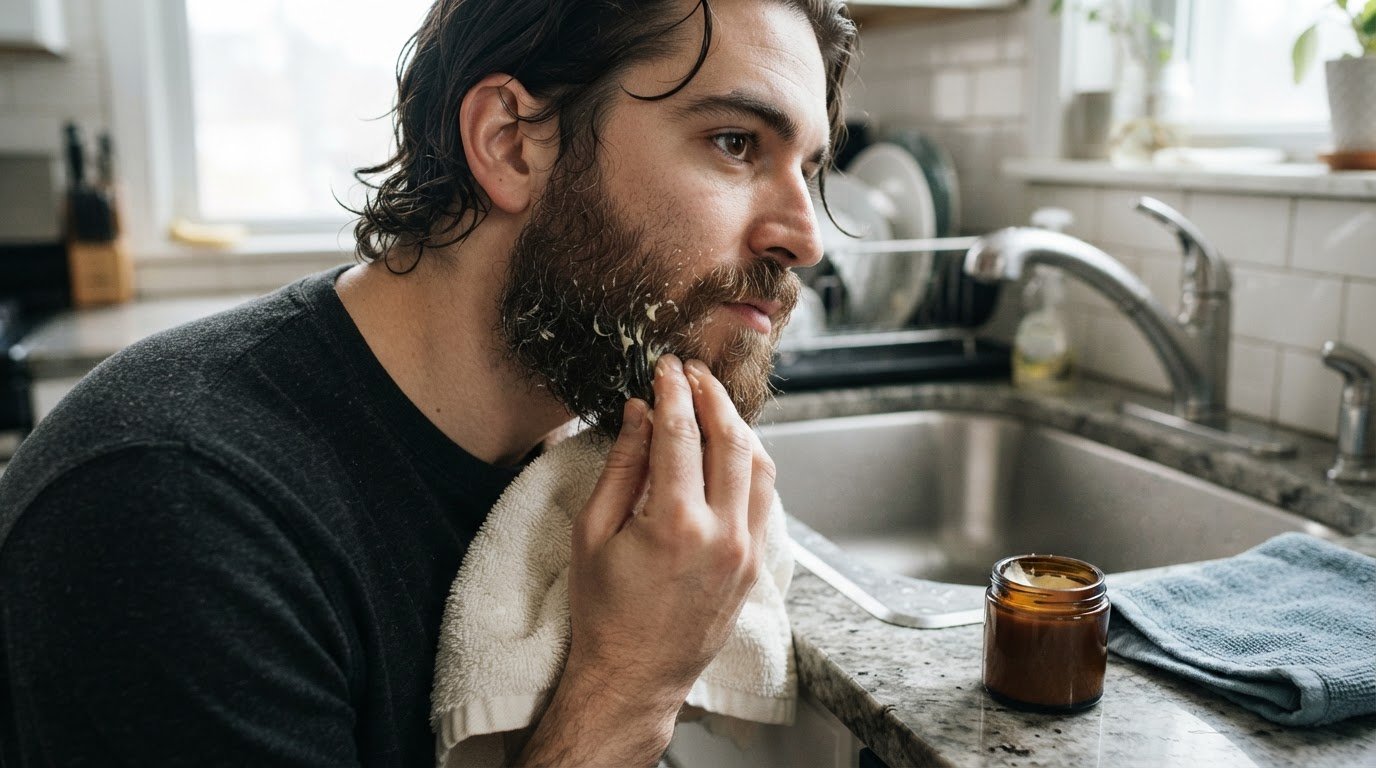
More product isn’t the answer; better access is. To add moisture to a low porosity beard, start with warm water, apply conditioning products while the hair is damp, and use gentle warmth to help the treatment work. Low-porosity strands have compact cuticles, so water and products can be slower to penetrate.
If your beard feels dry, adding layer after layer of oil or butter can leave it coated rather than comfortably conditioned. You’re right to look for a routine that supports moisture without weighing your beard down. The key is to make hydration easier to receive, then adjust how often you moisturize to how your beard feels.
This guide explains what low porosity means, how warm water and heat fit into conditioning, which heavier ingredients to use sparingly, and how to build a practical moisturizing rhythm. You’ll also learn how to recognize when your beard feels soft and pliable rather than greasy or coated, so you can refine your routine with consistency.
Key Takeaways
- Learn why compact cuticles can make a low-porosity beard slower to absorb water and conditioning products.
- Use warm water and gentle warmth to support your deep-conditioning routine.
- Choose lightweight, water-based products and use heavy butters and layered products sparingly.
- Build a moisturizing rhythm around how your beard feels, and look for softness without a greasy or coated finish.
1. What is Low Porosity Hair?
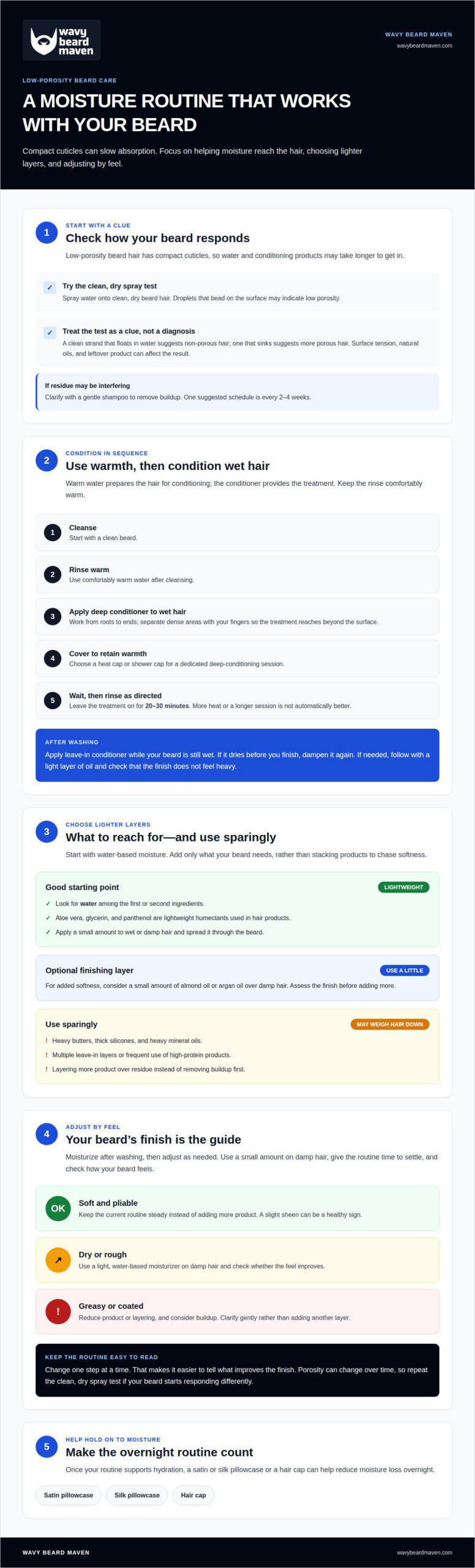
Low-porosity beard hair has compact cuticles, which can slow the entry of water and conditioning products. For a simple clue, spray clean, dry beard hair with water. Droplets that bead on the surface may indicate low porosity.
That spray test is a clue, not a final diagnosis. For a second check, place a clean strand in a cup of water: floating suggests non-porous hair, while sinking suggests more porous hair. Surface tension, natural oils, and leftover product can affect the float test, so buildup may cloud the result. If your beard has residue, clarifying with a gentle shampoo can help remove that extra barrier; one suggested schedule is every 2-4 weeks.
Low porosity affects how quickly moisture is absorbed, not whether your beard can become moisturized. Water and products may sit on the hair before absorbing, especially when there is residue. Once your routine supports hydration, a satin or silk pillowcase or a hair cap can help reduce moisture loss overnight.
Use how your beard feels as a practical guide: moisturized hair should feel soft and pliable, with a slight sheen, rather than greasy or coated. If butter leaves your beard feeling heavy, try using less or addressing buildup instead of adding another layer. Change one step at a time so you can tell what improves the finish.
Hair porosity can change over time. Bleaching, chemical treatments, heat, and environmental exposure can alter the hair fiber, so an old test may not reflect your beard now. Repeat the clean, dry spray test if your beard responds differently to water or products, and use the result as one guide to refining your routine.
2. Warm water and heat during deep conditioning
After cleansing, rinse your beard with warm water and apply deep conditioner while the strands are wet. Warm water prepares the hair for conditioning; the treatment provides the conditioning itself. Work it from roots to ends, using your fingers to separate dense areas so it reaches more than the surface. Keep the rinse comfortably warm.
Apply leave-in conditioner after washing, while your beard is still wet. The water on the hair helps the product spread, so distribute it evenly with your fingers rather than applying it to dry hair. If your beard dries before you finish, dampen it again. If your routine needs it, follow with a light layer of oil and check that the finish does not feel heavy.
For deeper conditioning, cleanse first, rinse with warm water, and spread deep conditioner over wet hair. Let the conditioner sit for a few minutes; that gives strands extra time with the treatment. For a dedicated deep-conditioning session, use a heat cap or shower cap to retain warmth and leave the treatment on for 20-30 minutes. Choose one covering, keep it in place, then rinse the conditioner out as directed by its label.
Use this sequence as a repeatable routine: cleanse, rinse warm, apply conditioner, cover, wait, and rinse. A shower cap can hold warmth during the session, while a heat cap provides another option for retaining it. Don’t assume more heat or a longer session will automatically improve results. Start with the 20-30-minute treatment window, then pay attention to how your beard feels after rinsing. If conditioning leaves it coated, adjust the product or reduce layering next time.
3. Ingredients to avoid and lightweight alternatives
Choose a water-based product first. Check the ingredient list and look for water among its first or second ingredients; aloe vera, glycerin, and panthenol are lightweight humectants used in hair products. Apply a small amount to wet hair and spread it through the beard, rather than stacking several leave-ins. Water-based formulas offer a lighter starting point for low-porosity strands, whose compact cuticle can slow absorption.
For added softness, consider a light oil such as almond oil or argan oil. These oils are recommended for low-porosity hair because they can penetrate tightly closed cuticles. Use a small amount over damp hair, then assess the finish before adding more. To keep your beard moisturized without making it greasy, pair a water-based product with a light oil and avoid layering multiple heavy products.
Heavy butters, thick silicones, and heavy mineral oils can weigh down low-porosity hair. Use rich butters and oils less often, and don’t rely on multiple leave-in layers to address dryness. Limit frequent use of high-protein products, too; protein treatments are best used sparingly for this hair type. A greasy or coated finish can signal that your routine needs fewer layers or lighter ingredients.
Product buildup can create a barrier that keeps moisture from reaching the hair. Remove buildup with a gentle clarifying shampoo, then return to a lighter routine rather than layering product over residue. Common mistakes include adding layer after layer, defaulting to heavy formulas, and using high-protein products frequently. Make one change at a time: look for water near the top of the ingredient list, apply products to wet hair, and assess softness and the finish. If buildup returns, clarify before changing the rest of your routine.
4. How often to moisturize
Let your beard’s feel guide your routine: moisturize after washing, then adjust as needed. If you’re learning how to add moisture to a low porosity beard, treat a dry, rough feel as a cue to hydrate. A greasy or coated finish may mean you’re using too much product or have buildup.
Cleanse with shampoo, then apply a lightweight moisturizer to damp hair. Water helps the product spread along the hair shaft, and using a small amount can keep grooming manageable without a heavy layer. Don’t add more product just because your beard feels dry immediately after application. Give your routine time to settle, then assess softness and flexibility.
Use these signs to guide your next step:
- Soft and pliable: Keep the current routine steady instead of adding more product.
- Dry or rough: Apply a light, water-based moisturizer to damp hair and check whether it improves the feel.
- Greasy or coated: Reduce product layers; if residue remains, cleanse before moisturizing again.
Use deep conditioning as a regular treatment, while adjusting everyday moisture to how your beard responds. Washing and styling can affect how it feels, so notice whether dryness follows shampooing or whether product buildup is the issue. Change one thing at a time, such as using less oil or adjusting when you moisturize. This makes it easier to see what helps without adding another layer at every grooming session.
Keep the routine simple: cleanse when needed, moisturize on damp hair, and use the beard’s finish as your guide. Understanding how to add moisture to a low porosity beard also means building consistency without adding unnecessary steps. For a structured way to build consistency, start a focused beard-care routine and refine it around the way your hair responds.
Wavy Beard Maven
Wavy Beard Maven offers educational guidance and grooming essentials to help you build a consistent beard-care routine. For low-porosity hair, start with lighter layers and adjust based on how your beard feels. Beard Oils, Beard Butters, Beard Balms, and a Beard Brush can support different parts of your routine, from conditioning to grooming. Choose what fits your approach and observe how your beard responds after washing and moisturizing. Consistency comes from learning the process and making deliberate adjustments, not using every product at once. For guidance with your beard-care routine, contact Wavy Beard Maven.
Make Your Routine Work for You
Let your beard’s response guide your next adjustment. Keep a simple note of what you use and how your beard feels afterward to spot which steps support your routine and which leave it weighed down. Learning how to add moisture to a low porosity beard takes consistent care, not a crowded lineup.
Wavy Beard Maven offers Beard Oils, Beard Butters, and a Beard Brush to support your grooming routine. Choose the tools that fit your approach, then keep refining your process with patience and purpose. If you’d like guidance as you shape your beard-care routine, contact Wavy Beard Maven for beard care advice. Keep showing up for your grooming practice, and build a routine that feels right for your beard.
Frequently Asked Questions
What is Low Porosity Hair?
Low-porosity hair has tightly arranged cuticles that can slow water and product absorption. Water may appear to sit on beard strands before they become fully wet. Try spraying clean, dry hair and observe whether droplets bead on the surface. Residue and natural oils can affect this clue, so consider it alongside how your beard responds during washing.
What’s Porous Hair?
Porous hair allows water to enter more readily than low-porosity hair. A float test compares a clean strand in a cup of water: a strand that sinks may indicate porous hair, while one that floats may suggest lower porosity. Surface tension, oils, and leftover products can influence the result, so don’t rely on one strand alone.
Should you use warm water or heat to help moisturize a low-porosity beard?
Use warm water when rinsing, then add gentle warmth during a deep-conditioning treatment. A shower cap or heat cap can help retain warmth while the conditioner sits. Keep the treatment period practical: the routine described here uses 20-30 minutes for deep conditioning or pre-poo with warmth. Warm water supports the process, while the conditioner provides the treatment itself.
Which beard moisturizers work best for low-porosity hair: leave-in conditioner, cream, or oil?
Start with a lightweight, water-based leave-in conditioner, especially if your beard gets coated easily. Judge a cream by its ingredients, not its name: water near the beginning of the list is a useful clue. Add a light oil only if your routine needs it. Apply one product at a time so you can tell how your beard responds.
What lightweight oils are best for low-porosity beard hair?
Almond and argan oils are lightweight options for low-porosity hair. Try a small amount on damp beard hair rather than applying a heavy layer to dry strands. Check the finish: softness with a slight sheen suggests a comfortable amount, while a greasy or coated feel may mean you need less oil or fewer product layers.
How often should you wash and moisturize a low-porosity beard?
Moisturize after washing while the beard is damp, then use its feel to guide additional applications. A dry or rough finish can prompt a light layer; a greasy finish calls for less product. For buildup, the routine recommends gentle clarifying every 2-4 weeks. Deep conditioning can support moisture maintenance, but frequency should fit how your beard responds to cleansing and products.