August 28, 2026
Softness is the engine of wave definition; you simply cannot compress a wire, you can only train a hydrated strand. If you’ve been struggling with a “brillo pad” texture that sticks straight out no matter how much you brush, you’re fighting a losing battle against your own biology. Learning how to soften beard for waves is the critical first step toward achieving that elite connectivity and deep ripple effect you’re after. We all know the frustration of skin irritation and stubborn, coarse hair that won’t cooperate with a beard wrap.
This guide provides the disciplined hydration techniques and product layering strategies you need to master your texture. You’ll learn exactly how to transform rough facial hair into a touchable, compliant canvas. We’re breaking down everything from co-washing essentials to the systematic application of beard oils and butters. By the end, you’ll have a repeatable daily grooming habit, anchored by our 7-Day Beard Wave Starter Routine™, to ensure your waves stay locked and your beard stays soft.
Key Takeaways
- Understand the vital link between hair elasticity and wave connectivity to stop your beard from springing back against your brush.
- Master a disciplined hydration schedule that teaches you how to soften beard for waves while preserving your essential natural oils.
- Learn the “Seal and Protect” layering strategy to ensure moisture reaches the skin and stays locked within the hair fibers for long-term health.
- Discover how to use heat and steam as a weekly deep treatment to force open the hair cuticle for maximum product absorption.
- Connect your softening routine to a precise brushing habit using a medium-soft boar bristle brush for elite ripple definition and connectivity.
Why a Soft Beard is Essential for Deep Wave Patterns
Many men view beard softness as a luxury or a comfort goal. In the world of elite wave patterns, softness is actually a technical requirement. You can’t force a stiff, wiry beard into a ripple pattern any more than you can fold a dry twig without it snapping. Achieving that deep connectivity requires understanding the biology of beard growth and how texture impacts the brush’s effectiveness. When you learn how to soften beard for waves, you aren’t just making it touchable; you’re increasing the physical flexibility of every strand.
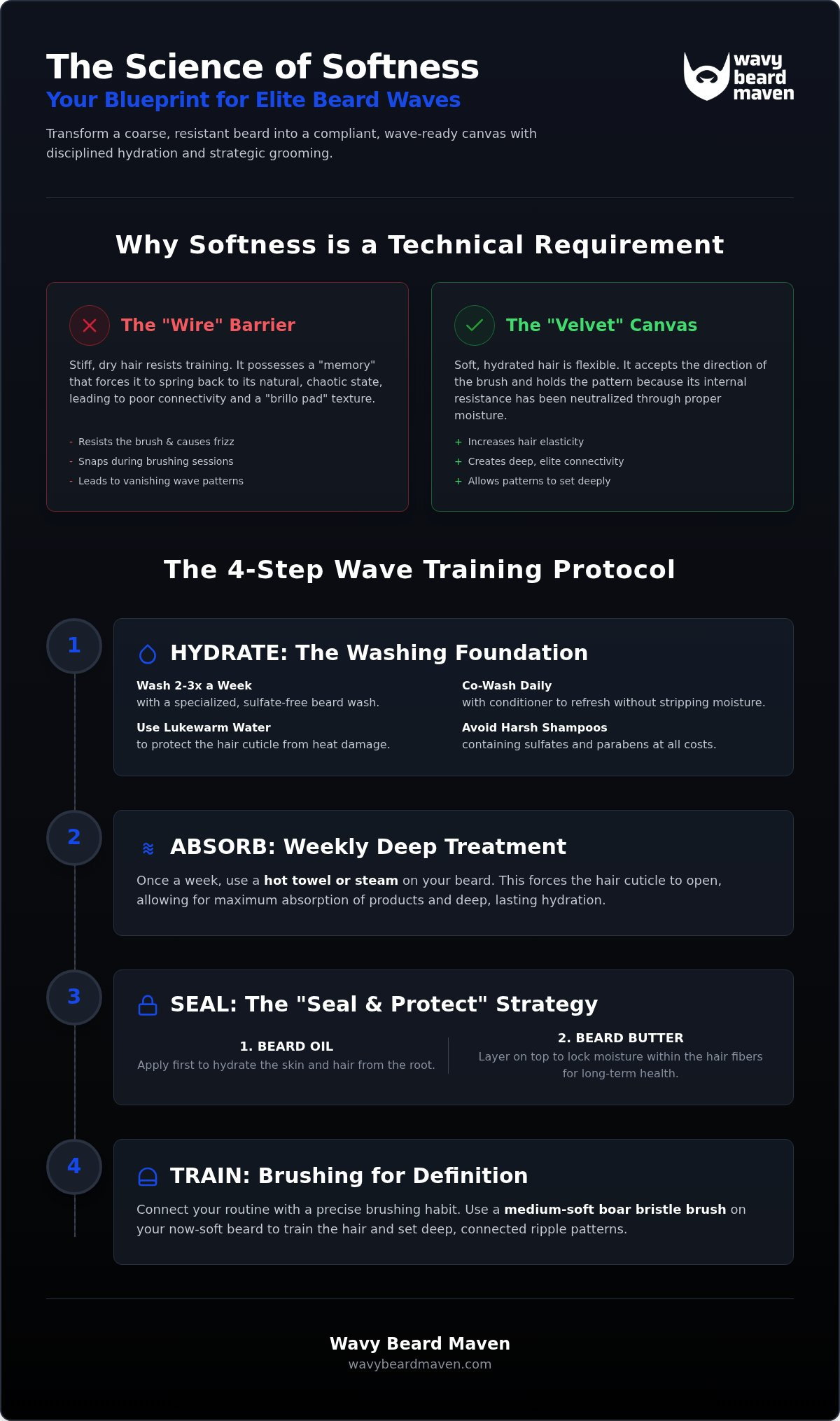
Stiff hair possesses a “memory” that forces it to spring back to its natural, chaotic state. This resistance is why your waves might look decent after a heavy session but vanish the moment you step outside. Training your hair is a disciplined process of overriding that memory. Taming is a temporary fix using heavy waxes, but training is a permanent shift in how your hair behaves. Soft, hydrated hair accepts the direction of the brush and stays there because the internal resistance has been neutralized.
The Science of Elasticity and Pattern Formation
Pattern formation happens within the hair cortex. When you introduce moisture, water molecules penetrate this inner layer and temporarily break the hydrogen bonds that hold the hair’s shape. This allows the hair to be reshaped by your brush. A healthy, flat-laying cuticle is also essential because it reflects light, creating the “shine” that makes waves pop. In the context of wave training, hair elasticity is the ability of the follicle to stretch and lay flat without snapping back to its original coiled state. Without this elasticity, your beard remains a collection of individual hairs rather than a unified wave system.
Breaking the “Wire” Barrier
Coarse hair often reaches a “wire” stage where it becomes brittle enough to snap during a vigorous brushing session. This leads to thin patches and poor connectivity. You want to move from a “wire” texture to a “velvet” texture. There’s a common misconception that “hard” hair holds waves better because it feels more rigid. In reality, rigid hair is resistant hair. If you want to know how to soften beard for waves effectively, you must prioritize compliance over stiffness. When you apply a beard wrap over a soft, hydrated beard, the compression is uniform. The hair lays flat against the skin, allowing the pattern to set deeply. This is the essential prep work that makes your tools truly effective.
The Hydration Foundation: Washing and Conditioning for Texture
Elite wave definition isn’t built on a dry foundation. If you’re washing your beard with the same shampoo you use for your scalp, you’re actively sabotaging your progress. Scalp shampoos are designed to strip heavy oils, but your facial hair relies on those natural sebum oils to remain pliable. To master how to soften beard for waves, you must treat your washing routine as a chemical reset rather than just a cleaning chore. Use lukewarm water during your rinse. Scorching heat damages the cuticle and leaves hair feeling like straw, making it impossible to lay flat.
Ditching Harsh Shampoos for Specialized Washes
Stop using products containing sulfates or parabens immediately. These harsh detergents create a “brillo pad” texture that makes brushing a nightmare. A specialized beard wash is formulated with a lower pH to keep the hair soft and ready for product absorption. It keeps the hair fibers healthy without stripping the essential moisture that allows for pattern formation. For most textures, a schedule of 2-3 times per week is the sweet spot. This frequency keeps the hair clean without depleting the natural lubricants needed for a connected, fluid look. Look for ingredients like shea butter or aloe vera that provide a soothing base for your routine.
Co-Washing for Maximum Moisture Retention
Co-washing, or conditioner-only washing, is the secret weapon for men with coily or kinky hair. It allows you to refresh your beard daily without the stripping effects of soap. Learning how to soften beard for waves through co-washing ensures that your hair stays in a constant state of “training readiness.” When you co-wash, focus on massaging the skin beneath the hair. This movement stimulates the follicles and encourages natural oil production, which is a key step when you’re looking to soften beard hair for better training.
Adopt a “rinse, don’t scrub” approach. Aggressive scrubbing can tangle your developing pattern and cause unnecessary frizz. Instead, let the water flow in the direction of your waves. This preserves the work you’ve done with the brush while ensuring every strand is fully hydrated. If you’re unsure where to start with your timing, the 7-Day Beard Wave Starter Routine™ Checklist provides the exact schedule you need to maintain this balance. Consistency in the shower leads directly to consistency in your pattern.
Strategic Product Layering: Oils and Butters for Elite Waves
Mastering how to soften beard for waves requires moving beyond the “one-and-done” product mindset. While some brands claim a single oil solves every texture issue, elite wavers understand the “Seal and Protect” method. This strategy uses a logical progression of products to address different biological needs. You must treat your skin and your hair as two separate entities with distinct requirements. If you ignore the skin, the hair becomes brittle. If you ignore the hair fiber, the pattern won’t hold.
The process begins with timing. Apply your products to a slightly damp beard immediately after your wash or co-wash session. This is when the hair cuticle is most receptive. When you apply product to dry, wiry hair, you’re merely coating the surface. By layering on damp hair, you lock in the water molecules introduced during the rinse. This creates the internal elasticity necessary for the hair to lay flat under the pressure of a beard wrap. For a complete breakdown of moisture management habits that complement this layering approach, our guide on beard hydration tips for elite wave definition covers ten essential practices that keep your canvas soft and pattern-ready.
Sealing Moisture with Premium Beard Oils
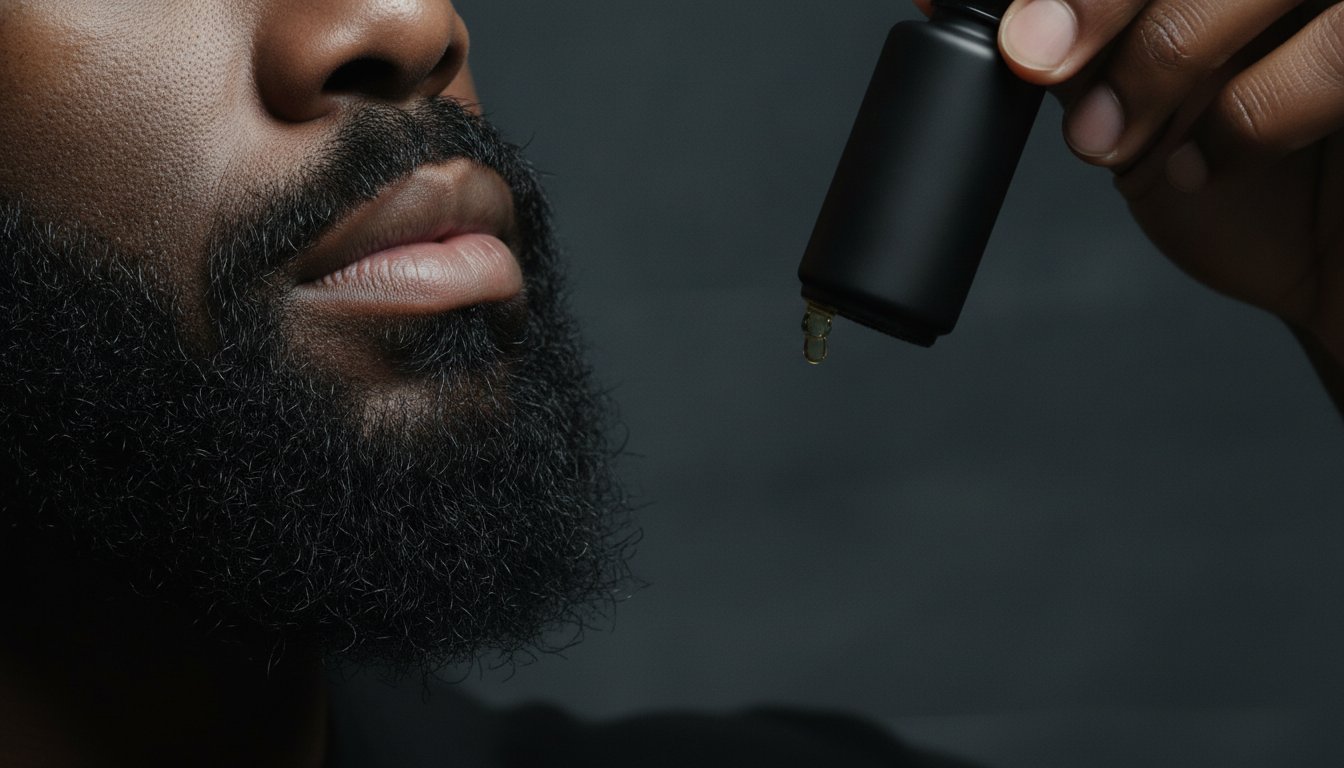
Your beard oil is for your skin, not just the hair. It mimics the natural sebum oils your body produces but often lacks in the coarse environment of a thick beard. To apply correctly, use your fingertips to reach the skin beneath the hair. This prevents the “wire” feel at the root, which is the primary cause of hair sticking straight out. When the skin is healthy and hydrated, the follicle emerges at a more compliant angle. This makes the initial stages of training much easier. A few drops of a high-quality beard oil, distributed with a boar bristle brush, ensures that every strand is primed for the next layer. If you have particularly stubborn, wiry hair, choosing the best beard oil for waves in coarse hair can make the difference between a pattern that springs back and one that stays locked all day.
Deep Conditioning with Beard Butters
While oil hydrates the foundation, beard butter conditions the structure. Unlike heavy balms that rely on beeswax for a stiff hold, butters use natural fats like shea or mango butter to provide a “soft hold.” This is the secret to wave definition. You don’t want your hair glued down; you want it trained to lay down. Butter provides the weight needed to keep the hair in place without the crunchy, unnatural feel of styling waxes.
For maximum results, apply your butter as an overnight treatment. Massage it thoroughly into the hair fibers, then immediately apply your beard wrap. This creates a pressurized, moisture-rich environment that forces the hair to accept the wave pattern. By the time you wake up, the hair has absorbed the nutrients, leaving you with a soft, compliant canvas that is ready for your morning brush session. This disciplined approach is how to soften beard for waves while building a pattern that actually lasts.
Advanced Softening Techniques: The Hot Towel and Steam Method
Elite wave patterns require more than just daily maintenance; they demand a weekly deep treatment to reset the hair’s structural integrity. While daily oiling and brushing provide the foundation, the hot towel and steam method acts as a technical catalyst. This is the most effective way to master how to soften beard for waves because it uses thermal energy to bypass the hair’s natural resistance. You’ll notice an immediate improvement in brush pull. The bristles move through the hair with less friction, allowing for deeper connectivity and more precise pattern alignment.
Step-by-Step Hot Towel Treatment
Start by preparing a clean cotton towel. Soak it in hot water, then wring it out until it’s damp but not dripping. The temperature should be hot enough to generate steam but never so hot that it burns your skin. Before applying the towel, massage a generous amount of beard oil into your facial hair. This “steam-cleaning” technique uses the heat to drive the oil deep into the follicles while simultaneously loosening any trapped debris. Wrap the towel firmly around your beard and leave it for five to seven minutes.
Don’t skip the cool down phase. Once the towel loses its heat, remove it and immediately apply a cold-water rinse or a cool, dry towel. This temperature shift is vital because it locks the pattern back in. It forces the cuticle to contract, sealing the moisture and nutrients you just introduced. This disciplined approach ensures you avoid heat damage and frizz, which are the common side effects of using scorching heat without a cooling reset.
Why Heat Opens the Cuticle for Better Absorption
Each strand of your beard is covered in a shingle-like structure called the hair cuticle. In its natural state, these shingles lay flat and protect the inner cortex. Steam provides the gentle pressure needed to lift these shingles. This opening allows heavy butters and nutrient-dense oils to penetrate the hair shaft rather than just sitting on the surface. When you understand the physics of how to soften beard for waves, you realize that product application without heat is only half as effective. A permanent moisture seal occurs when the hair cools and the cuticle shingles return to their flat, protective position. This process transforms wiry hair into a compliant, wave-ready canvas. To see how this fits into a full week of training, Download the 7-Day Beard Wave Starter Routine™ Checklist and start your transformation today.
From Softness to Waves: The Final Grooming Progression
Softness is the technical prerequisite, but the brush is where the architectural pattern is born. If you’ve followed the hydration steps correctly, your hair is now compliant and ready to be directed. Brushing dry, unconditioned hair is like trying to sculpt stone with a plastic spoon; you’ll only end up with frustration and broken hair fibers. When you master how to soften beard for waves, your brushing sessions become more efficient and far less damaging. The goal is no longer to “tame” the hair with force, but to “guide” it with precision. This shift in mindset is what separates the beginners from the elite wavers.
Brushing Softened Hair for Pattern Connectivity
Softened hair requires a strategic shift in your tool selection. Since the internal resistance of the hair has been neutralized through hydration, you don’t need a hard brush that scrapes the skin. Instead, reach for a medium-soft boar bristle brush. These natural bristles are specifically designed to distribute the oils and butters you’ve already applied. This distribution ensures that every strand from root to tip is coated, creating the uniform shine and connectivity that defines a top-tier pattern.
Precision is far more important than speed during this phase. Use long, deliberate strokes that follow the natural growth direction of your beard. Each stroke should overlap the previous one slightly to ensure there are no gaps in the connectivity. If you find your hair is still resisting the direction of the brush, it’s a sign you need to revisit your hydration foundation. Applying the right beard hydration tips consistently between sessions can eliminate that resistance and keep your strokes smooth and productive. For a deeper dive into specific stroke techniques and angles, check out our Beard Brushing Mastery guide to refine your daily routine.
Locking it in with the 7-Day Beard Wave Starter Routine™
The final piece of the technical puzzle is compression. Once you’ve brushed your softened hair into its desired alignment, you must secure it immediately. A beard wrap provides the constant, gentle pressure needed to set the pattern while you sleep or go about your day. Applying a wrap to dry hair is largely ineffective, but applying it to hair that has been properly softened with butter and oil creates a “mold” that locks in the ripples. This is where the training actually happens.
Consistency is the only path to mastery in this culture. You can’t soften your beard once and expect permanent results; it requires a daily commitment to the discipline. To stay on track and ensure you’re hitting every critical step, Download the 7-Day Beard Wave Starter Routine™ Checklist. This framework takes the guesswork out of how to soften beard for waves and helps you build the repeatable habit required for deep, connected ripples. Your results are earned through your dedication to the process. Start earning yours today.
Step Into the Ripple Movement
Elite wave connectivity isn’t a result of luck. It’s the product of disciplined prep work and specialized knowledge. By shifting your focus from force to flexibility, you’ve mastered how to soften beard for waves using the “Seal and Protect” layering method. You now understand that hydration starts in the shower with co-washing and culminates in a weekly hot towel treatment to force the hair cuticle into compliance. These aren’t just grooming tips. They are the technical standards for anyone serious about the craft.
Join thousands of men in the Wavy Beard Maven movement who have traded the “brillo pad” texture for deep, fluid ripples. We provide master-led guidance and specialized tools designed specifically for coarse and coily hair textures. It’s time to stop fighting your hair and start training it with precision. Master your pattern with the 7-Day Beard Wave Starter Routine™ and track your progress toward total connectivity. Your dedication to the routine will be reflected in the mirror. Stay consistent, stay disciplined, and watch your waves transform.
Frequently Asked Questions
How often should I use beard oil to keep my waves soft?
You should apply beard oil at least once daily to maintain a consistent texture. For those living in drier climates or men with high-porosity hair, a second application in the evening is often necessary. This daily habit ensures your skin remains hydrated and your hair stays pliable for training. Consistency is the foundation of the wave movement. If you skip days, the hair reverts to a wiry state, making it harder for your brush to maintain connectivity.
Can I use regular hair conditioner on my beard for waves?
Avoid using regular scalp conditioners on your facial hair. The skin on your face is much more sensitive than your scalp; regular conditioners often contain heavy silicones that can lead to breakouts or clogged pores. Instead, use a specialized beard conditioner or a co-wash specifically formulated for facial hair. These products provide the necessary hydration to soften beard hair without weighing down your wave pattern with synthetic residues or causing skin irritation.
Will softening my beard make my waves disappear?
Softening your beard actually enhances your wave definition rather than making it disappear. Many beginners fear that soft hair won’t hold a pattern, but the opposite is true. Soft hair is more elastic and compliant, allowing it to lay flat under the pressure of a beard wrap. When you understand how to soften beard for waves, you’re giving the hair the flexibility it needs to form deep, connected ripples that stay in place throughout the day.
What is the best time of day to apply softening products?
The best time to apply softening products is immediately after your morning wash and again before you sleep. Applying to a slightly damp beard in the morning locks in the moisture from the water. A nightly application of beard butter provides a deep conditioning effect while you wear your beard wrap. This dual-timing strategy ensures your hair remains in a constant state of hydration, which is essential for long-term pattern training and elite definition.
Why does my beard feel soft in the morning but wiry by noon?
This usually happens when you fail to seal the moisture correctly. If you only apply oil, the hydration can evaporate by midday, leaving the hair brittle and stiff. You must use a beard butter over your oil to create a protective barrier. This layering technique prevents moisture loss and maintains that velvet texture for the entire day. If you struggle with midday stiffness, it is a sign your environment is stripping your hair faster than your current routine can compensate. Men with particularly thick or wiry textures may also benefit from switching to the best beard oil for waves in coarse hair, which provides the higher viscosity needed to maintain compression and shine through the afternoon hours.
Is a hot towel treatment safe for all beard types?
A hot towel treatment is safe for all beard types as long as you manage the temperature. Whether you have a thin beard or a thick, coily texture, steam is the most effective way to open the cuticle for deep hydration. However, you must avoid using scorching water that can cause heat damage or skin irritation. Always finish with a cool rinse to close the cuticle and lock in the nutrients you just introduced during the session.
How do I soften a very short beard that I am just starting to wave?
Focus on the skin foundation when your beard is still short. Even at the stubble stage, you need to learn how to soften beard for waves by applying a few drops of oil daily. Use a soft boar bristle brush to stimulate the follicles and train the hair to grow in the desired direction from day one. Starting this habit early prevents the itchy phase and ensures your hair is soft and compliant as it reaches wave length.