September 1, 2026
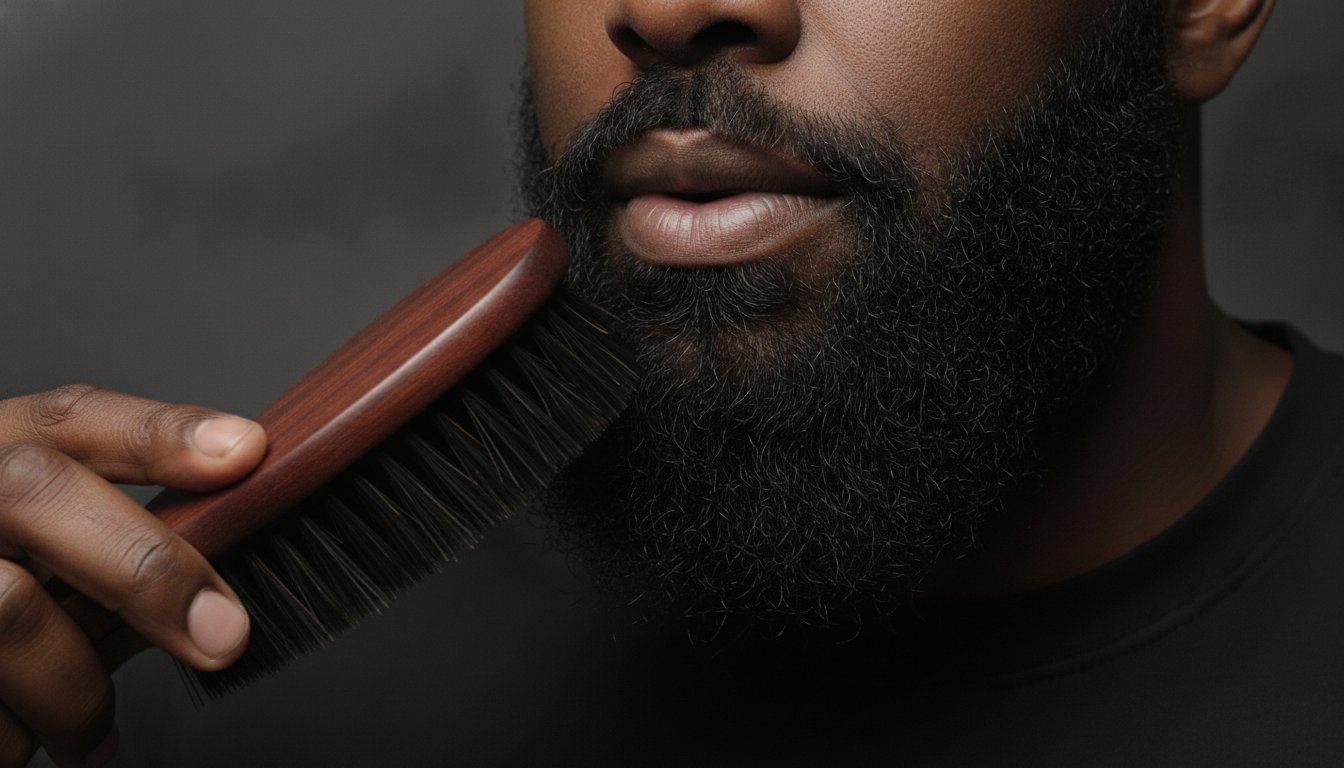
Stop waiting for your facial hair to cooperate and start training it to obey. Most men believe that deep, connected ripples are a gift of nature; however, the truth is far more empowering. Elite facial hair isn’t born. It’s built through a relentless commitment to the craft and a systematic beard wave transformation. You’ve likely felt the frustration of a frizzy, uncooperative beard or wondered why your patterns refuse to connect despite your best efforts. It’s exhausting to look in the mirror and see scruff when you’re aiming for a look that commands respect. We know that the path to a professional aesthetic often feels cluttered with product overwhelm and conflicting advice.
This guide is your definitive blueprint for mastering the art of the ripple. You’ll learn how to move from a chaotic mess to a masterpiece of symmetry and depth using disciplined, expert-led techniques. We’re going to break down the systematic approach to “wolfing,” the vital role of compression with beard wraps, and the precise daily habits required to master your grooming in 2026. By the time you finish this manual, you’ll have a structured routine that replaces guesswork with visible, high-definition results and total confidence in your grooming mastery.
Key Takeaways
- Define your beard wave transformation as a disciplined training process that separates a master waver from someone who just has a fresh trim.
- Master the “Wolfing” phase to cultivate the raw material and hair length needed for deep, connected patterns.
- Utilize a systematic toolkit of brushes, oils, and compression wraps to refine your texture and ensure maximum connectivity.
- Execute a structured 28-day roadmap designed to move you from initial scruff to elite, visible wave definition through daily persistence.
- Learn the specific trimming techniques that allow you to maintain a clean look while protecting your established wave structure.
What is a Beard Wave Transformation?
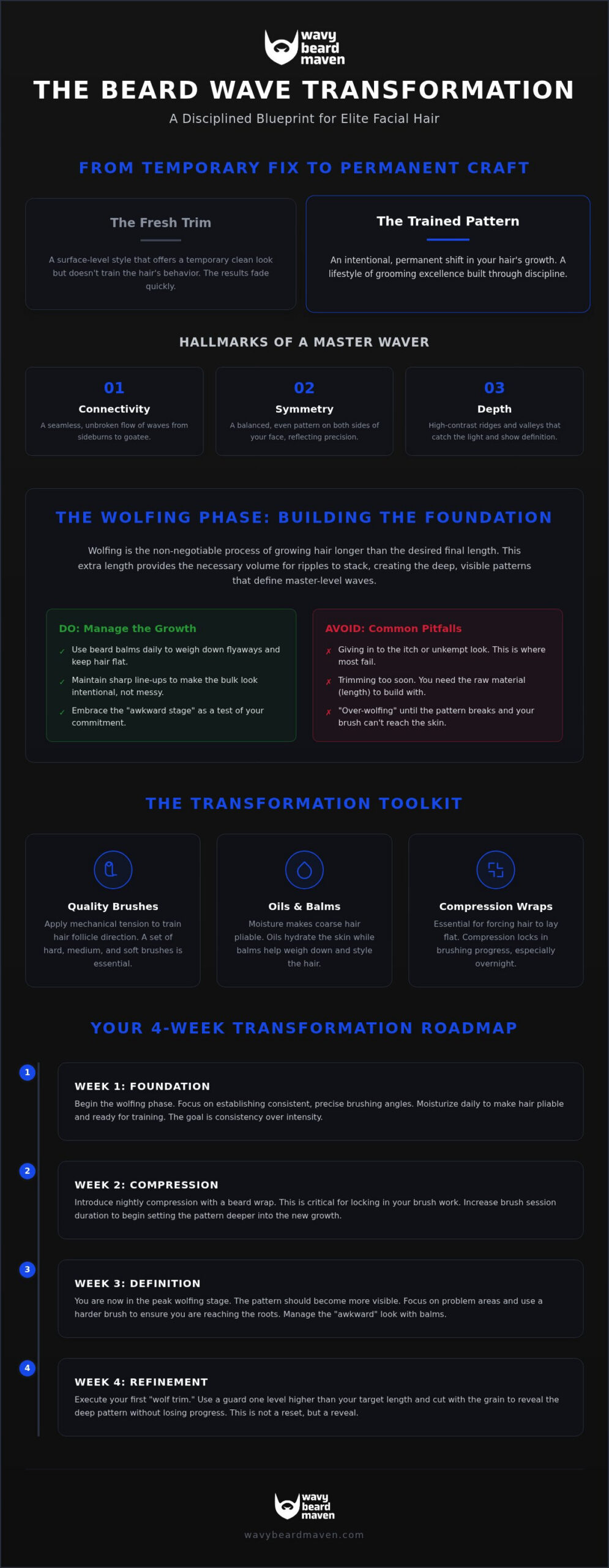
What exactly separates a master waver from a man who simply has a well-groomed beard? The answer lies in the discipline of a beard wave transformation. This isn’t a surface-level style you can buy at a barber shop; it’s the intentional process of training your facial hair to lay in a consistent, rippled pattern that flows with the natural contours of your face. While a “fresh trim” offers a temporary clean look, a “trained pattern” represents a permanent shift in your hair’s behavior. It’s the difference between a temporary fix and a long-term lifestyle of grooming excellence.
To reach the elite level, you must understand your foundation. For most men in this community, that foundation is Type 4 hair. This specific texture provides the natural curl tension necessary to hold a deep-wave structure. Your primary focus throughout this journey is Connectivity. You aren’t just looking for a few ripples on your cheeks. You’re aiming for a seamless, unbroken flow of waves that connects from your sideburns to your goatee. Connectivity is the hallmark of a specialist who has mastered the craft.
The Aesthetic of the Wavy Beard
The visual appeal of a wavy beard is undeniable, mirroring the prestige found in the history of hair waves on the scalp. In our movement, we judge a successful transformation by two specific metrics: symmetry and depth. Symmetry ensures that your pattern is balanced on both sides of your face, while depth creates those high-contrast ridges that catch the light. This aesthetic is a powerful form of cultural expression. It signals to the world that you possess the patience to earn your results rather than looking for a quick fix.
The Science of Texture Training
How do you force stubborn facial hair to follow a new path? It starts with the science of follicle redirection. When you brush consistently, you’re applying mechanical tension that slowly trains the hair to grow at a flatter angle. However, you can’t train dry, brittle hair. You must use moisture to make your coarse texture pliable. This is why Wolfing is a non-negotiable pillar of the journey. Wolfing is the practice of growing your hair longer than your desired final length. This extra length provides the necessary volume for ripples to stack on top of each other, resulting in the deep, visible patterns that define a master-level beard wave transformation.
The Wolfing Phase: Building the Foundation
Elite patterns aren’t created on short stubble. To achieve a true beard wave transformation, you must embrace the Wolfing phase. Wolfing is the intentional period where you allow your facial hair to grow beyond its usual length to increase the depth of your ripples. Think of this extra length as your raw material. Without significant hair volume, your waves will look shallow and faint. The deeper the hair, the more room your pattern has to set. During this time, the relationship between hair density and visibility becomes clear. Thicker beards provide the canvas needed for high-definition connectivity, but only if you have the discipline to let it grow. This phase is the backbone of any successful beard wave transformation.
Pushing through the “awkward stage” is where most men fail. Your beard will look unkempt and it will likely feel itchy. This is a psychological test of your commitment to the craft. Following dermatologist tips for healthy hair can help manage skin irritation during this phase, ensuring your foundation remains strong while the hair stacks. Remember, the messiness is temporary, but the deep-wave definition you earn is permanent.
Managing the Wolfing Period
You don’t have to look unrefined to be a wolf. Use beard balms daily to weigh down flyaways and keep the hair laid flat against your skin. While you’re skipping the full trim, you must maintain your line-ups. A sharp perimeter makes the bulk of the wolfing beard look intentional rather than accidental. You’ll know it’s time to stop when the hair becomes so thick that your brush can no longer reach the skin, or when the pattern starts to “break” and look messy despite your best efforts. For a structured approach to this growth cycle, start with our 7-Day Beard Wave Starter Routine™.
The Importance of Compression
As your hair gains mass, your standard brushing routine isn’t enough to hold the style. You need elite compression. Beard wraps are essential during wolfing to force that extra length to stay flat. If you don’t adjust your wrap tension as the beard grows, the hair will curl away from the face, destroying your progress. Be careful not to “over-wolf” though. If you go too long without a cut, the hair becomes unmanageable, leading to tangles and lost definition. Mastery is about finding the sweet spot where depth is maximized but order is maintained.
The Transformation Toolkit: Brushes, Oils, and Wraps
You cannot build an elite pattern with substandard equipment. A successful beard wave transformation relies on three specific pillars: specialized brushes, texture-softening topicals, and dedicated compression gear. Many men make the mistake of using generic scalp products on their faces. However, the coarse nature of facial hair requires a higher level of tension and moisture. While a standard durag might work for your head, it lacks the specific contouring needed to secure a beard. You need tools designed for the unique geography of the jawline and chin to ensure your progress isn’t lost overnight.
The “Brush Progression” is the secret to consistent progress. You don’t just pick one brush and stick with it. You start with a soft boar bristle brush when your hair is short to stimulate the skin and set the initial direction. As you gain length, you transition to a medium brush to provide the pull needed for ripple formation. During the peak of your wolfing phase, a hard brush becomes mandatory to penetrate the thickest layers and reach the root. This systematic approach ensures your beard wave transformation never hits a plateau and your pattern remains deep from the surface to the skin.
Brushing Mastery: The Engine of the Wave
Natural boar bristles are the only choice for a serious waver. Synthetic bristles are often too harsh or too flimsy, failing to distribute natural oils effectively. A medium brush is your daily workhorse, providing the perfect balance of pull and comfort for most of your journey. To keep your patterns crisp, you must clean your brushes weekly. Product buildup and dead skin cells will eventually clog the bristles, causing them to snag your hair and ruin your connectivity. A clean brush is a precise brush.
Oils and Butters: The Fuel for Flexibility
Moisture is the catalyst for change. Using a high-quality beard oil for waves is the foundation of your daily routine because it softens the hair shaft, making it pliable enough to be redirected. While oils focus on the skin and the roots to prevent itch, beard butters provide the light hold and deep conditioning your hair needs to stay laid. When applying these products, always move in the direction of your wave pattern. Use the “pat and smooth” method to ensure you aren’t lifting the hair you’ve worked so hard to train. Consistency in your product application is what separates a frizzy beard from a masterpiece of definition.
Your 4-Week Transformation Roadmap
Elite results are the product of consistent action, not random luck. To successfully complete a beard wave transformation, you must commit to a 28-day cycle where discipline is the only thing that matters. While social media might suggest that patterns appear after a single session, the reality of texture training is a methodical progression. This roadmap isn’t a suggestion; it’s a blueprint for those ready to move from scruff to deep, connected ripples. Your first objective is to secure the 7-Day Beard Wave Starter Routine™ Checklist to ensure your foundation is locked in from day one. By the end of this month, you won’t just have a better beard; you’ll have a master-level pattern.
Week 1-2: Setting the Pattern
During the first two weeks, your goal is to redirect the hair’s natural growth. You’ll focus on blind brushing, which means brushing without a mirror to develop muscle memory and feel the direction of your pattern. You must perform two 15-minute brush sessions daily. These are non-negotiable habits. Every morning and every evening, you’re communicating a new direction to your follicles. At night, you’ll secure this progress with a beard wrap. This compression prevents your hard work from being undone while you sleep, ensuring you wake up with your pattern laid flat and ready for the next day’s training.
Week 3-4: The Wolfing and Definition Phase
As you enter the second half of the month, the wolfing phase begins in earnest. You’ll notice your hair is significantly thicker, which means you need to increase your brush tension and incorporate beard butters for maximum hold. This is also when you’ll likely encounter “forks,” those frustrating broken lines where your pattern doesn’t quite connect. Don’t panic. Use precise, isolated brushing to bridge these gaps and force the connectivity. To deepen the ripples, implement the “Wash and Style” method. Apply your cleanser, brush your pattern while the hair is saturated, and then wrap it while it’s still damp. This technique uses the hair’s peak pliability to set the deepest possible ridges for a complete beard wave transformation.
By day 28, your milestones should include visible ripples across the cheeks and the beginning of connectivity at the jawline. If you’ve remained disciplined, the scruff is gone, and the elite pattern has taken its place. This is where your persistence pays off in high-definition symmetry.
Mastery and Maintenance for the Disciplined Waver
Achieving a beard wave transformation is a significant milestone, but maintenance is where true mastery is revealed. You’ve earned your ripples through weeks of wolfing and consistent brushing; now, you must protect that investment. Maintenance isn’t about working harder; it’s about working smarter to ensure your pattern remains crisp and connected. Reaching the peak of the wave movement requires you to transition from a student of the craft to a dedicated practitioner who understands that excellence is a daily habit rather than a destination.
Maintaining Connectivity Long-Term
Your environment changes, and your routine must adapt to keep your pattern elite. During colder months, your facial hair requires more intensive moisture to stay pliable. If you don’t increase your usage of oils and butters, your pattern will become brittle and lose its depth. You should also distinguish between your sessions. A “Maintenance Brush” session is shorter and focuses on surface-level order, whereas a “Training Brush” session is still necessary at least twice a week to keep the roots aligned. Never underestimate the power of nightly compression. Skipping even one night of wearing your beard wrap can cause the hair to lift, setting your connectivity back by several days.
Leveling Up Your Wave Game
For those seeking the absolute peak of the craft, 360 connectivity around the jawline is the final frontier. This requires precision brushing at angles that follow the bone structure of your face. If you ever feel your pattern is becoming stagnant or you’ve just received a trim that went a bit too deep, use the 7-Day Beard Wave Starter Routine™ to reset your foundation. It’s the perfect tool to sharpen your focus and reignite the training process whenever you need to refine your definition.
The “Fresh Cut” strategy is vital for long-term success. When it’s time for a trim, you must ensure the hair isn’t cut so short that the pattern is erased. Aim for a length that preserves at least two full ripples. This allows you to maintain a sharp, professional look while keeping your hard-earned texture intact. Always remember that your beard is a direct reflection of your discipline and your respect for the craft. Join the Wavy Beard Maven community to stay motivated and share your progress with others who value self-improvement. Start your journey today with the right mindset and the professional tools required for success. Your beard wave transformation is a testament to your persistence; wear it with pride.
Claim Your Pattern Mastery
Your path to elite status doesn’t happen by accident. It’s earned through the daily grind of brushing, the patience of the wolfing phase, and the precision of your compression routine. By now, you understand that a successful beard wave transformation is a systematic process of texture training. You’ve learned how to leverage the raw material of your growth and why specialized tools are mandatory for the unique demands of Type 4 hair. Discipline is the only thing that separates a masterpiece from a mess.
It’s time to stop settling for scruff and start commanding respect with a pattern that reflects your dedication. You don’t have to navigate this journey alone. Join thousands of disciplined wavers who have already stepped into the movement. With our expert-led wave education and specialized grooming gear, you have everything you need to achieve deep, connected ripples. Your beard is your signature; make sure it represents your best self.
Download the 7-Day Beard Wave Starter Routine™ and Begin Your Transformation
Consistency is the only thing standing between you and pattern mastery. Keep your brush moving and your wrap tight. We’ll see you in the community.
Frequently Asked Questions
How long does a beard wave transformation actually take?
A full beard wave transformation typically takes four to six weeks of consistent daily discipline before you see deep, defined patterns. While you might notice slight ripples within the first fourteen days, true connectivity and depth require a minimum of one full 28-day growth cycle. Your results depend entirely on your commitment to the routine. If you stay consistent with your brushing and compression, you’ll see a complete shift in your hair’s behavior by the end of the second month.
Can I get waves if I have a short beard or am I too early?
You can begin training your hair at any length, but you won’t see deep ripples until you have enough bulk. Starting early allows you to establish the correct growth direction before the hair becomes coarse and difficult to manage. Use this time to master your brush angles. Once you enter the wolfing phase and gain more length, the foundation you built during the short stage will allow your waves to pop with much greater definition.
Do I need a durag or a specialized beard wrap for waves?
You absolutely need a specialized beard wrap to achieve professional results. While a standard durag works for the hair on your head, it isn’t designed to provide the specific tension required for the jawline and chin. A dedicated beard wrap contours to the shape of your face, ensuring that your hair stays laid flat against the skin throughout the night. This level of targeted compression is what separates a fuzzy beard from a masterpiece of symmetry.
Why won’t my beard waves connect on the sides of my face?
Lack of connectivity on the sides is usually a result of inconsistent brushing angles or insufficient hair length. Your facial hair grows in different directions, so you must use a mirror to ensure every stroke follows the desired pattern. If your hair is too short, the waves won’t have enough raw material to bridge the gaps between sections. Increasing your wolfing period and using a medium beard brush will help you force those stubborn side patterns to connect.
How often should I wash my beard during the transformation process?
Limit your washing to once or twice per week to maintain the natural oils necessary for a successful beard wave transformation. Over-washing strips moisture and makes your hair brittle, which destroys the pliability needed for training. When you do wash, use the “Wash and Style” method. This involves brushing your pattern while the hair is saturated with a specialized cleanser and then immediately applying a beard wrap to lock in the ripples as they dry.
Is it possible to get waves with a very coarse, coily beard texture?
Coarse, coily textures are actually the ideal foundation for elite wave patterns. Type 4 hair possesses the natural curl tension required to hold deep, high-contrast ridges that other textures simply can’t produce. The key is to keep the hair extremely moisturized with beard oils and butters so it remains flexible. With the right amount of compression and consistent brushing, your coarse texture will transform into a structured, symmetrical pattern that commands respect in any room.
What is the best brush for a beginner starting their wave transformation?
A medium boar bristle beard brush is the superior choice for any beginner. Natural bristles are mandatory because they distribute oils evenly and provide the specific pull needed to redirect the hair follicle without irritating the skin. Synthetic brushes often lack the necessary tension or are too harsh for the face. As your beard grows thicker during the wolfing phase, you can eventually add a hard brush to your toolkit to reach the deeper layers of your pattern.
Can I use hair grease for my beard waves?
Avoid using traditional hair grease on your face at all costs. These products are often too heavy and contain ingredients that clog pores, leading to painful breakouts and skin irritation. Instead, rely on specialized beard butters and oils. These products provide the hold and moisture you need for wave definition while remaining light enough to keep your skin healthy. Consistency with the right topicals ensures your pattern stays sharp without compromising the health of the skin underneath.