November 18, 2026
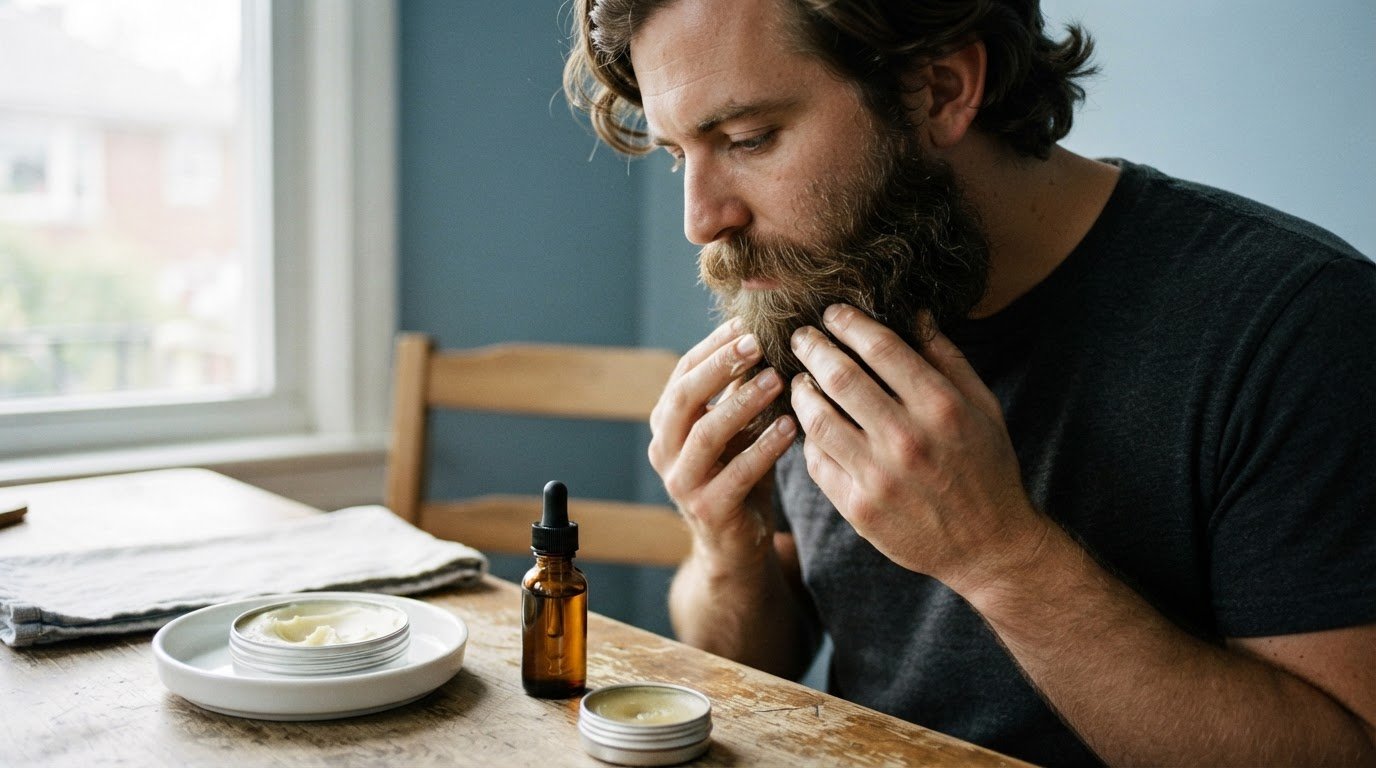
Beard butter isn’t simply beard oil with a thicker feel: it offers a creamier way to condition beard hair and the skin beneath it, while oil is useful for added shine and balm suits heavier styling. A practical understanding of shea butter in beard care starts with knowing where butter fits between those products. Its richer texture makes it a distinct part of the routine, not a substitute for every grooming staple.
If you’re wondering which product to reach for, the difference comes down to texture and purpose. This guide explains how shea butter can condition beard hair and skin, compares butter with oil and balm, and shows how to apply it from the roots through the beard. You’ll have a clear basis for choosing a product and using it in your routine.
Key Takeaways
- Match your product to the finish you want: butter conditions beard hair and the skin beneath it, oil adds shine, and balm supports heavier styling.
- Work beard butter through the hair and down to the skin to make conditioning part of your grooming routine.
- Warm a small amount between your palms first; the texture helps it spread through the beard.
- Learn what makes shea butter useful in beard care, and how its properties can support softer-feeling hair and skin.
How is beard butter different from beard oil or balm?
Beard butter sits between beard oil and balm in texture and purpose. It conditions beard hair and the skin underneath, while oil adds shine and balm provides more hold for styling.
Softening and Styling Beard Hair
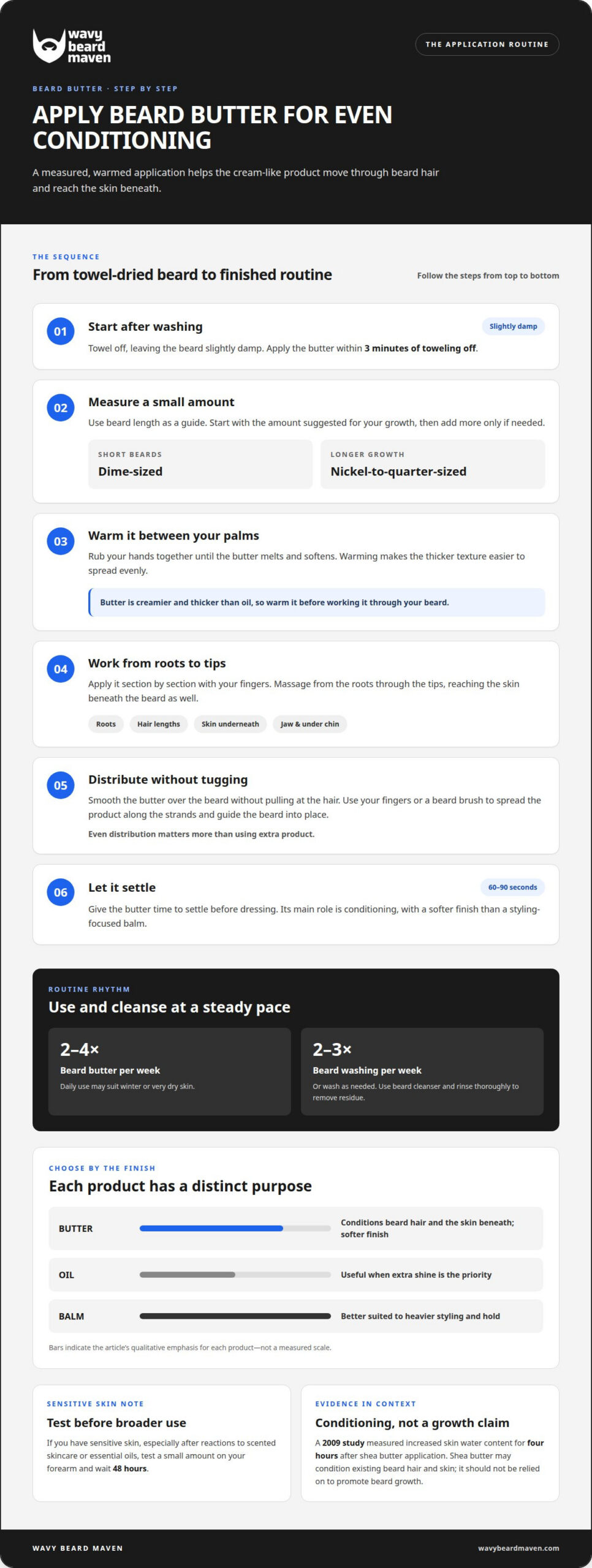
Beard butter is a creamy conditioner that softens hair and helps manage its shape. That balance matters when your routine needs comfort without a firm styling hold. After washing, apply it to a slightly damp beard and massage from roots to tips, including the skin underneath. A dime-sized amount suits short beards; longer growth may need a nickel-to-quarter-sized amount. Work it in within 3 minutes of toweling off, then use a beard brush to distribute it evenly.
Choose based on the finish you want. Beard oil is useful for extra shine or in dry climates, while beard balm is the better fit for heavy styling. Butter provides conditioning with a softer finish than a styling-focused balm. Let it settle for 60-90 seconds before dressing. If your beard feels dry but doesn’t need strong hold, butter can support moisture without making styling the main purpose.
Strength, Shine, and Breakage
Conditioned hair feels softer and can be easier to groom. Beard hair can become dry and brittle, so working butter from root to tip helps coat the strands and condition the skin beneath. Shea butter may also help shield beard hair from external factors such as sun, wind, and coloring. Conditioning can reduce rough handling that contributes to breakage, while oil remains an option when shine is the priority.
Does shea butter help beard growth, or does it only condition existing hair? It may help condition existing beard hair and the skin beneath it, but it should not be relied on to promote growth. Vitamin D receptors in hair follicles play a role in hair renewal and growth, but that does not show that applying shea butter activates those receptors.
Shea butter’s role in beard and skin conditioning
Shea butter conditions the beard while supporting moisture in the skin beneath it. A 2009 study measured increased skin water content for four hours after shea butter application. In practice, this matters when beard hair feels dry and the skin underneath needs conditioning. The finish depends on how much product you use and how thoroughly you spread it. Treat beard butter as a conditioning step, not a substitute for cleansing.
How often should you use shea butter on your beard, and how do you wash it out? For most men, use beard butter two to four times a week; daily use may suit winter or very dry skin. Wash your beard two to three times a week or as needed, using beard cleanser and rinsing thoroughly to remove residue.
Mango butter is made from the kernel of the mango fruit, so it’s a separate ingredient from shea butter. Don’t assume the two offer identical results for irritated skin or split ends. Check the ingredients in a butter blend, then notice how your skin and beard respond. For sensitive skin, especially after reactions to scented skincare or essential oils, test a small amount on your forearm and wait 48 hours before broader use.
Keep hygiene steady, especially if sweat, dirt, or product builds up beneath the beard. Clean the beard regularly and rinse away cleanser fully, since leftover residue can contribute to discomfort. For stubborn dry-skin patches, apply beard butter directly to the area two or three times a week. If you’re refining your routine, beard butter options can fit a conditioning-focused approach alongside consistent cleansing.
Beard butter’s texture and role in beard care
Beard butter is distinguished by its thick, cream-like texture, which affects how it moves through your beard and fits into your routine. Before applying, rub a small amount between your palms until it melts. Warming it makes it easier to spread evenly instead of leaving a concentrated patch. The texture is more than a sensory detail; it shapes how you apply the product.
Think of the difference between spreading cream and pouring liquid. Beard oil flows readily, while butter is thicker and needs warmth from your hands. Once softened, work it through the beard with your fingers, section by section. This controlled approach helps reach hair along the jaw and under the chin, where a quick surface swipe can miss. Even distribution matters more than using extra product.
Butter conditions rather than providing a strong hold. Beard balm is a better fit when shaping and heavier styling are the priority. Oil suits a routine focused on shine, while butter offers a richer conditioning step. Choose according to your goal: butter for dry-feeling hair, balm for a more structured shape, or oil for extra sheen. Each product has a distinct purpose.
Once the butter melts between your palms, smooth it over your beard without tugging. Then use your fingers or a beard brush to guide the hair into place. A brush helps distribute product along the strands and shape the beard. Start with a small amount and add more only if needed. Beard butter’s texture calls for warming and measured application, with conditioning as its main role in your routine.
What is shea butter, and what properties make it useful in beard care?
Shea butter is a plant-based fat extracted from the nuts of the African shea tree. Understanding shea butter in beard care starts with knowing its composition and role in conditioning products. Shea butter contains nutrients and fatty acids that are relevant to its use in conditioning products. These components help explain why it is used to condition beard hair and skin. Knowing the ingredient’s source can also help you read grooming labels more purposefully.
Shea butter’s fatty acids include stearic, linoleic, palmitic, and arachidic acids. Oleic acid is another fatty acid associated with sebum, the skin’s natural oil. These components contribute to shea butter’s rich, emollient character and explain its use in conditioning formulas, but they do not establish a specific result for every beard. Consider the full formula and the finish you want.
Shea butter also contains triterpenes and appears in skincare products and cosmetics, according to MDPI. Its nutrients describe the ingredient; they do not prove that applying it changes beard growth. Understanding shea butter in beard care means distinguishing its conditioning role from claims about growth. If you want a formula for beard hair and skin, look for shea butter in the ingredient list.
Shea butter can help protect beard hair from external factors such as sun, wind, and coloring. That makes its conditioning role relevant when your beard faces those exposures. Apply a suitable beard-care formula evenly through clean hair, reaching the skin beneath it. Then brush or shape your beard as usual. To put this ingredient knowledge into practice, build a more informed beard-care routine around the conditioning and finish you want.
Wavy Beard Maven: Beard Butters
Wavy Beard Maven offers beard butters for a conditioning-focused routine. Choose butter when your priority is conditioning beard hair and the skin beneath it. Beard oils can complement a routine focused on shine, while beard balms suit heavier styling. A beard brush helps distribute product and guide hair into place.
Choose products according to the result you want rather than treating them as interchangeable. Start with beard butter for conditioning, then consider oil for shine or balm for stronger styling. Applying each product consistently and distributing it carefully helps make every step purposeful.
Contact Wavy Beard Maven to explore beard butters for your grooming routine.
Make Your Beard Routine More Intentional
Let your beard’s needs guide your next step. Understanding shea butter in beard care can help you choose products with purpose instead of adding steps without a clear reason. Notice how your beard feels after grooming, then adjust your routine to suit the care and finish you want.
Wavy Beard Maven offers Beard Butters, Beard Oils, and a Beard Brush for different parts of a beard-care routine. Explore the options that fit your approach, whether you’re refining your conditioning routine or building consistent grooming habits.
Contact Wavy Beard Maven to discuss your beard-care needs. Keep learning, stay consistent, and take pride in the care you put into your beard.
Frequently Asked Questions
What about acne-prone or oily skin?
If your skin is oily or acne-prone, use a minimal amount and focus on the beard hair. Product can transfer to nearby skin, so avoid layering butter with several rich products at once. If you notice irritation or breakouts after adding it, stop and reassess the formula. Check the full ingredient list, since fragrance or other oils may also affect your experience.
What are the benefits of shea butter for beard hair and the skin underneath?
A conditioning product may help beard hair feel softer and easier to manage. Its role is grooming support, not a promise of new growth. For example, after wind leaves your beard feeling rough, a conditioning product can help it feel softer. The formula and how you apply it shape the finish.
How do you apply shea butter to a beard, and how much should you use?
Apply butter to a clean, slightly damp beard, then massage it through the hair and the skin underneath. Start with a dime-sized amount for a short beard; longer growth may need a nickel-to-quarter-sized amount. Add more gradually if coverage feels uneven. Finish by brushing through the beard to distribute the product and guide the hair into place.
How does shea butter compare with beard oil, balm, and other moisturizers?
Butter is the creamier conditioning option; beard oil is often chosen for extra shine or dry climates, while balm suits heavier styling. A typical lotion’s conditioning effect lasts two to four hours, and drugstore men’s moisturizers are typically 70-85% water. Those comparisons describe general product types, not a guarantee that face lotion will work well through beard hair.
Can shea butter clog pores or cause acne, irritation, or allergic reactions?
Skin reactions can vary, and a blended formula may contain other ingredients that affect your skin. If you’ve reacted to scented skincare or essential oils, apply a small amount to your forearm and wait 48 hours before broader use. Stop using the product if irritation develops. Don’t assume that a natural ingredient or product is automatically reaction-free.
Is shea butter safe for sensitive skin or people with nut allergies?
Shea butter comes from the nuts of the African shea tree, but that fact alone does not establish whether someone will react to it. Formulas may also contain other ingredients. If you have a nut allergy, ask your allergy clinician whether a specific shea-containing product is appropriate before applying it, especially to sensitive skin.