September 28, 2026
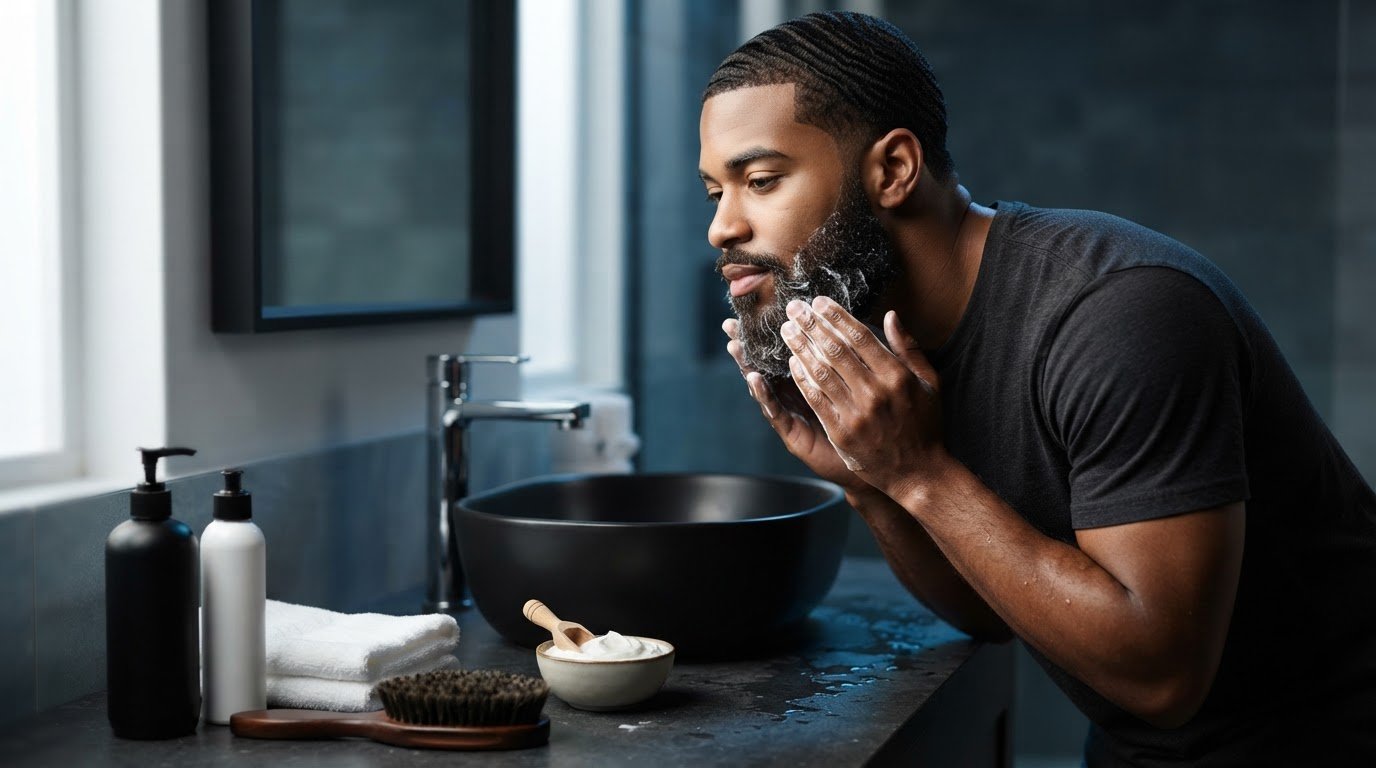
What if a product labeled “beard co-wash” isn’t the right cleanser for your beard? If you’ve wondered what is a beard wash co-wash, the label alone may not settle it. Co-wash generally refers to a cleansing conditioner made to wash hair, but product names and formulas vary. Ordinary conditioner isn’t automatically a cleanser.
It makes sense to look for a gentler option, especially if shampoo leaves your beard feeling dry or your routine leaves it coated. The practical test is whether the formula is intended to cleanse facial hair and whether its directions fit your routine. For wavers, cleansing is one part of beard care. Your beard’s texture and how it responds matter too.
This guide explains how co-wash differs from shampoo and ordinary conditioner, what to check on a product label, and how to try a new cleanser carefully. You’ll also learn how to assess whether it suits your beard and wave goals, then build a simple post-wash routine without mistaking moisturizers like beard oil or butter for cleansers.
Key Takeaways
- Wondering what is a beard wash co-wash? The term can describe different products, so the label alone may not tell you how one cleanses.
- Compare co-wash, shampoo, and ordinary conditioner by their intended purpose, cleansing role, and directions.
- Decide whether a co-wash suits your beard, skin, and routine by following the product instructions and noticing how your beard feels.
- Try a new cleanser carefully: follow its label, use a manageable amount, and rinse as directed.
- Keep cleansing in perspective: it supports beard care, but it doesn’t create waves by itself.
What Is a Beard Wash Co-Wash? The Term Explained Clearly
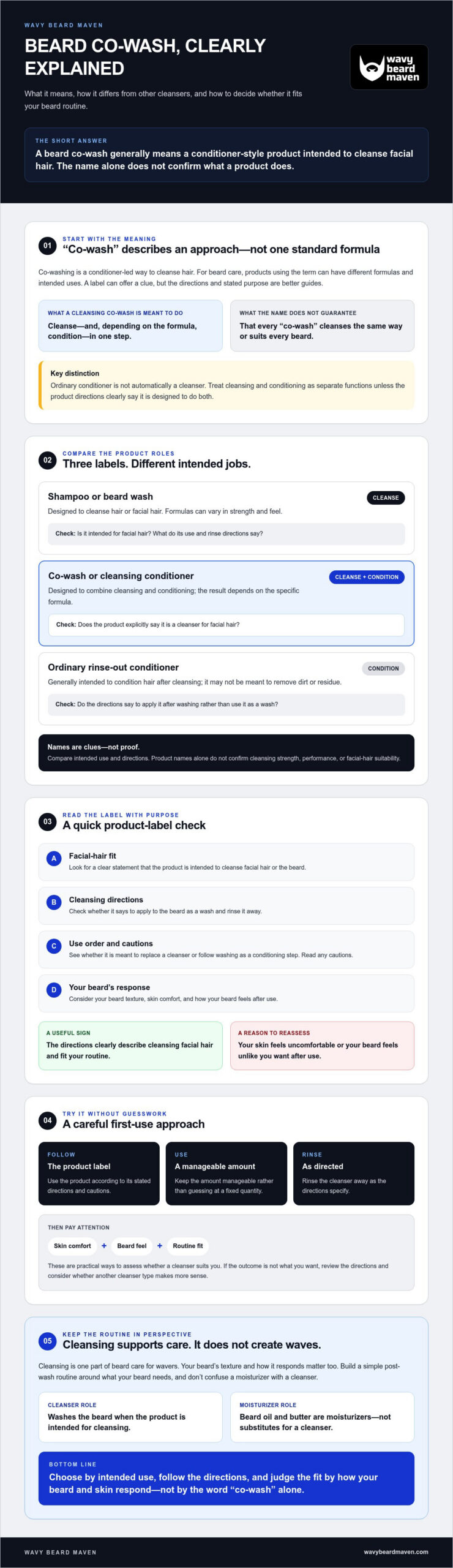
What is a beard wash co-wash? It generally means cleansing the beard with a conditioner-style product rather than using a conventional shampoo as the main cleanser. The term describes a conditioner-led approach, not a guaranteed formula or a single set of product standards. A label can suggest a product’s purpose, but the directions and stated intended use are more useful for understanding how it’s meant to work.
Beard co-wash isn’t a universally standardized product category. Brands may use the phrase for products with different formulas and intended uses, so don’t assume every item labeled “co-wash” performs the same way. The broader idea of co-washing is explained through cleansing conditioners, which are designed to combine conditioning with cleansing. For a beard product, check that the manufacturer specifically describes it as a cleanser for facial hair and provides directions for using it.
What does co-washing mean in beard care?
Beard co-washing is cleansing facial hair with a conditioner-style product intended to wash the beard, rather than relying on a product intended mainly to condition it. This definition describes the general method, not a formula specification. The name alone doesn’t confirm what a product cleanses or how often it should be used. Read the label, including its directions, intended use, and any cautions, before adding it to your routine.
Look for clear instructions that describe applying the product to the beard and rinsing it away. If the directions instead say to use it after washing and leave it on briefly before rinsing, it may be a conditioner step rather than your cleanser. Follow the product’s own guidance instead of treating the word “co-wash” as a guarantee.
Is beard co-wash the same as beard conditioner?
Not necessarily. A cleansing conditioner is intended to help clean as well as condition, while an ordinary rinse-out conditioner is generally meant to condition hair after cleansing. A conditioner may make the beard feel softer without being designed to remove everyday dirt or residue. Likewise, don’t assume every co-wash conditions to the same degree.
Check what the product says it does. Does it describe cleansing the beard, or is it presented as a conditioning step? Does the label tell you to use it in place of a cleanser, or after washing? Those details are more useful than the product name by itself. Treat cleansing and conditioning as separate functions unless the directions clearly say the product is designed to do both.
How Beard Co-Wash Differs from Shampoo and Conditioner
To understand what is a beard wash co-wash in practical terms, compare what each product is meant to do and how its label tells you to use it. “Shampoo,” “beard wash,” “co-wash,” and “conditioner” can signal different roles, but names alone don’t confirm a formula’s strength or performance. Use the directions and intended use as your guide.
| Product type | Intended purpose | Cleansing role | What to check on the label |
|---|---|---|---|
| Shampoo or beard wash | Clean hair or facial hair | Designed to cleanse; formulas can vary in strength and feel | Whether it’s intended for facial hair, plus use and rinse directions |
| Co-wash or cleansing conditioner | Combine cleansing and conditioning in one step | Designed to cleanse, though results depend on the specific formula | Whether the product explicitly says to use it as a cleanser |
| Ordinary rinse-out conditioner | Condition hair after cleansing | May not be intended to cleanse | Whether directions say to apply after washing rather than use as a wash |
Beard wash versus co-wash: what changes?
Both may be intended to clean facial hair, but their formulations and directions can differ. Shampoo is a cleanser category, not a promise that every formula cleans with the same strength. A cleansing conditioner may combine cleansing and conditioning functions, depending on how it’s made. Look for facial-hair suitability and compare the stated use, not just the claims on the front of the package.
Neither option is automatically best for every beard. Beard length, skin comfort, and how your beard feels after use all help you assess fit. If a product leaves your skin uncomfortable or your beard feeling unlike you want, review its directions and consider whether another type of cleanser makes more sense.
Co-wash versus ordinary conditioner
Conditioning and cleansing are distinct functions, even when a product claims to do both. A regular rinse-out conditioner may be intended to soften or smooth hair after washing, not remove dirt or residue. Use it as a cleanser only if the label specifically gives cleansing directions.
In plain language: a co-wash is meant to cleanse as well as condition, while an ordinary conditioner may be meant only to condition.
Build your routine around each product’s function, then assess how your beard responds. For more structured beard-wave care, explore this beard-wave routine guidance.
Which Beard-Cleansing Option Fits Your Hair, Skin, and Routine?
A co-wash isn’t a required step or a universal upgrade. It’s one option to assess against your beard length, how often you cleanse, whether residue tends to build up, and how your skin feels afterward. Start with the product’s stated purpose and directions, then pay attention to your own results rather than expecting one cleanser to suit every beard.
When might a co-wash be worth considering?
A co-wash may be worth trying if you want a conditioner-style cleanser and find a product clearly labeled for facial hair, with directions you can follow. Beard length can affect how you work a cleanser through the hair and rinse it out, so make sure you can reach the skin beneath the beard too. Don’t assume a product is right for you based on the co-wash name alone.
After use, notice how both your beard and the skin underneath feel. Does the beard feel clean enough for your routine? Does your skin feel comfortable? Do you notice residue after rinsing? These observations help you decide whether to continue or reassess. Co-washing doesn’t guarantee better wave definition, softer hair, or beard growth; don’t assume those outcomes from the cleanser category.
When might another cleanser be a better fit?
If residue seems to persist, or a co-wash doesn’t leave your beard feeling clean to your preference, review the directions and consider whether another cleanser better matches your routine. A longer beard may take more care to rinse thoroughly. If you cleanse frequently, observe how your beard and skin respond over time. Follow the label rather than increasing use or changing the method based on guesswork.
Stop using a product if irritation develops. If skin symptoms are persistent or severe, seek guidance from a qualified health professional instead of trying to solve the issue by switching cleansers repeatedly. For wave training, keep cleansing in its proper role: it’s one part of beard care, not a substitute for shaping habits. A guide to softening and training beard waves can help you think through those separate routine steps.
- Consider a co-wash if its facial-hair directions match your needs and you’re comfortable assessing the results.
- Reassess your choice if you notice persistent residue or discomfort.
- Get professional guidance for skin symptoms that are persistent or severe.
How to Try a Beard Co-Wash Without Guesswork
If you’ve figured out what is a beard wash co-wash, the next step is to test one methodically. Keep the product label in charge: directions can vary, so don’t assume every cleanser should be applied or rinsed the same way. Start with a manageable amount, follow the instructions, and assess how your beard and skin respond before changing the rest of your routine.
A simple first-use routine
Use this sequence as a guide, adjusting it to the product label:
- Check the directions. Confirm that the product is intended for beard or facial-hair use. Read how much to apply, how long to leave it in, and whether it should be rinsed out.
- Wet and apply as directed. If the label calls for a wet beard, wet it first. Begin with a manageable amount, then work the product through the beard gently, following the stated application method.
- Rinse as instructed. Rinse thoroughly if the directions call for rinsing. Pay attention to the areas beneath the beard, where product can be harder to wash away.
- Assess before adding steps. Notice how your beard and skin feel after washing. If you use a moisturizer afterward, such as beard oil or butter, keep that step familiar while you evaluate the cleanser.
What to monitor after washing
Give the routine a careful check. Does your beard feel clean to your preference? Do you notice leftover product, or does your skin feel uncomfortable? Note what you observe across uses, following the label’s recommended frequency. Change one routine variable at a time so you can better tell whether a difference relates to the cleanser or to another product or habit.
Pause use if irritation develops. If symptoms persist or feel severe, seek professional advice rather than continuing to experiment with the product. A careful routine isn’t about forcing a cleanser to work; it’s about recognizing whether it fits.
Keep cleansing separate from wave-training technique. A co-wash is a cleansing choice, while brushing, compression, and other training habits are distinct parts of a beard-wave routine. Don’t assume changing cleansers will create waves or replace consistent technique. If you’re ready to organize those habits, explore the beard-wave routine checklist.
Build a Beard-Wave Routine Around Cleansing, Not Product Hype
A cleanser earns its place in your routine when its purpose and directions fit your beard, not simply because “co-wash” appears on the label. Once you understand what is a beard wash co-wash, keep the choice in perspective: cleansing supports beard care, but it doesn’t create waves on its own.
Where cleansing fits in beard-wave training
Think of cleansing as one part of a consistent practice, alongside brushing and other training habits. Choose a cleanser based on its stated use, follow its instructions, and assess how your beard and skin respond. Keep your training steps steady enough to judge them on their own. For an overview of the broader process, explore guidance on how to get beard waves, without expecting a wash product to replace technique.
What can follow a wash?
After cleansing, beard oil or beard butter may fit your care routine, depending on your needs and preferences. These are grooming and conditioning categories, not cleansers, so keep their role separate from washing. If you’re considering oil as part of wave care, look for guidance on beard oil for waves and decide how it fits alongside the rest of your routine.
Wavy Beard Maven provides beard-wave education and offers beard oils, butters, brushes, balms, wraps, and the 7-Day Beard Wave Starter Routine™ Checklist. Use this guide to assess cleansing products independently, then explore the checklist and beard-wave education for help with the rest of your routine. Build deliberately, one routine choice at a time.
Choose Your Cleanser with Confidence
Now you can answer what is a beard wash co-wash: it’s a conditioner-style cleansing option, but the label alone doesn’t guarantee what a product is designed to do. Check its intended use and directions, then decide whether it suits your beard, skin, and routine. Shampoo, co-wash, and ordinary conditioner serve different purposes, and no single choice fits every waver.
Keep your method steady as you try a cleanser. Follow the product instructions, notice how your beard and skin feel, and change one routine step at a time. Cleansing supports beard care, but consistent wave-training habits do their own work. Beard oils and butters may be part of post-wash care, not substitutes for a cleanser.
Wavy Beard Maven shares step-by-step beard-wave education and offers grooming products including beard oils, butters, brushes, balms, and wraps. Explore Wavy Beard Maven’s beard-wave guides and routine resources to keep building a routine with purpose. Start with the 7-Day Beard Wave Starter Routine™ Checklist, then refine your approach one step at a time.
Frequently Asked Questions
What is a beard wash co-wash?
A beard wash co-wash generally refers to a conditioner-style product intended to cleanse facial hair. The term isn’t standardized across brands, so check the label to confirm the product’s purpose and directions. Don’t assume an ordinary beard conditioner is a cleanser, or that every co-wash has the same ingredients or performance. Use the product only as directed for its stated intended use.
Is co-wash better than shampoo for a beard?
No, co-wash isn’t automatically better than shampoo for every beard. The right fit depends on the product’s intended use, how your beard and skin feel, and how it performs in your routine. Compare the directions and assess the results rather than choosing by product category alone. If you notice unwanted residue or discomfort, reassess the product and how you’re using it.
Can I use regular hair co-wash on my beard?
Check the label before using a hair co-wash on your beard or the skin beneath it. Products designed for scalp hair aren’t necessarily intended for facial-hair use, and formulas vary. If the directions don’t clearly support your intended use, choose a product labeled for that use or ask a qualified professional for guidance. Don’t rely on the word “co-wash” alone to confirm suitability.
How often should I co-wash my beard?
There’s no single co-washing schedule that suits every beard or product. Follow the specific label directions, then consider your cleansing needs and how your beard and skin feel. Don’t increase use just to pursue wave definition, since co-washing alone doesn’t train a wave pattern. If dryness, residue, or irritation appears, reassess the product and routine rather than assuming more frequent washing will help.
Does co-washing help beard waves?
Co-washing may be one cleansing choice in a broader beard-care routine, but it doesn’t create beard waves by itself. Wave training depends on consistent techniques and suitable care over time. Choose a cleanser based on its intended purpose and your comfort, then keep your brushing and other training steps steady. Treat cleansing as support for your routine, not a shortcut to a trained pattern.
What should I do if a beard co-wash leaves residue or irritation?
Follow the product directions and rinse as instructed. If residue remains or irritation develops, stop using the product and reassess whether it’s appropriate for your beard-area routine. Don’t try to resolve ongoing irritation by adding more grooming products. For symptoms that are persistent or severe, seek advice from a qualified healthcare professional. Pay attention to your skin’s response before deciding whether to try another cleanser.