October 16, 2026

A beard wrap can hold facial hair in place, but it won’t create waves on its own. If product descriptions have left you wondering what is the purpose of a beard wrap, start with its basic role: it can gather or cover beard hair, depending on its design. A wave routine takes more than putting on a wrap.
You might want to keep a longer beard contained during an activity, cover it during rest, or support a grooming routine. A wrap may help with those goals, but the right choice depends on its fit and intended use. Think of it as an optional tool, not a shortcut or a guarantee of waves.
This guide explains what a beard wrap does, when it can be useful, and how temporary coverage differs from consistent wave training. You’ll also see how brushing, beard-care products, and compression fit into a routine, so you can decide whether a wrap makes sense for you.
Key Takeaways
- If you’re asking “what is the purpose of a beard wrap,” match its design to your goal: holding facial hair in place or covering it during rest or activity.
- Wraps, bonnets, and durags can have different purposes, though their names and designs may overlap.
- Compression can position beard hair temporarily. A wrap alone won’t create lasting waves.
- Choose when to use a wrap based on your situation, and make comfort part of the decision.
- For wave training, build a consistent routine with brushing and beard care rather than relying on a wrap.
What Is the Purpose of a Beard Wrap?
A beard wrap is a grooming accessory designed to hold or cover facial hair. The name can refer to different formats, from a compact holder that gathers beard hair to a fuller covering worn over the beard. So, what is the purpose of a beard wrap? It depends on the design and how it is intended to be used.
That distinction matters. A holder and a covering designed for rest may both be called beard wraps, but they aren’t necessarily interchangeable. One gathers hair into a more contained shape; another covers more of the beard. The product’s construction and stated use tell you more than the category name alone.
Beard care depends on hair length, daily activities, and grooming goals. For a wider perspective on the history and care of beards, remember that a wrap is one optional accessory within a broader grooming routine, not a requirement for every beard.
Why does the term beard wrap mean different things?
Product naming varies, and search results may group holders, bonnets, and other beard coverings under similar labels. A beard holder generally gathers or binds facial hair, while a covering made for rest is intended to sit over it. These categories can overlap in everyday descriptions. Look at the stated purpose and the way the item is designed to fit rather than assuming every product called a wrap works the same way.
What a beard wrap is, and what it is not
A beard wrap is an accessory, not a treatment that conditions hair or a styling product that shapes it by itself. It can be part of grooming, but wearing one doesn’t automatically create a lasting wave pattern. Think of it as a tool for holding or covering beard hair in a particular situation. Its usefulness depends on the design and whether it feels comfortable to wear.
Keep the roles clear when choosing how a wrap fits your routine:
- For holding: A compact design may gather facial hair when you want it contained.
- For covering: A fuller design may cover the beard during rest.
- For care: Oils, butters, and balms are grooming products. A wrap doesn’t replace them.
Don’t expect one accessory to solve every beard-care concern. A wrap can’t be assumed to prevent all tangling, breakage, or discomfort, and a snug fit isn’t automatically the right fit. Start with the situation you want to address, then consider the design’s intended use and how it feels when worn. This makes it easier to judge what a wrap can realistically do before comparing formats or adding one to your routine.
What Does a Beard Wrap Do for Your Beard?
A beard wrap can hold facial hair in place or cover it during a particular activity or part of your grooming routine. If you’re asking what is the purpose of a beard wrap, begin with the situation you want to address: gathering longer hair while moving, covering it during rest, or using it as one step in grooming. The design determines which role makes sense.
Containment is temporary. A wrap may keep beard hair closer together rather than letting it move freely, while a covering may reduce direct exposure to wind or rubbing against clothing or bedding. These are possible practical benefits, not guarantees. The effect depends on the format, fit, beard length, and activity.
Containment and coverage during everyday activity
Picture a longer beard shifting in the wind or moving around during a ride. A suitable holder or covering may gather the hair and limit how freely it moves, making it feel more manageable in the moment. A compact holder and a fuller covering aren’t automatically suited to every beard length or activity, though. Match the format to the situation, and don’t assume every style provides the same coverage.
For everyday use, consider what needs to be contained and how long you’ll wear the wrap. A design that feels practical for a short trip may not suit another activity. The goal is simple: use the accessory for the role it is intended to serve, rather than expecting it to control every strand in every condition.
A beard wrap’s role during rest or grooming
Some beard coverings are marketed for rest or grooming. Depending on the design and fit, covering the beard may reduce direct contact with a pillow, clothing, or hands. That doesn’t guarantee moisture retention or protection from hair damage. Comfort matters too. If a covering feels restrictive, it may not be practical for your routine.
A wrap covers or holds hair; it doesn’t condition it. Beard oils, butters, and balms have a separate role in grooming, while a beard brush helps arrange the hair. A wrap can be an optional part of a routine, but it doesn’t replace those care steps or determine their results.
In short: a beard wrap’s function depends on its design and intended use. It may provide temporary containment during movement, coverage during rest, or support during grooming. Choose based on the situation, not broad claims attached to the name.
- Movement: Consider a format intended to gather or cover hair, taking the activity and fit into account.
- Rest: A sleep-oriented covering may provide a layer between the beard and nearby surfaces, but it doesn’t promise a specific hair-care result.
- Grooming: Treat the wrap as an accessory alongside, not instead of, your conditioning and brushing products.
If containment or coverage fits your routine, explore beard wraps as an optional grooming tool and choose one with a clear purpose in mind.
Beard Wrap vs. Beard Durag vs. Beard Bonnet: What’s the Difference?
These names can describe similar-looking beard coverings, but they don’t guarantee the same format or function. A beard wrap may be a holder that gathers facial hair, while a bonnet is often presented as a covering for rest and a durag-style design may be used for closer compression. These are common descriptions, not fixed definitions. To understand what is the purpose of a beard wrap, compare the specific design and stated use rather than relying on its label.
Format
Intended purpose
Typical context
Beard wrap or holder
Gathers or holds facial hair.
Containment during everyday activity.
Beard bonnet
Covers the beard, often with a looser fit.
Rest or overnight coverage.
Beard durag
Provides a closer-fitting covering, sometimes for compression.
Grooming routines that use compression.
Use this comparison as a starting point, not a rulebook. A product’s shape, fit, and coverage can vary, and sellers may use overlapping names. Two designs with different labels may serve a similar role, while products with the same label may suit different situations. Read the description to see what the item covers or holds and how it is intended to be worn.
How does a beard wrap differ from a beard durag?
The terms can overlap in product listings, so there isn’t one universal distinction. Some wraps are described as holders that gather beard hair; durag-style coverings are often associated with closer coverage or compression. Focus on the specific design and its stated purpose. For a deeper look at durag formats and compression, the guide Beard Durag for Waves: 2026 Ultimate Compression Guide explores that topic in more detail.
When is a beard bonnet or glove a different option?
Bonnet-style coverings are commonly presented for rest, while beard gloves are marketed for containing facial hair during movement. Those descriptions can help you narrow down the format, but they don’t mean every bonnet or glove works the same way. Consider whether you need coverage or containment, then choose a design intended for that use and comfortable for your beard.
Keep the decision practical. If your priority is gathering longer facial hair while moving, compare holder or glove-style formats. If you want a covering for rest, a bonnet-style design may be more relevant. If your grooming routine includes compression, explore durag-style options and consider how their fit and use differ from looser coverings.
Names are clues, not promises. Check the product’s construction and intended use, then match those details to your routine. This helps separate a useful format comparison from broad claims and keeps your expectations grounded in what the accessory is designed to do.
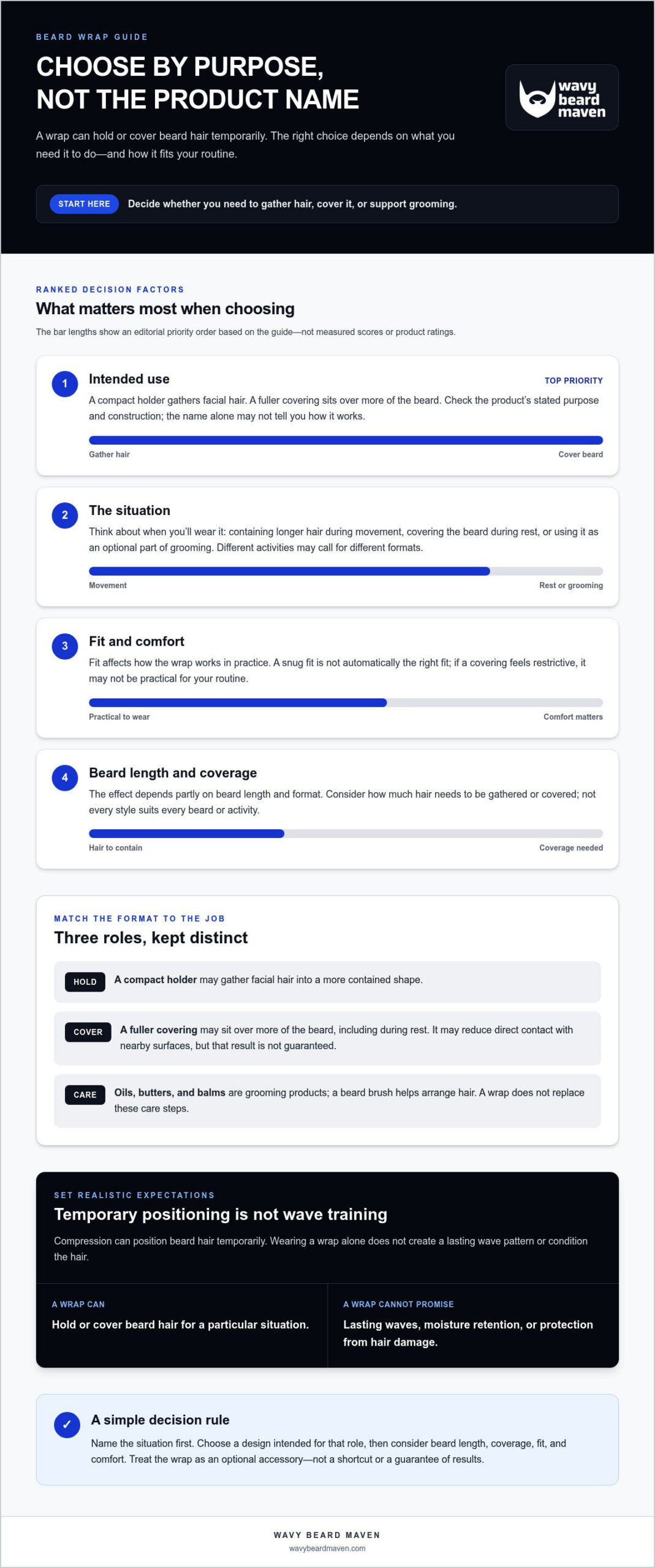
Can a Beard Wrap Create Waves? Set Realistic Expectations
A beard wrap alone isn’t a shortcut to waves. If you’re asking what is the purpose of a beard wrap in a wave routine, its role is to provide temporary coverage or hold, not to guarantee a lasting pattern. Compression means gently holding hair in place for a period of time. That temporary positioning is different from developing a lasting wave pattern.
Think of the wrap as a supporting tool, not the whole method. A beard-wave routine may include brushing and consistent grooming, while a wrap can be one optional part of the process. Results aren’t guaranteed. The wrap’s usefulness depends on its design, fit, and comfort, as well as the habits around it.
What compression can and cannot explain
In plain terms, compression means gently holding or covering hair temporarily. After removing a wrap, hair may look positioned differently for a while, but that appearance alone doesn’t prove a lasting change. A wrap can’t replace brushing or other consistent grooming habits, and no single accessory should be expected to create a wave pattern by itself.
Fit matters. An uncomfortable wrap may be difficult to use consistently, and a design that doesn’t suit your beard may not provide the coverage you want. Focus on comfort and intended use rather than assuming a tighter fit or longer wear will produce better wave results.
How wraps fit into a beard-wave routine
Build your routine around repeatable care, then decide whether a wrap supports it. Brushing and using beard-care products are separate steps; depending on the design, the wrap may help hold the beard in position afterward. It’s optional, not the central method. Wearing one without the rest of your routine doesn’t make it a wave-training plan.
For a fuller training framework, the How to Get Beard Waves: The Complete 2026 Training Guide covers the broader process. Keep detailed wearing and compression instructions in dedicated guides, and use this simple check to set expectations:
- Purpose: Know whether you want temporary coverage or support during grooming.
- Comfort: Choose a fit you can wear comfortably for its intended use.
- Consistency: Keep brushing and beard care at the center of your routine rather than relying on the wrap alone.
A wrap can support the routine; repeated grooming habits do the training. For structured next steps, use the 7-Day Beard Wave Starter Routine™ Checklist to bring consistency to your beard-wave practice.
When Should You Use a Beard Wrap, and Is It Right for You?
A beard wrap is worth considering when it addresses a specific need, not simply because it’s part of a wave routine. Identify what you want it to do, choose a format designed for that situation, then assess its fit and comfort. If you’re still asking what is the purpose of a beard wrap, the answer depends on how you plan to use it: for temporary containment, coverage during movement or rest, or optional support during grooming.
A simple checklist for deciding whether to use one
Start with the situation. You might want to gather longer facial hair while moving, cover it during rest, or use a wrap as one accessory in a grooming routine. Those are different goals, so don’t assume one format suits them all. Read the product description and look at its construction to see whether its intended use matches yours.
- Name the need. Decide whether you want temporary containment, coverage during an activity, or a covering for rest.
- Match the format. Compare your goal with the product’s stated purpose and design. A holder, bonnet-style covering, and durag-style wrap may offer different kinds of coverage.
- Check comfort. Follow the product’s fit and care directions. If it feels uncomfortable or unsuitable, adjust it according to those directions or stop using it.
Be specific about the context. A wrap you’re considering for rest may not be the same format you’d choose to contain facial hair during movement. If your goal is wave training, treat the wrap as an optional part of your routine rather than a requirement or a standalone method.
Where to go next in your beard-wave journey
Your grooming routine should work for your needs. A beard wrap may be useful if its intended purpose fits your situation and it feels comfortable; you can leave it out if it doesn’t add value. For practical instructions within a wave routine, How to Use a Beard Wrap to Lock in Your Pattern offers a focused next step. Keep the bigger picture in mind: the accessory supports your routine, but doesn’t replace consistent care.
If a wrap fits the way you groom, Wavy Beard Maven offers beard wraps as an accessory for your routine. Choose one with a clear purpose, follow its directions, and let comfort guide whether it earns a place in your practice.
Make Your Next Grooming Step Intentional
Let your routine answer the question, “what is the purpose of a beard wrap?” Choose tools because they support a goal that matters to you, not because a trend says you need them. A small, consistent habit is a stronger foundation than adding accessories without a plan.
Wavy Beard Maven brings beard-wave education together with practical grooming tools. The free 7-Day Beard Wave Starter Routine™ Checklist can help you create structure and stay focused as you build consistency. Keep your approach comfortable, give it time, and adjust as you learn what works for your beard.
Explore beard wraps and build your routine with purpose. Stay disciplined, trust the process, and take the next step with confidence.
Frequently Asked Questions
Can a beard wrap help keep a beard from tangling in the wind?
Yes, a suitable holder or wrap may gather longer facial hair so it moves less freely in windy conditions. That can make a walk or ride feel more manageable, but it won’t prevent every knot, especially if hair catches on clothing or shifts inside the covering. Choose a format intended for the activity, then check your beard afterward and continue your usual brushing and detangling routine.
Is a beard wrap the same as a beard durag?
Not necessarily. The labels can overlap in listings, but the name alone doesn’t tell you how a particular design fits or functions. A holder may gather hair, while a durag-style covering may be described in connection with compression. Compare the item’s shape, coverage, and stated use. When choosing between two options, assess what each is designed to do rather than relying on the label.
Can you sleep with a beard wrap on?
Some beard coverings are marketed for rest, but that doesn’t mean every holder is made for sleeping. Before wearing one overnight, read its directions and consider whether its shape and fit suit that use. Don’t assume it will retain moisture or prevent damage. If it shifts, pinches, or feels restrictive, remove it. A covering should feel comfortable enough for its intended purpose, not something you have to tolerate.
Does wearing a beard wrap train beard waves?
No, wearing a wrap by itself shouldn’t be treated as a way to train waves. If you’re asking what is the purpose of a beard wrap in wave care, think of it as a possible accessory, not the training plan. Build your routine around repeatable grooming habits, including brushing, and use a wrap only if it fits your approach. Don’t judge progress by how your beard looks immediately after removing it.
How tight should a beard wrap feel?
A wrap should feel secure enough for its intended use without pinching or restricting you. There isn’t one fit that suits every design or beard, so follow the product’s fit directions rather than tightening it to chase a particular result. If you notice discomfort, adjust it as directed or take it off. Comfort is a practical signal: a wrap that feels wrong may not suit your needs.
Can a beard wrap replace beard oil or balm?
No. A wrap holds or covers facial hair, while beard oils and balms have separate grooming roles. Putting on a wrap doesn’t apply a grooming product to your beard or the skin beneath it. Choose each item for the job you want it to do, and follow its directions. Using oil or balm doesn’t make a wrap suitable for every activity or fit.