November 8, 2026
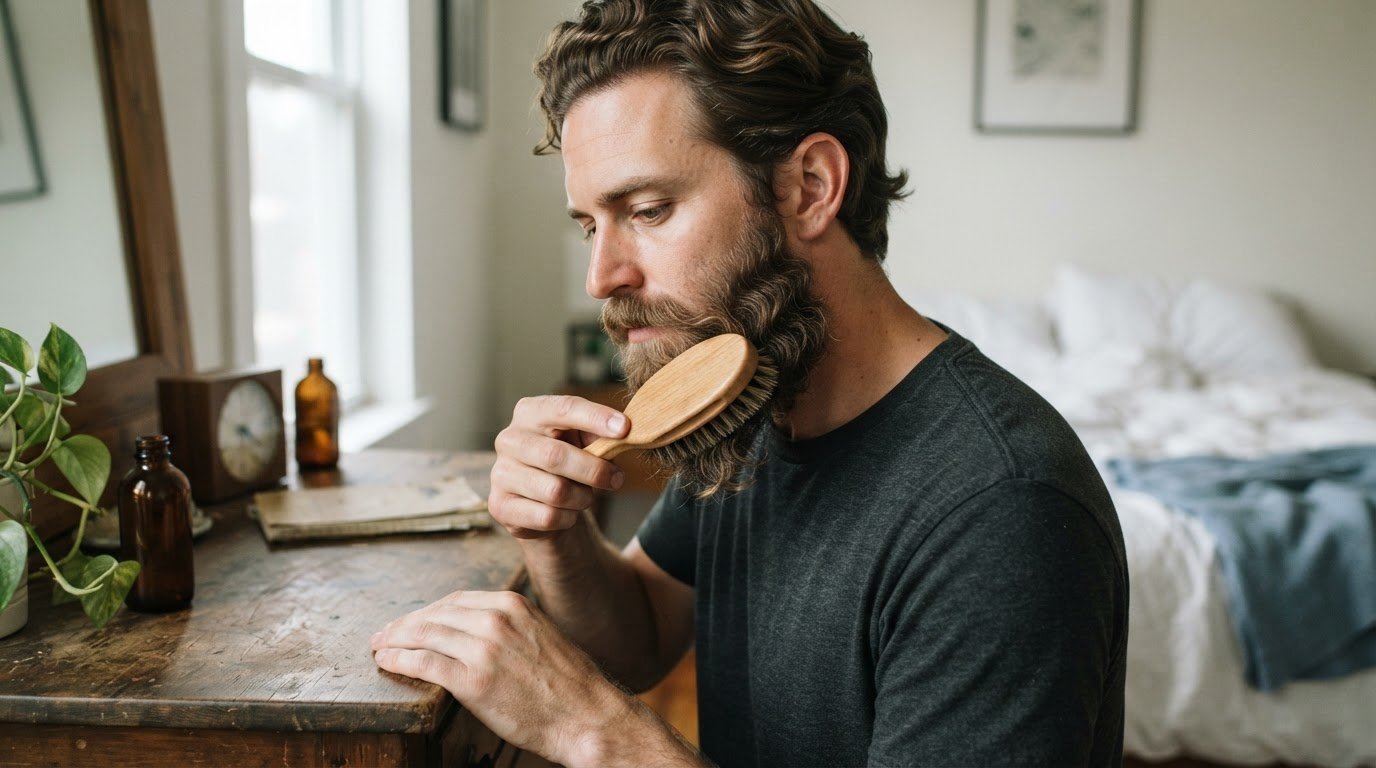
What should you do when you miss a brushing session? Don’t try to make up for it by brushing harder or adding extra sessions. Resume your usual beard-care routine at the next opportunity; one missed session doesn’t erase the progress built through consistent grooming.
It’s easy to worry that a wavy beard will lose its shape if you skip a step. You may notice it feels less aligned or needs a little more attention, but a steady, gentle approach is the better reset. This guide explains what a missed session can mean for your beard, how often to brush, and how long to spend brushing when you return to your routine. You’ll also learn simple ways to keep your grooming on track when your usual brush isn’t within reach, so you can care for your beard with patience and consistency instead of overcorrecting.
Key Takeaways
- Think about whether a missed session is an occasional slip or part of a pattern, then shape your beard-care routine around consistency.
- Use a regular brushing rhythm and a measured technique rather than treating grooming as a task to rush through.
- After a skipped session, return to your usual routine instead of trying to compensate with extra brushing.
- A Beard Brush can support your grooming routine, while beard oils, butters, and balms can complement your care approach.
Effects of missing a day of brushing
A missed beard-brushing session may leave your beard feeling less aligned, but it doesn’t undo your progress. Beard waves are created through consistent brushing, product use, and routine, not one session alone. Return to your usual approach rather than trying to compensate all at once.
Notice a fuzzy feeling when your tongue passes over your teeth? That texture can signal plaque buildup. Plaque left in place may harden into tartar, sometimes within 24 hours. Leaving plaque on the teeth can give it time to harden along the teeth and gum line. Once tartar forms, regular brushing won’t remove it; a professional dental cleaning is needed.
One missed session is different from repeated gaps in oral hygiene. A few days without brushing can allow plaque and tartar to accumulate, irritating gums. Gingivitis may begin after a couple of days of poor brushing habits. If gum-line buildup remains, it can contribute to gum recession. Missing brushing a few days each month also raises the chance of needing fillings, crowns, or more serious dental work.
Flossing matters because a toothbrush doesn’t clean effectively between teeth. Food and plaque can collect in those spaces even when tooth surfaces feel clean. A daily flossing habit helps clear those areas and supports gum health. If you’re wondering what to do when you miss a brushing session, consider whether it’s an occasional slip or part of a repeated pattern.
For example, a fuzzy feeling after dinner may reflect plaque, not instant damage. Resume your regular cleaning routine at the next session, and keep brushing consistently. If you’re deciding what to do when you miss a brushing session, remember that brushing harder won’t remove tartar. Persistent gum irritation or bleeding deserves attention, especially if skipped sessions have become frequent. Consistent hygiene helps limit buildup before it becomes a bigger dental concern.
Recommended brushing frequency and duration
Make twice-daily brushing your baseline for everyday oral cleaning. Each session should last two minutes. This routine helps remove food and bacteria from teeth and gums. Patients who brush less than twice a day face a higher risk of tooth decay and gum recession. An occasional missed session differs from regularly brushing less often or cutting sessions short.
Give each session its full two minutes instead of rushing through a quick pass. A timer can help you track the time when brushing feels automatic. Use those minutes to clean the different tooth surfaces, including the outer, inner, and chewing surfaces. Move steadily rather than repeating the same easy-to-reach area. Thorough coverage matters more than adding extra time later.
Connect your sessions to parts of the day you can remember, such as morning and bedtime. Night brushing helps clean surface stains before they can penetrate deeper layers. A dependable cue, like brushing after getting ready for bed, can make the routine easier to maintain. If you’re deciding what to do when you miss a brushing session, return to your usual schedule at the next opportunity.
Frequency and duration work together. Brushing twice daily for less than two minutes cuts short the recommended cleaning time. Brushing for two minutes only once daily misses the recommended frequency. Aim for both: two sessions, each lasting two minutes. If you forget one, don’t double the next session or extend it to compensate. Knowing what to do when you miss a brushing session helps keep the routine clear: resume the regular schedule and give each session its intended time.
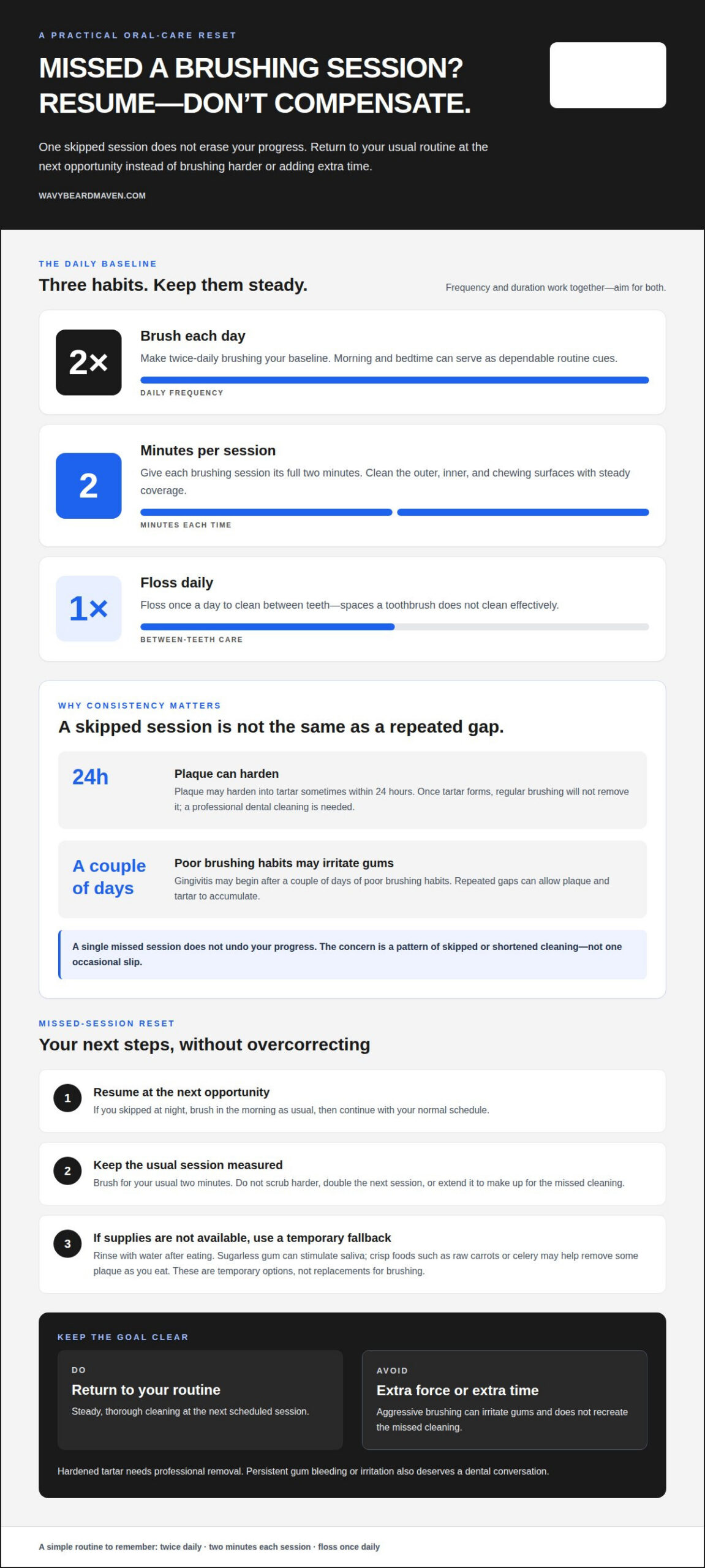
What to do after missing a brushing session
Return to your usual oral hygiene routine at the next opportunity. Choose a practical fallback if a toothbrush or toothpaste isn’t available.
Resuming Brushing
Resuming brushing means returning to your regular cleaning routine without trying to erase the missed session. If you skipped at night, brush your teeth in the morning as usual, then continue with your normal schedule. A consistent routine helps remove food and bacteria again. Floss once a day to clean between teeth, where a toothbrush cannot reach effectively.
If you can’t brush right away, rinse your mouth with water after eating. This can help wash away some food and bacteria. Sugarless gum can stimulate saliva, which helps wash away bacteria, while crisp foods such as raw carrots or celery can help remove some plaque as you eat. These are temporary fallbacks, not replacements for brushing.
Making Up for Missed Brushing
Making up for a missed session doesn’t mean brushing longer or scrubbing harder later. Resume the usual two-minute session instead. Extra force won’t recreate the cleaning you missed, and brushing aggressively can irritate your gums. Keep the next session steady, covering your teeth rather than concentrating pressure on one spot.
When no toothbrush or toothpaste is available, a temporary paste can be made by mixing half a teaspoon or a teaspoon of baking soda with water. Baking soda doesn’t provide fluoride or other minerals, so it isn’t a long-term toothpaste replacement. Mouthwash may help reduce bacteria, but it can’t substitute for brushing. A water rinse is another simple option.
If you’ve gone a few days without brushing or flossing, restart a consistent routine rather than attempting an extended session. Tartar that has hardened won’t come off with regular brushing; a dentist can remove it during a professional cleaning. Persistent gum bleeding or irritation also warrants a dental conversation. The takeaway: resume your normal care, use temporary measures only as backups, and seek professional cleaning for tartar.
Should you brush for longer to make up for a missed session?
No. After missing a session, return to your regular two-minute brushing routine rather than extending the next one. The recommended schedule is twice daily, with two minutes for each session. An extra-long session doesn’t recreate the missed cleaning at the time it was due. Keep the focus on making the next scheduled session thorough and consistent.
Brushing is a repeated cleaning habit, not a time balance to settle later. For example, if you skip brushing before bed, brush at your next regular opportunity, then continue your usual schedule. Don’t treat one session lasting four minutes as a replacement for two separate sessions. Daily brushing helps remove food and bacteria, while a routine makes that cleaning more dependable.
Use each two-minute session to clean your teeth steadily instead of rushing through the surfaces. Extending the timer alone doesn’t ensure that you’ve cleaned each area. A patient who brushes longer but still misses areas may not get the same benefit as someone following a regular, thorough routine. The practical goal is consistent coverage, not an oversized session after a lapse.
If you’ve missed brushing for a few days, restart with the usual schedule rather than adding extra minutes to every session. Brushing at least twice per day for two minutes each time is the stated routine. Continue flossing once a day as part of your oral care, since brushing doesn’t effectively clean between teeth. If tartar has formed, longer brushing won’t remove it; professional dental cleaning is needed.
Keep the reset simple: return to two minutes, twice daily, and avoid turning a missed session into a reason to overcorrect. Consistency is the useful measure. For another daily-care habit, keep your grooming routine consistent.
Wavy Beard Maven: Beard Brush
Wavy Beard Maven offers a Beard Brush to support your beard-grooming routine. A beard brush is for beard care, not for cleaning teeth. If you missed brushing your teeth, return to your regular oral-care routine with a toothbrush; beard grooming is a separate practice.
For maintaining a wavy beard, a Beard Brush can be part of a consistent routine. Beard oils, butters, and balms also complement beard care. Choose tools and products that fit a routine you can maintain, rather than treating one missed session as a reason to overcorrect. Steady habits build a more deliberate approach to grooming.
For questions about beard care or choosing a routine, contact Wavy Beard Maven.
Build a Routine That Fits Your Next Step
Let a missed session be a cue to make your daily habits easier to maintain, not a reason to overcorrect. Knowing what to do when you miss a brushing session gives you a clear reset for oral care. Keep that routine distinct from beard grooming: each serves a different purpose, and consistency in one doesn’t replace care for the other.
Use the same steady mindset to refine your beard routine. Choose grooming habits that fit your day and support the wavy style you want to maintain. If you’d like guidance on beard care, contact Wavy Beard Maven to discuss your next step.
Keep building with patience. A routine you can return to is a strong foundation for training beard waves.
Frequently Asked Questions
Can I Skip a Day of Brushing?
Yes, an occasional missed day is unlikely to cause immediate tooth loss or cavities. The key is not letting it become your normal pattern. If travel, illness, or a late night disrupts your routine, restart at your next scheduled brushing. A reminder tied to an existing habit, such as getting ready for bed, can help you stay consistent.
DOES MISSING ONE BRUSHING SESSION REALLY MATTER?
It matters because that session would have cleared food debris and bacteria from your mouth. One missed session doesn’t mean damage is certain, but repeated omissions expose teeth and gums to buildup more often. Treat a slip as a cue to return to your routine, not a reason to scrub aggressively or judge your oral health by appearance alone.
What REALLY Happens When You Forget To Brush?
Some food residue and plaque may remain on your teeth until you brush again. Mouth bacteria feed on food and produce acidic waste, which can erode enamel over time. If skipping becomes frequent, gum irritation and decay become greater concerns. The effect depends partly on whether you’ve also been eating or snacking without cleaning afterward.
Should you brush as soon as you remember after missing a brushing session?
Yes, brush when you remember if it’s practical, then continue your regular schedule. If you missed a session and remember later, simply brush as you normally would. Don’t add an extra session or brush harder to compensate. The aim is to restart your routine, not create an extended session.
What should you do if you miss brushing before bed?
If you’re already in bed, rinse with water to help clear food debris and acids. If you can get to your toothbrush, brush as you normally would; a quick floss can also help clear between teeth. If you can’t brush, use these as temporary fallbacks and resume your regular oral-care routine in the morning.