November 16, 2026

A beard brush can last 2-3 years with proper care, but its condition matters more than its age when deciding when to replace your beard brush. Shedding bristles, damage, or pulling during grooming are signs it may be time to switch tools.
It’s easy to keep using a familiar brush, especially when it’s part of your daily routine. But worn bristles can make grooming less comfortable and effective. Pay attention to how the brush feels and performs, not just how long you’ve owned it.
Learn what affects a beard brush’s lifespan, which signs mean it’s time to replace it, and how cleaning can help maintain it. Use the comparison below to decide whether to keep your brush, clean it more thoroughly, or choose a new one for your routine.
Key Takeaways
- Assess your brush by how well it works in your routine, not by age alone.
- Learn how to spot the difference between buildup you can clean and wear that affects grooming.
- Find out when bent or shedding bristles may be manageable and when replacement makes more sense.
- Choose a new brush that fits your beard and grooming habits, then maintain it with a consistent care routine.
Beard brush lifespan
A quality beard brush can last 2-3 years with proper care. Treat that as a general lifespan, not a replacement deadline: bristle condition, cleaning, and daily handling all affect how well a brush performs.
Does beard brush replacement frequency depend on daily use or beard type? Yes. Frequent styling puts more wear on bristles, while a longer or thicker beard may need more brushing and detangling. Neither factor sets a fixed replacement date, so assess the brush’s condition and how it performs.
Material matters, too. Beard brushes often use boar bristles, which have a texture similar to human hair and can distribute natural oils. Plastic bristles may create static and can be harsh on beard hair. Choose a brush that moves through your beard without forcing knots or scraping your skin. A comb can help detangle and shape longer hair, while a brush supports styling.
Use this comparison as a guide, then assess your own routine:
| Option | Use pattern | Lifespan guidance | What to assess |
|---|---|---|---|
| Quality brush, cared for | Regular styling and oil distribution | 2-3 years | Whether bristles still groom smoothly |
| Brush used often | Daily grooming | No separate fixed interval | Changes in performance and bristle condition |
| Brush used occasionally | Less frequent styling | No separate fixed interval | Condition, cleanliness, and comfortable use |
Choose based on material, your beard’s needs, and how the brush performs, not the calendar alone.
Keep brushing controlled: use gentle strokes and don’t force the brush through tangles. Consistent care helps a quality brush shape your beard without unnecessary pulling. If styling takes more effort, compare the bristles with how the brush performed when new. That difference can help you decide when to replace your beard brush, even if it hasn’t reached the end of its expected lifespan.
Signs a beard brush needs replacing
Assess how the brush works during grooming, not just how it looks on the counter. Shedding or bent bristles, and pulling on beard hair, can each signal a problem.
Shedding Bristles
A few loose bristles may signal wear, especially if shedding continues after cleaning. Notice whether bristles come away during each pass or collect in your beard. Missing bristles leave gaps, making it harder to distribute natural oils or shape thicker, longer beards. Bent bristles may still be attached, but shedding reduces the brush’s working surface. If bristles keep coming out as you groom, replace the brush.
Bent Bristles
Bent bristles may be flattened, curled, or pushed out of line, so they no longer move evenly across your beard. They may stay attached but snag hair or make grooming feel uneven. Cleaning removes product buildup, but it won’t restore bristles that have permanently lost their shape. Don’t force them straight. If they keep catching beard hair or disrupting your routine, choose a replacement.
How much does a replacement beard brush cost in the US? Cost depends on its material and construction, so compare how the bristles and handle are made against your grooming needs. A durable brush that helps remove dead skin and distribute beard balm evenly may suit a consistent routine better than choosing by appearance alone.
Pay attention to the result, too. If a brush repeatedly snags or pulls, or leaves sections harder to control, compare it with a beard comb. A comb can help with detangling, but it won’t repair damaged bristles. Persistent pulling can contribute to breakage, so stop using a brush that catches your beard on each pass.
For daily styling, choose a replacement that feels comfortable and moves through your beard without force. Explore a beard brush for your routine when your current tool no longer grooms smoothly.
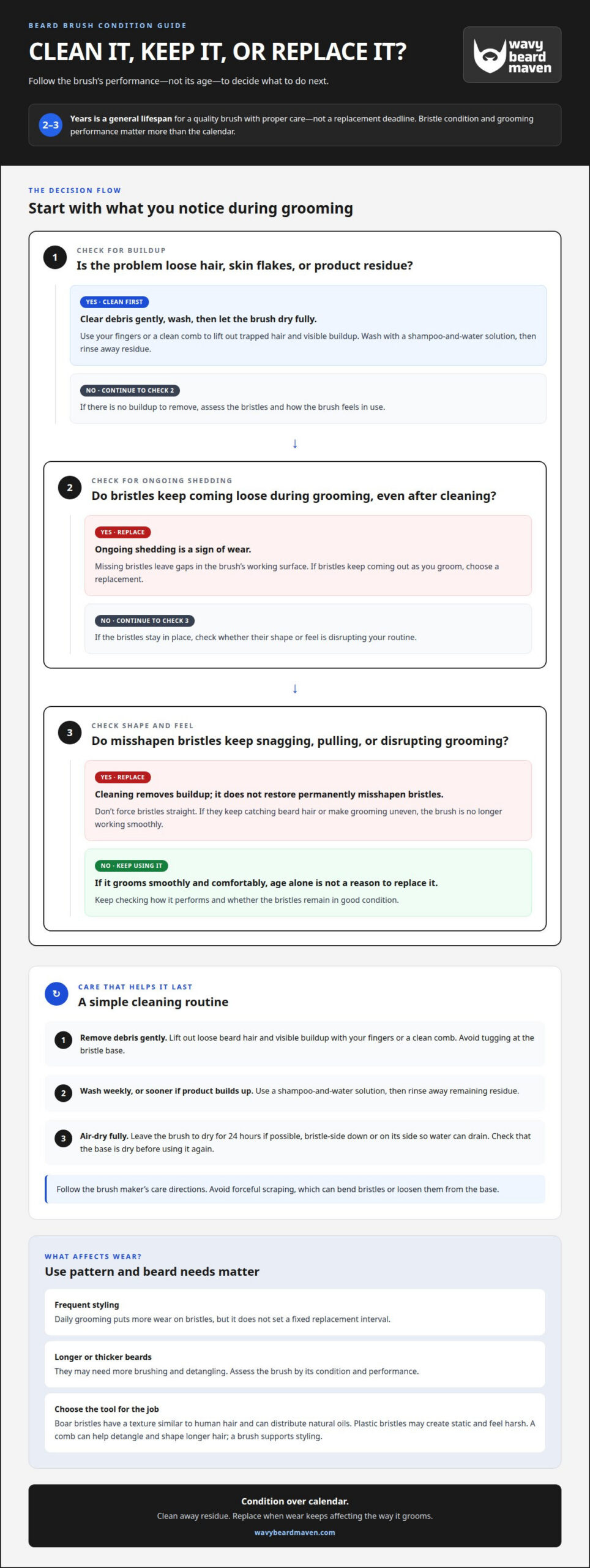
How to clean and maintain a beard brush for longevity
A weekly cleaning routine helps remove beard hair, skin flakes, and product residue from the bristles. Clear trapped debris first, then wash the brush and let it dry fully before using it again.
- After grooming, lift out loose beard hair and visible buildup with your fingers or a clean comb. Work gently around the bristle base to avoid tugging or loosening the bristles.
- For routine washing, use a shampoo-and-water solution. A beard brush can be cleaned with a shampoo-and-water solution, then rinsed to remove remaining residue.
- Shake off excess water and leave the brush to air dry for 24 hours if possible. Set it bristle-side down or on its side, so water can drain instead of pooling around the base.
Clean the brush weekly, or sooner if product builds up between the bristles. Removing oil and balm residue regularly helps the brush work smoothly. Avoid forceful scraping, which can bend bristles or loosen them from the base.
According to the U.S. Environmental Protection Agency, the manual says to clean combs and brushes by soaking them in 1 teaspoon of ammonia and 2 cups of hot water, or heating them in hot water for 5-10 minutes. Follow the brush maker’s care directions when choosing a cleaning method, especially if the handle or base has a material-specific instruction.
After each wash, inspect the brush before using it again. Check for remaining debris, a damp base, or bristles shifted out of position. If it’s still wet, let it dry longer rather than brushing your beard with it. Keeping the brush clean and dry makes it easier to spot changes in the bristles and decide whether cleaning is enough to keep it useful.
Can you repair or restore a beard brush with shedding or bent bristles?
First identify the problem. A brush with loose debris needs cleaning; one with bristles that keep falling out or remain misshapen has physical wear. Cleaning can remove residue, but it can’t replace missing bristles or reliably restore their original shape.
If the brush is shedding, inspect its base and handle before trying to fix it. If a few hairs are trapped between the bristles, remove them gently and see whether the brush works normally afterward. If bristles continue coming loose during grooming, don’t pull at them or use household glue. A loose bristle can detach again, and adhesive may create a rough spot that catches beard hair.
Test bent bristles differently. After cleaning, let the brush dry fully and inspect the rows. If the bristles return to line and pass through your beard without snagging, the bending may have been temporary. If they remain flattened or point sideways, don’t heat them or force them upright. That could deform other bristles or damage the brush base.
Use this quick assessment before deciding:
- Debris between bristles: Remove it gently, then test the brush on a small section of beard.
- One bent bristle: Check its position after the brush is dry; stop using it if it catches hair.
- Ongoing shedding: Retire the brush if bristles keep coming loose during ordinary grooming.
- Several misshapen rows: Replace the brush when it can’t move smoothly through beard hair.
Skip repairs that leave sharp edges, loose parts, or uneven bristles against facial hair. A brush should glide through your grooming routine, not demand extra force or repeated adjustments. If the bristle bed has worn down, replacing the tool is more practical than trying to rebuild it at home. Choose a beard brush for your grooming routine when the damaged one no longer works smoothly.
Wavy Beard Maven: Beard Brush
Wavy Beard Maven offers a Beard Brush to support a consistent grooming routine. If your brush sheds, stays bent, or pulls your beard after cleaning, replacing it with a brush suited to regular styling is a practical next step.
Include Beard Oils, Beard Butters, or Beard Balms as they fit your routine. These products support beard care alongside brushing, which helps you work through and shape your beard. Use steady technique and clean the brush regularly to keep it in better condition.
Replace your brush when the signs point to lasting wear, rather than forcing a damaged tool through your beard. Explore Wavy Beard Maven’s Beard Brush and educational grooming guidance to choose an approach that fits your routine.
Build a Routine That Works for You
Make your next step a more intentional grooming routine. Notice how your beard responds to your usual strokes, how much effort styling takes, and whether the brush feels comfortable in your hand. These observations can guide your decision without making grooming a chore.
Knowing when to replace your beard brush helps you choose a tool that suits how you care for your beard now. Choose with purpose, keep your routine steady, and pay attention to what works for your hair and preferred style.
If you’d like help choosing a brush for your routine, contact Wavy Beard Maven. Take the next step with confidence, and keep refining your grooming practice one consistent session at a time.
Frequently Asked Questions
When should you switch tools?
Replace your brush if it repeatedly snags, pulls beard hair, or no longer moves smoothly through your routine. Deciding when to replace your beard brush also means checking whether gentle cleaning restores its performance. For example, if it keeps catching on the same section after you remove debris, stop forcing it. Use a beard comb for careful detangling while choosing a replacement.
How often should you replace a beard brush?
A quality beard brush may last 2-3 years with proper care, but that’s a guide rather than a fixed schedule. Check its condition during regular grooming instead of replacing it automatically on an anniversary. If it still feels comfortable and works smoothly, age alone doesn’t mean it needs replacing. Persistent pulling or bristles coming loose are stronger reasons to switch tools.
What are the signs a beard brush needs replacing?
Watch for bristles that keep shedding, stay bent, or pull at your beard during ordinary grooming. A brush that snags strands or makes a familiar styling pass feel rough also needs attention. Remove trapped hair and residue, then test it gently. If the problem continues, cleaning hasn’t addressed the wear, and replacement is the sensible next step.
How long does a boar bristle beard brush last?
A quality boar bristle beard brush may last 2-3 years with proper care. Boar bristles are commonly used because their texture resembles human hair and helps distribute natural oils. Still, bristle type alone doesn’t determine the replacement date. Pay attention to whether the rows stay in shape and the brush continues moving through your beard without snagging or pulling.
How long do synthetic beard brushes last?
Synthetic brushes don’t have a separate lifespan in the available lifespan guidance. Use the broad reference for a quality beard brush, 2-3 years with proper care, while judging the individual tool by its condition. For example, persistent static, snagging, or bristles that bend out of shape may signal that it no longer suits your grooming routine, regardless of material.
Can worn or damaged beard brush bristles irritate skin or damage beard hair?
They can make grooming rougher: bent or uneven bristles may snag hair or pull against facial skin. Repeated pulling can contribute to beard hair breakage, so stop using a brush that catches with each pass. Cheap plastic bristles can also create static and may damage beard hair. Choose gentle strokes, and switch tools if discomfort or snagging persists.