November 2, 2026

The best place for beard butter in your routine depends on the finish you want. After washing and towel-drying, apply it to a slightly damp beard, either before beard oil or after the oil has absorbed. If you want hold, add beard balm afterward. Give the layers time to settle, and treat butter as a conditioning step, not a replacement for every product.
Oil, butter, and balm do different jobs. Layering too much can leave your beard feeling heavy rather than conditioned, so choose the order and amount according to what your beard needs.
Learn how beard butter fits alongside oil and balm, when to apply it first, and how beard length can affect your routine. You’ll see when butter adds useful softness and when a simpler approach makes more sense. Build your routine around how your beard feels, and keep only the steps that help.
Key Takeaways
- Choose your layering order based on how your beard feels and the finish you want, rather than using every product by default.
- Let beard length and texture guide how much butter you use; start light and adjust if your beard still feels dry or wiry.
- Reach for butter when you want conditioning and softness, not firm shaping or hold.
- Keep your routine lean on short growth or when extra layers feel heavy, and refine it as your beard changes.
Can You Use Beard Oil, Balm, and Butter Together?
Yes, beard oil, butter, and balm can all fit into one routine when each has a clear purpose. Knowing when to use beard butter in your routine starts with the finish you want: conditioning, softness, or styling hold.
Beard Butter Application Order
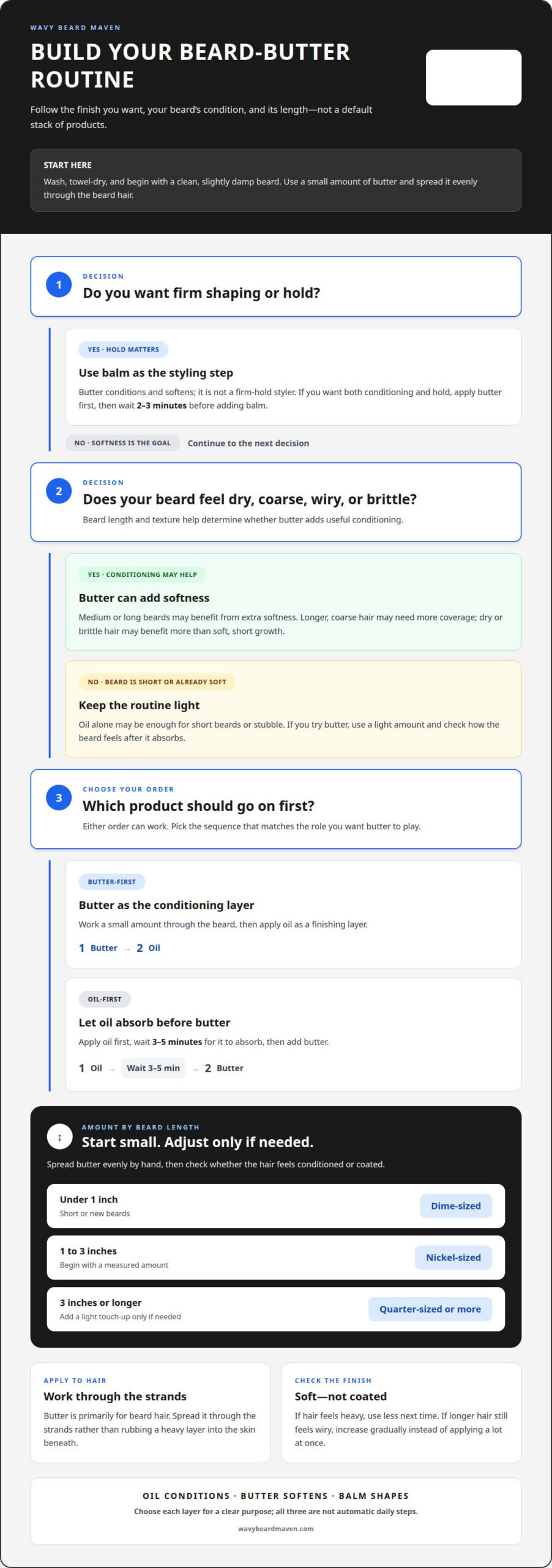
Application order means deciding whether butter goes before or after oil on a clean, slightly damp beard. For butter-first, towel-dry, work in a small amount, then apply oil as a finishing layer. For oil-first, let it absorb for 3 to 5 minutes before adding butter. If you want balm for styling, wait 2 to 3 minutes after applying butter.
Start with a small amount and spread it evenly through your beard by hand. Use butter before oil if you want it as the conditioning layer, or apply it after the oil has absorbed.
Applying Butter to Beard Hair
Beard butter is primarily for beard hair, so work it through the strands rather than massaging it into your skin. This helps condition and soften the hair without coating your face.
Using too much may leave hair feeling heavy. Butter won’t clog pores or cause acne for everyone, but people with oily or acne-prone skin should use a small amount or choose oil alone. Stop applying a product if irritation develops. Read the ingredient label and avoid components you already know irritate your skin.
Differences Between Beard Products
Beard oil conditions without hold, butter adds softness and texture, and balm helps shape the beard. Choose each layer for a specific purpose instead of applying all three automatically.
Oil can follow butter, or butter can follow oil once it has absorbed. Balm is the styling step when you want hold, not a necessary daily layer. Choose the combination that suits your beard and the style you want.
Does butter-first work for all beard lengths?
Butter-first can suit a medium or long beard, especially when the hair feels dry, wiry, or brittle. Short stubble may need less, since rich layers can feel heavy on very short growth.
Matching Care to Beard Length and Texture
Beard length and texture help you decide whether butter will condition your hair or weigh it down. Medium-length hair may benefit from extra softness, while a longer, coarse beard may need more coverage. In dry climates, butter can also be a useful conditioning step.
For short beards or stubble, oil alone may be enough. If you try butter on short growth, use a light amount and see how the beard feels once the product has absorbed. Adjust as your beard grows or the seasons change, rather than layering by habit.
Adjusting Butter Amounts by Length
Use an amount suited to your beard length, then distribute it evenly by hand. Start with a small amount and adjust only if your beard still feels dry:
- Under 1 inch: Use a dime-sized amount for short or new beards.
- 1 to 3 inches: Start with a nickel-sized amount.
- 3 inches or longer: Start with a quarter-sized amount or more, then add a light touch-up if needed.
Work the butter through your beard by hand, then check whether the hair feels conditioned or coated. If a shorter beard feels heavy, use less next time. If a longer beard still feels wiry, increase the amount gradually rather than applying a lot at once.
Texture matters alongside length: dry, brittle hair may benefit more than soft, short growth. If you’re refining your routine, explore beard butter options as you match the amount to your beard.
Using beard butter for conditioning without heavy hold
Beard butter conditions and softens facial hair; it is not a firm-hold styler. Choose it when softness matters more than keeping a shape in place. For stronger styling hold, use beard balm.
Butter can help when your beard feels coarse, dry, or brittle. Work a light layer through the hair to soften it, rather than relying on butter to shape every strand. It supports conditioning but does not create new beard growth.
Nighttime offers a practical conditioning window. After washing, towel-dry your beard, then massage a dime-sized amount through the hair before bed. Leave it in overnight, and assess how your beard feels in the morning. Dry, coarse, or long beards may benefit from a lighter second application at night, but keep the amount controlled.
Beard butter is primarily for beard hair, not a skin treatment. Spread it through the strands instead of rubbing a heavy layer into the skin beneath. This helps soften the hair without coating your face. If your skin feels uncomfortable after applying a product, stop using it.
For a weekly deep-conditioning check-in, look at texture after washing rather than adding a rich layer automatically. Dry skin may suit a single deep wash a week; the beard’s feel can guide whether nighttime butter helps between washes. Keep the conditioning step separate from hold: butter offers little to no hold, while balm helps shape and control a style.
Build consistency by observing the finish, not by piling on products. If your beard feels soft and manageable after one application, more butter may only leave it feeling coated. Use nighttime conditioning when dryness calls for it, then adjust the routine as your beard responds.
When beard butter fits into a routine
Apply beard butter once daily, usually in the morning, to a clean, slightly damp beard. Add it after washing, then choose whether oil or butter comes first based on the finish you want.
For a butter-first routine, spread butter through the beard before adding a few drops of oil. If oil goes first, let it absorb for 3 to 5 minutes before applying butter. Keep balm for days when styling and hold matter; it doesn’t need to be part of every routine.
Beard length and feel help determine whether butter belongs in your daily routine. A longer beard that feels coarse or dry may benefit from conditioning, while very short growth can feel weighed down by extra layers. Start with a small amount and check the finish. Soft hair without a coated feel suggests the amount is working for you.
Weather can affect how much conditioning your beard needs. On hot, humid days, skip butter if your beard already feels heavy. When the seasons change, keep your routine steady and observe how your beard responds before adjusting the layers. In dry conditions, a lighter second application may help if your beard still feels dry.
You can use beard butter twice a day, but keep the total amount in mind. A morning application can support softness during the day, while a lighter evening layer may suit a beard that still feels dry. Check the finish before adding more. If your beard feels coated, use less next time or skip butter.
The practical answer to when to use beard butter in a routine is after washing, when your beard is clean and slightly damp, or at night if it needs extra conditioning. Decide based on beard length, texture, weather, and how your beard feels after the last application.
Wavy Beard Maven: Beard Oils
Wavy Beard Maven offers beard oils to complement a conditioning routine with beard butter. Use oil for conditioning without styling hold, butter when your beard needs softness, and balm when you want more control. A medium-to-firm boar-bristle brush is the primary tool for training beard waves. Apply product before brushing, and avoid brushing completely dry, brittle hair.
Keep your routine focused: choose each product for the finish you want instead of layering everything by default. If your beard feels dry, focus on conditioning; if shaping is the priority, include balm. Adjust the combination as your beard length and texture change.
Explore beard oils and other grooming essentials at Wavy Beard Maven.
Build a Routine That Works for Your Beard
Your grooming routine doesn’t need to stay fixed. Notice how your beard looks and feels, then make one small adjustment at a time. This steady approach helps you learn when to use beard butter in your routine without adding layers out of habit. Keep your goal in view, whether it’s comfort, softness, or a shaped style.
As your beard changes, revisit the steps that support it. A routine that suits your current texture may need a different balance as your beard grows or the weather shifts. Make each product earn its place, and pay attention to how your beard responds.
If you want help choosing a routine for your beard, contact Wavy Beard Maven. Stay consistent, refine your approach, and wear your beard with confidence.
Frequently Asked Questions
Does How Often You Use It Change by Beard Type?
Skin condition, beard texture, and weather can all affect how useful butter feels. If your skin is oily or acne-prone, use beard oil alone or pair it with only a small amount of butter. Dry, coarse hair may benefit from a lighter evening application. On hot, humid days, skip butter if your beard already feels heavy.
Does the order really matter?
Order matters because each layer needs time to settle. If you apply oil first, let it absorb before adding butter. If butter goes first, oil can follow as a finishing layer. Add balm only when you want styling hold. You don’t need every product in every routine, so choose the sequence that matches your goal.
Morning AND Night?
Use beard butter in the morning, at night, or both, depending on how your beard feels. A morning application can soften your beard for the day; a lighter layer at night may help if coarse hair still feels dry. If you apply it twice daily, keep each application modest and watch for a coated finish.
What Order Should You Use Beard Products In?
Start with a clean beard, then choose a sequence that suits the finish you want. One option is wash, butter, then oil. Another is wash, oil, wait 3 to 5 minutes, then butter. If you want hold, finish with balm after the butter has settled for 2 to 3 minutes. Treat these as alternatives, not a requirement to use everything.
Should beard butter be applied before or after beard oil?
Either order can work. Apply butter first when you want it worked through the beard before oil adds a finishing layer. If you prefer oil first, wait 3 to 5 minutes for it to absorb before spreading butter through the hair. Keep the amount controlled in either sequence, especially if your beard is short or your skin tends to feel oily.
How do you apply beard butter step by step?
After washing, towel-dry your beard until it is slightly damp. Take a small amount of butter, warm it between your hands, then work it evenly through the beard hair without concentrating it on the skin. Check the finish before adding another product. If you apply oil first, let it absorb before layering butter.