October 19, 2026

Humidity can turn a well-shaped beard frizzy or unpredictable, but piling on product isn’t the answer. A practical beard care routine for humid climates starts with what you can observe: whether your beard feels sweaty, dry, coated, or simply harder to shape. Keep it clean, care for the skin beneath it, and use only the products that support your comfort and style.
If warmth and sweat leave your skin uncomfortable, or your beard feels heavy after applying oil or balm, adding another layer may make the problem worse. Damp air can change how beard hair sits and looks. A steady routine, with lighter product use when needed, is more useful than a daily battle with your beard.
This guide covers how to cleanse without overdoing it, moisturize with a light touch, and shape your beard for a more consistent look. You’ll also find practical ways to adjust your routine after sweating and track what works, so your beard stays manageable through humid days.
Key Takeaways
- Build a beard care routine for humid climates around comfort and manageability, not the promise of controlling every weather-driven change.
- Match your response to what you notice: sweat, dryness, frizz, and a heavy feel may each call for a different adjustment.
- Choose whether to cleanse, rinse after heavy sweat, or stick with your usual routine based on your activity and your beard’s condition.
- Keep the steps simple, and make product optional rather than layering on more than your beard needs.
- Stay consistent with your grooming practice, then make modest adjustments to maintain your beard waves and style.
Why Humidity Changes Your Beard, and What Your Routine Needs to Solve
You step into humid air and your beard starts behaving like it has its own plans. The outline looks puffier, flyaways appear, and the shape you set indoors seems less defined. It’s tempting to add more product, but a useful beard care routine for humid climates focuses on comfort and manageability, not a beard that never responds to the weather.
Humidity, heat, sweat, and product residue can all affect how your beard feels. Moisture in the air may change how facial hair sits, while warmth and perspiration can leave the skin underneath feeling damp or uncomfortable. Look at each signal before changing your routine. That helps you choose a purposeful adjustment instead of reaching for a quick fix.
What humid air can do to beard texture
Beard hair can take on moisture from humid air, which may make strands swell or sit differently. You might notice puffiness, flyaways, or tangling. The effect varies with your beard’s length, natural texture, and care habits, so use your own experience rather than expecting every beard to react the same way.
Compare a beard that feels fuller and harder to shape after time outdoors with one that feels coated or sticky after product application. Those clues suggest different routine questions. General hair care practices offer a useful foundation, but facial hair also needs attention to the skin beneath it and the shape you want to maintain.
Separate humidity from sweat and product buildup
Heat and perspiration can collect around the skin beneath your beard, making it feel warm, damp, or uncomfortable, especially after activity or time in the heat. Product residue can feel different: the hair may seem heavy, tacky, or harder to brush through. You can experience both at once, so look for patterns rather than assuming humidity is the only cause.
Humidity-related frizz doesn’t automatically mean your beard needs more product. Review what you’ve already applied, or refresh after heavy sweat if your beard feels uncomfortable. Notice when the change starts and what came before it: time outdoors, exercise, rinsing, or applying oil, butter, or balm. Those observations give you a practical starting point.
Set a clear goal: a beard that feels comfortable, stays manageable, and reflects your style, even when the weather shifts. You can’t control the air, but you can learn how your beard responds and make thoughtful adjustments. That’s the foundation for a routine that fits your habits without adding unnecessary steps.
How to Build a Humid-Weather Beard Routine Without Overloading Your Hair
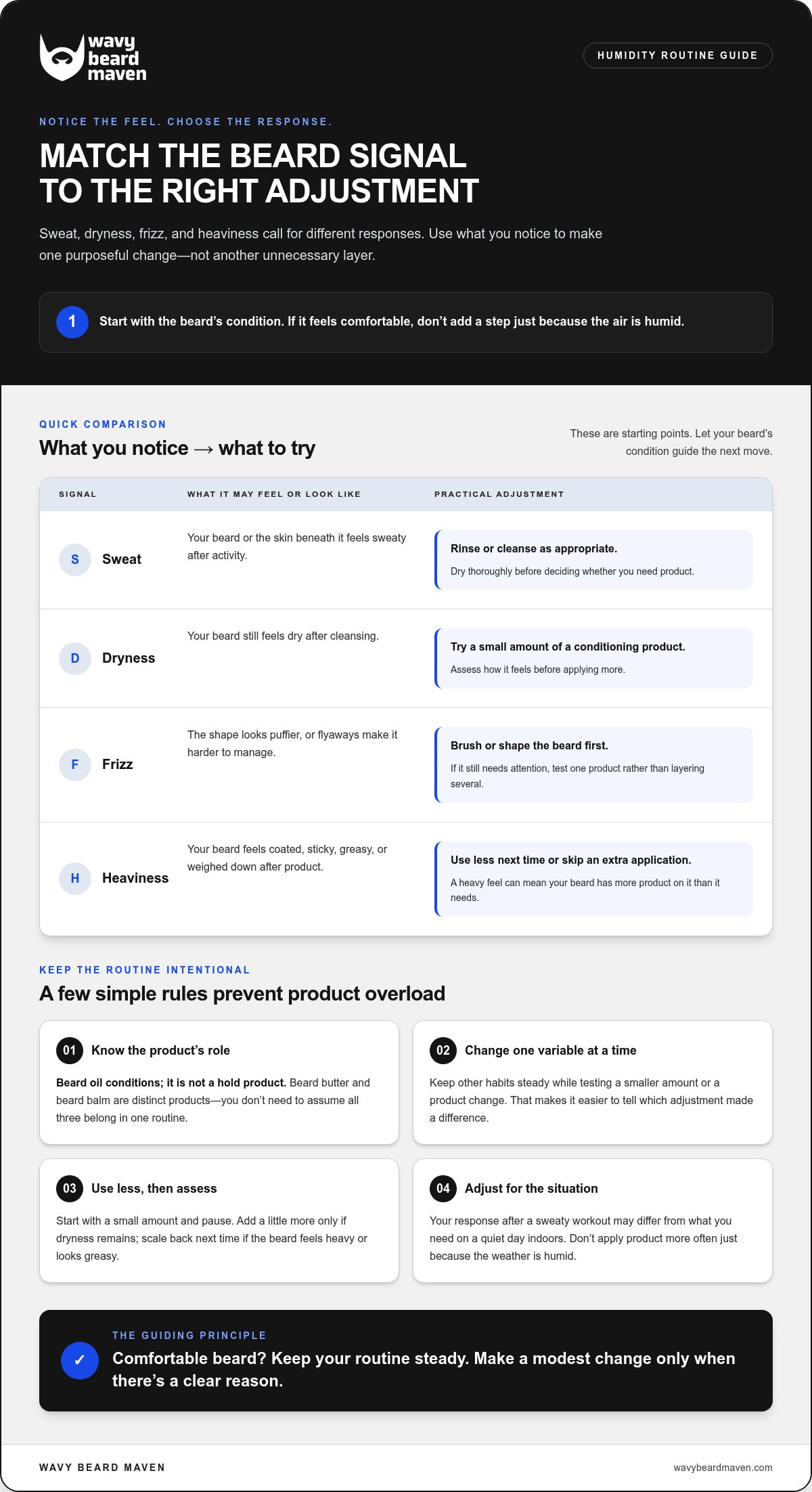
A routine for humid weather doesn’t need a product for every concern. Start with what you can see or feel, then make one modest adjustment. This keeps your beard care routine responsive rather than reactive. If your beard feels comfortable, don’t add a step just because the air is damp.
Use these starting points to decide what to try:
- Sweat: If your beard or the skin beneath it feels sweaty after activity, rinse or cleanse as appropriate. Dry thoroughly before deciding whether you need product.
- Dryness: If your beard still feels dry after cleansing, try a small amount of a conditioning product and assess the feel before applying more.
- Frizz: Brush or shape the beard first. If it still needs attention, test one product rather than layering several at once.
- Heaviness: Use less product next time or skip an extra application. A greasy appearance or weighed-down feel can mean your beard has more product on it than it needs.
These are starting points, not fixed rules. Your beard may need a different response after a sweaty workout than on a quiet day indoors. Let its condition guide your next move.
Choose the right product role for the problem
Beard oil is a conditioning option, not a hold product. Beard butter and beard balm are distinct grooming products, so don’t assume you need all three in one routine. Choose based on what you want to address and how your beard feels, then check the result before adding another step. For more detail on oil and wave care, explore this beard oil guide for waves.
Change one variable at a time. For example, keep your cleansing and brushing habits steady while trying a smaller amount of your usual product. If you change the product, amount, and application frequency together, it’s harder to tell which adjustment made a difference. Treat each change as a deliberate test, not a race to find a quick fix.
Use less, assess, and adjust
Start with a small amount, spread it through the beard, and pause to assess. Does the hair still feel dry, or does it feel coated? Add a little more only if dryness remains. If your beard looks greasy, feels heavy, or becomes harder to shape, scale back at the next application instead of adding another layer to control frizz.
Frequency matters as much as amount. Don’t apply product more often just because the weather is humid. Notice how your beard feels during your usual routine and adjust when there’s a clear reason. The 7-Day Beard Wave Starter Routine™ Checklist can help you track your habits and make deliberate changes.
Should You Change Your Beard Routine in Humidity? Compare the Common Advice
Humidity can prompt two quick reactions: wash more often to feel fresh, or add more product to keep the beard in place. Neither is automatically right. Cleansing may help after sweat or grime, but washing when your beard doesn’t need it may leave the hair feeling less comfortable. Extra product can change how the beard feels without addressing what’s bothering you.
Adjust your routine to your beard’s condition, not to a fixed weather rule. Decide whether to cleanse, rinse, or keep your usual routine based on your activity, skin comfort, and how your hair feels. Then notice the result before making another change.
Wash frequency: freshen up without stripping your routine
A schedule such as washing two to three times a week is one possible approach, not a universal standard. If you’ve sweated heavily or notice residue, cleansing may make sense. If you’ve had a low-activity day and your beard feels comfortable, another wash may not add value. If frequent washing leaves your facial hair feeling less comfortable, adjust the schedule and see how your beard responds.
A rinse after heavy sweat is a separate option from a full cleanse. It can refresh your beard without making every warm or humid day a wash day. Notice how your skin feels afterward and whether your beard still feels clean. Set your routine by the pattern you observe, not humidity alone.
- Frequent cleansing: May suit days with noticeable sweat or residue, but cleansing more often than needed can leave the beard feeling less comfortable.
- Occasional cleansing: Keeps your regular routine simple, though you may want to adjust after a particularly active or sweaty day.
- Rinsing after heavy sweat: Offers a refresh between cleanses, but may not address residue that calls for cleansing.
More product versus a lighter, deliberate application
Adding layers may seem like a quick response to puffiness or flyaways, but it can leave the beard greasy or weighed down. A modest application lets you see whether your hair needs conditioning without using more than necessary. If you prefer a softer, less styled finish, minimal product may suit your look. If you want more styling support, consider whether balm fits your routine.
Oil conditions the beard but doesn’t provide styling hold. It doesn’t offer the same kind of hold as balm or wax, so using more oil to shape your beard may not meet your styling goal. Choose a product for the job you want it to do, then assess comfort, feel, and manageability rather than expecting a humidity-proof finish.
Make one change at a time. If you cleanse, rinse, and add several products all at once, you won’t know which step helped or made the beard feel heavy. Keep your preferred style in view, too. The goal isn’t to follow a weather rule or erase every change in texture. It’s to stay comfortable and make deliberate choices that work for your beard.
A Step-by-Step Beard Care Routine for Humid Days
Keep the order simple: refresh only when your beard needs it, dry it well, shape it gently, then decide whether a product has a clear role. This gives your beard care routine a reliable structure without turning every warm day into a full wash-and-style session. Use the everyday steps as your base, and refresh after sweat when activity calls for it.
Morning and post-sweat steps
Start by checking your beard. If it feels clean and comfortable, you may not need to cleanse. If you’ve sweated heavily or notice residue, rinse or cleanse in a way that suits your routine. Dry gently, then brush to detangle and guide the hair. Brushing supports your grooming practice, but it doesn’t guarantee a particular wave pattern or finish.
- Refresh according to condition. Cleanse when your beard needs it, or rinse after heavy sweat. If neither applies, move on without an unnecessary wash.
- Dry gently and thoroughly. Press a towel against the beard rather than rubbing aggressively. Let the hair dry before adding product or settling into your style.
- Brush with intention. Use a beard brush to detangle and guide the hair in the direction you want it to sit. Work steadily rather than forcing snags. For more detail on technique, use this beard brushing guide for waves.
- Make product optional. If your beard still feels dry or needs a finishing touch, apply a small amount of a suitable grooming product. Pause and assess the feel before adding anything else.
After a workout or a period of heavy sweating, treat the refresh as its own choice, not a reason to repeat every morning step. Rinse or cleanse if your beard feels sweaty or has residue, then dry it thoroughly. Brush if it needs detangling or reshaping, and apply product only if its condition calls for it. A refresh can be simple.
Evening reset and weekly adjustments
At night, focus on what the day left behind. If there’s sweat or product residue, refresh your beard with a cleansing approach that feels comfortable. If it feels clean, don’t automatically repeat the morning cleanse. Dry it thoroughly and gently before sleep, and skip styling steps you don’t need.
Consistency comes from observing, not overcorrecting. Over several days, notice which steps leave your beard comfortable and manageable, and whether certain activities prompt a refresh. Change one part of the routine at a time so you can tell what’s working. If a checklist would help you build that habit, start with the free 7-Day Beard Wave Starter Routine™ Checklist.
Keep Your Beard Waves on Track with a Routine Built for Humid Weather
Humidity can shift how your beard waves look from day to day, but less definition doesn’t mean your wave pattern is permanently lost. Keep the foundation of your routine familiar, then make small adjustments when your beard feels different. A gentle brush-through, a refresh after heavy sweat, or a lighter product application may help more than starting over or adding several new steps.
The aim is a grooming practice that supports your preferred style while keeping you comfortable. Weather can influence how hair sits, so allow for some variation. A beard care routine for humid climates works best as a steady framework, not a promise that your waves will look identical in every condition.
Adapt wave care without fighting the weather
Brush with intention and avoid forcing the hair into place with repeated, aggressive strokes. If your beard feels damp or tangled, refresh and dry it before brushing. If it already feels clean, focus on gentle grooming. You can adjust the timing of your usual steps or use less product on a muggy day without abandoning the routine that works for you.
Beard wraps are an optional grooming tool, not a requirement for managing humidity. If you want to understand their role in a wave routine, this beard durag and compression guide offers dedicated guidance. Keep your approach comfortable, and don’t treat any wrap or product as a guaranteed way to control how your beard responds to weather.
Build consistency with simple tools and tracking
For several days, make a quick note of the conditions around your routine: humidity, activity, products used, and how your beard felt afterward. You may spot a pattern, such as your beard feeling heavier after layering product or needing a refresh after exercise. Change one step at a time, then use your observations to judge whether the adjustment suits your beard and style.
A beard brush, beard oil, butter, balm, or wrap can each be an optional tool in your grooming practice. Choose based on the step you’re working on, not because humid weather automatically calls for a purchase. For wave-care foundations and a broader training sequence, continue with the complete beard-wave training guide.
If structure helps you stay consistent, the free 7-Day Beard Wave Starter Routine™ Checklist offers a simple way to build a repeatable habit. Explore Wavy Beard Maven’s educational resources and beard-care products as you refine your approach. Keep the routine disciplined, make weather-led changes with care, and let your observations guide the next adjustment.
Make Your Routine a Practice You Can Own
Your next step isn’t to chase a perfect beard day. Notice what helps your beard feel comfortable and your style feel like yours, then repeat the habits that fit. With a beard care routine for humid climates, small, thoughtful adjustments can become part of a grooming practice you trust, even when the weather shifts.
Keep learning as your waves develop. Wavy Beard Maven offers specialized education for training and maintaining wavy beard styles, along with a free 7-Day Beard Wave Starter Routine™ Checklist to help you build consistency. Use those resources to strengthen your technique, not to pressure yourself into adding steps or products you don’t need.
Explore Wavy Beard Maven’s beard-wave guides and grooming products to choose a useful next step for your routine. Stay patient, stay consistent, and keep shaping a style that reflects you.
Frequently Asked Questions
Does humidity make beard hair frizzy or puffy?
Yes, humid air can make beard hair appear puffier or more unruly, though the effect varies by beard texture, length, and grooming habits. If your beard looks fuller after time outdoors but feels clean and comfortable, you may not need to change your routine. Try shaping it gently and see how it settles indoors. Notice whether the change happens in certain conditions or after particular grooming steps.
Should I wash my beard every day when it is hot and humid?
Not necessarily. Daily washing may suit some routines, but heat alone doesn’t mean your beard needs cleanser every day. Consider what your beard has been exposed to. After a sweaty workout or a day that leaves noticeable residue, cleansing may help; on a quieter day, you may not need it. If frequent washing leaves your beard feeling uncomfortable, adjust the schedule and observe how your skin and hair respond.
Can sweat under a beard cause irritation?
Sweat can leave the skin beneath your beard feeling damp or uncomfortable, and friction from hair or clothing may add to that sensation. After exercise, refresh your beard and dry the skin beneath it rather than letting moisture sit unnoticed. Avoid scratching or vigorously rubbing the area. If irritation persists, worsens, or concerns you, seek advice from a healthcare professional instead of relying on grooming changes alone.
Is beard oil too heavy to use in humid weather?
Beard oil isn’t automatically too heavy for humid weather. The amount you use and how your beard responds matter. Try a modest application as part of your usual routine, then check whether the hair feels conditioned or coated. Oil is a conditioning option, not a styling hold product, so adding extra oil to keep a style in place may leave your beard feeling greasy without providing the hold you want.
How should I dry my beard after working out?
After working out, gently press a clean towel against your beard to absorb moisture rather than rubbing back and forth. Use your fingers to separate dense areas so you can reach the skin beneath, then let the beard finish drying before applying product or wrapping it. If it still feels sweaty or has residue, refresh it first. The aim is to dry both hair and skin comfortably, without rough handling.
Can humidity affect beard waves?
Yes, humidity can change how defined or settled your beard waves look, but a temporary change in appearance doesn’t mean the pattern is permanently gone. Let the beard dry and return to your familiar grooming practice rather than brushing aggressively or starting over. For example, after a humid commute, gently reshape the beard once it’s dry and assess it before deciding whether another step is needed.
What should I do if my beard feels greasy by midday?
If your beard feels greasy by midday, don’t add more product to counter it. If practical, gently blot away surface moisture or residue, then leave the beard alone until your next refresh. At your next application, use less and note whether the greasy feel returns. Also consider whether you layered products or applied them before the beard was fully dry. Adjust one habit at a time so you can identify what’s contributing to the heavy feel.