September 6, 2026
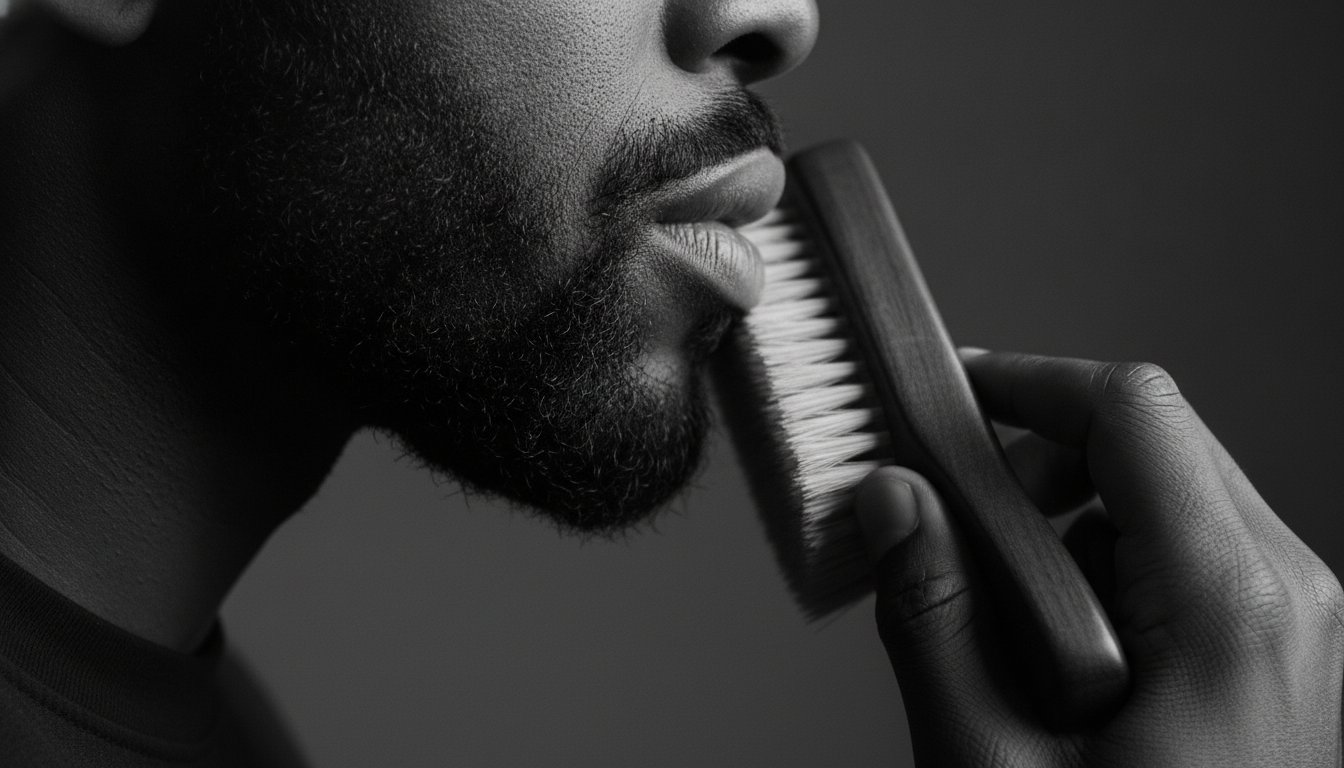
Why does your facial hair look like a frizzy, unorganized mess while others sport deep, connected ripples that look carved from stone? It’s not a matter of luck or genetics. Elite beard waves aren’t grown; they’re trained through the strategic intersection of bristle resistance and compression discipline. If you’ve been struggling with inconsistent patterns that don’t connect across your jawline, you likely haven’t found the right beard brush for waves to match your specific hair texture yet.
We know you’re tired of the skin irritation that comes from using brushes that are far too stiff for your current hair length. You want a beard that feels as good as it looks, and you’re ready to put in the work to get there. This 2026 mastery guide promises to transform your grooming routine by teaching you the science of bristle selection and the nuances of the 360-degree brushing technique. We’ll explore how to choose the perfect tool for your stage of growth, how to distribute natural oils for maximum softness, and the exact steps to achieve total connectivity across your face.
Key Takeaways
- Identify why 100% boar bristles are the non-negotiable standard for a beard brush for waves, providing the necessary pull to train coarse facial hair.
- Master the hierarchy of brush stiffness by using soft bristles for fresh trims and transitioning to medium brushes for deep pattern definition.
- Implement the “8-Angle” system starting from your crown to ensure total connectivity and vertical alignment across your entire jawline.
- Understand the critical role of compression and why using Beard Wraps is essential to lock in the progress made during your brushing sessions.
- Streamline your path to elite results by following the 7-Day Beard Wave Starter Routine™ Checklist to build a disciplined and effective daily habit.
Why Your Standard Grooming Kit Fails the Wave Test
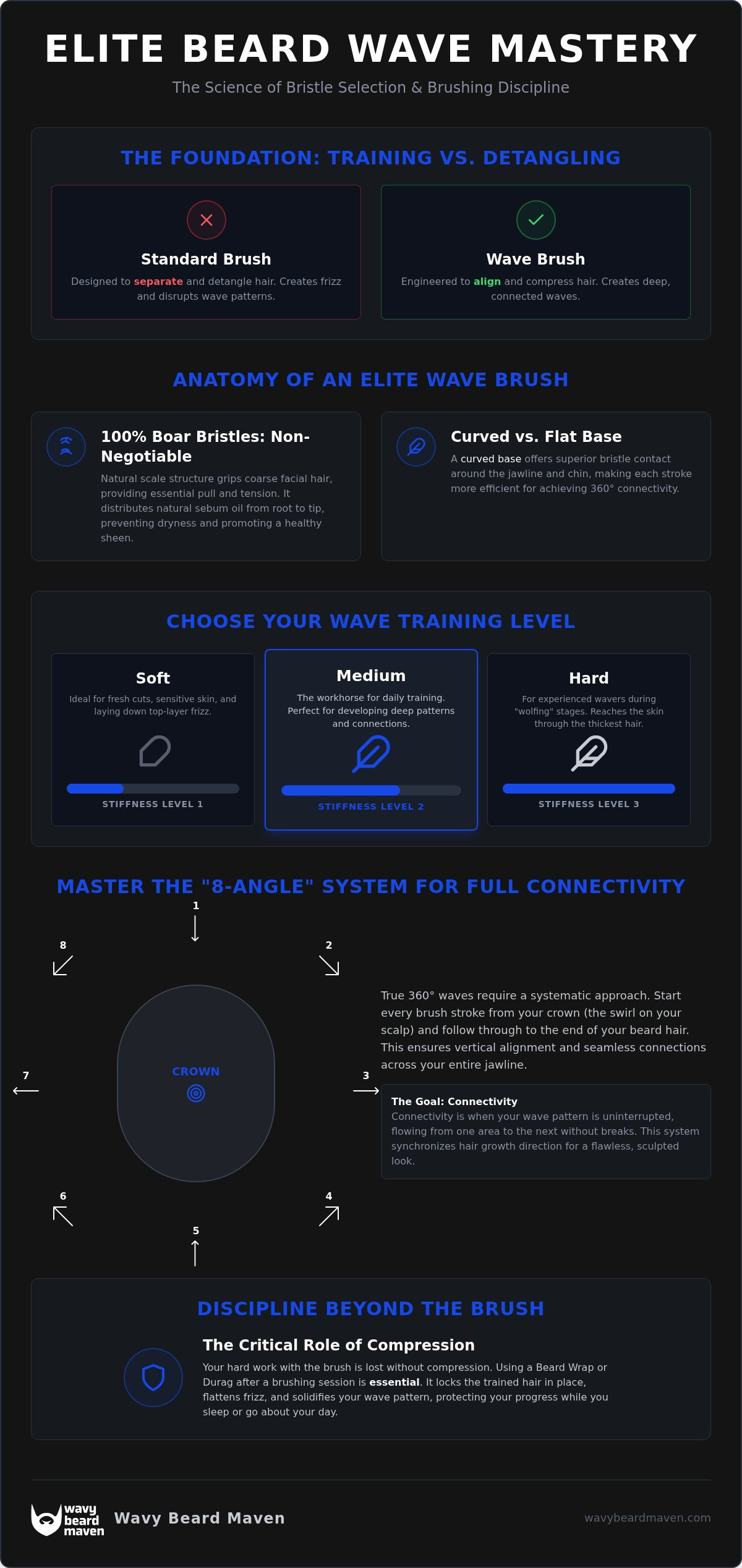
Most men assume a brush is just a brush. They pick up whatever is available at the local drugstore and wonder why their pattern looks jagged and disconnected. A standard grooming kit is designed for detangling; it’s meant to separate hairs and remove knots. Wave training is the exact opposite. It’s a process of alignment and compression. You aren’t just grooming; you’re forcing the hair to lay in a specific direction until it develops a permanent memory. Investing in a dedicated beard brush for waves is the first step toward shifting from basic maintenance to elite mastery.
The difference between a detangler and a wave trainer lies in the density and resistance of the bristles. To achieve that deep, shimmering ripple effect, your brush must have enough “pull” to manipulate the hair from the root. When hair lies perfectly flat and uniform, it reflects light in a way that creates the illusion of depth. Without this specific tension, your facial hair remains a chaotic collection of individual curls rather than a unified, connected pattern. Connectivity is the ultimate goal of any serious waver. It represents the point where your brush strokes have successfully synchronized the growth direction across your entire jawline.
The Physics of Facial Hair vs. Scalp Hair
Facial hair is structurally different from the hair on your head. According to a historical and biological overview of beards, beard follicles are often more irregular and the hair itself is significantly coarser. This coarse texture requires specialized bristles that can penetrate through thick layers to reach the skin. If your brush only grazes the surface, you’ll never achieve the deep-seated waves you’re after. Reaching the skin level is also vital for sebum distribution. Sebum is your body’s natural oil, and it’s the primary fuel for wave elasticity. A high-quality beard brush for waves ensures this oil moves from the root to the tip, keeping the hair manageable and ready for training.
Common Mistakes in Beginner Brush Selection
Don’t fall for the trap of cheap synthetic bristles. Nylon and plastic bristles create static and frizz, which is the direct enemy of a clean, laid-down look. Many beginners also make the mistake of choosing a brush that is too soft for their current growth stage. While a soft brush is great for finishing, it won’t provide the resistance needed during the “wolfing” stage when your beard is at its thickest. Finally, never neglect the ergonomics of the tool. You’ll be spending a significant amount of time training your pattern. If the handle doesn’t feel natural in your hand, your technique will suffer. Mastery requires consistency, and consistency requires a tool that supports your discipline rather than hindering it.
The Anatomy of an Elite Beard Brush for Waves
Excellence in wave training isn’t an accident; it’s a result of precision engineering. When you select a beard brush for waves, you’re choosing the primary engine for your pattern development. A tool with the wrong anatomy won’t just slow your progress; it can actually damage your follicles and disrupt your connectivity. To achieve elite status, you must understand the components that separate a professional-grade trainer from a generic grooming tool. The weight, the bristle alignment, and the base curvature all play a role in how effectively you can manipulate your hair texture.
The Power of Boar Bristles
100% boar bristles are the absolute, non-negotiable standard for any serious practitioner. Unlike synthetic alternatives that simply slide over the hair, boar bristles possess a natural scale structure that grips the hair shaft. This provides the necessary tension to stretch and lay the hair flat without causing the static that leads to frizz. These bristles are also exceptional at moisture management, absorbing and redistributing the sebum from your skin to the ends of your beard. This process is vital for dermatologist-recommended beard care, as it prevents the dryness and breakage that often occur during high-intensity brushing sessions. The varying cuts of the bristles allow for different levels of pull, ensuring you can reach the skin even through a thick wolfing stage.
Design Features That Drive Results
The debate between curved and flat bases often comes down to the specific contours of your jawline. While flat brushes are excellent for broad, flat areas like the cheeks, a curved base allows for significantly more bristle contact around the chin and the curve of the jaw. This increased surface area means every stroke is more efficient, accelerating your path to 360-degree connectivity. Many elite wavers prefer the military palm grip because it offers superior tactile feedback. Without a handle, your hand is closer to the bristles, allowing you to feel the resistance of the hair and adjust your pressure in real-time. If you’re looking for a tool that delivers this level of control, the Wavy Beard Maven Beard Brush is engineered to meet these rigorous standards.
Bristle density is the final pillar of brush anatomy. A high-density layout with multiple rows ensures maximum coverage, reducing the number of strokes needed to train the hair. Wood handles, particularly those made from reinforced hardwoods, offer the durability and weight required for high-energy sessions. Plastic may be lighter, but it lacks the soul and grip of a well-crafted wooden tool. For those who utilize the wash and style method, look for vented designs that allow for airflow and drainage. This ensures your tool remains sanitary and effective for the long haul, maintaining its integrity through years of dedicated discipline.
Hard, Medium, or Soft: Choosing Your Wave Training Level
Success in wave training requires more than just effort; it requires the right level of resistance for your current growth stage. You wouldn’t use a finishing polish to sand down a rough board, and you shouldn’t use a soft brush to train a thick, two-month beard. Understanding the hierarchy of stiffness is what separates a novice from a master. Your beard brush for waves must evolve as your facial hair gains mass and length. If you notice your bristles are merely skating over the top layer of hair without providing any tactile “pull” at the root, your current tool has lost its effectiveness.
- The Soft Brush: This is your finishing tool. It’s essential immediately after a fresh trim or to lay down flyaways before applying a Beard Wrap.
- The Medium Brush: Consider this your daily workhorse. It provides enough tension to define the pattern without being overly abrasive on the skin.
- The Hard Brush: This is a specialist tool reserved for the “wolfing” stage. It possesses the raw power needed to penetrate through dense growth to reach the skin.
The Wolfing Stage Progression
Wolfing is the disciplined practice of letting your beard grow longer than your desired final length. This added mass allows the wave pattern to set deeper into the hair. As your beard gains volume, a soft or medium brush simply won’t reach the bottom layers. You need the aggressive pull of a hard brush to keep the hair from curling into a standard beard shape. When transitioning to firmer bristles, pay close attention to skin sensitivity. Start with lighter pressure and gradually increase as your skin becomes accustomed to the increased friction. Consistency is key, but you must respect your skin’s limits to avoid irritation.
Matching Bristle Stiffness to Beard Texture
Your natural hair texture dictates your brush selection. For those with coarse, 4C textures, the hair naturally resists laying flat. You’ll likely spend more time with medium and hard brushes to force that connectivity. Conversely, if you have a straighter beard texture, a hard brush might be too aggressive and could cause breakage. You’ll find more success focusing on soft and medium strokes. For the ultimate finish, many professionals use the “Double Brush” method. Start your session with a hard brush to reach the deep layers, then immediately follow up with a soft beard brush for waves to polish the surface and ensure every single hair is perfectly laid. This dual-action approach creates a level of depth and shine that a single brush simply can’t replicate. To fully understand when and how to make this critical equipment transition, study the complete breakdown of the soft vs hard brush for beard waves so you can match your tool precisely to your growth stage.
Mastering the Stroke: Brushing Techniques for Connectivity
Every elite wave pattern begins at a single point of origin: the crown. For beards, this is typically the area where the sideburn meets the temple or the high point of the cheek. Once you identify your crown, you must follow the “8-Angle” system to ensure total vertical alignment. This isn’t about random scrubbing. It’s a systematic approach where each stroke flows in a specific direction from the crown toward the chin. Remember that consistency always beats intensity. Spending 30 minutes with light, rhythmic strokes using your beard brush for waves is far more effective than 5 minutes of aggressive scrubbing that irritates the skin and breaks the hair.
Friction is the enemy of progress. To minimize resistance and protect your follicles, you must use a high-quality Beard Oil for Waves. This provides the necessary lubrication for your bristles to glide through the hair while maintaining the tension required to set the pattern. Without this barrier, the constant friction of the bristles can lead to split ends and a frizzy texture that refuses to lay flat.
The Step-by-Step Brushing Routine
Follow this disciplined sequence to maximize your session results:
- Step 1: Prepare the hair with warm water or steam. This opens the cuticle and increases elasticity, making the hair more receptive to training.
- Step 2: Prime the follicles by applying Beard Oil. This locks in moisture and prepares the surface for the brush.
- Step 3: Begin systematic strokes. Start at the ear and move toward the chin in long, steady motions. Ensure your brush follows the natural contour of your jawline.
- Step 4: Finish with a soft brush. This polishes the top layer and lays down any remaining flyaways for a crisp, light-reflecting finish.
Fixing Gaps and Forking Patterns
Forks occur when your wave lines collide or split, usually due to inconsistent brush angles. To fix a fork, you must isolate the area and brush it out in the correct direction until the hair realigns with the surrounding pattern. Connecting the sideburns to the main beard body requires particular attention to the transition zone near the jaw. Use vertical brush angles for the mustache area to ensure the waves flow seamlessly into the rest of your facial hair. To master these fundamentals and build a lasting habit, start your journey with the 7-Day Beard Wave Starter Routine™ Checklist.
The Wavy Beard Maven Discipline: Beyond the Brush
Brushing your facial hair into a specific pattern is only half of the equation. If you spend thirty minutes with a beard brush for waves but fail to secure that progress, you’re essentially taking one step forward and two steps back. Without the immediate application of pressure, your hair’s natural elasticity will cause it to revert to its original curly state as soon as it dries or encounters humidity. Mastery requires a holistic approach that combines technical brushing with strategic compression to lock in your hard-earned ripples. Complementing your brush work with proven natural beard wave methods ensures you’re reinforcing your pattern from every angle without relying on harsh chemicals that can compromise your hair’s long-term health.
The Role of Beard Wraps and Compression
A Beard Wrap is the essential finishing tool for every training session. Its primary function is to provide the consistent, uniform pressure needed to hold the hair in its newly stretched position. Think of your brush as the sculptor and the wrap as the mold that sets the shape. For maximum wave depth, you should apply your wrap immediately after your brushing routine while the hair is still pliable from oils or steam. Wearing compression headwear overnight is non-negotiable for anyone seeking elite connectivity. This transition from the active brush session to the passive rest phase ensures that your pattern sets deep into the follicle, preventing the hair from lifting while you sleep. To understand exactly how to select and apply the right compression gear for your jawline, explore the complete beard durag for waves ultimate compression guide so your hard-earned pattern survives the night.
Your Path to Elite Wave Definition
Patience is the foundation of the Wavy Beard Maven discipline. While you might see surface-level changes quickly, true pattern formation follows the four-week rule. It takes approximately one month of consistent daily effort for the hair to develop a lasting memory. During this time, it’s vital to track your progress and adjust the stiffness of your beard brush for waves as your beard gains mass. If your pattern looks stagnant, you likely need more “pull” from a firmer bristle or more duration in your compression phase. To accelerate your results and eliminate the guesswork, we recommend following the 7-Day Beard Wave Starter Routine™ to build the necessary habits for long-term success.
The longevity of your results also depends on the maintenance of your tools. Boar bristles are organic materials that can accumulate oil, dead skin, and product buildup over time. To keep your brush at peak performance, use a comb to remove loose hairs after every session. Once a month, clean the bristles with a mild soap and warm water, being careful not to submerge the wooden base. A clean brush ensures better oil distribution and a more effective grip on the hair. Ultimately, this journey is about more than just aesthetics. It’s a path toward personal mastery and a sense of cultural pride. When you look in the mirror and see a perfectly connected pattern, you’re looking at the result of your own dedication. Ready to take the first step? Download the 7-Day Starter Checklist and join the movement today.
Forge Your Signature Wave Pattern
Mastering the ripple effect in your facial hair is a testament to your discipline and commitment to excellence. You now understand that a premium beard brush for waves is a precision instrument, not just a grooming tool. By aligning your bristle stiffness with your growth stage and adhering to a systematic 8-angle routine, you’ve laid the foundation for deep, 360-degree connectivity. This mastery is earned through daily persistence rather than luck.
Success requires a holistic approach where your brushing technique is supported by high-quality oils and essential compression. Thousands of wavers have already transformed their texture by following these master-led principles and utilizing specialized tools designed for coarse facial hair. This journey toward elite grooming results is a path toward broader personal confidence and self-respect. It’s time to stop guessing and start training with purpose.
Start your 360 wave journey with our 7-Day Beard Wave Starter Routine™ Checklist. Stay dedicated to the process, and the ripples you’ve worked for will become your permanent reality.
Frequently Asked Questions
What is the best type of brush for getting beard waves?
A 100% boar bristle brush is the non-negotiable standard for any serious waver. This material provides the natural tension and pull required to manipulate coarse facial hair into a uniform direction. Unlike synthetic bristles, boar hair effectively distributes your natural sebum and applied Beard Oils from the root to the tip. This process ensures your hair remains elastic and healthy, which is essential for maintaining deep, light-reflecting ripples over time.
Can I get waves with a regular plastic comb?
You won’t achieve elite results with a standard plastic comb. While combs are useful for detangling long hair, they lack the surface area and bristle density needed to train hair to lay flat. Plastic materials also generate static and frizz, which actively disrupts the wave pattern. To see real progress, you must switch to a dedicated beard brush for waves that uses natural bristles to provide consistent compression and alignment across your jawline.
How often should I brush my beard to see wave results?
Consistency is the foundation of the Wavy Beard Maven discipline. You should aim for at least two 15-minute sessions per day to see visible results within four weeks. Some advanced practitioners prefer one longer 30-minute session to ensure total connectivity. Remember that the goal is to build muscle memory in your follicles. Brushing once or twice a week won’t provide enough repetitive stimulus to override your beard’s natural curl pattern.
Do I need a hard or soft brush for a short beard?
You should start with a soft brush if your beard is short or recently trimmed. A soft beard brush for waves is designed to lay down the top layer of hair without scratching the sensitive skin underneath. Using a hard brush on a short beard can lead to painful irritation and even follicle damage. Save the medium and hard bristles for when your beard gains more mass during the wolfing stage of your training. For a complete comparison of when to deploy each tool, review the detailed soft vs hard brush for beard waves mastery guide to ensure you’re always using the right level of stiffness for your current growth stage.
How do I clean my boar bristle wave brush without damaging it?
Maintaining your tools is a vital part of your grooming routine. Start by using a small comb to remove loose hairs and debris from the bristles after every session. Once a month, wash the bristles with a small amount of mild soap and warm water. It’s critical that you don’t submerge the wooden handle in water, as this can cause the wood to warp or crack. Let the brush air-dry with the bristles facing down.
Why isn’t my beard waving even though I brush every day?
Brushing is only half of the battle. If you aren’t seeing results, you’re likely neglecting compression or using the wrong bristle stiffness for your hair length. Without a Beard Wrap to lock the hair in place after a session, your beard will simply curl back up. Ensure you’re following a systematic approach like the 7-Day Beard Wave Starter Routine™ Checklist to align your angles and maintain the discipline required for deep connectivity.
What is the ‘wash and style’ method for beard waves?
The wash and style method involves training your waves while your beard is saturated with water and a specialized cleanser. Brushing during the washing process allows you to set the pattern while the hair is at its most pliable. Once you’ve brushed your beard into the desired direction, you apply a Beard Wrap before rinsing out the soap or while the hair is still damp. This locks in the pattern as it dries for maximum definition.
Is it better to brush a wet or dry beard for waves?
It’s best to brush your beard when it’s slightly damp or primed with oil rather than bone dry. Brushing a completely dry beard can lead to friction-based breakage and split ends. Conversely, soaking wet hair is often too weak to hold a pattern effectively. We recommend applying a high-quality oil to slightly damp hair to provide the perfect balance of lubrication and tension during your daily training session.