October 3, 2026
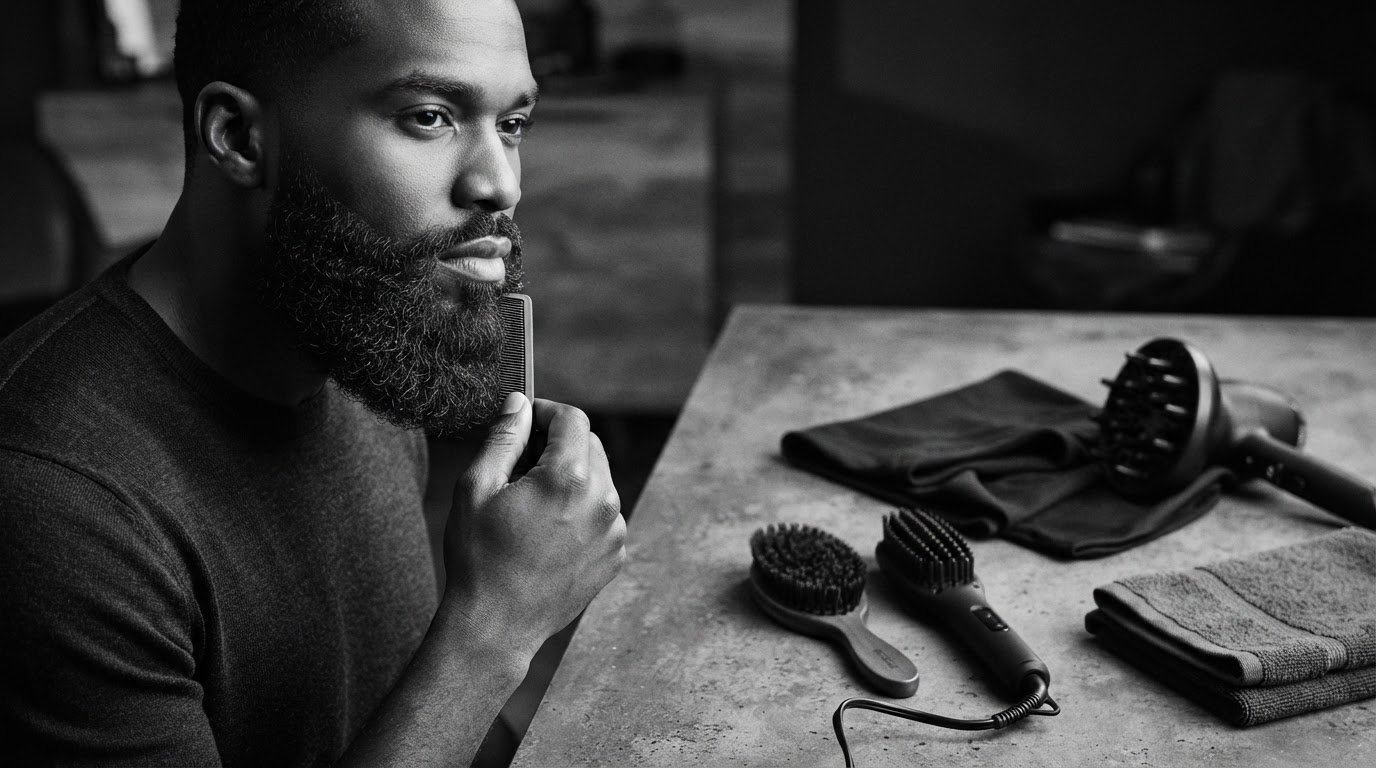
What if the best tool for your beard waves isn’t a dedicated waving brush? If you’re unsure which tools can guide your hairs without tugging or irritating your beard, you’re asking the right question. The best waving brush alternatives for beards are tools you can use comfortably and consistently to direct hair, not simply any tool that smooths it down.
A comb, a heated brush, or a round brush paired with a blow dryer can each support a different part of your routine, but they aren’t interchangeable. Some help detangle or shape; others can change the beard’s appearance without serving as a straightforward wave-training tool. Knowing the difference helps you choose with purpose and avoid building a routine that doesn’t fit your goal.
This guide compares practical alternatives, explains what each can and can’t do, and shows how beard length, texture, and comfort should shape your choice. You’ll also learn what a waving brush contributes, so you can build a steady routine around direction and control, whether you use a dedicated brush or another tool.
Key Takeaways
- Choose a tool for the task: detangling, smoothing, and directing beard hairs call for different approaches.
- Compare waving brush alternatives for beards by their control, coverage, comfort, and role in your wave routine.
- Use repeatable direction and manageable pressure to make your technique easier to maintain.
- Test one alternative at a time, then assess how comfortably and consistently you can use it.
- Build a simple setup around your needs, from directional grooming to overnight pattern support.
Why Look for Waving Brush Alternatives for Beard Waves?
A dedicated waving brush is designed to help guide beard hairs in a chosen direction through repeated, controlled strokes. That focused role can make it useful for wave training, but the tool’s name matters less than the task you need it to do. People look for waving brush alternatives for beards for practical reasons: a brush may feel awkward, cover too much area, or be uncomfortable on a particular part of the face.
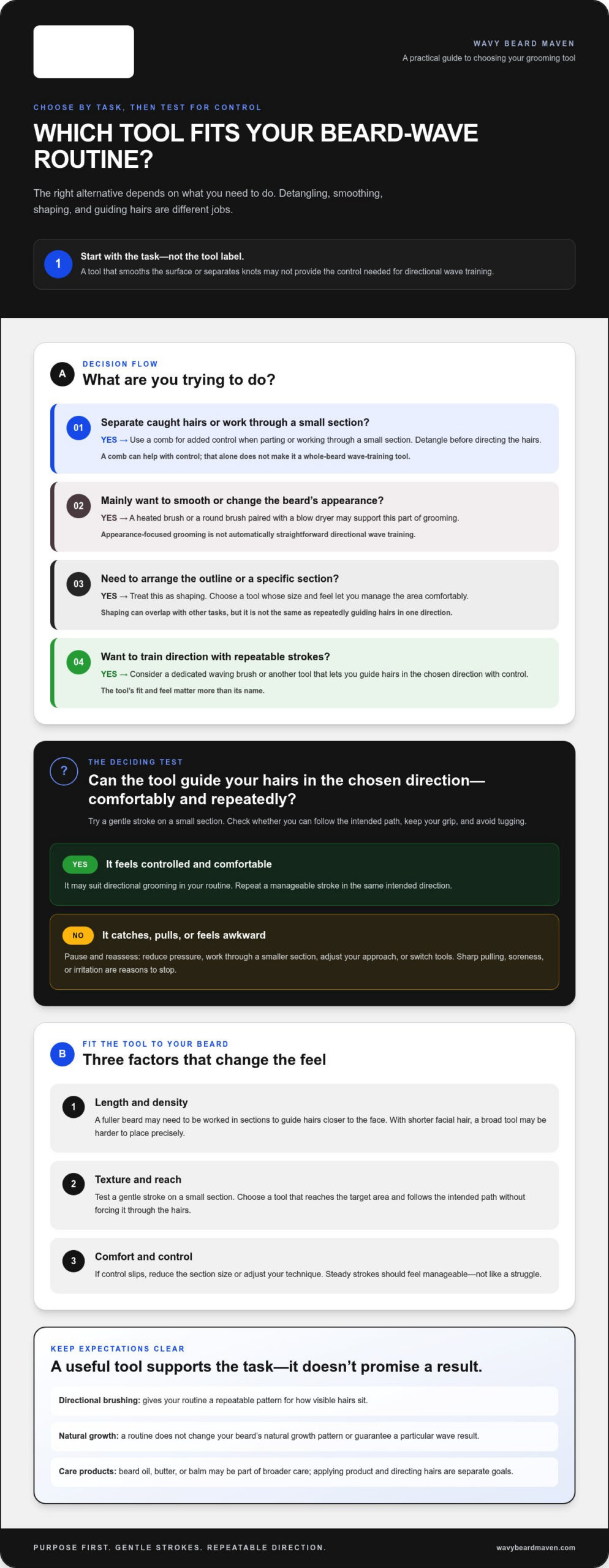
Keep the jobs distinct. Grooming can smooth the beard’s appearance, detangling can separate caught hairs, and shaping can arrange the outline. Wave training focuses on repeatedly guiding hairs in a consistent direction. These tasks can overlap, but doing one well doesn’t automatically mean a tool is suited to the others. Choose based on purpose, not on the assumption that one tool does everything.
What does a waving brush do for a beard?
Directional brushing gives your routine a repeatable pattern: move through the beard in the direction you want the hairs to lie, using strokes you can control and reproduce. This can help manage how the visible hairs sit, but it doesn’t change the beard’s natural growth pattern or guarantee a particular wave result. Facial hair varies in its natural characteristics, so build a routine that works with your beard rather than promising to remake it.
That distinction matters when choosing a tool. One that makes the beard look smoother during grooming may not provide the control you want for directional training. A tool that separates knots can still be useful before styling, even if it doesn’t cover enough area to guide the whole beard efficiently.
When might another grooming tool make sense?
Choose an alternative when its shape or feel makes the task easier to manage. A comb, for example, may give you more control when parting or working through a small section. A large brush may feel cumbersome around short hairs or a compact area. Neither option is automatically better; the fit depends on where you’re working and how comfortably you can repeat the movement.
Comfort is part of technique. If a tool catches, pulls, or makes you press harder than feels manageable, pause and adjust your approach. Controlled strokes should feel steady, not like a struggle. Test the tool on a small section first and notice whether it follows your intended direction without discomfort.
- Detangling: Separate caught hairs before directing them.
- Smoothing: Manage the visible surface of the beard.
- Shaping: Arrange the outline or a specific section.
- Wave training: Repeat a chosen direction with control.
Use one central test: can this tool guide the hairs in a controlled, repeatable direction without discomfort? If so, it may suit that task in your routine. If it only helps with detangling or shaping, use it for that job instead of expecting it to replace every function of a waving brush.
What matters more than the tool when training beard waves?
A tool earns its place in a wave routine through the control it gives you, not the label printed on it. Repeatable direction and manageable pressure matter because they let you perform the same motion without fighting the beard or your grip. An alternative that feels easy to guide may suit your routine better than a tool that seems ideal but feels awkward in practice.
Wave-training consistency means repeating a comfortable stroke in the same intended direction as part of a steady routine. It doesn’t mean brushing harder or longer. Comfort and control can help you maintain a technique, but they don’t promise faster results.
Match control to beard length and texture
Length and density affect where a tool can reach and how much of the beard it can manage at once. With a fuller beard, you may need to work in sections to guide hairs closer to the face. With shorter facial hair, a broad tool can be difficult to place precisely. Choose a tool that reaches your target area without forcing it through the hairs.
Texture also affects how a tool feels as it moves. Rather than assume one shape or bristle material works for everyone, try a gentle stroke on a small section. Can you follow the intended path, keep your grip, and avoid tugging? If control slips, reduce the section size or adjust your technique.
Keep the routine gentle and repeatable
Use steady strokes you can comfortably reproduce. Aggressive or excessive brushing doesn’t make a routine more disciplined; it can make the experience uncomfortable. Some resistance may come from moving through the beard, but sharp pulling, soreness, or irritation are signs to stop and reassess. Reduce pressure, work through a smaller section, or switch tools if you can’t maintain control.
For a broader sequence of wave-training steps, use this beard wave training guide to help frame your practice. Keep the direction and motion simple enough to repeat. A beard brush can support directional grooming, while beard oil, butter, or balm may be part of a broader care routine. Applying a product and directing hairs are separate goals.
- Detangling: Work through caught hairs so your tool can move more smoothly.
- Smoothing: Arrange the visible hairs for a neater appearance.
- Distributing product: Spread care products through the beard as needed.
- Guiding hairs: Repeat a chosen direction with controlled strokes.
Use those distinctions to assess waving brush alternatives for beards: can the tool reach your target area, follow the chosen direction, and feel comfortable through repeated strokes? Change one factor at a time, such as pressure or section size, so you can tell what improves control. For a simple framework to keep your practice organized, explore the 7-Day Beard Wave Starter Routine™ Checklist.
Which waving brush alternatives work for different beard needs?
The best substitute depends on the job you need done. A comb can separate a section with precision, while a different brush may give you broader directional contact. Fingers can arrange a few hairs, but they’re harder to use for consistent strokes across the full beard. Compare tools by their practical role, then choose the one that lets you work comfortably and repeat the motion.
| Tool | Best-suited task | Potential limitation | Wave-training role |
|---|---|---|---|
| Beard comb | Parting sections and detangling | Works through narrower tracks, so it may not cover broad areas like a brush | Can guide smaller sections with deliberate strokes |
| Fingers | Arranging a small section or settling flyaways | Limited coverage and less consistent contact from stroke to stroke | Useful for touch-ups, not a full routine substitute |
| Another beard brush shape | Directional grooming across a larger area | Its size or grip may not suit every section or hand | Can support training if strokes stay controlled and repeatable |
| Round brush with blow dryer | Styling and directing hair while drying | Requires managing both the brush and dryer, and focuses on styling as well as direction | May assist with shaping, but isn’t identical to a dedicated waving brush |
| Heated brush | Smoothing or aligning a dry beard | Adds heat and may not be the right fit for every routine | Can change the beard’s appearance, but doesn’t replace consistent directional practice |
Can a beard comb replace a waving brush?
A comb can be practical when you need to part the beard, separate a knot, or arrange individual sections. Its teeth pass through distinct tracks of hair, while a brush contacts a broader area. That difference affects both coverage and feel. A comb may help direct a small section, but don’t expect it to provide the same contact or result as a dedicated waving brush. Treat it as a precision tool and use controlled strokes that don’t snag.
Can fingers or another brush type help?
Fingers give you immediate control over a few hairs, so they’re handy for small areas and flyaways. They’re less suited to repeating uniform strokes across the beard. A brush with a different shape or bristle preference can still serve as an alternative if you can grip it comfortably and guide it in your chosen direction. Learn how purposeful brush technique fits a wave routine in this beard brushing mastery guide.
Think in terms of roles, not winners. Use a comb where precision matters, fingers for minor touch-ups, and a brush when you want broader directional control. These waving brush alternatives for beards can support different parts of a routine, but none removes the need to assess comfort and repeatability. If a dedicated beard brush better fits your directional-grooming needs, explore Wavy Beard Maven’s beard brush options.
How to test a beard-wave brush alternative in your routine
A fair test keeps your technique steady while you assess the tool. Don’t switch tools, products, pressure, and direction all at once; if several things change together, you won’t know what helped or felt uncomfortable. Make a small, repeatable comparison and let comfort and control guide your decision.
Run a simple tool comparison
Compare your usual beard brush with one alternative on the same area of your beard. Keep the direction and pressure as similar as you comfortably can. You’re evaluating how each tool handles that particular task, not trying to prove that one tool is universally better.
- Choose one alternative. Select a comb or another brush that suits the area you want to groom. Keep your usual brush nearby for comparison.
- Define one direction. Pick the path you want to guide the hairs, and use the same path for both tools.
- Use controlled strokes. Work gently over the same section. Don’t add extra pressure to make a tool perform.
- Assess the experience. Notice comfort, coverage, grip, and whether you can repeat the movement without snagging or losing control.
Stop or adjust if a tool pulls uncomfortably or causes irritation. You can reduce the section size, change your grip, or set that tool aside. A useful alternative should make the intended movement manageable, not turn practice into a test of endurance.
Build a routine around the result
Keep the tool that gives you a comfortable, controlled stroke and reaches the area you intended to groom. If a comb handles a small section well but feels slow across a wider area, use it for precision rather than forcing it to do every job. A different brush may suit broader directional grooming if you can guide it consistently.
Once you’ve chosen a tool, keep the rest of the routine steady while you get used to it. If you want to assess a beard-care product, introduce it separately rather than changing it during the tool comparison. Beard oil can be part of care, but applying oil and directing hairs are distinct steps. For guidance on how oil may fit a wave routine, see the beard oil guide for waves.
Make a brief note after each test: which area you worked, which tool you used, whether you could repeat the stroke comfortably, and where coverage felt limited. That record can help you spot a practical fit without chasing a perfect tool or switching methods every session. Consistency starts with a technique you can maintain.
Ready to put your choice into practice? Use the 7-Day Beard Wave Starter Routine™ Checklist to organize your beard-wave practice.
Build a beard-wave setup that fits your style and routine
A useful setup doesn’t need to be complicated. Start with the tool that gives you comfortable, repeatable directional control, then add other items only for tasks it doesn’t handle well. The aim is a routine that fits your beard’s length, texture, and the time you’re prepared to give it, not a drawer full of tools you rarely use.
Choose tools by the job you want done
For directional grooming, a beard brush can help you work across a broader area with consistent strokes. For precise detangling or separating a small section, a comb can be a helpful task-specific aid. Fingers can arrange a few hairs or settle flyaways, but they don’t offer the same consistent contact as a grooming tool. These options have different roles, so don’t treat them as identical replacements.
If overnight pattern support is part of your routine, a beard wrap may complement your grooming steps. Learn more about its role in this beard wrap compression guide. Keep expectations practical: a wrap can be one part of a routine, while comfortable tool use and consistency remain central to your grooming choices.
- Directional grooming: Choose a beard brush or another tool you can guide comfortably across the area you want to work.
- Precise detangling: Keep a comb or your fingers available for smaller sections and individual snags.
- Overnight support: Consider a beard wrap if it suits your routine and feels comfortable to wear.
Make consistency the center of your setup
Begin with a manageable routine you can repeat. Notice which tool feels controlled, where it reaches easily, and whether any part of the process causes pulling or irritation. Refine one element at a time instead of changing tools and care products together. That way, you can tell what fits your grooming needs and leave out what doesn’t.
Connect beard care to a specific purpose. A beard brush supports directional grooming; beard oils, butters, and balms are complementary care categories to consider as part of your broader routine. You don’t need to add every option. Choose what makes sense for your needs, then keep the steps simple enough to sustain.
Wavy Beard Maven offers beard brushes and complementary beard-care products, along with the 7-Day Beard Wave Starter Routine™ Checklist to help structure your practice. Whether you settle on a brush or one of the waving brush alternatives for beards, let comfort and repeatability guide your setup. Explore Wavy Beard Maven’s beard-wave education and grooming products, starting with the beard wrap compression guide, and build your routine with purpose.
Make Your Next Wave Routine Your Own
Your beard routine can evolve as its length, texture, or styling goals change. Treat your tool choice as something you can reassess, not a permanent commitment. If a method starts to feel awkward, adjust the setup and keep the movements controlled. That flexibility lets you stay consistent without forcing your beard into a routine that no longer suits it.
As you put waving brush alternatives for beards into practice, focus on one clear goal for your next session. Choose a direction, use a tool you can handle comfortably, and notice what you’d like to refine. Build your technique through patient attention to your own grooming, not by collecting more tools or chasing a guaranteed result.
Ready to keep building your practice? Explore beard-wave grooming tools and training resources to find ideas and support for your next routine. Stay consistent, trust what feels manageable, and keep shaping a beard-wave practice that reflects your style.
Frequently Asked Questions
Can I train beard waves without a waving brush?
Yes, you can use other tools to arrange or manage beard hair, though each has limits. A comb can help you work through a narrow section, while fingers can settle a few hairs near the mustache or cheek. These waving brush alternatives for beards may not provide the broad, repeatable contact of a brush. Choose a method you can use gently and consistently, and treat it as grooming support, not a guaranteed wave pattern.
Is a beard comb better than a waving brush for beard waves?
A beard comb isn’t automatically better; it’s useful for different tasks. Use it to separate a small section before grooming or work through a localized tangle rather than dragging a brush across it. A brush may be more practical for covering a wider area with similar strokes. Choose based on the section you’re working on and whether the comb moves through it without pulling or disrupting your routine.
Can I use a regular hairbrush on my beard?
You can test a regular hairbrush, but don’t assume its size or shape will suit facial hair. A wide brush may be awkward near the mustache or jawline, and its bristles may not feel comfortable on your face. Try it gently on a small, accessible patch first. If you can’t control the stroke or it catches, stop rather than pressing harder. A brush made for beard grooming may be easier to handle.
Can fingers replace a brush for beard waves?
Fingers can help arrange a small section, guide a few hairs into place, or tidy flyaways after grooming. They’re less practical for repeating the same movement over a larger beard area, especially if you need consistent contact across several sections. Use them for targeted styling rather than expecting them to do every brush-related job. For instance, you might use your fingers to settle one stray hair after finishing your regular routine.
Will brushing my beard too much cause irritation?
It can, especially if repeated strokes feel harsh, you press hard, or you force a tool through a snag. Keep your movements light enough to stay in control, and don’t use brushing to pull apart a tight tangle. If your skin feels sore or irritated, pause and reassess your pressure and technique before grooming again. More strokes aren’t automatically more effective, so let comfort set the limit for your routine.
Can a beard wrap create waves without brushing?
A beard wrap may support your routine by holding facial hair in place, but it doesn’t guide hairs through the same motion as brushing. Think of the wrap as a separate step, not a replacement for grooming. If you try one, check that it feels comfortable and doesn’t create unwanted pressure. Decide whether it fits your routine based on how your beard feels when you remove it and continue grooming.