October 6, 2026
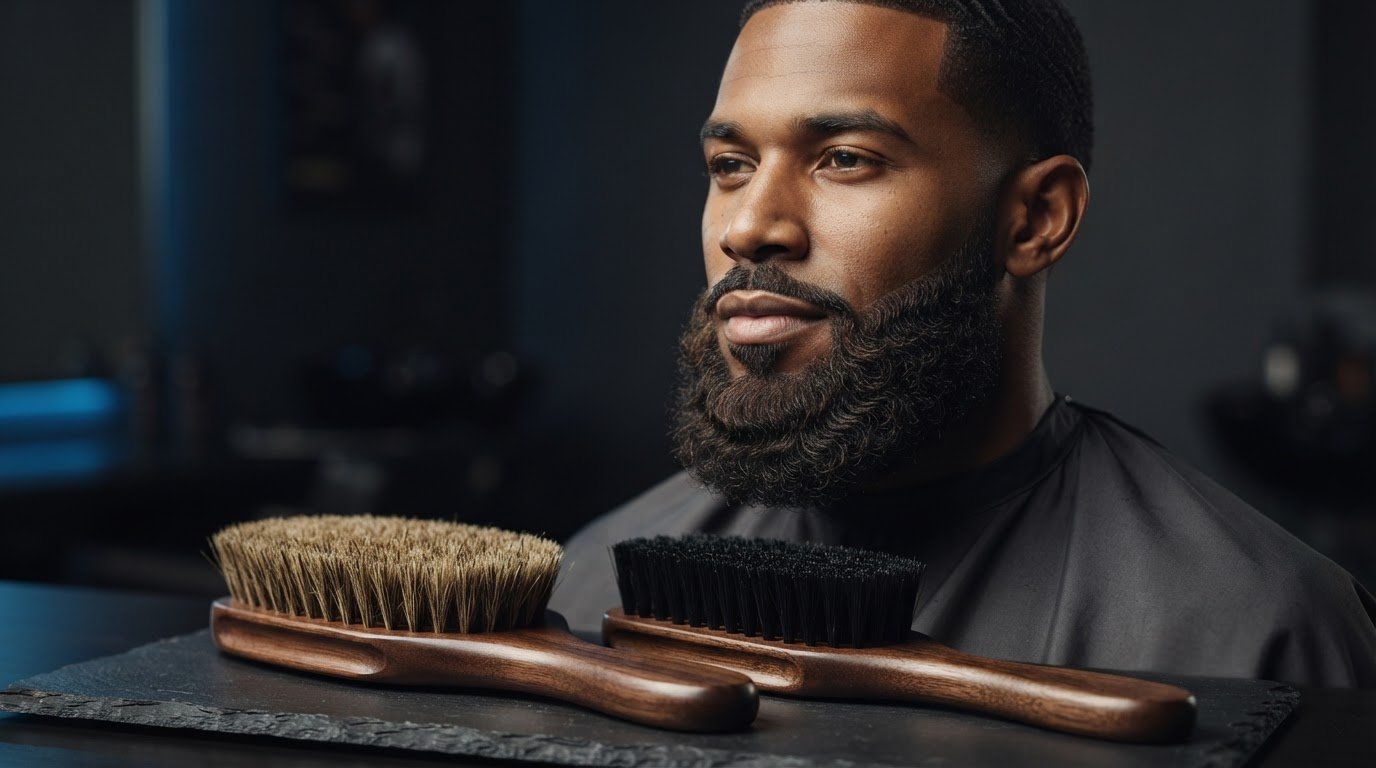
The boar bristle brush isn’t automatically the better choice for beard waves. If your beard is thick, coarse, or tightly curled, synthetic bristles may give you more reach and control. The real question in the boar bristle brush vs synthetic for waves debate is which brush lets you make smooth, comfortable, repeatable strokes through your beard.
Natural bristles don’t shape every beard best, and a firmer brush doesn’t automatically create more definition. Beard texture, skin comfort, brush construction, and technique all matter. A brush that pulls or irritates your skin can make it harder to keep up a routine. The right one should help you guide your hair without promising instant waves.
This guide explains how boar and synthetic bristles may feel on different beard types, what each can contribute to wave training, and how to choose based on your priorities. You’ll also learn how to compare brushes and build a steady practice. Waves come from patient repetition, not a single tool.
Key Takeaways
- Compare boar and synthetic bristles by feel and performance, then consider bristle length, stiffness, spacing, and brush construction.
- The boar bristle brush vs synthetic for waves choice depends on your beard texture and priorities, not a one-size-fits-all rule.
- Use a simple, gentle test to assess comfort and control before making a brush part of your routine.
- Compare brushes on the same beard area under similar conditions to get a more useful sense of how each handles your hair.
- Build your wave practice around controlled strokes and a consistent direction. Changing bristle materials won’t guarantee a particular pattern or faster progress.
Boar Bristle Brush vs. Synthetic for Beard Waves: What’s Actually Different?
For beard waves, material matters, but so do beard texture, comfort, and technique. Boar bristles are natural animal fibers; synthetic bristles are manufactured fibers, often made from materials such as nylon. Both can guide beard hair, but material alone won’t tell you how smoothly a brush moves or whether it suits your routine. The boar bristle brush vs synthetic for waves choice starts with how your beard responds, not with a promise on the packaging.
Brush shape, bristle density, and stroke technique all matter. Two brushes made from the same type of fiber can feel quite different if one is denser, stiffer, or shaped to sit differently against your face. General descriptions of types of hair brushes explain how brush designs vary, but the useful test for beard waves is how a brush moves across your own facial hair.
What changes when you brush beard hair instead of scalp hair?
Beard hair isn’t one even sheet. Coarseness, curl, and density can vary, and growth direction may shift from cheek to jaw to chin. A brush that glides over your cheek may meet more resistance at the chin, where hair can curl more tightly or grow in a different direction. Assess comfort and control on more than one patch of beard before choosing a brush.
Claims about boar bristles spreading scalp sebum along scalp hair don’t transfer directly to a beard. Facial skin produces its own oils, but the amount and distribution you notice can differ by area and grooming routine. A brush may move surface oils or grooming product through beard hair, but that doesn’t mean it will reproduce scalp-oil effects or create a wave pattern. Focus on what you can observe: whether your hair feels smoother, tangles less, or is easier to guide in your chosen direction.
What does a brush contribute to a beard-wave routine?
Brushing is repeated directional grooming. A controlled stroke lays hair in a chosen direction and helps you practice a consistent pattern. That practice may support wave training over time, but a brush can’t guarantee waves or determine how quickly they appear. Your hair’s natural characteristics and the consistency of your routine shape the outcome.
It helps to separate the jobs. Detangling works through knots so strokes can pass with less snagging. Smoothing aligns hair for a more orderly appearance. Brushing can also help move beard-care product through the area where you apply it. Pattern training is the repeated, deliberate act of directing hair in your intended flow. One brush may handle several of these jobs, but use light pressure and adjust if it pulls or irritates your skin.
Start by noticing how the brush behaves on each part of your beard. Keep strokes controlled and repeatable. If a tool feels comfortable and helps you guide the hair without fighting its texture, it can earn a place in your practice. Consistency builds the routine; material is one factor in choosing the tool.
How Boar and Synthetic Bristles Feel and Perform on Beard Hair
Brush material can affect how bristles feel against your beard, but it doesn’t determine the result by itself. Bristles vary in length, stiffness, and spacing. The handle, pad, and overall brush shape also influence how evenly they meet your face. A densely packed brush may feel firmer than a more open one, even when both use the same material. Use this comparison as a starting point, then judge each brush with comfortable, controlled strokes.
| Factor | Boar bristles | Synthetic bristles |
|---|---|---|
| Material | Natural fibers | Manufactured fibers, which vary by type |
| Possible feel | May feel firm or flexible depending on grade and design | May feel smooth, firm, or flexible depending on fiber and construction |
| Cleaning | Remove trapped hair and buildup; follow care instructions | Remove trapped hair and buildup; follow care instructions |
| Potential use | Controlled grooming and surface smoothing | Directional grooming, smoothing, or working through tangles, depending on design |
| Wave consideration | Assess comfort and whether strokes guide your beard without excess drag | Assess stiffness, spacing, and whether strokes feel controlled on your beard |
Material alone can’t predict how a brush will affect every beard. Design, hair texture, and technique shape the experience too. For the boar bristle brush vs synthetic for waves decision, you’re choosing a tool for repeated contact with facial hair and skin, not a guaranteed wave result. Glide and resistance can change across the cheek, jaw, and chin, so don’t judge a brush on one quick pass.
What boar bristles may offer during beard brushing
Natural boar bristles may suit controlled grooming if you want to guide hair and smooth its surface. That doesn’t guarantee shine, and claims about transferring scalp oils don’t necessarily apply to your beard. Bristle grade and brush construction affect firmness; beard density and your comfort matter just as much. If strokes catch or feel scratchy, ease your pressure or try a different design rather than pushing through discomfort.
What synthetic bristles may offer during beard brushing
Synthetic isn’t one uniform material. Nylon and other manufactured fibers can differ in flexibility, thickness, and finish, so their feel varies from brush to brush. Some designs may be easy to clear of loose hair or clean according to their care directions. Bristle stiffness and spacing affect resistance too: one brush may move through a tangle differently from a design made for closer, smoother contact.
For wave training, focus on repeatability. Can you move the brush in your intended direction without snagging, pressing too hard, or irritating your skin? That practical test tells you more than a material label. Keep your brush clean, follow its care guidance, and adjust pressure before changing your whole routine. If you’re building a steady practice, the free 7-Day Beard Wave Starter Routine™ Checklist can help you organize your grooming steps.
Which Brush Is Better for Beard Waves? Match the Material to Your Needs
Neither boar nor synthetic bristles are right for every beard-wave routine. Choose based on what you need from repeated strokes: comfortable contact, steady directional control, manageable upkeep, and a tool you’ll use consistently. If a brush catches at the jaw, feels harsh on your skin, or makes it hard to follow your intended direction, its material label matters less than how it performs on your beard.
Use this comparison to distinguish bristle material from the brush’s overall construction:
- Boar material: A possible fit if you prefer the feel of natural bristles. The experience can vary with bristle grade and brush design.
- Synthetic material: A possible fit if you prefer manufactured fibers or straightforward upkeep. Fiber type and brush design still affect performance.
- Construction: Bristle length, spacing, firmness, density, and brush shape affect how it contacts your beard, regardless of material.
- Routine: Either type may work if it supports comfortable, repeatable strokes and is easy for you to maintain. Cleaning needs depend on the brush and its care instructions.
When might a boar-bristle brush fit your routine?
Consider boar bristles if you like a natural-bristle feel and can guide your beard without pressing hard. Test strokes across your cheek, jaw, and chin, since comfort may change with hair density and growth direction. Natural doesn’t mean automatically superior. Keep the brush in your routine only if it feels comfortable and gives you reliable control.
When might a synthetic brush fit your routine?
Synthetic bristles may suit you if you prefer manufactured fibers or want a brush that feels consistent in use and is simple to clean according to its care guidance. Don’t rely on the synthetic label alone. Check stiffness and spacing, which can affect resistance and how easily you guide strokes through your beard. Synthetic doesn’t mean poor wave control.
Set your priorities in order. First, the brush should feel comfortable against your facial skin. Next, check whether you can follow your intended direction without tugging or changing pressure from stroke to stroke. Then consider upkeep: if cleaning the brush is a hassle, you may be less likely to maintain it as part of your routine.
No bristle type guarantees a particular wave pattern or faster progress. Your hair characteristics and consistent technique shape the results, so avoid switching materials repeatedly in search of an instant change. Choose the brush that supports a steady practice, then give your routine time.
For a broader look at choosing a brush and refining your strokes, use this beard brush for waves guide alongside your own comfort and control test. The right choice is the one you can use with care, confidence, and consistency.
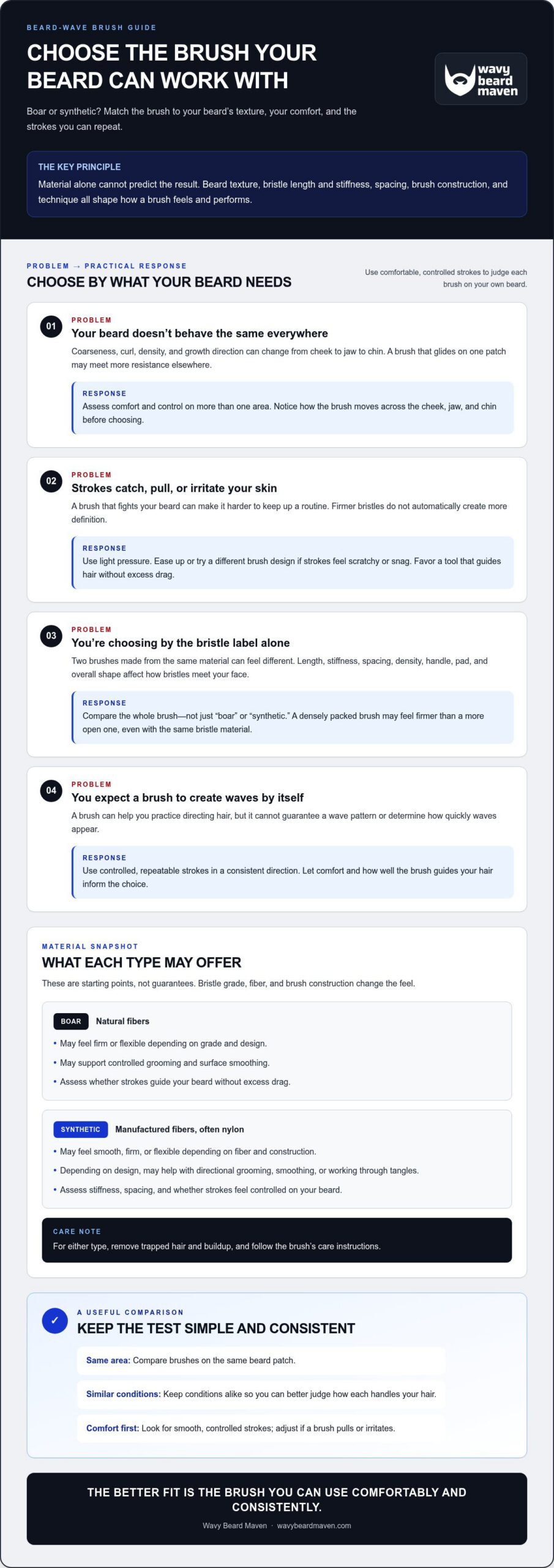
How to Test a Beard Brush for Wave Training Without Overbrushing
A brush comparison should tell you which tool gives you comfortable control, not how much pressure your beard can tolerate. Keep the test short and consistent. Use the same beard area, similar hair condition, and the same stroke direction with each brush. Differences in dampness, product, or placement can affect how the bristles feel.
A simple, controlled brush-comparison test
Follow these steps with each brush. Keep pressure light, and don’t add extra strokes to force a visible result. The aim is to compare how each tool handles your beard during ordinary, controlled brushing.
- Inspect. Check for bent, broken, uneven, or debris-covered bristles. Set aside a brush with damage that could scratch your skin or catch your hair.
- Try gentle strokes. Choose one beard area and use a few deliberate strokes in your established growth or training direction. Don’t press down to make the bristles reach further.
- Assess comfort. Notice any pinching, scratching, or pulling, especially where the brush crosses denser hair. Pause if your skin feels uncomfortable.
- Compare control. Notice whether the brush follows your intended direction smoothly or snags and interrupts the stroke. Repeat the same test with the other brush under similar conditions.
Know when to pause
Discomfort is feedback, not a reason to push harder. Stop if brushing causes irritation, excessive tugging, or noticeable skin discomfort. Check for a snag or damaged bristle, reduce pressure, and reassess before brushing again. If irritation continues, give your skin a break rather than testing repeatedly. This measured approach helps you compare the boar bristle brush vs synthetic for waves without turning the trial into overbrushing.
Keep the comparison fair. Test the same cheek or jaw area with both brushes, and try them when your beard is in a similar state, such as dry both times or prepared the same way. Use the same direction and light pressure. If one brush feels different only on the chin, note that separately; beard density and growth direction can vary across your face.
Once you choose a brush, regularly remove trapped hair and product residue. Use a cleaning method suited to its materials and construction, then let it dry fully before storing it. A clean, dry brush is easier to assess during future sessions and keeps buildup from complicating your routine. Avoid soaking a brush or using a harsh cleaner unless its care instructions allow it.
If you want more detail on directional strokes and technique, the how to brush your beard for waves guide can help you build a controlled method around the brush that feels right.
Ready to bring more structure to your practice? Get the free 7-Day Beard Wave Starter Routine™ Checklist and use it to keep your grooming steps consistent.
Build a Consistent Wave Routine Around the Brush That Works for You
The best brush for your beard-wave practice is one that feels comfortable and helps you make controlled, repeatable strokes. Once you’ve chosen it, give your routine time before judging progress. Switching between boar and synthetic brushes repeatedly can make it harder to tell whether a change comes from the tool, your technique, or the way your beard is growing.
Keep your wave practice consistent
Choose a manageable routine you can follow without rushing. Keep your brushing direction steady and use pressure that feels comfortable on your beard and skin. More force or extra brushing isn’t a shortcut; it can leave your face uncomfortable without making your pattern develop faster. Let control and comfort guide your practice.
Track a few simple observations over time. A brief note after grooming can help you notice changes without expecting an instant transformation:
- Comfort: Did brushing feel comfortable across your cheeks, jaw, and chin?
- Control: Could you maintain your intended direction without tugging or repeatedly adjusting your grip?
- Pattern: How did your beard look after grooming, and did its appearance change as you kept your routine steady?
Use these observations to decide whether your brush and approach still suit you. If the brush feels good and your strokes stay controlled, there may be no reason to change materials. In the boar bristle brush vs synthetic for waves decision, consistency is part of the choice: a tool supports your practice only if you can use it comfortably and regularly.
What to explore after choosing your brush
A brush is one part of a larger training practice. Broader guidance on how to get beard waves can help you connect brush use with the other habits involved in growing and maintaining a wavy beard. Keep expectations grounded. A checklist can organize your learning, but it can’t promise a particular pattern or timeline.
The free 7-Day Beard Wave Starter Routine™ Checklist offers a structured next step for putting your grooming practice in order. Use it to support steady habits, then keep paying attention to how your beard responds. A consistent approach gives you a clearer basis for making adjustments than frequently changing your brush or routine.
Keep building with the tools and guidance that fit your goals. Explore beard-wave tools and guidance at your own pace, and stay focused on comfortable strokes, a clear direction, and the discipline to keep showing up.
Make Your Next Stroke a Deliberate One
Let your beard’s response guide your next step. Rather than chasing a perfect tool, choose a brush that feels comfortable and a routine you can maintain. Give yourself time to notice how your technique develops; steady practice is more useful than changing materials whenever progress feels slow.
The question of boar bristle brush vs synthetic for waves is a starting point, not a rule you have to follow forever. As your beard grows and your needs shift, reassess what feels right while keeping your strokes controlled and intentional.
Build on that practice with Wavy Beard Maven’s step-by-step beard-wave education and grooming resources. The 7-Day Beard Wave Starter Routine™ Checklist offers a practical way to organize your next steps without promising an instant result. Explore beard-wave tools and guidance and keep showing up for the routine that works for you.
Frequently Asked Questions
Is a boar-bristle brush better than a synthetic brush for beard waves?
Neither is automatically better. Choose based on how the brush feels and handles your beard. In the boar bristle brush vs synthetic for waves comparison, consider your priorities: a natural-bristle feel, easy upkeep, or a particular level of resistance. If one brush catches at your chin but moves comfortably over your cheeks, its material alone doesn’t make it the right fit for your whole routine.
Can a synthetic brush train beard waves?
Yes, a synthetic brush can support wave training if it lets you guide your beard in a consistent direction without discomfort. Focus on controlled strokes rather than expecting a specific result from the fiber type. If you use a synthetic brush to work through a tangle, detangle gently first, then continue with your usual directional strokes. The brush assists your practice; it doesn’t create a guaranteed pattern on its own.
Do boar-bristle brushes distribute oil through a beard?
A boar-bristle brush may move some oil or grooming product already on your beard, but don’t assume it will distribute facial oils evenly or deliver the same effect associated with scalp hair. Beard length, density, and how product is applied all affect what reaches the hair. If you use beard oil, apply it according to your routine, then brush gently to groom the hair rather than relying on the bristles to spread oil by themselves.
Which brush is better for a coarse beard and waves?
A firmer synthetic or mixed-bristle brush may be worth testing on a coarse beard because bristle design can affect how well it reaches through dense hair. Don’t choose by material label alone. Try a small area first, especially where your beard is thickest, and notice whether the bristles guide hair or pull at it. If they snag, reduce pressure or try a design that feels more manageable.
Can brushing too much damage beard waves?
Yes, excessive or forceful brushing can irritate facial skin and put unnecessary tension on beard hair, which may lead to breakage. A few extra strokes won’t automatically erase your pattern, but brushing harder to speed progress is a poor trade. Stop if you feel pulling or tenderness, or see irritation. Let your skin settle, then return to comfortable strokes instead of trying to make up for missed brushing.
How do I clean a beard brush with boar or synthetic bristles?
Regularly remove loose beard hair and visible product buildup using a method suited to the brush’s materials and construction. A gentle tool or your fingers can help lift trapped hairs; avoid pulling hard on bristles. Follow the brush’s care directions before using water or cleaner, since handles and bristle bases can respond differently. After cleaning, let the brush dry fully before putting it away to help limit trapped moisture and residue.
Should I use a boar-bristle and synthetic brush together?
You can use two brushes if each has a clear purpose, but you don’t need both to train waves. For example, one brush might feel easier for working through a snag, while another feels better for finishing directional strokes. Keep the sequence gentle and stop if either brush pulls or irritates your skin. If switching tools adds extra passes without improving comfort or control, simplify your routine and stick with the brush that works best.