October 11, 2026
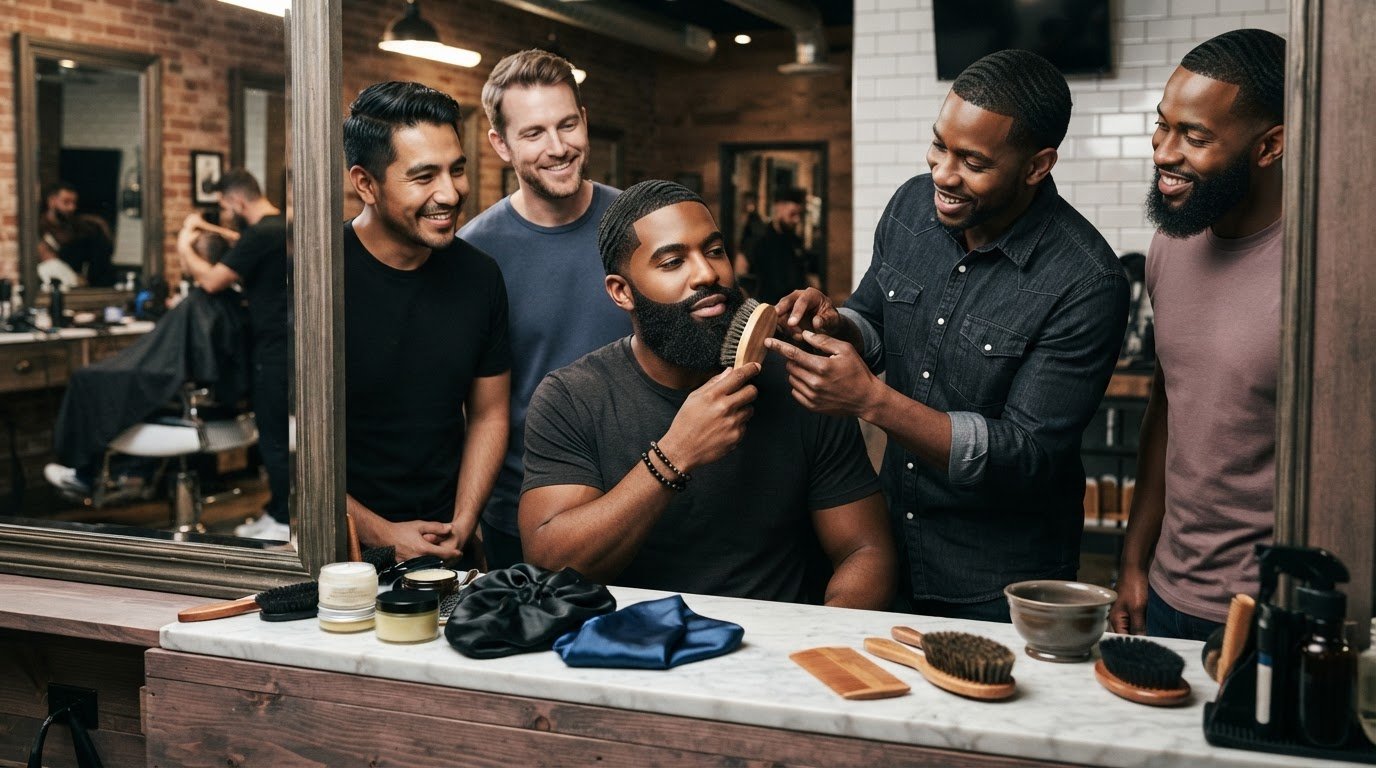
What if the hardest part of learning beard waves isn’t the brushing routine, but finding people who understand why you keep showing up for it? Building a community of beard wavers makes that connection easier. Training a beard takes patience and consistent care, and beginners may have questions before they see the progress they hope for. A welcoming group can turn those questions into shared learning and encouragement.
A strong community grows through more than product talk. Members need room to share routines, ask practical questions, celebrate effort, and offer feedback without judgment. This guide explains how to set a clear purpose, welcome beginners, establish respectful norms, and create a sustainable rhythm for learning together. Whether you’re bringing a few enthusiasts together or starting an online space, the aim is the same: help people build confidence through practice, consistency, and support.
Key Takeaways
- Define a clear purpose for building a community of beard wavers, then choose a simple first activity that gives members a reason to participate.
- Welcome beginners with respectful norms that make questions and different routines feel valid.
- Set a manageable rhythm for shared learning so conversations keep moving without constant activity.
- Encourage members to ask questions, share experience, and reflect so participation can grow steadily.
- Use Wavy Beard Maven’s educational guides to give members practical lessons they can learn and discuss together.
What Does Building a Community of Beard Wavers Actually Mean?
Building a community of beard wavers means creating a shared space where people learn, practise, and celebrate shaping facial hair into waves. The goal isn’t to collect followers or fill a feed with product promotions. It’s to help people exchange knowledge, recognize one another’s effort, and connect through a practice that takes patience.
A beard-waver community is a group of people who connect through learning and practising beard waves, sharing experience and encouragement while respecting each member’s pace. That definition leaves room for different routines and experience levels. One person may be working on brushing consistently, while another may have lessons to share from their own practice. Both can contribute. For broader context, Understanding Community Building explores how shared purpose and participation bring people together.
The distinction matters: a large audience can scroll past posts without connecting, while a smaller group can offer real value through thoughtful questions, useful replies, and shared learning. If every conversation turns into a sales pitch, members have little reason to return. Keep the people and the practice at the centre of the group. Product discussions can have a place when they’re relevant and useful, but they shouldn’t define the community.
Why shared identity matters to beard wavers
A shared grooming interest can help people feel understood. Members recognize the care behind the look and the patience it can take to refine a routine. That connection may make learning feel less solitary, especially for someone who hasn’t found many people to talk with about beard waves. A community can offer encouragement and exchange, though it cannot promise a particular result.
Make belonging about participation, not perfection. Consistency and persistence are values members can encourage, not standards people have to meet before they’re welcome. Beginners, experienced wavers, and curious supporters can all take part. Invite people to contribute in a way that suits them, whether that means asking a question, sharing a lesson, or reading along until they feel ready to join in.
What a healthy community gives its members
A healthy group makes useful exchanges easier. Members can ask about technique, explain what they’ve tried, and offer constructive encouragement without treating one person’s routine as the only right way. For example, someone can describe what helped them stay consistent while recognizing that another member may have a different experience. That kind of context keeps advice open to discussion.
People can participate at different skill levels and at their own pace. Some will share progress; others may read, reflect, and join a conversation later. Welcome both. A community’s value isn’t measured by size alone. Consider whether people feel respected, learn from one another, and have a reason to return. Those are the foundations for building a community of beard wavers with lasting meaning.
How to Set a Clear Purpose and Welcome Beard-Wave Beginners
Before inviting people in, make it clear what the group is for and how a new member can take part. A focused purpose keeps discussions useful. A simple welcome helps beginners join without feeling that they need expert technique or visible progress. When people understand the group’s purpose, they can quickly decide whether it fits their interests and what kind of participation is welcome.
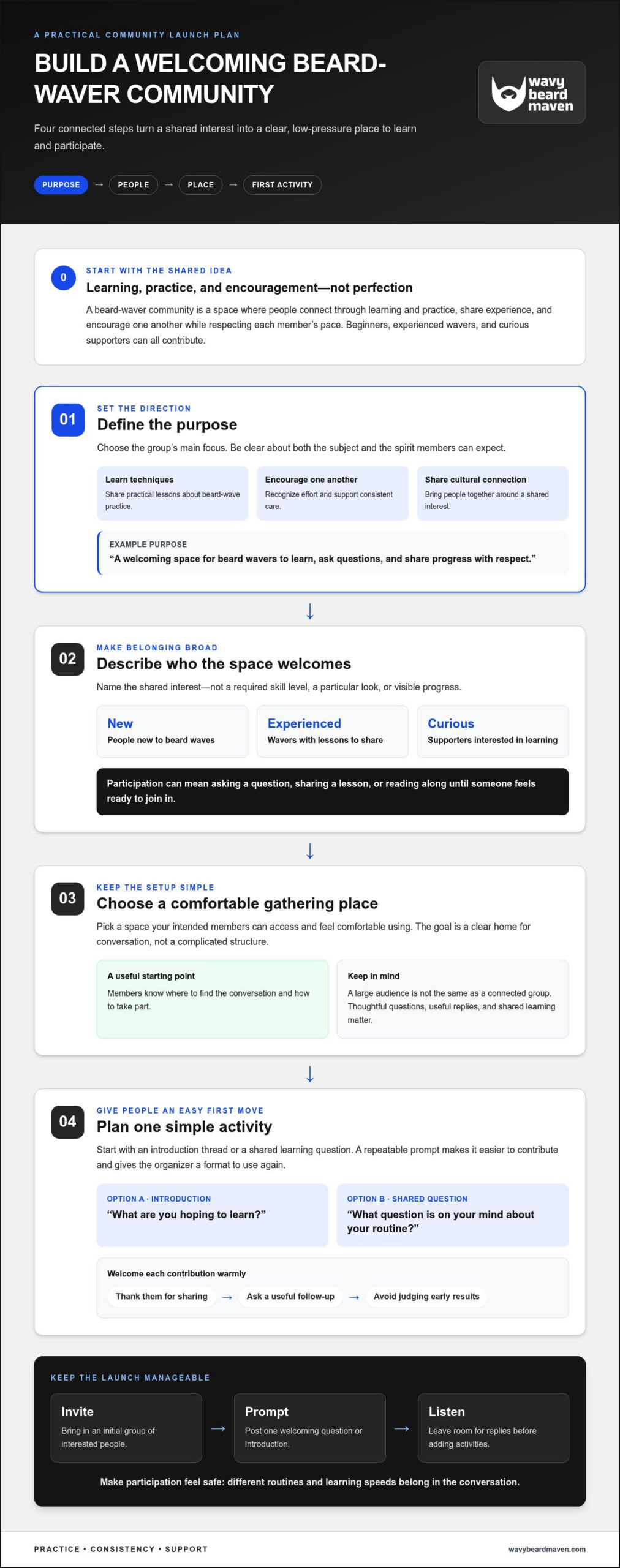
Use this launch sequence to make the idea practical:
- Define the purpose. Choose the group’s main focus: learning beard-wave techniques, encouraging one another, sharing cultural connection, or combining these aims. Make the purpose specific, such as “Learn together and share progress respectfully.”
- Describe the audience. Welcome people who are new to beard waves, experienced wavers, and curious supporters. Name the shared interest, not a required skill level or a particular look.
- Choose a gathering place. Pick a space your intended members can access and feel comfortable using. Keep the setup simple. The goal is a clear home for conversation, not a complicated structure.
- Plan one first activity. Start with an introduction thread or a shared learning question. A repeatable prompt gives members an easy way to contribute and gives the organizer a format to use again.
Choose a community purpose members can understand
Your purpose should explain both the subject and the spirit of the group. For example: “A welcoming space for beard wavers to learn, ask questions, and share progress with respect.” Add a short introduction explaining that members can exchange practical lessons, learn at different speeds, and offer encouragement without pressure to follow one routine. Use direct wording so beginners know what to expect before posting.
Make the first interaction easy for a new waver
Don’t require a polished introduction or a progress photo. Offer a low-pressure prompt that can be answered in a sentence, such as “What are you hoping to learn?” or “What question is on your mind about your routine?” Respond warmly to each contribution. Thank the person for sharing, ask a useful follow-up, and avoid judging early results or correcting technique before you understand their experience.
Give newcomers a clear next step if they want to build their technique fundamentals. Wavy Beard Maven’s complete beard-wave training guide can serve as a shared learning resource. Members can discuss foundational ideas without turning the group into a test of who knows the most.
Keep the launch manageable. Invite an initial group of interested people, post one welcoming prompt, and leave room for replies before adding more activities. This gives you a chance to learn what members actually need. Building a community of beard wavers can start with a clear purpose, a welcoming first exchange, and one useful resource to learn from together.
How to Create Welcoming Rules and Better Conversations
Good conversations need a supportive environment. Set clear expectations early and model the tone you want members to use. The aim isn’t to make every reply sound alike. It’s to make questions, honest experience, and respectful disagreement welcome throughout the group.
Clear group norms, applied consistently to beginners and experienced members alike, help build the trust people need to ask questions and share openly. Keep the rules concise enough to remember and practical enough to guide real interactions:
- Respect the person. Discuss an idea or technique constructively. Don’t mock someone’s appearance, progress, or experience level.
- Protect privacy. Get permission before reposting another member’s photos, personal details, or story outside the group.
- Make room for learning. Welcome beginner questions and explain advice without insisting that one routine works for everyone.
- Moderate consistently. Apply the same expectations to every member, regardless of experience or confidence.
Set norms that protect respect and belonging
Encourage feedback that is specific and useful. Instead of saying, “Your technique is wrong,” a member could explain what they’ve tried and ask what the other person hopes to achieve. Help members distinguish personal experience from universal instruction. “This approach helped me” leaves room for different routines, while “Everyone should do it this way” can shut down discussion. If a post crosses a boundary, respond calmly, name the relevant norm, and apply the same approach to everyone.
State privacy expectations directly, too. Someone may be comfortable sharing a progress photo inside the group but not outside it. Ask permission before sharing, and make clear that membership doesn’t mean permission to repost. That expectation lets people decide what they’re comfortable contributing.
Use prompts that lead to useful exchanges
Instead of asking for reactions without a clear topic, invite a specific question, a lesson learned, or a small win. For example:
- What question about your brushing routine would you like help thinking through?
- What did you learn from a recent attempt, even if the result wasn’t what you expected?
- What small sign of progress are you pleased with this week?
When replying, ask for context before offering detailed advice. A member’s experience can be useful without becoming a rule for everyone. If a conversation turns specifically to brush technique, the beard brushing mastery guide can give members a shared educational reference point.
Keep the tone steady: recognize effort, offer practical suggestions, and leave room for follow-up questions. That’s how building a community of beard wavers becomes more than posting updates. It creates a dependable exchange where members can learn without fear of ridicule. For more structured beard-wave learning to bring into discussions, explore Wavy Beard Maven’s educational guides.
How to Keep a Beard-Waver Community Active Through Shared Learning
A community stays useful when members have a reason to return and a simple way to take part. Build a repeatable learning cycle: ask a focused question, invite members to share their experience, reflect on what the group learned, and use that reflection to welcome the next question. This keeps activity connected to real practice rather than posting for its own sake.
Build a repeatable rhythm for participation
Choose a pace you can maintain, such as one planned discussion each week or a recurring check-in every other week. The best rhythm is one you can sustain, not the busiest schedule you can announce. Rotate between questions, lessons learned, and reflections so members have different ways to contribute.
- Ask: Invite one specific question about the learning process.
- Share: Encourage members to describe an experience that may help someone else.
- Reflect: Summarize useful takeaways and recognize thoughtful contributions.
- Welcome: Use what came up to shape the next question, and invite quieter members to join when they’re ready.
Make participation flexible. A short written update may be enough. Members who are comfortable can also share a photo, while following the group’s privacy expectations. Organizers can model the cycle by asking genuine questions and acknowledging replies, then invite willing members to suggest topics or share lessons. Sharing responsibility helps the group feel like a community rather than a feed that depends on one person to keep it moving.
Turn individual progress into shared learning
Ask members to describe what they tried, what they noticed, and what they might adjust next time. A reflection such as “I kept up with my routine this week and noticed how my beard responded” gives context without claiming that the same approach or result will apply to everyone. Recognize patience, consistency, and learning, not only visible pattern changes. Progress can also mean asking a clearer question or sticking with a practice through an uncertain stage.
Keep the conversation focused on experience and mutual learning. Detailed brushing, compression, and daily routine tutorials belong in educational guides. Group discussions can help members compare notes, raise questions, and identify what they want to learn next. For members who want more structure in their own practice, the free 7-Day Beard Wave Starter Routine™ Checklist offers a guided starting point to follow and reflect on together.
Try the cycle for a few rounds, then notice which prompts lead to thoughtful replies and which feel like a chore. Adjust the rhythm without treating a quiet stretch as failure. Consistent, low-pressure participation gives members a path from curiosity to contribution, which is central to building a community of beard wavers that learns together. Explore the 7-Day Beard Wave Starter Routine™ Checklist as a shared starting point for learning and reflection.
How Wavy Beard Maven Can Help You Take the Next Community-Building Step
A thriving community doesn’t need a complicated launch. Start with one useful conversation, then share learning material when a question calls for more detail. Wavy Beard Maven’s educational guides give members a shared reference point, while they bring their own questions, observations, and experience to the discussion. Keep the focus on learning together, not on turning every exchange into a product pitch.
Share learning resources without overwhelming the group
Match a resource to a real question instead of dropping a stack of links into the conversation. If a member asks specifically about beard oil and wave definition, the beard oil guide for wave definition can add background to the discussion. Invite members to share what they took from the guide and how it relates to their experience. The resource supports the conversation; it doesn’t replace it or make one person’s routine a universal rule.
Keep grooming products in their proper place. Beard oils, butters, brushes, balms, and wraps can be discussed when relevant, but they shouldn’t define the group’s purpose. Accessible education is a stronger foundation: a guide can help someone understand a technique, while respectful conversation lets members compare questions and perspectives without pressure to buy or follow an identical routine.
The free 7-Day Beard Wave Starter Routine™ Checklist can give members who want more structure a guided starting point to learn from together. Treat it as an optional aid for discussion, not a measure of commitment or a requirement for belonging. Each member can decide what fits their goals and pace.
Take a simple first step today
Write one sentence that explains why your group exists, then pair it with one welcoming prompt. For example: “We’re here to learn about beard waves and encourage one another,” followed by, “What’s one thing you’re curious about right now?” That’s enough to open a meaningful exchange. Make room from the start for beginner questions, different experience levels, and varied learning paces.
As replies come in, respond with curiosity and share a useful lesson or relevant educational guide when it helps answer the question. Then give members space to carry the discussion forward. This is a practical way to begin building a community of beard wavers: give people a reason to connect, a question they can answer, and room to learn from one another.
Explore Wavy Beard Maven’s beard-wave learning resources for educational material to bring into your next community discussion.
Start the Conversation That Brings Wavers Together
A community takes shape through its first exchanges: one honest question, one useful lesson, or one welcome that helps someone feel they belong. You don’t need every detail figured out before you begin. Make room for people to learn at their own pace, and let the culture grow through steady participation and mutual respect. That’s the heart of building a community of beard wavers.
Wavy Beard Maven offers beard-wave education, step-by-step tutorials, and a free 7-Day Beard Wave Starter Routine™ Checklist that members can use as a shared learning aid. Bring a relevant resource into a conversation, then let members’ questions and experiences guide what comes next.
Explore Wavy Beard Maven’s beard-wave guides and resources, and take one practical idea back to your community. Start small, stay consistent, and keep building together.
Frequently Asked Questions
How do I start a beard-waver community?
Start by deciding what members will have in common and what they can do together. You might create a space for people to compare learning notes, discuss beard-wave culture, or encourage one another as they practise. Choose a gathering place that feels manageable for your intended members, then post a short welcome and one easy question. Building a community of beard wavers can begin with a few thoughtful exchanges, not a large audience.
Can beginners join a beard-wave community?
Yes, beginners belong in a beard-wave community. They don’t need to know specialist terms or have a defined wave pattern to show. Make that clear in your welcome, and offer ways to participate that don’t depend on posting photos, such as asking what a term means or sharing a goal. If someone is unsure how to join in, answer their question rather than testing their knowledge. That first interaction helps set the tone.
What should a beard-waver community talk about?
A beard-waver community can discuss learning goals, grooming questions, personal observations, and cultural connection. For a useful exchange, ask members to describe a specific situation. “What are you trying to understand about your routine?” is more focused than a general request for comments. When someone shares advice, invite them to explain what they tried and noticed. That context helps others consider the suggestion without assuming it applies to every beard or goal.
How do I keep an online grooming community active?
Choose a posting rhythm you can sustain, then make each discussion easy to answer. If replies slow down, ask what members would like to learn next or invite someone to share a lesson from a recent experience. Avoid filling quiet periods with unrelated posts just to keep a feed busy. A thoughtful response to an older question can restart discussion and show members their contributions still matter.
What rules should a beard-waver group have?
Set clear rules for respectful feedback, privacy, and constructive discussion. Ask members to critique an idea rather than someone’s appearance, and require permission before sharing another person’s photo outside the group. Explain how moderators will respond to a breach, such as removing a disrespectful comment and reminding the member of the expectation. Keep the rules easy to find and apply them consistently so members know what to expect.
Do I need to be an expert to build a beard-waver community?
No. You can organize a learning community without presenting yourself as an authority on every technique. Be clear about what you’ve personally tried, and distinguish your opinion from a universal answer. If a question goes beyond your experience, invite members to explore it together or point them toward an educational resource. Curiosity, follow-through, and respect help an organizer create value as the group’s shared knowledge grows.