September 25, 2026
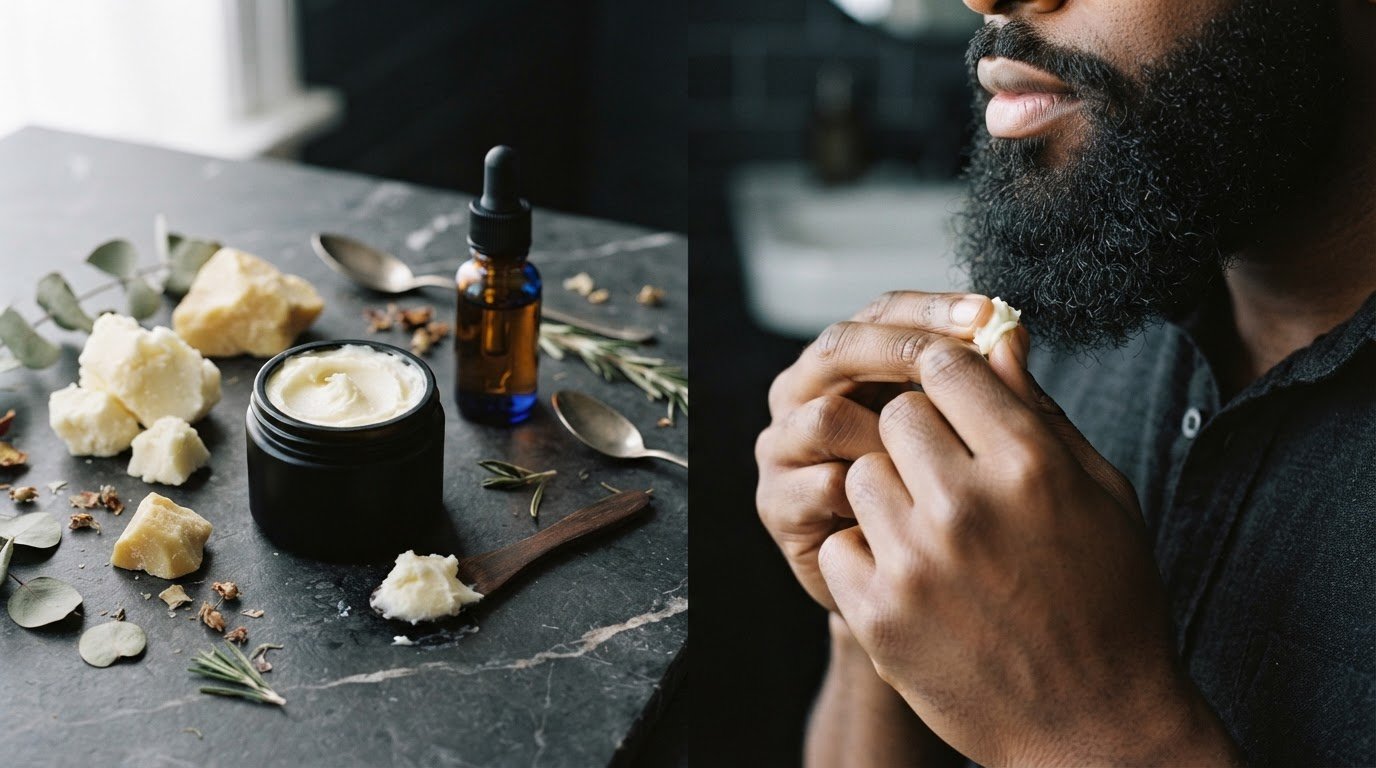
What if your first DIY beard conditioner recipe skipped water and started with a simple leave-in butter instead? Making a small batch gives you more control over the ingredients and texture than choosing a ready-made product. First, know what you’re making: beard oil, balm, butter, and rinse-out conditioner aren’t interchangeable. A water-free butter is a straightforward place to start, but clean tools, careful essential-oil use, and sensible storage still matter.
In this guide, you’ll learn what each ingredient contributes, how to make and apply a small batch, and how to adjust it to your beard and skin. You’ll also see what leave-in butter can and can’t do, so you can set realistic expectations and avoid using more than you need. We’ll cover patch testing, storage, and how light application can fit into a consistent beard-wave practice. Prefer not to mix your own? Prepared beard butter and beard oil are alternatives.
Key Takeaways
- A water-free leave-in butter can be a simple starting point for conditioning beard hair, but it isn’t the same as a rinse-out conditioner.
- This DIY beard conditioner recipe uses a small set of ingredients, each chosen to shape the butter’s texture and feel.
- Keep water, damp fingers, and wet tools out of the container. A water-free mixture still doesn’t last indefinitely.
- Apply a little to a thoroughly dry beard, then adjust the amount to your beard’s length, density, and preferred feel.
- Build the butter into a consistent grooming routine, or choose prepared beard butter or beard oil if you’d rather skip making your own.
What Is a DIY Beard Conditioner, and What Can It Actually Do?
If your goal is a softer-feeling beard, a simple homemade leave-in can be a practical place to start. This DIY beard conditioner recipe makes an anhydrous butter, meaning it contains no added water. It’s designed to stay in the beard rather than be rinsed out. The butter and oils coat the hair and can help it feel softer and easier to manage.
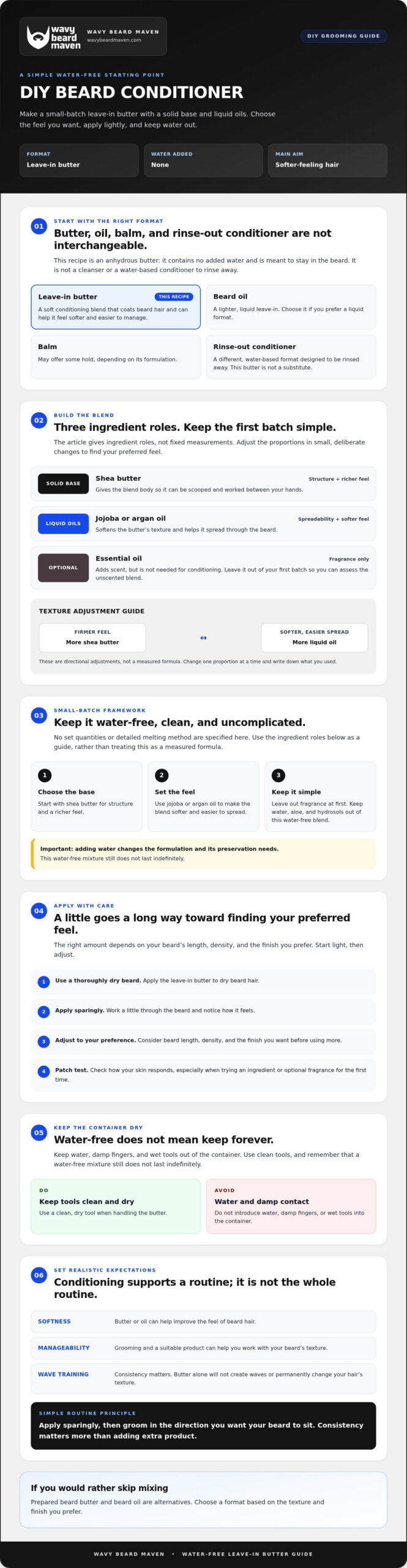
That distinction matters. This mixture isn’t a cleanser or a water-based conditioner designed to rinse away after washing. The shea butter in the recipe provides a rich, solid base, while liquid oils shape the butter’s texture. The finished feel depends on the blend and how much you apply, so start light and adjust to your preference.
Keep three goals separate as you build your routine:
- Softness: Use a leave-in butter or oil to improve the feel of beard hair.
- Manageability: Grooming and a suitable product can help you work with your beard’s texture.
- Wave training: This takes a consistent grooming routine. Butter alone won’t create waves or permanently change your hair’s texture.
Beard conditioner, beard oil, and balm: what is the difference?
Beard oil is a lighter, liquid leave-in, while balm may offer some hold depending on its formulation. This recipe makes a soft conditioning butter intended to coat and soften, not to cleanse or shape the beard by itself. These formats feel different, and no single one suits every beard or preference. Choose based on the texture and finish you want.
Who should try a homemade leave-in butter?
Try one if you want a simple, customizable leave-in for beard hair that feels dry and prefer to choose the ingredients yourself. If you’re looking for a washable, water-based conditioner, this recipe isn’t the right format. That requires a different formulation. A butter can support a soft, manageable feel, but it won’t permanently alter your beard’s texture or produce waves on its own.
Think of the butter as one part of your grooming practice, not the whole routine. Apply it sparingly, then groom in the direction you want your beard to sit. For wave training, consistency matters more than adding extra product. Next, consider what each ingredient contributes so you can tailor the feel without confusing conditioning with cleansing or hold.
Choose DIY Beard Conditioner Ingredients for the Feel You Want
A starter blend doesn’t need a long ingredient list. For this DIY beard conditioner recipe, think in three parts: a solid base for body, liquid oils for spreadability, and optional fragrance. Keep your first batch unscented so you can assess the texture and how your skin responds without adding another variable.
| Ingredient type | Example | Purpose |
|---|---|---|
| Base butter | Shea butter | Gives the blend structure and a richer feel. |
| Liquid oil | Jojoba or argan oil | Softens the butter’s texture and helps it spread through the beard. |
| Optional fragrance | Essential oil | Adds scent, but isn’t needed for conditioning. |
What does each ingredient contribute to the recipe?
Shea butter is the solid base. It gives the mixture enough body to scoop and work between your hands. Cleveland Clinic discusses shea butter’s moisturizing use for skin, including how it may relieve dry skin. In a beard butter, treat it as a cosmetic ingredient that contributes to the product’s feel, not as a treatment for a skin condition.
Jojoba and argan oils are liquid ingredients. They make the butter easier to spread and can give the finished blend a softer feel. The balance matters: more liquid oil generally makes the mixture softer and easier to spread, while a higher proportion of butter generally makes it firmer. Your beard’s length and density, as well as your preferred finish, can help you decide which texture to try.
How can you adjust the texture without adding water?
Make small, deliberate changes. If the finished butter feels too firm, try slightly more liquid oil in the next test batch. If it feels too soft, increase the butter proportion. Change one proportion at a time and write down what you used. Otherwise, it’s hard to tell what caused the difference.
- For a softer feel: Add a little more jojoba or argan oil.
- For a firmer feel: Use a little more shea butter.
- For a first batch: Leave out essential oils and assess the unscented blend.
Keep this beginner formula water-free. Don’t add aloe, hydrosols, or water: introducing water changes the formulation and preservation needs. Essential oils are optional fragrance, not a conditioning requirement, and may not suit every person’s skin. If you’d rather use a prepared option, explore beard butter and beard oil instead of mixing your own.
How to Make a DIY Beard Conditioner: A Small-Batch Recipe
This measured DIY beard conditioner recipe makes a simple, water-free leave-in butter. It’s a cosmetic grooming blend, not a professionally tested formula or a water-based conditioner. Start with this small batch, keep the process clean and dry, and assess the texture before making changes.
Starter batch
- 2 tablespoons shea butter
- 1 tablespoon jojoba oil
- 1 tablespoon argan oil
What tools and preparation does the recipe need?
Gather a heat-safe bowl, spoon, measuring spoons, a clean storage container, and a gentle heat source. Wash your utensils and container, then let them dry completely before you begin. Even small amounts of water can complicate a water-free mixture, so keep your work area and tools dry.
Use a water bath rather than placing the bowl directly over high heat. Set the heat-safe bowl over a saucepan of gently heated water, making sure the bowl doesn’t touch the water. Keep the water below a simmer to limit splashing and prevent water from getting into the ingredients.
How do you mix, cool, and apply the beard butter?
Follow the steps below. Gentle heat is enough, so don’t leave the ingredients on heat longer than needed.
- Measure: Add the shea butter to the heat-safe bowl.
- Melt: Warm it over the water bath, stirring gently until it has just melted.
- Combine: Remove the bowl from the heat. Stir in the jojoba and argan oils until evenly blended.
- Cool: Let the mixture cool and begin to set. Don’t seal the container while the blend is still hot.
- Transfer: Spoon it into your clean, dry container and close it once fully cool.
Whipping is optional. It can change the finished texture and make the butter feel lighter, but it adds a step. For a first batch, let the mixture set without whipping so you can assess the basic formula.
Before routine use, try a very small amount on a discreet patch of beard and skin. If it feels comfortable, warm a little between your palms and work it through a clean, thoroughly dry beard. Start sparingly. You can add more if needed, but too much may leave the hair feeling heavier than you want. Keep water and damp fingers out of the container as you use it.
How to Keep Homemade Beard Conditioner Simple and Use It Carefully
Keeping water out makes this DIY beard conditioner recipe simpler to handle, but it doesn’t make the mixture stable forever or remove every chance of contamination. Use clean, fully dry tools and a dry container, and don’t dip damp fingers into the butter. A clean, dry scoop can help limit moisture transfer during use.
Don’t assume the batch has a particular shelf life. Store it closed in a cool, dry place, away from heat and direct sunlight, and check it before use. If its smell, appearance, or texture changes noticeably, stop using it and discard the mixture rather than trying to fix it.
Why should a beginner avoid adding water to this recipe?
Water changes the formulation. Water-containing products need an appropriate preservation system and formulation know-how. Simply refrigerating a mixture shouldn’t be treated as a substitute for a validated preservative system. Keep this beginner butter anhydrous. If you want a washable, water-based conditioner, choose a properly formulated product designed for that purpose instead of adapting this recipe with water, aloe, or hydrosols.
Are essential oils necessary, and how should you handle sensitivity?
No. The butter works without added fragrance, so an unscented first batch keeps the ingredient list straightforward. Essential oils can cause irritation or sensitivity for some people, and there isn’t one dilution that’s right for every oil and use. If you decide to add one, follow authoritative, product-specific safety guidance rather than guessing at an amount.
Before applying the butter routinely, test a small amount on a discreet area of skin and watch for a reaction. Don’t apply it to irritated or broken skin. If redness, itching, burning, or another reaction develops, stop using the mixture. Seek professional advice if the reaction is persistent or concerning.
- Keep the batch dry: Protect it from water, damp hands, and wet tools.
- Check before use: Discard it if its smell, appearance, or texture changes noticeably.
- Keep fragrance optional: Skip essential oils if you’re unsure how your skin will respond.
Careful handling is part of a disciplined grooming routine. If you’d rather avoid making and storing a homemade blend, prepared beard butter and beard oil are alternatives.
Fit DIY Beard Conditioner into a Consistent Beard-Wave Routine
A leave-in butter is one part of beard care, not the whole routine. Keep the sequence simple: cleanse as appropriate, dry your beard thoroughly, apply a little butter, then groom. Water left in your beard can transfer to the container, so dry your beard and hands before handling the mixture.
Start with a fingertip-sized amount or less. Warm it between your palms and distribute it evenly through the beard, working from the hair lengths toward the ends. Avoid loading product near the skin. Add more only if some areas still need coverage. Your beard’s length, density, and preferred feel matter more than a fixed amount.
How much DIY conditioner should you use on your beard?
Use the smallest amount that gives your beard the feel you want. After each use, note how much you applied and whether the beard felt soft, weighed down, or still dry. Track a few applications before adjusting the recipe. Changing both the amount and the ingredient balance at once makes it harder to identify what helped.
Conditioning and wave training have different jobs. Butter may support a softer feel, while consistent grooming is part of a wider training practice. For the bigger picture, follow a complete beard-wave training guide. If you’re comparing a liquid leave-in with butter, see this beard oil guide for waves.
When might a prepared beard butter or oil be a better fit?
Making your own gives you control over the ingredients, but measuring and mixing may not suit every routine. Prepared beard butter can be an option if you prefer a richer format; beard oil offers a lighter liquid format. Either way, use a light hand and judge the feel on your own beard rather than assuming one product type works for everyone.
Brushing and compression are separate grooming steps, not substitutes for conditioner. Learn how brushing fits into wave practice with this beard brush wave guide, then build a steady routine around the steps that suit your beard. If you’d rather skip small-batch mixing, explore Wavy Beard Maven grooming products, including beard butter and beard oil.
Build a Beard Routine You Can Keep
A beard-care routine works best when each step has a clear purpose. This DIY beard conditioner recipe gives you a customizable leave-in option. Careful handling and light application help you make it part of your grooming practice with intention. Keep your expectations grounded: conditioning can support a softer feel, while wave training calls for consistent grooming beyond any one product.
Pay attention to how your beard responds as you refine your approach. A small adjustment to the amount or texture can help you find a routine that feels right without turning care into guesswork. Wavy Beard Maven shares educational guides focused on beard-wave training and maintenance. The shop also offers beard oils, butters, balms, brushes, and wraps for those who prefer prepared grooming products.
Ready to skip the mixing? Explore beard oils and butters for your routine.
Frequently Asked Questions
Can I use a DIY beard conditioner every day?
You can use a leave-in butter regularly if your skin tolerates it, but daily application isn’t necessary for everyone. Start with a small amount and pay attention to how your beard and skin feel afterward. If the hair feels coated or heavy, use less or apply it less often. Keep the container dry during use, and stop if you notice irritation or a change in the mixture.
What is the difference between beard conditioner and beard oil?
Beard butter is a soft, solid leave-in blend of butters and oils, while beard oil is a lighter liquid leave-in. Both can coat beard hair and affect how soft or manageable it feels, but their texture and finish differ. Neither format is a cleanser, and this homemade butter isn’t a rinse-out conditioner. Choose based on your preferred feel, then adjust the amount to your beard.
Can I add water or aloe vera to homemade beard conditioner?
Don’t add water or aloe vera to this simple, water-free recipe. Adding water changes the formulation and means preservation must be considered. Refrigeration alone shouldn’t be treated as a substitute for a properly formulated preservative system. If you want a washable, water-based conditioner, use a product formulated for that purpose rather than modifying this leave-in butter. Keep the tools and container dry, too.
Do I need essential oils in a DIY beard conditioner recipe?
No, essential oils aren’t required. The DIY beard conditioner recipe works without fragrance, and an unscented batch lets you assess the basic blend first. Essential oils can cause sensitivity for some people, so don’t guess at an amount or assume one dilution suits every oil. If you choose to include one, follow authoritative, product-specific safety guidance and patch test before regular use.
How should I store homemade beard conditioner?
Store the butter in a clean, completely dry, closed container in a cool, dry place away from heat and direct sunlight. Keep water, damp fingers, and wet tools out of the mixture. Don’t assume a particular shelf life for this homemade batch, and check it before use. If its smell, appearance, or texture changes noticeably, stop using it and discard it.
Can homemade beard conditioner make my beard wavy?
No, conditioner alone won’t create waves or permanently change your beard’s texture. A leave-in butter may support a softer feel, but wave training is a separate goal that relies on a consistent grooming routine. Apply only enough product to suit your beard, then groom with intention. Treat the butter as one part of maintenance, not a shortcut or substitute for regular practice.
What should I do if DIY beard conditioner irritates my skin?
Stop using it if you notice itching, burning, redness, or another reaction. Gently wash the product off and avoid applying it again, especially on irritated or broken skin. Don’t try to cover the reaction with more product or add ingredients to the batch. If symptoms persist, worsen, or concern you, seek advice from a qualified health professional before trying the mixture again.