October 24, 2026

Your beard isn’t shaped by your plate alone, but nutrition can influence its condition. Yes, diet can affect beard texture: a balanced mix of protein, vitamins, and minerals supports healthy hair, while too little protein may leave strands weak. Genetics also influence beard growth, so food can support your beard’s potential without changing its natural pattern.
If you’re wondering whether better food choices could help your beard feel healthier or look fuller, focus on steady nourishment, not a miracle ingredient. This guide explains how protein and other nutrients relate to beard growth and hair quality, which foods can support a balanced routine, and how hydration fits in. You’ll also learn why nutrient deficiencies may matter, where biotin fits, and what nutrition can and can’t do for your beard. Use these details to make practical choices and strengthen your grooming routine.
Key Takeaways
- Build meals around varied protein sources, fruits, vegetables, and whole grains to provide nutrients associated with beard hair health.
- Keep hydration in your routine, and learn how it relates to beard dryness and comfort.
- Understand how nutrient deficiencies may affect hair quality, and why a balanced diet matters more than relying on one “beard growth” food.
- Find food sources of biotin and vitamin B6, then see how they can fit into everyday meals.
- Learn why inadequate protein may weaken beard strands and what to consider when choosing protein-rich foods.
1. How Does Diet Affect Beard Growth?
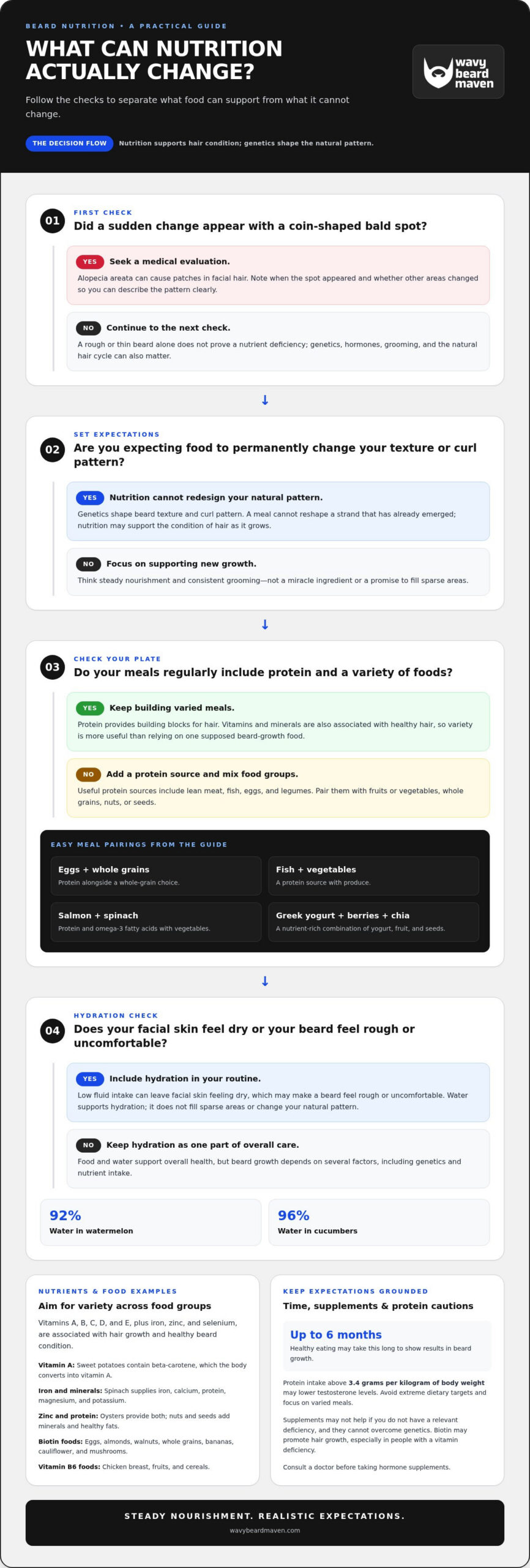
The question “Does diet affect beard texture?” has a practical answer: nutrition can support healthy hair, but genetics shape your beard’s natural pattern. Protein supplies building blocks for hair, while vitamins and minerals support hair growth. Eggs, fish, legumes, fruits, and vegetables offer a range of nutrients. A varied diet is more useful than relying on one food to make your beard grow.
Protein matters because inadequate intake can leave beard strands weak. Lean meat, fish, eggs, and legumes are useful sources. Vitamins A, C, and E, B and D vitamins, iron, and zinc are also associated with healthy hair. For example, pair eggs with whole grains or serve fish with vegetables. Sweet potatoes contain beta-carotene, which the body converts into vitamin A.
So, does diet affect beard texture as new hair grows? Nutrition may support the condition of growing hair, but it can’t permanently change the texture or curl pattern shaped by genetics. A meal won’t reshape a strand that has already emerged. Dryness and brittleness may also relate to grooming habits or other factors. Healthy eating may take six months to show results in beard growth.
Genetics and hormones also influence facial hair. A decrease in male sex hormones may lead to less hair growth, and stress can affect eating habits. Protein intake above 3.4 grams per kilogram of body weight may lower testosterone levels. Avoid extreme dietary targets; focus instead on varied meals that fit your routine.
Can diet change beard texture permanently or only as hair grows? Diet can support hair condition as it grows, but it can’t permanently change texture shaped by genetics. Treat nutrition as support for new growth, not a way to redesign your natural beard pattern.
What are the risks of taking supplements for beard growth? Supplements may not help beard growth if you don’t have a relevant deficiency, and they can’t overcome genetics. Biotin may promote hair growth, especially in people with a vitamin deficiency. Consult a doctor before taking hormone supplements.
When should changes in beard hair texture be evaluated by a doctor? Seek an evaluation if a sudden change appears alongside a coin-shaped bald spot. Alopecia areata can cause patches in facial hair. Note when the spot appeared and whether other areas changed, so you can describe the pattern clearly.
2. Hydration and hair health
Water supports skin and hair hydration, providing a foundation for beard care beyond what you eat. When fluid intake is low, facial skin can feel dry, which may make your beard feel rough or uncomfortable. Hydration supports overall health, while beard growth depends on several factors, including genetics and nutrient intake. Don’t expect water alone to fill sparse areas or change your natural beard pattern. Treat hydration as one part of a balanced routine, alongside varied meals and consistent grooming.
Choose foods that bring several useful nutrients to the plate. Salmon with spinach, for example, combines protein and omega-3 fatty acids with vegetables that provide minerals. Greek yogurt topped with berries and chia seeds offers another nutrient-rich meal. Chicken breast, fruits, and cereals provide vitamin B6, while eggs contribute protein and biotin. These examples make balanced eating practical: combine a protein source with produce, whole grains, or seeds instead of building meals around one supposed beard-growth food.
What foods support healthy beard hair? Choose lean meats, fish, eggs, legumes, fruits, vegetables, whole grains, nuts, and seeds. Salmon, spinach, berries, oats, and avocado each provide different nutrients associated with hair health, so variety matters more than repeating one food.
Vitamins A, B, C, D, and E, along with iron, zinc, and selenium, are associated with hair growth and healthy beard condition. Spinach supplies iron, calcium, protein, magnesium, and potassium. Sweet potatoes contain beta-carotene, which the body converts into vitamin A. Oysters provide zinc and protein, while nuts and seeds add minerals and healthy fats. Build a balanced diet across food groups instead of treating one vitamin or mineral as a standalone fix.
Healthy fats have a place in that mix. Avocado, nuts, and seeds provide fats, while salmon, flaxseeds, and chia seeds are sources of omega-3 fatty acids. Omega-3s may help reduce inflammation and support conditions associated with hair growth. Add chia seeds to yogurt or include fish with a meal; these straightforward choices bring fats alongside other nutrients. Brazil nuts are selenium-rich, so use food variety rather than relying on a single concentrated source.
Hydration and food work together as parts of overall health, not as instant beard-growth switches. Watermelon is 92% water, and cucumbers are composed of 96% water, making both examples of water-rich produce. Keep water accessible through the day, and include hydrating foods with meals. For a practical grooming routine alongside these habits, explore this beard-care routine guidance. A healthy beard reflects consistent care, nourishment, and the natural pattern set by your follicles.
4. Nutritional deficiencies and hair quality
A nutrient gap can limit the resources available for healthy hair, including beard hair. Protein is especially relevant because too little dietary protein can leave beard strands weak. Iron, zinc, and vitamins also play roles in hair health, so a limited diet may leave nutritional needs unmet. Don’t assume a rough or thin beard proves a deficiency. Texture and coverage can also reflect genetics, hormones, grooming, and the natural hair cycle.
Think of keratin as part of a hair strand’s structure, not a shortcut to fuller facial hair. Biotin-rich foods, including eggs, almonds, walnuts, whole grains, bananas, cauliflower, and mushrooms, contribute to the body’s keratin infrastructure. A varied plate can include eggs at breakfast, whole grains at lunch, and nuts as a snack. These foods provide nutrients, but they don’t guarantee a particular beard density or reshape hair that has already grown.
Collagen is another protein in the body, but claims about collagen supplements and beard growth call for caution. This does not establish that taking collagen will make facial hair grow thicker. Focus first on a balanced diet with protein, fruits, vegetables, and grains rather than treating one supplement as a complete plan.
Hair follicles produce strands through growth cycles, and different areas of the body follow different timelines. Scalp hair can remain in its growth phase for many years, while eyebrow and eyelash growth phases last only a few months. These comparisons show why hair changes aren’t always visible immediately. Facial hair also develops over time, so assess a routine by consistent changes rather than day-to-day differences.
Smoking and vaping are separate exposures from dietary deficiencies. If beard hair changes while your eating habits or tobacco or vape use also change, note the timing and details rather than assuming one caused the other. A simple record can include meals, new supplements, grooming products, and where texture or coverage changed. This gives you a clearer picture than focusing on one isolated strand.
For a practical food routine, build meals from several food groups instead of relying on a single “hair food.” Pair beans or eggs with whole grains, add spinach or berries, and include nuts or seeds. This approach provides a wider range of nutrients associated with hair health. A nutritious diet may support healthier, fuller beard hair as it grows, while genetics still influence your beard’s natural shape and density.
5. Biotin and vitamin B6 food sources
Biotin and vitamin B6 appear in familiar foods, making them practical parts of a varied eating pattern. Eggs provide biotin and protein; bananas, cauliflower, mushrooms, almonds, and walnuts also contain biotin. Chicken breast, fruit, and cereals are vitamin B6 sources. Rotate these options through meals instead of expecting one ingredient to stimulate new beard growth. Biotin may promote hair growth, particularly when a person has a deficiency; more biotin isn’t automatically better.
Try a simple meal-building approach. Add eggs and whole-grain toast at breakfast, chicken with vegetables at lunch, or almonds as a snack. A banana or mushrooms can add another biotin-containing choice, while chicken breast or cereal contributes vitamin B6. These foods provide more than one nutrient, so the aim is a balanced pattern rather than a single “beard food.” A diet with varied sources is a steadier foundation for growing hair than chasing a quick fix.
Leafy greens add another useful element to your plate. Spinach contains iron, calcium, protein, magnesium, and potassium, while the body converts beta-carotene in sweet potatoes into vitamin A. Add spinach to eggs or pair sweet potatoes with a protein source. Vitamins A, C, and E are associated with healthy hair growth. Berries, kiwi, and papaya are ways to include fruit alongside leafy vegetables. No single food supplies every nutrient.
Hair health involves more than biotin and B6. Protein, vitamins A, B, C, D, and E, iron, zinc, and selenium are associated with hair growth. Eggs contribute protein, biotin, calcium, iron, and zinc, while legumes add another option to meals. Oats, quinoa, and brown rice can round out the plate with whole grains. Combine food groups across the day instead of placing the full burden on supplements or one nutrient.
Keep expectations grounded in what nutrition can do. Biotin is most relevant to hair growth when a deficiency exists, and supplements can’t create beard growth when genetics don’t support it. Beard appearance also depends on natural growth patterns and hormones, so no food choice guarantees higher testosterone levels or fuller facial hair. Build meals around foods you can eat consistently, and let your overall eating pattern guide your choices.
Use a practical check at your next meal: include a protein food, a fruit or vegetable, and a whole grain or nuts. For example, eggs with spinach and whole-grain toast combine several foods associated with hair health. Another option is chicken, brown rice, and vegetables. This approach makes biotin and vitamin B6 part of a broader routine, while supporting balanced nutrition for hair as it grows.
5. Can protein deficiency make beard hair coarse or brittle?
Too little dietary protein can weaken beard strands, making breakage and a rough feel worth noticing. That doesn’t mean every coarse beard points to a protein deficiency. Natural texture, grooming habits, and dry facial hair can also affect how strands feel. Distinguish between the symptoms: brittle hair snaps or breaks more easily, while coarse hair feels rough. These clues can help you assess what your beard needs without treating texture alone as a diagnosis.
Protein supplies building blocks the body uses to maintain hair. If your meals regularly lack protein foods, your beard may not get the support it needs. Look at your usual eating pattern, not just one day: do your meals include fish, eggs, lean meat, or legumes? Beans with grains, or fish alongside vegetables, offer a practical starting point. Consistent food choices matter more than adding one high-protein meal after noticing a texture change.
More protein isn’t automatically better. Protein intake above 3.4 grams per kilogram of body weight may lower testosterone levels, and hormones influence facial hair growth. Avoid extreme targets designed to force a fuller beard. Instead, spread familiar protein sources across meals, such as eggs at breakfast, lentils at lunch, and fish at dinner. This steady approach supports overall nourishment without relying on excessive intake or a supplement marketed for beard growth.
Consider other contributors before blaming your diet. Frequent heat, harsh washing, and rough towel drying can leave beard hair dry or prone to breakage. Try a simple routine: wash gently, pat dry, and avoid pulling through knots. If your strands feel brittle after a grooming change, adjust that step and observe how your beard responds. Nutrition and daily handling can affect different parts of the same problem.
For a food check, write down what you eat over several typical days. Note protein sources at each meal, including eggs, fish, meat, or legumes, then look for gaps. A varied eating pattern is more useful than judging beard texture after one meal. Hair grows gradually, so changes in new growth won’t appear immediately. Keep the record alongside notes about washing and styling to spot patterns more clearly.
Beard oils and beard butters can help condition the hair and improve how it feels, but they don’t replace protein in your diet. Use them as grooming support, not as a nutritional fix. Choose beard oils and butters to complement gentle care while you build balanced meals with protein foods. If weakness or breakage persists alongside broader health changes, discuss those changes with a healthcare professional.
Wavy Beard Maven: Beard Oils
Wavy Beard Maven offers Beard Oils as a practical grooming option for a dry or rough-feeling beard. Nutrition supports hair as it grows, while beard oil fits into your day-to-day care routine. It doesn’t replace balanced meals or change the growth pattern shaped by genetics. Apply it as part of consistent beard maintenance, and use a Beard Brush to distribute grooming products through your hair.
Beard Butters and Beard Balms are other options for your beard-care routine. The right approach depends on what you want to address: nourishment through food, hydration, or managing your beard’s feel and appearance. Build your routine with intention, then keep it consistent.
Visit Wavy Beard Maven to explore beard-care guidance and products.
Make Your Next Beard-Care Move Count
If you’re still asking, “does diet affect beard texture?” turn that curiosity into a routine you can maintain. Notice how your beard feels after washing, how it responds to grooming, and which changes you make over time. Keep the process simple: adjust one habit at a time, then observe what suits your beard. This makes it easier to distinguish a grooming preference from a food choice without chasing dramatic transformations.
Nutrition is one part of beard care; daily maintenance is another. Beard Oils, Beard Butters, and a Beard Brush can help you build a grooming routine around the feel and appearance you want. Choose tools that fit your habits, and stay consistent rather than constantly switching approaches.
Ready to shape a routine that fits your beard? Contact Wavy Beard Maven to explore beard-care options. Keep learning, stay disciplined, and take pride in the process.
Frequently Asked Questions
How Does Diet Affect Beard Growth?
A balanced diet supports the body’s ability to grow and maintain beard hair, but it can’t determine your beard pattern on its own. If your meals often lack protein foods or vegetables, start by adding something like eggs, beans, or spinach. Look for sustained changes in your eating habits and beard condition rather than judging growth after one meal. Genetics and hormones also influence facial hair.
What Foods Can Stimulate Beard Growth?
No specific food can reliably switch on beard growth or overcome genetics. Instead, build meals with foods that supply nutrients associated with hair health, such as eggs with whole grains or fish with vegetables. Legumes provide another protein option, and fruit adds variety. These choices support nourishment as hair grows; they aren’t a guaranteed way to fill patchy areas or change your natural growth pattern.
What Factors Influence Beard Growth?
Genetics, hormones, nutrition, and age all help shape beard growth. Beard density and shape can continue evolving until around age 30, so a younger adult’s current pattern may still change. Your eating habits affect whether your body receives nutrients associated with hair health, while hormones influence facial hair development. Compare changes over time and note shifts in diet, grooming, or health rather than attributing every difference to one factor.
Can diet change beard texture or curliness?
Diet can support the quality of new beard hair, but it doesn’t permanently reset the texture or curl pattern shaped by genetics. So, does diet affect beard texture? It may influence hair condition, especially when nutrition is inadequate, but a meal won’t straighten curls or create a different natural pattern. If your beard feels rough, consider both your food habits and grooming practices, such as washing and drying.
Which nutrients affect beard hair growth and texture?
Protein, vitamins A, B, C, D, and E, plus iron, zinc, and selenium, are associated with hair health. Omega-3 fatty acids are also relevant to conditions that support hair growth. Rather than focusing on a single nutrient, combine different foods across meals. For instance, pair eggs or legumes with vegetables and whole grains, then include fish, nuts, or seeds in other meals.
Can dehydration or diet-related deficiencies make beard hair dry?
Inadequate hydration may contribute to beard dryness and discomfort, while nutrient gaps can affect hair quality. If your beard feels dry, consider whether you’re drinking water regularly and eating varied meals. Watermelon and cucumber are examples of water-rich foods; eggs, legumes, and vegetables provide different nutrients. Dryness can also relate to grooming, so consider whether your washing or drying habits changed alongside your diet.
Can hormones or genetics affect beard texture more than diet?
Genetics and hormones shape beard growth patterns, while diet mainly supports the resources available for healthy hair. Your natural curl, density, and coverage aren’t controlled by food alone. Hormonal changes can also affect facial hair growth, so don’t automatically blame a new pattern on nutrition. Keep meals balanced, and avoid taking hormone supplements without first consulting a doctor.