October 2, 2026
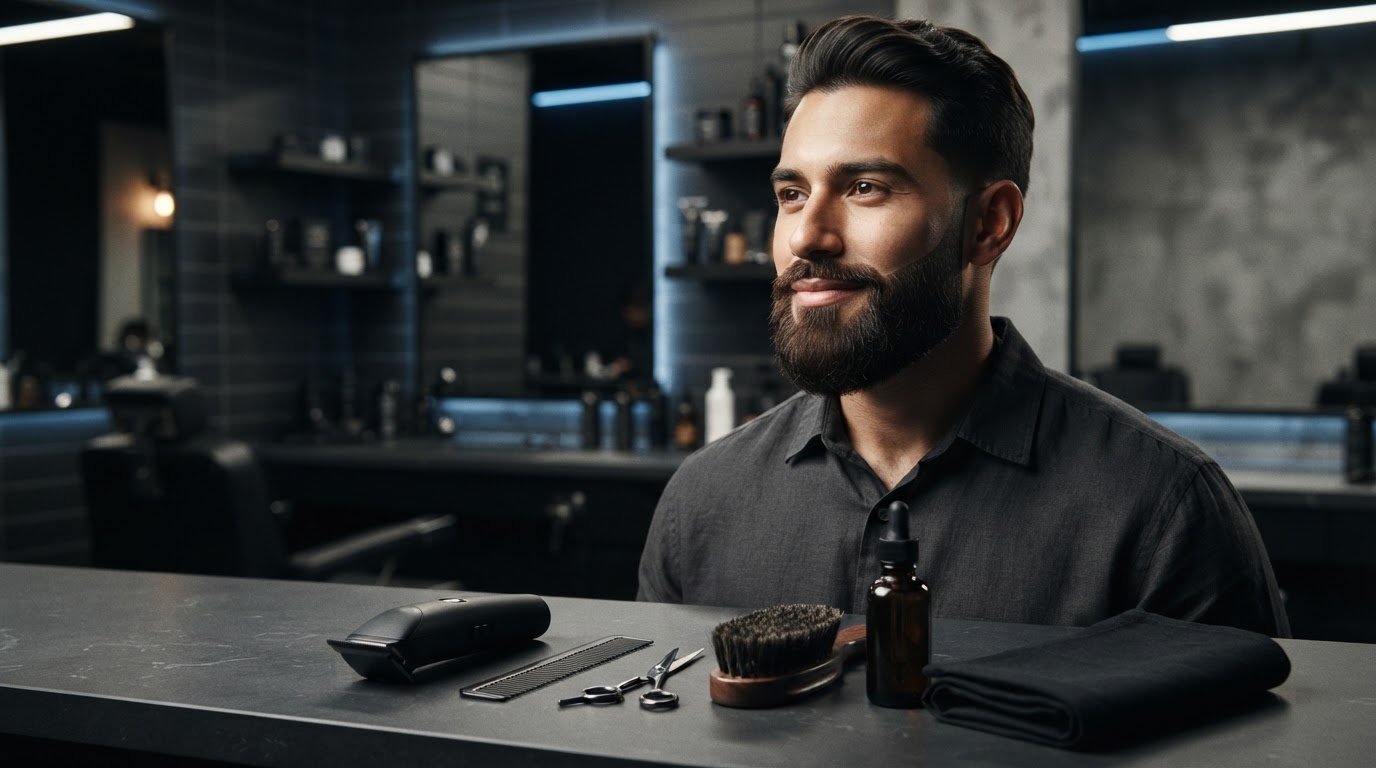
What if your beard doesn’t need to be shorter to look more professional? If you’ve wondered how to make my beard look more professional without giving up a style that feels like you, start with its shape, not its length. Even a clean beard can look untidy when the cheek and neckline have no clear boundaries or stray hairs disrupt the outline.
You don’t need a dramatic makeover or frequent trims to create a polished look. Choose a manageable shape that works with your face and growth pattern, then maintain it with a simple, repeatable routine.
This guide shows you how to set natural-looking boundaries, trim for balance, and choose a style that fits your day-to-day life. You’ll also learn how to build an easy upkeep routine with practical tools and finishing touches such as beard oil or balm. Small, consistent adjustments can make your beard look intentional while keeping your personal style intact.
Key Takeaways
- Learn how to make my beard look more professional by choosing a shape that suits your face, growth pattern, and preferred upkeep.
- Compare short stubble, a short boxed beard, and a fuller beard to find a look that fits your workplace expectations and personal style.
- Follow a practical at-home trimming sequence, from preparing your beard to checking the overall shape.
- Build a manageable maintenance routine to keep your beard’s outline looking deliberate as it grows.
What Makes a Beard Look Professional? Start With Intentional Grooming
A professional beard isn’t defined by one length or trend. It looks clean, deliberate, and maintained in a way that suits the person wearing it. If you’re asking how to make my beard look more professional, assess the outline and overall balance before assuming you need to cut it short.
A polished beard has a considered shape, tidy edges, and an even appearance that you maintain consistently. What looks considered depends on your growth pattern, facial proportions, preferred length, and workplace expectations. Facial hair also carries different styles and cultural meanings, so professionalism doesn’t require giving up what makes your look personal.
Clean edges and a balanced silhouette often make a stronger impression than copying a fashionable cut. Natural texture, uneven density, or areas that grow in different directions don’t automatically make a beard look unkempt. Work with the growth you have, keep the shape coherent, and avoid forcing identical lines or fullness where your beard doesn’t naturally provide them.
Workplace norms vary by role and employer. A relaxed office may welcome a range of beard lengths, while a setting with specific hygiene or safety expectations may have rules about facial hair or coverings. Review your workplace’s written guidance, then choose a shape that fits those expectations and feels comfortable. There is no single template for professional grooming.
Does a professional beard have to be short?
No. Short stubble, a shaped medium beard, and a fuller beard can all look intentional when their outlines and proportions are maintained. Length becomes distracting when it looks accidental, such as uneven patches left unshaped or edges that have grown beyond the chosen outline. Natural texture isn’t a flaw to correct. Choose a length you’re comfortable maintaining and that suits your setting.
Which grooming details create a polished first impression?
Check three visual cues: tidy outlines, balanced proportions, and a clean appearance. Look at whether the cheek and neck edges seem deliberate, whether one side appears noticeably fuller, and whether hairs around the mouth interrupt the shape. You don’t need a dramatic reshaping to improve these details. A light cleanup can bring definition while preserving your style.
Use this quick check before work or a professional event:
- Outline: Do the cheek and neckline look deliberate rather than overgrown?
- Balance: Does the overall shape look even from the front and sides?
- Finish: Is the beard clean, with stray hairs around the mouth and edges managed?
If one detail stands out, adjust that area rather than changing everything at once. A cared-for appearance comes from consistent upkeep, not one perfect trim.
How to Shape a Professional Beard Around Your Face and Growth
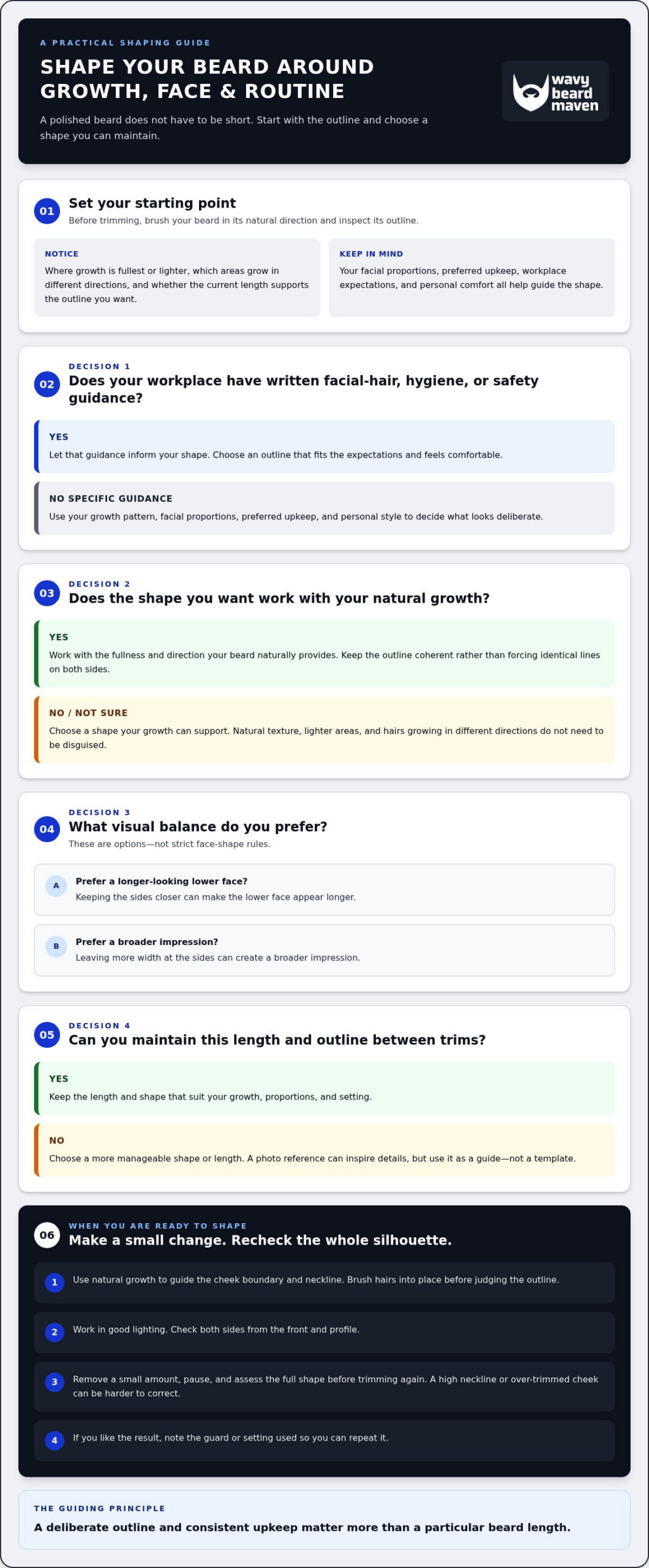
Start with what your facial hair can naturally support. Before trimming, note where growth is dense or sparse, how long the beard is, which areas grow in different directions, and how much upkeep you’re willing to do. A shape that looks sharp in a photo may need more daily attention than you want, or depend on fullness your growth pattern doesn’t provide.
Think of shaping as balancing proportions, not following strict face-shape rules. Keeping the sides closer can make the lower face appear longer, while leaving more width at the sides can create a broader impression. These are visual options, not requirements. Choose an outline that suits your features, works with your growth, and fits your routine and workplace.
How should you choose a beard shape for your face?
Brush your beard in its natural direction so you can see its outline and density before deciding what to change. Reference photos can help you identify features you like, such as fuller sides or a shorter chin, but use them as guides rather than templates. The CDC guidance on facial hairstyles illustrates varied styles in the context of respirator fit, a reminder that facial hair can be shaped in different ways for practical needs.
Use this checklist to narrow down a shape:
- Growth: Where is your beard naturally fullest, and where is it lighter?
- Length: Is your current length enough to create the outline you want?
- Proportion: Do you want to emphasize width, keep the sides close, or add visual length at the chin?
- Upkeep: Can you maintain the length and outline between trims?
- Setting: Does the shape fit your workplace expectations and personal comfort?
When you’re unsure, make a conservative change. Remove a small amount, step back, and assess the whole silhouette before trimming again. This leaves room to refine the shape without committing to a drastic change. Note the guard or setting you used if you want to repeat a result you like.
Where should you set your cheek line and neckline?
Use your natural growth as a guide rather than carving a line far above it. A consistent cheek boundary gives the upper edge a deliberate look. A neckline that follows your chosen shape helps the beard look even as it meets the throat. Brush the hairs into place before judging the outline. This beard brushing guide can help you direct facial hair consistently before shaping.
Work in good lighting and check both sides from the front and profile. Make a small adjustment, then pause to reassess. Over-trimming one cheek or setting the neckline too high can be harder to correct than leaving a little extra hair for another pass. Aim for a boundary that looks balanced on your face, not perfectly identical on both sides.
Explore practical beard-care guidance as you build a shaping routine around your growth and preferred style.
Professional Beard Styles Compared: Match the Look to Your Setting
No beard style is automatically professional. Short stubble can look sharp, and a fuller beard can look just as intentional when its shape is controlled. The right choice depends on your growth pattern, the time you can give upkeep, your comfort, and your workplace expectations. Use this comparison to narrow your options, then adapt the style to your own facial hair.
| Style | Visual impression | Upkeep | Workplace fit |
|---|---|---|---|
| Short stubble | Close, understated, and crisp when evenly trimmed | Needs regular trimming to keep the length consistent | Can suit settings where a subtle, low-profile look feels appropriate |
| Short boxed beard | Defined and structured, with visible shape around the cheeks and jaw | Requires attention to length and outline | Can work across a range of settings when the lines and proportions are maintained |
| Fuller beard | More coverage and presence, with room to show natural texture | Needs shaping to manage bulk, edges, and uneven ends | May suit workplaces that allow facial hair, provided it’s kept tidy and meets any relevant requirements |
These styles are starting points, not strict categories. Density and growth direction affect how each one looks on you. Sparse cheeks may make a boxed outline difficult to define, while a dense beard may need more shaping to keep a shorter silhouette from looking bulky. Workplace norms differ, so account for any specific expectations in your role before choosing a style.
Is stubble or a short beard easier to keep polished?
Stubble gives a close, crisp impression, but it can lose its even appearance as it grows. A short beard offers more length to define the jaw and outline, though it still needs consistent trimming. Neither is automatically easier or more formal. Choose the style whose upkeep you can realistically maintain rather than relying on assumptions about which length looks more professional.
Watch for an accidental in-between stage: one area grows longer while the rest stays close, or the outline becomes difficult to read. Decide on a target length and maintain the overall shape. If frequent trimming doesn’t fit your schedule, factor that in before choosing very short stubble.
Can a longer beard still look professional?
Yes. A fuller beard can look deliberate when its silhouette is shaped and its edges are maintained. Excess bulk, uneven ends, or flyaways can distract from the shape, so brush the beard into place and trim only what disrupts its outline. A small amount of beard balm can help control the finish. The beard balm hold and styling guide offers more detail.
To decide how to make my beard look more professional, compare styles based on your face, growth, setting, and upkeep rather than trends alone. Choose a shape you can repeat and maintain. A good fit matters more than chasing a look that doesn’t work with your natural density or daily routine.
How to Groom Your Beard at Home for a Neat, Even Finish
A controlled trim comes from working in stages, not trying to perfect every edge in one pass. Set aside enough time to check your work, and use clean, dry facial hair so its length is easier to judge. Remove less than you think you need. If you’re working out how to make my beard look more professional at home, a calm, repeatable sequence can help you refine the shape without rushing into an uneven cut.
What tools help with a controlled at-home trim?
A beard trimmer with guards helps reduce overall length evenly. A detail trimmer is useful for refining chosen edges and smaller areas, while grooming scissors let you snip individual hairs outside the shape. Keep tools clean and in good condition for more predictable passes. Before assessing uneven spots, brush your beard in its natural direction so hairs aren’t lifted or pushed across the outline.
How can you avoid over-trimming and uneven lines?
Start with a longer guard or the smallest adjustment, then check the result before removing more. Use steady lighting and a mirror. Take short passes instead of pressing hard or moving quickly, and compare both sides from the front and at an angle. If you’re unsure whether a side needs another correction, pause and reassess rather than trimming repeatedly until the outline shifts.
Follow this sequence without rushing:
- Prepare: Wash and fully dry your beard. Brush it in its natural direction, then check the shape from the front and both sides before trimming.
- Reduce bulk: Fit a longer guard and move the trimmer through the beard with light, even passes. Follow the direction of growth, then reassess before switching to a shorter guard.
- Clean the outline: Use a detail trimmer to tidy the edges you’ve already chosen. Make small, controlled movements around the cheek and neckline rather than carving a new boundary in one pass.
- Check symmetry: Step back from the mirror and compare the overall silhouette, not just one small patch. Turn your head to each side and look for uneven length or an outline that appears higher on one side.
- Finish: Use scissors for isolated stray hairs, then brush the beard back into place. If you use beard oil or balm, apply a modest amount for a neat, comfortable finish.
Pause between stages. Hair can look different once it’s brushed into place, and a second look may show that no more trimming is needed. Repeating a consistent technique also makes future touch-ups easier because you can see which guard and passes produced a shape you like.
Build a steady grooming routine with beard-care tools and essentials that support your at-home trim.
Maintain a Professional Beard With a Simple, Consistent Routine
A polished beard takes upkeep between trims, not just on grooming day. A quick daily check can catch hairs that have shifted out of place, while occasional reshaping keeps your chosen outline clear as the beard grows. You don’t need a complicated regimen. A few repeatable habits can help maintain the look you’ve created.
What should a simple beard-care routine include?
Keep the routine focused: cleanse regularly, dry your beard gently, brush it into place, and check for stray or uneven hairs. Washing with a dedicated beard shampoo two to three times a week can keep the beard clean without turning every day into a full grooming session. Adjust how often you wash to your routine and how your beard feels.
Use products to support the finish you want, not to add unnecessary steps. Beard oil can be part of your routine when you want the hair and skin to feel comfortable, while balm can offer light control when hairs need direction. Start with a small amount and adjust it to your beard’s length, texture, and feel. Too much product can weigh hair down or make the finish look heavy. For more on choosing and using oil, see this beard oil guide. The focus here is everyday beard care, not wave training.
Consistency matters more than a crowded shelf. A quick mirror check can tell you whether to brush the beard into place, smooth a flyaway, or leave it alone. Keep the routine simple enough to repeat, and change one habit at a time if the finish isn’t working for you.
When should you maintain your beard at home or reset its shape?
Check the cheek line, neckline, and overall balance as your beard grows. If those boundaries still look deliberate, a light touch-up may be enough. If the outline has blurred or the beard feels out of proportion, take time to reshape it instead of trimming by habit. Growth speed, length, and preferred style differ, so there’s no single schedule that suits everyone.
Before trimming, compare the current shape with the look you want to keep. A small cleanup can preserve the outline; a larger reset may make sense when several areas have grown unevenly. Avoid chasing every stray hair each day. Look at the whole beard first, and trim only when a change improves its overall shape.
That’s the practical answer to how to make my beard look more professional over time: follow a routine you can sustain, use products sparingly for a comfortable, controlled finish, and reshape when growth calls for it. Explore Wavy Beard Maven’s beard-care guidance to keep building a steady practice that fits your beard.
Make Your Next Grooming Move With Confidence
Your beard doesn’t need a complete overhaul to look more intentional. Pick one manageable adjustment, such as refining the outline or settling on a maintainable length, and give yourself time to see how it fits your style and daily life. That’s a practical way to answer how to make my beard look more professional without losing what makes the look yours.
Build on that progress with clear instruction and tools that support your routine. Wavy Beard Maven offers step-by-step beard-grooming education alongside beard oils, butters, brushes, balms, and wraps to help you care for and style your facial hair.
Explore Wavy Beard Maven’s beard-care guidance and grooming products to choose a practical next step for your routine. Make one adjustment, keep the habits that work, and wear your style with confidence.
Frequently Asked Questions
How often should I trim my beard to look professional?
Trim when growth starts to blur the shape you want, rather than following a fixed calendar. Growth speed, beard length, and how crisp you like the outline all affect timing. As part of your regular grooming, check the cheek line, neckline, and balance from the front. If only a few hairs look out of place, a light touch-up may be enough; save a fuller trim for when the overall shape needs it.
Can I have a beard at work and still look professional?
Yes. A beard can look professional at work when it suits the setting and is cared for. To decide how to make my beard look more professional without giving up my style, review your employer’s grooming guidance and any requirements tied to your role. Then choose a comfortable look you can maintain. A professional appearance doesn’t automatically mean shaving or keeping facial hair very short.
What should I tell a barber if I want a professional beard trim?
Plan the shape before trimming by deciding what length you want to keep and which areas need less bulk. For example, you might preserve chin length while reducing fullness at the sides, or keep the cheek edge natural rather than sharply defined. A reference photo can help you identify the features you like, but adapt the shape to your own growth. At home, use a longer guard first and make small adjustments as you assess the silhouette.
How can I make a patchy beard look more polished?
Shape around your beard’s strongest growth instead of trying to make every area equally dense. If the cheeks grow lighter than the chin, for example, avoid letting the chin dominate the silhouette. Brush the beard in its usual direction before judging its coverage. If you’re considering a shorter shape, make a small change first and live with the result before adjusting again.
Should I use beard oil or beard balm for a professional look?
Choose based on the finish you prefer: beard oil is commonly used in beard care, while balm can help give facial hair a more controlled, styled appearance. Start with a small amount, spread it evenly, and add more only if needed. If the beard looks heavy or greasy, use less next time. Products can support grooming, but they don’t replace cleaning and shaping.
How do I fix an uneven beard line after trimming?
Stop trimming and identify where the line looks uneven before making another change. Check whether the difference is at the cheek, neckline, or overall silhouette, then view it straight on and from each side. If correcting it would push the outline too far or remove more length than you want, let the beard grow before refining it. Avoid lowering both sides just to match one mistake.