October 14, 2026
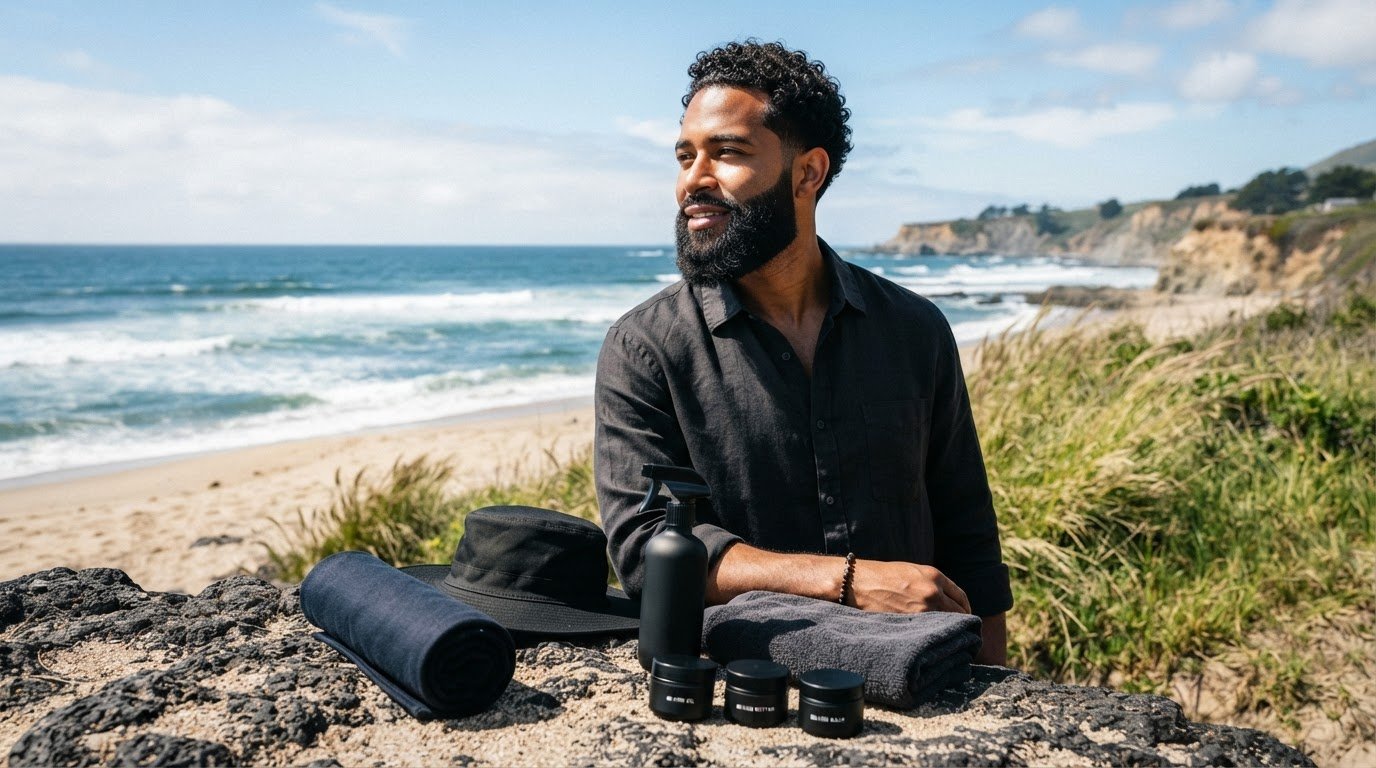
What does protecting your beard at the beach actually involve? Mostly, it means planning for saltwater, sun, wind, and sand, then rinsing and handling your beard gently afterward. Saltwater can leave beard hair feeling rough as it dries, while wind can shift hairs and sand can get caught near the skin. If you’re training your waves, a change in how your beard looks after swimming doesn’t automatically mean you’ve lost progress.
You don’t have to choose between enjoying the beach and keeping up your routine. Make the day easier with a few practical steps: use shade or comfortable headwear when it suits your plans, rinse with fresh water when you can, and keep your usual grooming products in their proper role. Beard oil, butter, and balm are grooming products, not waterproofing or sun protection.
This guide covers before, during, and after beach care, including how to rinse away salt and sand and return to your wave routine. If your beard looks different after a swim, start with a gentle reset rather than extra brushing or product. A temporary change in texture is a reason to care for your beard, not a reason to start over.
Key Takeaways
- Learn how saltwater, sun, wind, sand, and sweat can affect beard comfort and texture in different ways.
- Use shade, a hat, and freshwater rinsing where useful when protecting your beard at the beach.
- Know why beard oil and balm are grooming tools, not substitutes for sunscreen or waterproof protection.
- Follow a simple before, during, and after routine without adding unnecessary products or steps.
- Reset your usual wave routine after the beach. Temporary changes in shape or softness are manageable, not proof that you’ve lost progress.
What beach conditions can do to your beard and wave pattern
Beach beard protection is the practical management of sun, water, wind, sand, and sweat, not a promise that your beard will look exactly the same all day. Each can affect comfort and appearance differently. A beard that feels rough or looks less defined after the beach may need a rinse and a gentle reset, not a drastic change to your grooming routine.
Consider each exposure separately. Saltwater can leave residue as it dries. Wind can shift hairs and add tangles, especially when your beard is damp. Sand can cling near the skin and between hairs, so brushing before rinsing may feel uncomfortable. Sweat can collect beneath the beard and leave the skin feeling damp. These are practical reasons to rinse and handle your beard gently, not proof that a beach day has caused lasting damage.
How saltwater, sun, wind, and sand affect beard comfort
After swimming, dried salt residue may leave your beard feeling stiff or rough. Wind can push hairs out of their usual lay, and sand can make brushing uncomfortable until it’s rinsed away. Notice the difference between what you feel and what you can conclude: temporary dryness, tangling, or a messy shape doesn’t by itself show that the hair has changed permanently.
Sun exposure deserves attention too. Hair can be affected by environmental conditions, as the general overview of hair care practices explains, but a change in beard color or texture after one outing isn’t proof of UV damage. Protect your skin with shade, a hat, and sunscreen used according to its directions. Beard oil and balm are grooming products, not sunscreen or waterproof barriers.
Why a trained beard wave may feel different after swimming
Water temporarily changes how hairs sit together. Swimming adds movement, and drying can leave sections pointing or clumping differently from your usual pattern. Salt residue, wind, touching your beard, or towel-drying can also affect how defined the waves look. A different appearance right after the beach isn’t a reliable measure of your progress.
One beach day doesn’t replace the steady practice behind beard-wave training. Rinse away residue, dry without rough rubbing, and return to your usual routine once your beard feels comfortable. If you’re building consistency, the complete beard-wave training guide explains the longer-term process. Focus on repeatable habits, not a single post-swim mirror check.
That’s the useful mindset for protecting your beard at the beach: manage exposure where you can, respond gently afterward, and don’t mistake a temporary texture shift for a lasting setback.
What actually helps protect your beard at the beach?
Choose each step for the job it can do. Shade and suitable headwear help limit direct exposure; freshwater rinsing removes salt and sand; grooming products fit into your regular beard-care routine. No single step makes a beard immune to beach conditions, and adding more product doesn’t automatically offer more protection. A simple plan is easier to follow and keeps conditioning separate from sun care.
Physical coverage and facial-skin sun protection
Use shade when it’s available, and wear a hat that feels comfortable and offers practical coverage. These choices can limit direct sun reaching your face, but they don’t replace sunscreen on exposed skin. Beard hair and facial skin are different care targets: don’t assume facial hair shields all the skin beneath it, or that beard products protect either from UV exposure.
Apply sunscreen to exposed skin according to its label, including directions about use and reapplication. The FDA’s sunscreen guidance explains sunscreen as a product for helping protect skin from the sun. Conditioning can support beard grooming, but it isn’t sun protection unless a product is specifically labeled for that purpose. If you develop a persistent or concerning skin reaction, seek advice from a medical professional.
Where beard oil, butter, balm, and wraps fit
Beard oils, butters, and balms can be optional parts of your grooming routine, while a wrap can help manage your beard as part of styling. Use each according to its directions and what feels comfortable. None should be treated as waterproof or as a UV shield. In warm, humid conditions, using less or skipping a product may feel more comfortable than layering several products.
Keep the purpose of each step clear: freshwater rinsing addresses residue, physical coverage helps limit direct exposure, and grooming products support your usual care habits. A product that makes your beard feel softer doesn’t prove that it blocks sunlight or keeps saltwater from reaching the hair. For broader guidance on conditioning and wave texture, explore this beard oil guide for wave texture.
For protecting your beard at the beach, start with the practical basics: choose shade or a hat when it suits the day, use sunscreen on exposed skin as directed, and rinse your beard with fresh water when you can. Keep your product routine light and familiar instead of trying to build a barrier with extra layers. Wavy Beard Maven’s beard-wave grooming resources offer guidance for building those everyday habits.
The beach-care myth to leave behind: one swim will ruin your waves
One swim doesn’t automatically erase your beard waves or cause permanent wave loss. Your beard may look less defined or feel rough after swimming, but those observations alone don’t show that lasting damage has occurred. Water, salt residue, wind, and drying can all affect how hairs sit temporarily. Rinse your beard and handle it gently before deciding that your pattern has changed.
Repeated exposure and individual responses can differ. How your beard feels may depend on the conditions, how often you swim, and your usual grooming habits. Avoid both extremes: don’t assume every texture shift signals damage, and don’t ignore repeated discomfort. A change in feel or appearance after one swim isn’t, by itself, evidence of permanent harm to your beard or wave pattern.
Temporary texture changes versus reasons to adjust your routine
Salt residue can leave hair feeling rough, and damp hairs may tangle or dry in a different shape than usual. Treat those as cues to rinse and reassess, not as diagnoses. Use fresh water when practical, then gently pat or squeeze away excess moisture rather than rubbing hard. Wait until your beard is clean and settled before judging how your waves sit.
If the same irritation keeps returning, or you notice pain or unusual skin symptoms, seek medical advice. Don’t try to solve persistent skin discomfort by repeatedly adding grooming products or brushing more firmly. A medical professional can help you address ongoing symptoms rather than guessing at the cause.
How to keep beach care simple without over-grooming
Keep your beach-day priorities practical: find shade when you can, rinse with fresh water when it’s available, and choose grooming steps that feel comfortable. You don’t need to force your beard into its usual shape while it’s still wet, salty, or being pushed around by wind. Give it a gentle reset first.
Avoid brushing aggressively to chase an immediate wave pattern. Pulling at tangles or repeatedly reshaping damp hair can add frustration without telling you whether your routine is working. Likewise, don’t pile on oil, butter, or balm just because your beard looks different in the moment. Use grooming products as you normally would and follow their directions.
Consistency is built across your routine, not proved by perfect styling after every swim. Once you’ve rinsed and handled your beard gently, return to your usual wave-training habits. That’s the grounded approach to protecting your beard at the beach: respond to what you notice, avoid overcorrecting, and don’t use one day’s texture as a measure of your progress.
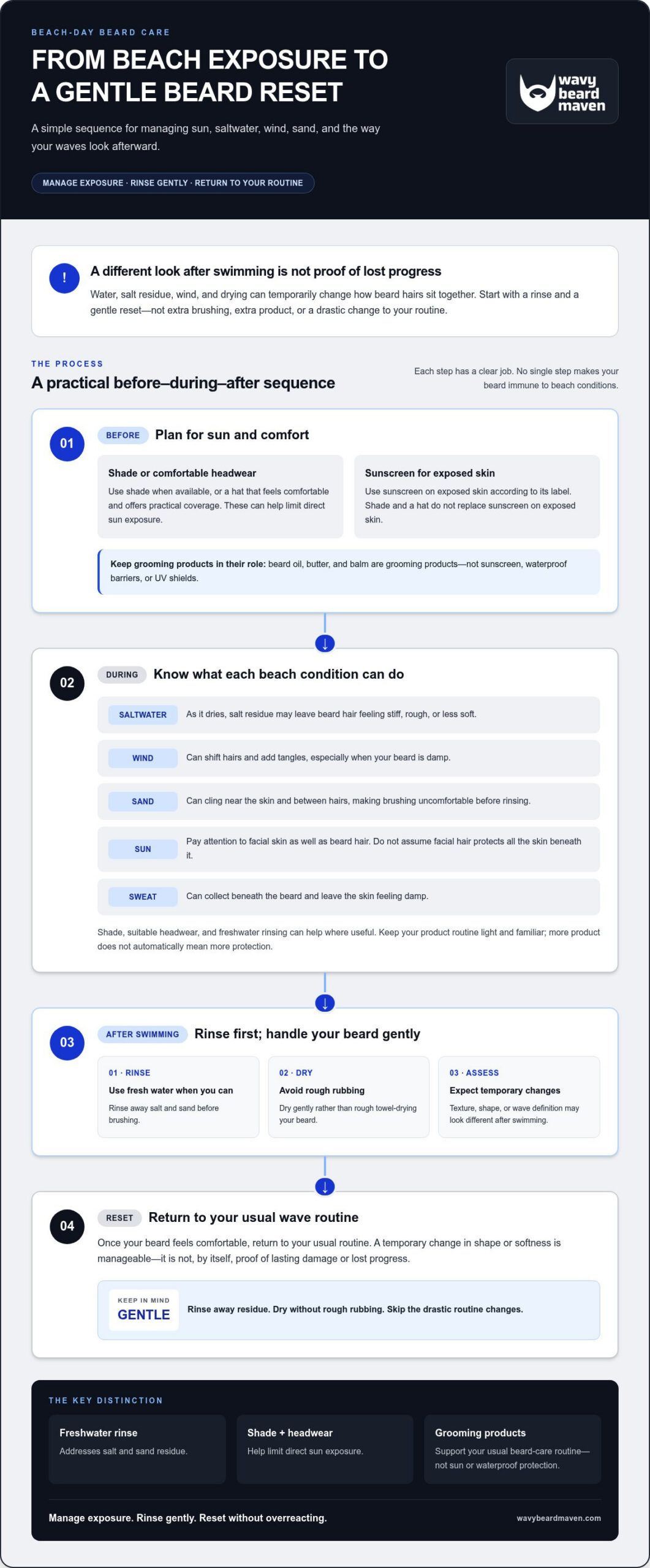
How to protect your beard at the beach: a before-during-after routine
A useful beach routine should be easy to follow, not another grooming project. Focus on comfort, practical coverage, and rinsing when you can. Keep optional products optional. This sequence gives you a straightforward plan for the day and makes it easier to return to your regular wave habits afterward.
Before and during beach time
Start with a comfortable, tidy beard. Skip elaborate styling or extra product layers that may feel heavy in the heat. Plan how you’ll rinse after swimming, whether that means bringing fresh water or using a convenient rinse when one is available. Choose shade and suitable headwear when they fit your plans, and use sunscreen on exposed skin according to its label. Beard oils, balms, butters, and wraps are grooming tools, not sunscreen or swimming protection.
- Before you leave, keep grooming familiar. Brush or shape your beard as you normally would. Use a familiar product only as directed and if it feels comfortable. There’s no need to add extra layers for the beach.
- Plan a simple rinse. If practical, bring fresh water or plan a convenient way to rinse after swimming. A rinse doesn’t need to turn into a full wash routine.
- Choose coverage for comfort. Take advantage of shade and wear headwear that suits the activity. Continue your usual sun-care steps for exposed facial skin.
- During the day, respond to what you notice. If your beard collects sand or feels uncomfortable after swimming, rinse with fresh water when available. Avoid forceful brushing or repeated styling while it’s wet.
After swimming: rinse, dry gently, and reset
Once you’re out of the water, rinse your beard with fresh water when available. Let the water run through the hair and around the skin beneath it, then gently pat or squeeze away excess moisture. Air-drying is another option. The aim is to remove surface residue without rough towel friction or a complicated recovery routine.
- Rinse first. Clear away salt, sand, or other residue before adding grooming products.
- Dry without tugging. Pat gently, and ease apart tangles rather than pulling through them.
- Return to your usual care. If your beard feels ready for it, use your familiar oil, butter, or balm according to its directions and your comfort. Don’t add product just to force an immediate wave pattern.
- Resume your normal wave habits. Brush and use compression as you usually do, without turning the beach reset into a second full training session.
That’s the practical rhythm for protecting your beard at the beach: prepare simply, make sensible choices during the day, and reset gently afterward. The 7-Day Beard Wave Starter Routine™ Checklist can help you build consistency into your regular routine.
Bring your beard-wave routine back after a day at the beach
Once you’ve rinsed away beach residue and dried your beard gently, return to your established wave routine. You don’t need to make up for the day with extra brushing, more product, or repeated compression. Let comfort guide the reset: if your beard still feels gritty or your skin feels irritated, handle it minimally and give it another gentle rinse before resuming your usual grooming.
A simple reset for the next grooming session
Wait until your beard feels comfortable before brushing or using compression. Then follow the steps you already know at your normal pace. If brushing is part of your routine, use a light hand and work through the beard without forcing tangles. The beard brush and wave-pattern guide offers focused brushing guidance without turning this beach reset into a new training plan.
Keep the next session familiar. If you usually groom once, don’t add extra sessions just because your waves looked different after swimming. Temporary changes in shape or softness aren’t a scorecard for your progress. Notice how your beard feels after rinsing and drying, then make only the adjustments your normal routine calls for.
Pay attention to persistent dryness or irritation, but don’t try to diagnose the cause from appearance alone. If discomfort continues or concerns you, seek medical advice. Your grooming routine can support care and consistency, but it shouldn’t replace professional guidance for ongoing skin symptoms.
Keep the routine consistent beyond beach season
Wave training is built through repeatable habits over time, not perfect styling after every outing. Keep the steps manageable: return to your regular brushing and compression practices, use familiar grooming products according to their directions, and adjust only when comfort calls for it. A steady approach helps keep beach care in perspective instead of letting one day dictate a full routine change.
If you’re building a consistent foundation, Wavy Beard Maven’s free 7-Day Beard Wave Starter Routine™ Checklist provides a structured starting routine. It’s an educational resource, not a promise that beach exposure or temporary texture changes will be prevented. Use it as a guide for everyday discipline, then tailor your grooming to what feels right for your beard.
Protecting your beard at the beach is part of maintaining a routine, not a reason to start over. After rinsing and drying gently, return to your regular habits and let consistency do its work.
Carry your wave routine forward with confidence
Let beach days be part of your life, not a test your beard has to pass. The skill is building a routine you can return to, even when your texture shifts or your schedule changes. That steady mindset makes protecting your beard at the beach manageable without turning grooming into a source of stress.
Wavy Beard Maven offers beard-wave education and the free 7-Day Beard Wave Starter Routine™ Checklist to help you build consistent habits. Use these resources as a guide, then keep refining a routine that works for you.
Explore Wavy Beard Maven’s beard-wave guides and grooming resources to find practical guidance for your routine and next steps.
Frequently Asked Questions
Should I wash my beard immediately after going to the beach?
You don’t necessarily need to shampoo your beard as soon as you leave the beach, but rinse it with fresh water when you can, especially after swimming or getting sand in it. Use a beard wash or cleanser if it fits your normal washing schedule or residue remains. If you’re making a quick stop before heading home, a thorough rinse is a practical first step. Avoid scrubbing just to make your beard feel completely clean.
Can I use regular shampoo on my beard after swimming?
You can use regular shampoo if it’s what you have available, but follow its directions and pay attention to how your beard and skin respond. Use a modest amount, rinse thoroughly, and avoid getting it in your eyes. If your face feels uncomfortable afterward, stop using that shampoo on your beard and return to a product that suits your usual grooming routine. Shampoo formulas vary, so don’t assume they’ll all feel the same.
Does sunscreen protect beard hair from the sun?
Sunscreen is intended to protect skin when used as directed, not to condition or style beard hair. Apply it to exposed facial skin according to the product label, and don’t assume hair-care products provide sun protection unless their labeling specifically says so. If you’re unsure how to apply sunscreen around facial hair, follow its directions or ask a healthcare professional. Shade and headwear are additional practical choices.
Can I wear a beard wrap while swimming?
A beard wrap is a grooming tool, not automatically swim equipment. Don’t wear one in the water unless its own instructions specifically say it’s suitable for swimming. If you use a wrap as part of your regular wave routine, keep it dry during beach time and put it on afterward only when your beard is clean and comfortable. Avoid tying or compressing it tightly to hold a wet beard in place.
What should I do if sand gets stuck in my beard?
Rinse the area with fresh water before brushing, since dry grains can feel scratchy against the skin and catch between hairs. Use your fingertips to loosen any remaining particles gently, then rinse again. Check around the beard line and beneath the chin, where sand may be less visible. If grains remain tangled, don’t yank at them. Add water and work slowly until they release.
How should I care for my beard during a multi-day beach trip?
Keep a repeatable routine rather than washing and restyling after every swim. Rinse with fresh water when practical, wash according to your usual schedule, and pack only grooming items you already know feel comfortable. Keep your brush clean and away from loose sand. For protecting your beard at the beach over several days, maintain your usual wave habits without adding extra sessions to compensate for changing texture.
Can I apply beard oil to a wet beard after swimming?
You can apply beard oil to a damp beard if the product directions allow it, but rinse away salt or sand first. Gently squeeze or pat out excess water so your beard isn’t dripping, then use the amount directed on the label. Start with less if you’re unsure how it will feel in warm weather. Oil is a grooming step, not a way to waterproof hair or protect skin from the sun.