September 17, 2026

Your beard isn’t just a collection of facial hair; it’s a statement of your personal discipline and a reflection of your identity. Most men assume that growing a great beard is a matter of luck or genetics, but the truth is that elite grooming is a skill you must earn. Mastering beard care for beginners in 2026 requires moving past the myth of the “natural” look and embracing a systematic approach to texture and skin health. If you’re currently battling itchy, dry skin or staring at patchy growth in the mirror, you aren’t failing. You simply haven’t been given the right blueprint yet.
It’s frustrating to invest weeks into growth only to end up with an unruly, scruffy mess that lacks direction. We’ve all felt that urge to shave it off when the itch becomes unbearable or the hair refuses to lay flat. This guide promises to change that by handing you the foundational habits and specialized wave techniques needed to transform your facial hair into a disciplined, wavy masterpiece. We’ll break down the “skin-ification” of grooming, the power of compression wraps, and the exact tools required to define your pattern. You’re about to transition from a random growth phase into a structured routine that builds both a soft, healthy beard and lasting confidence.
Key Takeaways
- Learn how to shift from passive growth to intentional texture training to unlock your beard’s elite potential.
- Discover the essential toolkit for beard care for beginners, focusing on the three pillars of hydration, training, and compression.
- Master the “Wash-Hydrate-Brush-Compress” cycle to build a consistent daily routine that defines your wave pattern.
- Identify immediate solutions for common hurdles like skin irritation and patchy growth using targeted oils and directional brushing.
- Understand how maintaining a disciplined grooming routine fosters long-term results and increases your overall personal confidence.
What is Beginner Beard Care? Shifting from Growth to Mastery
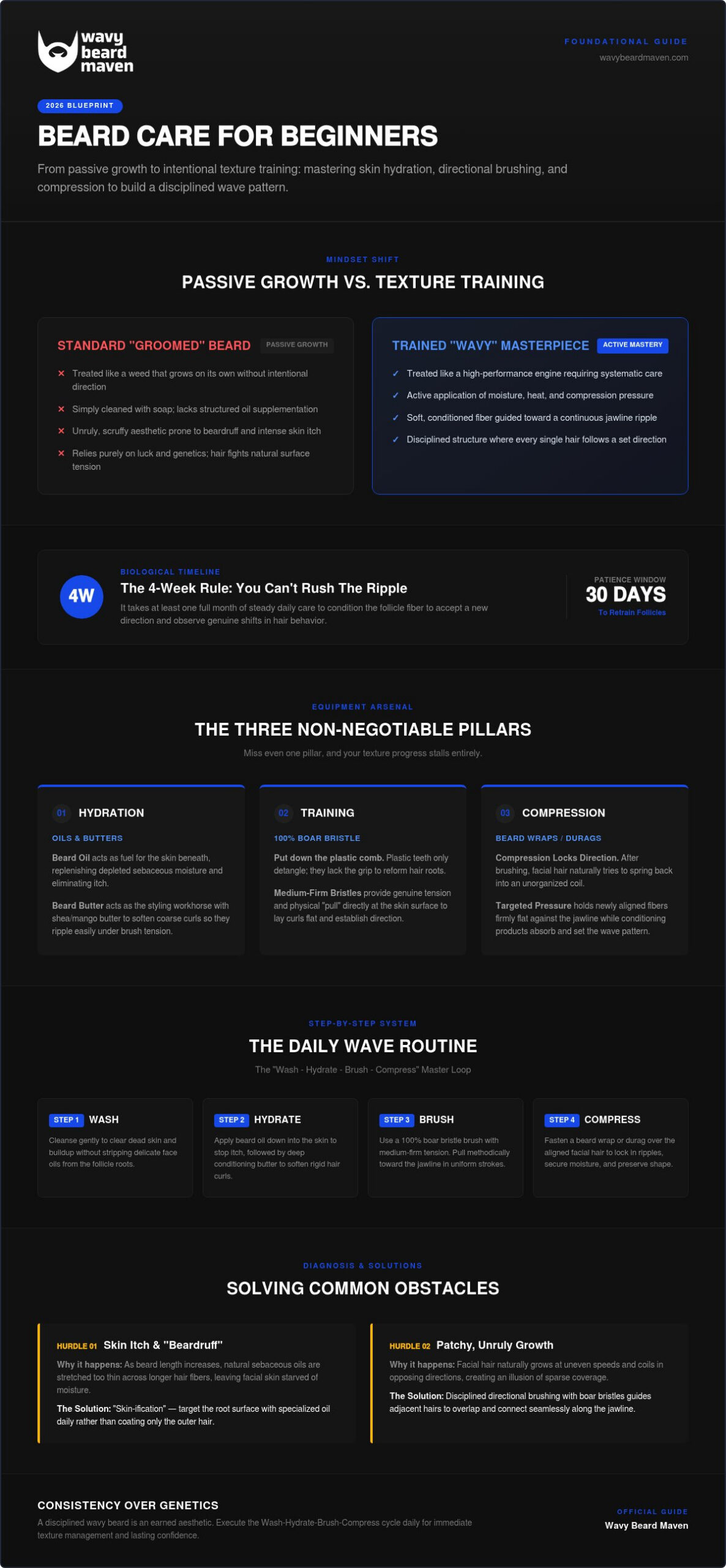
What exactly is beard care for beginners? It isn’t just the act of putting down the razor and seeing what happens. Real mastery begins when you shift your focus from passive growth to active, intentional management of both your skin health and hair texture. Most men treat their facial hair like a weed that grows on its own. If you want a masterpiece, you have to treat it like a high-performance engine that requires specific, systematic maintenance. This transition from “letting it grow” to “training the flow” marks the difference between a scruffy face and a disciplined aesthetic.
Establish this mindset early. You don’t get a wavy, defined beard by luck or genetics alone. Aesthetic results are earned through daily dedication and persistence. In the modern grooming movement, we view this process as a cultural practice. It is a way to reclaim your appearance and project a sense of order. Understanding the fundamentals of facial hair growth and biology is the first step toward this level of specialized knowledge. When you respect the craft, the craft respects you back.
Why Your Beard Care Journey Starts at the Root
Your hair is only as healthy as the skin it grows from. Your face produces natural sebaceous oils to keep things hydrated, but as your beard gets longer, those oils get stretched thin. This is exactly why beginners often quit during the first few weeks. “The itch” isn’t a sign your beard is bad; it’s a signal that your skin is starving for moisture. If you don’t supplement those natural oils, your skin becomes dry and flaky, leading to the dreaded “beardruff.” Beard training is the consistent application of moisture, heat, and pressure to dictate how your hair sits. By focusing on the root, you create the foundation for a soft, manageable texture that responds to training rather than fighting it.
Setting Realistic Expectations for 2026
You can’t rush the ripple. As you explore beard care for beginners, remember that you aren’t just growing hair; you’re conditioning the fiber to accept a new direction. In the 2026 grooming landscape, we focus on the 4-week rule. It takes at least a full month of consistent care to see genuine changes in your hair’s texture and behavior. Before you start training, you must observe your natural hair pattern. Do your curls move in a specific direction? Are there patches that need more volume? Understanding these traits allows you to work with your body rather than against it. There’s a massive difference between a “groomed” beard and a “trained” wavy beard. A groomed beard is simply clean. A trained beard is a disciplined structure where every hair follows a specific, rippling direction toward the jawline. Mastery takes time, but the confidence you gain from the process is immediate.
The Essential Beginner Toolkit for Wave Definition
To achieve a wavy masterpiece, you need more than just a sink and a prayer. You need an arsenal. We categorize the essential toolkit into three non-negotiable pillars: Hydration, Training, and Compression. If you miss even one of these, your progress will stall. Professional beard care for beginners is about precision. It’s about selecting tools that work in harmony to retrain your hair’s natural direction. This systematic approach ensures that every minute you spend grooming contributes to a disciplined, rippling aesthetic.
Hydration Heroes: Oils and Butters
Think of your beard oil as fuel for your skin. It prevents the itch and provides the foundation for healthy growth. Beard butter, however, is your styling workhorse. It contains deep conditioning agents like shea or mango butter to soften coarse curls so they can ripple under brush tension. Following dermatologist tips for a healthy beard is vital for maintaining skin integrity under your facial hair while you build your routine. You want products that offer hold without heavy buildup. This allows for maximum wave connectivity across the jawline. Learn how beard oil masters texture and definition to ensure your hydration game is on point from day one.
Training Tools: Brushes vs. Combs
Put down the plastic comb. If you want waves, you need a 100% boar bristle beard brush. Plastic teeth simply detangle; boar bristles actually pull and lay the hair down. This tension is what trains the follicle root over time. Brush density matters. A medium-firm brush provides the necessary “pull” to reach the skin and define deep patterns without causing irritation. Master the art of brushing for 360 waves to understand the specific angles required for elite results. Effective beard care for beginners relies on this consistent directional pressure to transform unruly hair into a structured flow.
The Power of Compression
The final pillar is compression. This is where most beginners fail. After you’ve hydrated and brushed, you must lock that pattern in. Beard wraps are designed to keep your hair laid flat while you sleep or rest. Without compression, your hair will frizz and lose its shape the moment you hit the pillow. It’s the secret weapon for waking up with a disciplined, rippling texture that stays in place all day. You can browse our specialized gear to find the wraps and brushes needed to secure your progress and maintain your wave pattern through the night.
Step-by-Step: The Daily Beginner Beard Routine
A disciplined routine is the engine that drives your results. Effective beard care for beginners isn’t a random collection of habits; it is a systematic cycle of Wash-Hydrate-Brush-Compress. By following this chronological blueprint, you ensure that every minute spent in front of the mirror contributes to long-term texture training. This process moves beyond basic hygiene to actively dictate how your hair grows and flows. Consistency is the only path to a wavy masterpiece.
Mastering the concept of “damp training” is a game changer for your texture. Always apply your products to a slightly wet beard. Water acts as a carrier, helping your oils and butters penetrate the hair shaft more effectively. Once your products are applied, use the “hand-laying” technique. Simply use your palms to smooth down your hair in the direction of your waves. This manual pressure helps seal the cuticle and eliminates flyaways before they have a chance to ruin your pattern.
The Morning Session: Wake and Wave
Your day begins with a gentle cleanse to remove overnight buildup and sweat. Avoid harsh soaps that strip your natural oils. Instead, use a specialized wash that respects your skin’s balance. Understanding the causes of beard itch and irritation is essential here, as proper cleansing prevents the bacterial growth that leads to discomfort. After washing, pat your beard with a towel until it is damp, not dripping wet.
Apply your beard oil directly to the skin beneath the hair. This step is non-negotiable for maintaining hydration at the root and preventing dryness. Follow this with a dedicated 10-minute brush session. Angles matter more than speed. Move your boar bristle brush at a consistent 45-degree angle toward your chin to reinforce your wave pattern. This consistent directional pressure is what truly separates a master from a novice in the world of beard care for beginners.
The Evening Lockdown: Protection and Growth
Nighttime is for recovery and deep conditioning. Before bed, apply a generous amount of beard butter to your hair. Unlike oil, butter provides a thicker layer of protection that softens coarse curls while you sleep. This makes the hair more pliable for the next day’s training session. It’s the ultimate way to ensure your hair remains healthy, soft, and responsive to the brush.
The final, critical step is the lockdown. You must secure a beard wrap to maintain your pattern while you sleep. Without this layer of compression, your hair will frizz and lose its direction the moment your face hits the pillow. It keeps your waves laid flat and protects them from friction. Check out the ultimate guide to beard compression and wraps to learn the best tying techniques for maximum overnight security.
Troubleshooting: Solving the Most Common Beginner Hurdles
Every journey has its obstacles. In the world of beard care for beginners, these hurdles often lead men to give up right before they hit their stride. You must view these challenges as technical problems with logical solutions. Whether it’s a persistent itch or a pattern that refuses to connect, your success depends on your ability to troubleshoot with discipline. Results aren’t a matter of luck. They are the product of consistent adjustments and specialized knowledge.
Defeating Beardruff and Irritation
Is your skin flaking or just recovering from product buildup? You need to identify the difference. Beardruff is usually a result of neglected skin, whereas buildup comes from over-applying heavy balms without proper washing. Consistent brushing acts as a natural exfoliant. It clears dead cells and allows your skin to breathe. Beard itch is usually a sign of dehydrated skin, not hair growth issues. By applying beard oil daily to the skin beneath the hair, you eliminate the irritation and keep the foundation healthy. If you want to stay on track, grab our 7-Day Beard Wave Starter Routine™ Checklist to ensure you never miss a hydration step.
Don’t let the “patchy phase” derail your progress. Most men assume their growth is insufficient when, in reality, they simply aren’t managing their hair distribution. Use your boar bristle brush to sweep longer hairs over thinner areas. This directional training creates the illusion of fullness while your slower follicles catch up. It’s about strategic management. You are training the hair to cover the canvas evenly.
Correcting Pattern Inconsistencies
What do you do when your waves aren’t connecting? Start by identifying your “weak spots.” These are the areas where the ripple breaks or loses its flow. This usually happens because your brush angles are inconsistent. You must adjust your stroke to force connectivity between the jawline and the chin. Ensure you are brushing in the exact same direction every single day. Patience is the most important tool in your beginner kit. Patterns don’t appear overnight. They are forged through weeks of repetition and mental discipline.
Managing the “wolfing” phase is another critical skill. Wolfing is the practice of letting your beard grow longer than usual to build deeper texture. You must resist the urge to trim too early. Let the hair gain enough bulk so the waves have enough material to form. Only trim the flyaways that disrupt the silhouette. This extra length provides the depth required for a high-definition ripple. By staying disciplined during this phase, you allow your texture to reach its elite potential.
The Wavy Beard Movement: Staying Disciplined for Long-Term Results
Transitioning from a beginner to a dedicated waver requires a fundamental shift in perspective. You’ve moved past the initial itch and the unruly growth phase; now, you’re focused on the refinement of your pattern. This level of grooming discipline is a cultural practice that fosters pride and a shared sense of identity. When you master your appearance through a systematic approach, that sense of order translates directly into broader personal confidence. You aren’t just maintaining a style. You’re projecting self-respect and precision to the world. By embracing beard care for beginners as a lifestyle rather than a chore, you join a movement of men who value earned results over luck.
Tracking Your Progress
How do you stay motivated when the ripples feel like they’re forming in slow motion? You must document the journey. Take weekly progress photos from the same angles and under the same lighting. These visual receipts prove that your daily brush sessions are working, even when you can’t see the micro-changes in the mirror every morning. You’ll know you’ve graduated from beginner techniques when your hair stays laid and organized without constant intervention. Once you’ve mastered the basics, set your next elite goal: achieving 360-degree wave connectivity. This is the point where your pattern flows seamlessly from your sideburns across the jawline to the chin without a single break in the flow.
Your First 7 Days of Mastery
The next week is critical for cementing your new habits. You need to move from theory to execution with military precision. This is the foundation of the Wavy Beard Maven community, a shared movement of practitioners dedicated to technical expertise and cultural expression. We value consistency above all else because aesthetic mastery is a result of repetition. To ensure your success over the next week, follow these immediate steps:
- Audit your toolkit to ensure you have high-performance beard oils, butters, and a 100% boar bristle brush.
- Execute the Wash-Hydrate-Brush-Compress cycle twice daily without exception.
- Commit to a minimum of 10 minutes of directional brushing per session to train the follicle roots.
- Secure your beard wrap every night to protect your progress while you sleep.
To accelerate your results and refine your technique, follow the complete 2026 training guide to get waves for a deep dive into advanced brushing angles. This resource is designed to take you beyond the basics and into the realm of professional texture management. As your final command, download the 7-Day Beard Wave Starter Routine™ Checklist. It serves as your daily roadmap, ensuring every aspect of your beard care for beginners journey is handled with discipline. Start your journey with a structured plan today and earn the masterpiece your beard was meant to be.
Master Your Texture and Claim Your Confidence
Success in grooming isn’t a matter of luck; it’s the result of a disciplined system. You now have the blueprint to move beyond the scruffy phase and into the realm of intentional texture training. By mastering the cycle of hydration, directional brushing, and overnight compression, you’ve established the foundation for a rippling masterpiece. This shift from passive growth to active mastery is the core of effective beard care for beginners in 2026. You’re no longer just letting it grow; you’re training the flow.
Now is the time to turn this knowledge into action. Join a community dedicated to the art of the wavy beard and access expert-led instruction for all hair textures. Our mastery-focused grooming tools are designed to support your journey every step of the way. To ensure your first week is a success, Download the Free 7-Day Beard Wave Starter Routine™ Checklist and start your progression today. Consistency is your greatest asset. Stay dedicated to the routine, trust the process, and watch as your discipline reveals your beard’s elite potential.
Frequently Asked Questions
How often should a beginner wash their beard?
You should wash your beard two to three times per week using a dedicated beard wash. Standard shampoos contain harsh sulfates that strip away the natural sebum your skin needs to stay healthy. For those just starting beard care for beginners, daily rinsing with lukewarm water is fine; however, you must limit full cleansing to avoid dryness. If you work in a dusty environment, you may need to wash more frequently to prevent buildup from clogging your follicles.
Do I really need a beard wrap to get waves?
Yes, a beard wrap is a non-negotiable tool for anyone serious about wave definition. Compression is the final step in the training process that locks your pattern in place. Without it, your hair will naturally frizz and lose its directional flow while you sleep or go about your day. Think of the wrap as a mold for your beard. It ensures that the time you spend brushing translates into lasting results rather than temporary styling.
Can any beard texture develop waves?
Most curly and coarse hair textures can develop visible wave patterns through consistent training. The ripple effect is essentially a curl that has been elongated and laid flat through moisture and pressure. If your hair has a natural bend or curl, you have the foundation for waves. Straight hair types may struggle to achieve deep definition, but any man can use these techniques to create a more disciplined, organized flow across his jawline using directional brushing.
What is the difference between beard oil and beard balm for beginners?
Beard oil is a liquid hydrator designed primarily to nourish the skin beneath your hair and prevent irritation. It acts as the foundation for your routine. Beard balm is a thicker styling agent that contains wax to provide hold and structure. While oil absorbs quickly to stop the itch, balm sits on the hair to tame flyaways and keep your waves connected. Using both ensures your skin stays healthy while your style remains disciplined and orderly.
How long should I brush my beard every day?
You should commit to at least ten to fifteen minutes of focused brushing twice a day. Effective beard care for beginners relies on consistent directional pressure to retrain the hair roots. Don’t just brush aimlessly. Use a 100% boar bristle brush and follow a specific pattern toward your chin. This repetition is what creates the “memory” in your hair fibers, allowing the wave pattern to become more pronounced and permanent over several weeks of mental discipline.
Is it normal for my beard to itch when I first start taking care of it?
It is completely normal to experience some itching during the early stages of growth and care. This discomfort is usually a signal that your skin is dehydrated or that new hairs are curling back toward the face. You can cure this immediately by applying high-quality beard oil to the skin. The oil supplements your natural sebum and softens the hair, allowing you to push through the itchy phase without reaching for the razor or losing focus.
When is the best time to apply beard products?
The best time to apply your products is immediately after a shower while your beard is still slightly damp. Your hair cuticles are open and more receptive to moisture when they are warm and wet. Pat your face with a towel until it isn’t dripping, then apply your oil and butter. This damp training method ensures maximum absorption and makes the hair more pliable for your subsequent brush session and the critical compression lockdown that follows.
Can I use hair products on my beard?
You should never use standard scalp hair products on your face. The skin on your jawline is much more sensitive than your scalp; furthermore, facial hair has a different, coarser texture. Scalp shampoos and conditioners often contain aggressive chemicals that cause breakouts or severe dryness under your beard. Stick to specialized beard oils, butters, and balms that are formulated to be non-comedogenic and supportive of your specific facial hair biology and skin health.