September 11, 2026
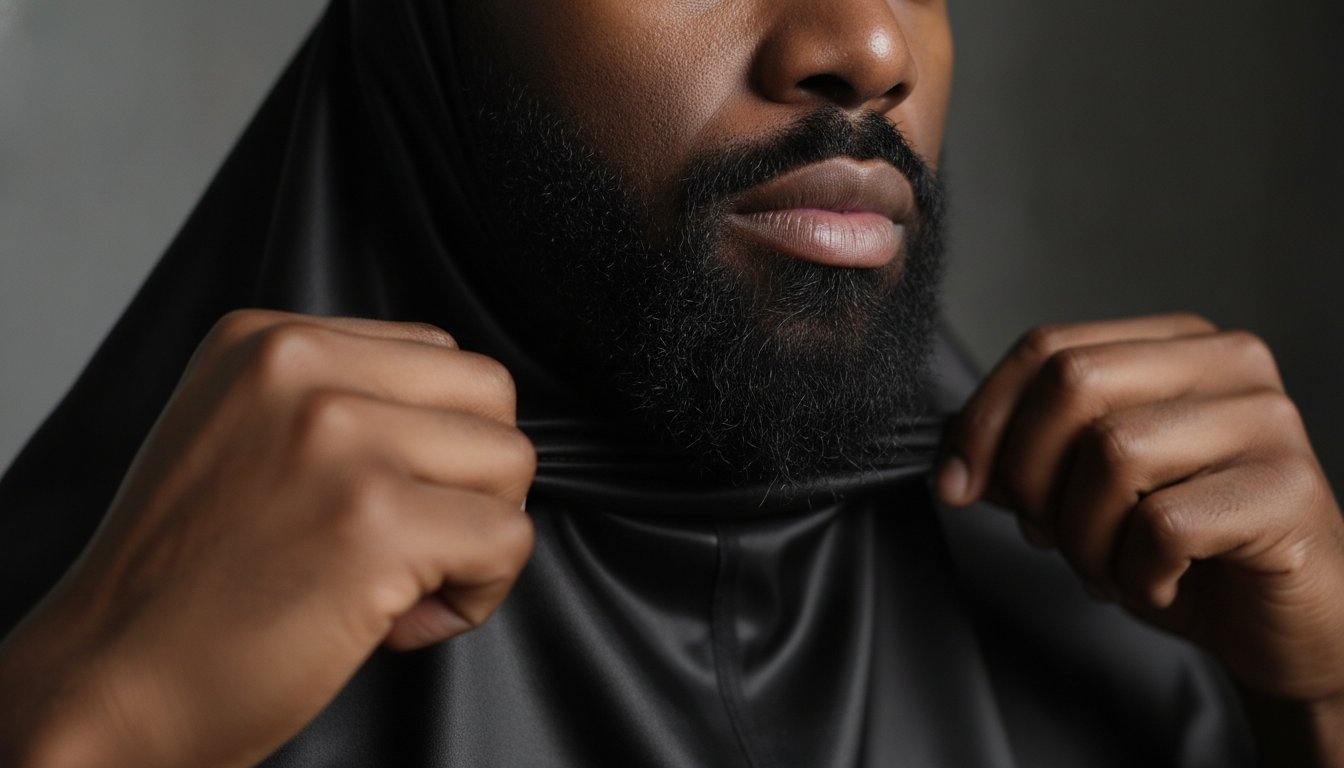
Compression isn’t just a step in your grooming routine; it’s the pattern-lock that determines whether your hard work survives the night or disappears by sunrise. You’ve likely spent hours with a boar bristle brush, mapping out your angles and applying premium oils, only to wake up with a frizzy, undefined mess because your beard durag for waves didn’t provide the necessary tension. It’s a common struggle when a standard wrap fails to fit the chin or slips off the jawline, leaving your hair to roam free and lose its structure. We understand that elite waves are earned through discipline and the right tools, not luck.
This 2026 guide is designed to help you master the science of hair training by choosing the perfect compression gear to secure deep, connected patterns and maximum moisture retention. We will explore the technical differences between velvet and silk materials, the art of layering for high-level compression, and the specific routines required to keep coarse hair laid and healthy. By the end of this breakdown, you’ll have a systematic approach to protecting your progress and achieving the crisp, connected look you’ve been working toward. It is time to stop guessing and start locking in the results your dedication deserves.
Key Takeaways
- Understand how compression prevents hair from returning to its natural coiled state by flattening cuticles for uniform growth.
- Identify the key ergonomic features of a specialized beard durag for waves that ensure a secure fit so your patterns don’t shift.
- Determine the best material for your hair density to balance the “Moisture War” between product absorption and hair hydration.
- Master the “Chin-First” tie technique to provide consistent tension across the jawline and maintain elite connectivity.
- Discover how to incorporate professional-grade wraps into a disciplined 7-day routine for maximum aesthetic results.
The Science of Beard Compression: Why a Durag is Non-Negotiable for Waves
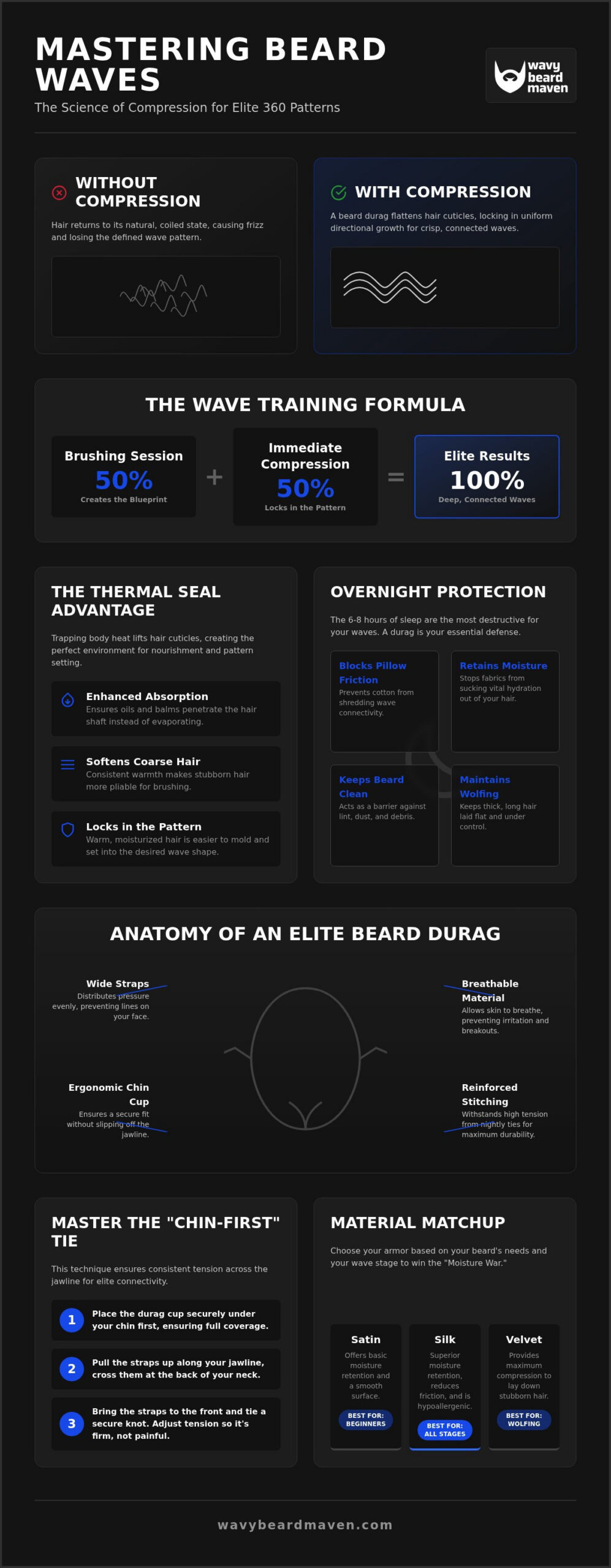
What defines the difference between a fuzzy beard and a masterpiece of 360 connectivity? The answer lies in the science of compression. Beard compression is the mechanical application of uniform pressure to train hair into waves. When you utilize a beard durag for waves, you are performing a deliberate act of hair modification. By flattening the hair cuticles against the jawline, you encourage uniform directional growth. This process prevents “frizz-back,” a biological reaction where the hair fiber attempts to return to its natural, disorganized coiled state. Without consistent pressure, your hair will always choose the path of least resistance, which is curling away from your desired pattern. Understanding the full mechanics of a proper beard compression technique is the foundation that separates casual groomers from elite wavers.
A specialized wrap also functions as a thermal seal. By trapping natural body heat against the skin, the wrap helps slightly lift the hair cuticles. This creates a critical window for nourishment and growth. Consider these benefits of the thermal seal:
- Enhanced Absorption: Heat ensures beard oils and balms penetrate the hair shaft rather than evaporating.
- Softening: Consistent warmth makes coarse hair more pliable for future brushing sessions.
- Pattern Setting: Warm, moisturized hair is easier to mold into the wave shape during the compression phase.
Transitioning from Brushing to Pattern Locking
Your brushing session is the blueprint, but the wrap is the foundation. Brushing alone only completes 50% of the mission. While the brush redirects the hair, the hair itself possesses a memory that pulls it back toward its original shape. If you finish brushing and fail to compress immediately, the pattern begins to dissolve within minutes. You must apply your wrap the moment you put the brush down to “set” the waves. This transition is where elite wavers earn their results through discipline. It ensures that the angles you just painstakingly mapped out are locked into place for the long term.
Protecting Your Progress During the Overnight Shift
The 6-8 hours you spend sleeping are often the most destructive period for your beard. Pillow friction is a silent enemy that saps moisture and shreds wave connectivity. A beard durag for waves acts as a protective barrier against cotton fabrics that suck the hydration out of coarse hair. Beyond moisture retention, it prevents lint and debris from nesting in your beard. This is especially vital during “wolfing” phases. When your hair is at its thickest and most stubborn, consistent overnight compression is the only way to keep the hair laid flat and maintain the flow of your pattern.
Choosing Your Armor: Key Features of an Elite Beard Durag
Selecting your gear is a tactical decision that directly impacts your wave connectivity. You can’t expect a standard scalp durag to perform the specialized task of jawline compression. A dedicated beard durag for waves features an ergonomic design specifically contoured to cup the chin and wrap the jaw without the fabric bunching or slipping. This fit is essential for maintaining the directional growth we established in the previous section. Beyond fit, prioritize breathability. High-quality wraps allow your skin to breathe while your hair stays compressed, which prevents the breakouts and irritation often caused by cheap, non-porous fabrics. Look for reinforced stitching at every seam; your armor needs to withstand the tension of nightly ties without losing its integrity.
Strap Length and Tension Control
The straps are the engine of your compression. Wide straps are a requirement for any serious waver because they distribute pressure evenly across your face. This prevents the “line” effect, where thin straps dig into your cheeks and leave deep, unsightly indentations by morning. We recommend extra-long straps that allow for a secure fastening behind the neck. This configuration keeps the tension focused on the beard itself rather than pulling on your ears or throat. Discipline is required here: you must balance tight compression with healthy blood flow. A wrap that is too tight won’t just be uncomfortable; it can damage the skin and hinder the hair growth you’re trying to promote. If you feel a pulse in your jaw, loosen the tie slightly.
Material Science: Satin vs. Silk vs. Velvet
Your hair texture and current wave stage dictate your material choice. Satin is a reliable starting point for beginners, offering basic moisture retention at an accessible level. However, as you progress, you’ll likely move toward silk or velvet. Silk, often called “silky” in the community, provides a superior high-gloss finish. Its smooth surface reduces friction to near zero, which is vital for preventing frizz during the day. Velvet is the heavy-duty choice for those with coarse hair or those in a “wolfing” phase. The thickness of velvet provides the maximum compression force needed to keep long, stubborn hair laid flat against the face. Choosing the right beard durag for waves based on these material properties is what separates the novices from the masters. If you’re serious about your craft, explore the professional-grade beard wraps that combine these elite features into a single, durable tool.
Material Matchup: Finding the Right Wrap for Your Beard Texture
Mastering your wave pattern requires a deep understanding of hair density and its relationship with mechanical pressure. Coarse hair is not just thicker; it is more resilient and prone to “frizz-back” than curly or medium textures. Therefore, your beard durag for waves must be selected based on its ability to overcome that natural resistance. We define the interaction between your wrap and your grooming products as the “Moisture War.” In this struggle, the wrong material acts as a sponge, siphoning away the expensive nutrients you’ve applied. The right material acts as a sealant, forcing oils and balms deep into the hair shaft where they can do the most work.
Your selection process should also shift based on your current “Wolfing” stage. Wolfing is the disciplined practice of letting your beard grow for extended periods (typically 4 to 8 weeks) to increase wave depth. During the early weeks after a trim, your hair is compliant and requires moderate tension. However, as you reach peak wolfing, the hair becomes thick and stubborn. At this stage, you need a wrap with significant “stretch” and weight to accommodate the increased volume while maintaining a flat, uniform surface. Without this adaptability, your pattern will lose its connectivity as the hair grows away from the skin.
The Case for Velvet: Maximum Compression for Coarse Beards
Velvet is the undisputed heavyweight champion for men with coily or “stubborn” hair textures. Because coily hair has a stronger natural snap-back, it requires the dense, non-slip compression that only velvet provides. The physical weight of the fabric acts as a constant force, pushing connectivity into difficult areas like the corners of the jawline. To maintain these properties, never put your velvet wrap in a dryer. Hand wash it in cold water and air dry it to prevent the elastic fibers from breaking down. This discipline ensures your compression remains consistent for the long haul.
Silky Wraps: Best for Moisture Retention and Frizz Control
Silky wraps are the precision tools of the maintenance phase. Once your pattern is established, your goal shifts from aggressive training to preservation. Silk mimics the natural proteins in human hair, which significantly reduces friction-induced breakage and split ends. This material is the ultimate companion for achieving a high-shine finish. When you integrate these wraps with a premium beard oil for waves, the smooth surface ensures the oil stays on your beard rather than being absorbed by the fabric. This creates a mirror-like luster that highlights the depth of every connection you have earned.
Mastering the Tie: Techniques for Secure, All-Night Compression
Tying your beard durag for waves is a skill that requires technical precision. It is not enough to simply cover the hair; you must engineer the tension to serve your specific pattern. We recommend the “Chin-First” technique for maximum stability. Begin by centering the wrap directly under your chin and pulling the straps upward toward the crown of your head. As you wrap, ensure the “tail” or flap of the durag fully encompasses the jawline. This coverage is the only way to maintain 360 connectivity and prevent the edges of your pattern from curling during the night. For elite wavers who struggle with the wrap slipping, the “Double-Wrap” method is the solution. Tie a primary silky wrap to lock in moisture, then layer a velvet wrap over it to provide an immovable foundation of compression. If you want to go deeper on the mechanics behind these methods, our complete breakdown on how to use a beard wrap covers every step of the process in detail.
Checking your tension is a mandatory step in this process. Use the “Two-Finger Rule” to ensure you haven’t over-tightened the straps. If you cannot comfortably slide two fingers between the strap and your cheek, the tension is too high and will likely cause irritation. Discipline in your tie technique ensures that your hard work isn’t undone by a wrap that shifts while you sleep. Secure your 360 connectivity with a professional-grade beard wrap designed for all-night security.
Avoiding the “Line” and Tension Headaches
Precision wrapping involves more than just the knot. You must flatten the straps as you pull them around your face. Twisted straps create concentrated pressure points that leave deep, unsightly lines on your cheeks. Position the final knot at the side of your head or high on the nape. Never place the knot directly on the spine or neck bone, as this leads to tension headaches and poor sleep quality. Perform daily skin checks to ensure the wrap isn’t trapping excessive sweat, which can lead to ingrown hairs. If you notice redness, loosen your tie or switch to a more breathable material for a few nights.
Layering: Using Wraps Over Oils and Balms
Success starts with proper preparation. Follow the foundational how to get beard waves principles by thoroughly brushing in your oils and balms before you even touch your wrap. Wait exactly 5 to 10 minutes after applying your products before tying down. This brief window allows the oils to settle into the hair fibers rather than being immediately absorbed by the fabric of your beard durag for waves. For those in a peak “wolfing” stage, consider pairing your layering routine with the best beard balm for hold and styling to ensure your pattern stays locked in place before you even reach for your wrap. Consider the “Plastic Bag Method.” Place a thin layer of plastic over your beard before tying your wrap to create a non-porous seal. This technique forces every drop of moisture into the hair shaft, resulting in a high-definition, mirror-like shine. Pairing this layering approach with a refined beard compression technique ensures that stubborn coarse textures are fully trained into deep, connected 360 wave patterns.
Elevating Your Routine with Wavy Beard Maven Essentials
Success in the waving community isn’t a matter of luck; it is the result of a systematic approach to grooming. At Wavy Beard Maven, we view the beard durag for waves as more than a simple accessory. It is a vital component of our philosophy of discipline. Integrating high-level compression into your 7-Day Beard Wave Starter Routine™ ensures that your progress is never stagnant. While your oils provide the nutrients and your brush provides the direction, the wrap provides the permanence. By locking in the moisture from our specialized balms, you create an environment where hair remains soft and compliant. The Wavy Beard Maven wrap serves as the ultimate seal for a disciplined grooming habit, protecting the hours of effort invested in every brushing session.
The Disciplined Waver: Why Consistency Trumps Luck
Consistency is the foundation of the craft. We advocate for the “No Days Off” rule because wave patterns are a living record of your persistence. If you skip even one night of compression, you allow your hair to revert to its natural state, undoing days of brushing. Use the Wavy Beard Maven checklist to track your consistency and hold yourself accountable to the movement. Our community success stories consistently highlight that those who see the deepest, most connected patterns are those who never compromise on their nightly wrap. This isn’t just about aesthetics; it is about the refinement of a skill and the pride that comes with mastery.
Building Your Elite Grooming Kit
Your tools must work in harmony to achieve professional results. A specialized wrap is the final piece of the beard brush for waves mastery guide. Brushing redirects the hair, but without the wrap, that redirection is temporary. Brushing and compression are two sides of the same coin. Investing in a professional-grade durag is a strategic move that saves money by ensuring your oils and balms aren’t wasted on your pillowcase. When you choose high-quality materials, you ensure that every part of your kit supports the same goal: 360 connectivity and a mirror-like shine. Join the movement today and secure the pattern you’ve worked so hard to build. Consistency is the only path to elite status. Stop settle for mediocre results and start locking in your progress with the discipline your beard deserves.
Lock in Your Progress and Master the Wave
Mastering the craft of beard waving is a journey defined by discipline and technical precision. You now understand that a high-quality beard durag for waves is the only tool capable of locking in the directional growth you have worked so hard to establish through brushing. By selecting the right material for your specific hair texture and mastering the “Chin-First” tie technique, you ensure that every session translates into deep, connected patterns. Consistency is the ultimate divider between those who merely wish for results and those who earn them through daily persistence.
Wavy Beard Maven is trusted by the elite wave community to provide specialized gear designed for maximum jawline compression. We offer 100% Satin and Velvet options that act as the final seal for your grooming routine, protecting your hair from friction and moisture loss. Don’t let your connectivity fade while you sleep. It is time to invest in the professional-grade armor your beard deserves.
Secure Your Pattern: Shop Wavy Beard Maven Wraps
Stay dedicated to the process and take pride in the results your hard work will produce. Your journey toward elite connectivity starts with the right foundation.
Frequently Asked Questions
Can I use a regular hair durag for my beard waves?
No, you should avoid using a standard scalp durag for your facial hair. Scalp wraps are engineered for the curvature of the head and lack the ergonomic shaping needed to secure the chin and jawline. A dedicated beard durag for waves is essential because it provides the specific tension required to cup the face without shifting. Using a regular hair wrap often leads to uneven compression, which can ruin hours of brushing and disrupt your connectivity.
How long should I wear my beard durag each day?
Aim for a minimum of 6 to 8 hours of compression daily, ideally during your sleep cycle. This extended period is necessary for the hair to set and memorize the directional pattern established by your brush. Many disciplined wavers also incorporate a short 30 minute compression session immediately following their morning grooming routine. This practice helps lock in moisture from your oils and ensures your waves stay laid throughout the day’s activities.
Will a beard durag cause skin breakouts or acne?
Breakouts are not inevitable if you prioritize hygiene and fabric quality. Skin irritation usually stems from trapped bacteria or non-breathable synthetic materials. You can prevent acne by ensuring your beard is clean before you tie down and by rotating between fresh wraps. Choosing professional grade silk or satin options allows for better skin respiration than lower quality alternatives. Regular washing of your gear is non-negotiable to keep your complexion clear while you train your hair.
How tight should I tie my beard wrap for maximum waves?
Focus on achieving firm, uniform pressure rather than maximum tightness. Tying your wrap too tight can lead to tension headaches and may even damage the hair follicles or skin. Always apply the Two-Finger Rule to verify your tension levels. If you cannot slide two fingers between the strap and your jaw, loosen the knot. Proper compression should feel secure enough to stay in place overnight without causing a pulsing sensation in your face or neck.
Should I wash my beard durag, and how often?
Wash your wrap at least once a week to prevent the accumulation of oils, balms, and dead skin. A clean wrap is vital for both hair health and skin clarity. Hand wash your beard durag for waves in cold water using a gentle soap to maintain the integrity of the elastic fibers. Avoid using a mechanical dryer, as high heat can break down the materials and reduce the compression strength you need for elite patterns.
What is the best material for a beginner beard durag?
Satin is the most effective choice for beginners due to its smooth texture and moisture locking properties. It provides a reliable entry point for those learning the fundamentals of hair training without a significant investment. As you progress into advanced stages like wolfing, you may find that velvet offers the additional weight needed for stubborn textures. However, starting with satin ensures your hair stays hydrated and frizz free while you establish your initial wave connections.
Can I wear a beard durag if I have a very short beard?
Start using a wrap as soon as your beard hair is long enough to show a direction when brushed. Even at a short length, compression is vital for training the hair to grow horizontally against the skin. This early intervention prevents the hair from curling outward, which is the primary cause of frizz and lack of definition. Establishing this habit early ensures that as your beard grows, the wave pattern is already locked into the foundation.
Does wearing a durag help with beard patchiness?
Compression is a powerful tool for managing the appearance of patchiness. By training your hair to lay flat and grow in a specific direction, you can use existing length to overlap and cover thinner spots. This directional growth creates the visual effect of a thicker, more connected beard. Additionally, wearing a wrap ensures that your growth supporting oils remain on the hair and skin rather than rubbing off on your pillowcase while you sleep.