September 12, 2026

Your beard wrap isn’t just a piece of fabric you throw on before bed; it’s a precision compression tool that earns you elite definition through discipline. Most men treat grooming as a chore, but you understand that aesthetic results are the product of a systematic routine. You’ve likely felt the frustration of seeing your waves disappear overnight or watching your beard frizz up immediately after a heavy brush session. It’s a common struggle, but it’s one that ends when you master the technical side of hair texture management.
In this guide, we’ll teach you exactly how to use a beard wrap to lock in your pattern and maintain essential hydration. We’ll move from foundational concepts to advanced compression techniques, showing you how to turn a simple nightly habit into a professional-grade ritual. You’ll learn to achieve deep, connected beard waves while ensuring your facial hair stays moisturized and protected. By the end of this breakdown, you’ll have a reliable nightly routine that transforms your grooming from luck-based maintenance into a craft of pure precision.
Key Takeaways
- Understand the science of compression and why a specialized wrap is essential for training textured hair into deep, connected waves.
- Learn the “Golden Rule” of pre-wrap mastery; always ensure your facial hair is moisturized with oil and brushed before applying any pressure.
- Follow a disciplined guide on how to use a beard wrap to achieve a secure fit that won’t disturb your pattern while you sleep.
- Commit to a consistent nightly routine to maintain your definition and keep your beard looking sharp during the wolfing phase.
- Integrate the wrap into your daily discipline to turn grooming from a chore into a cultural practice of self-improvement.
The Science of Compression: Why You Need a Beard Wrap for Waves
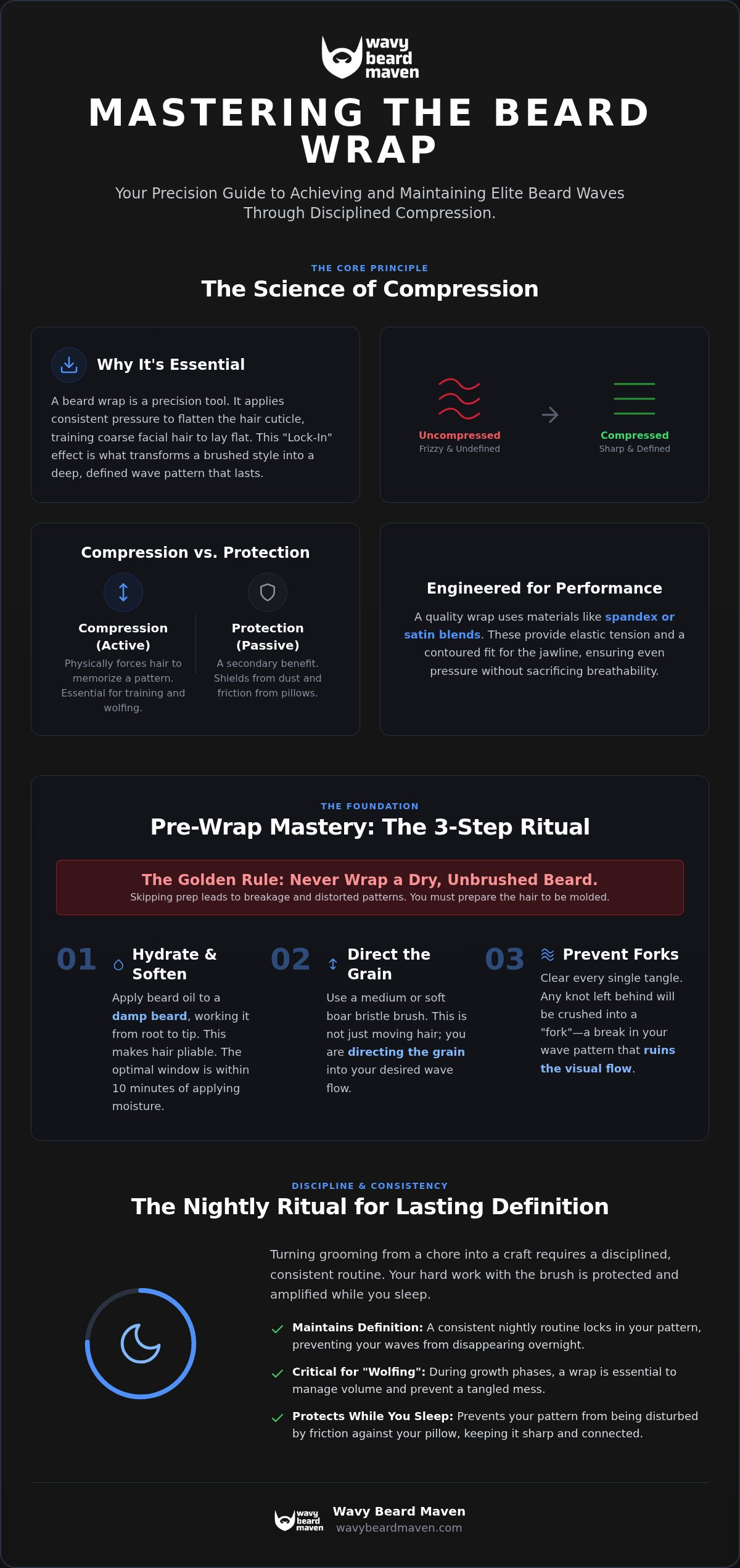
Compression is the secret engine behind every elite wave pattern. While a brush creates the initial direction, it’s the wrap that enforces the discipline. Without it, your hair naturally wants to curl outward or frizz up. A beard wrap acts as a specialized compression garment, applying the consistent pressure needed to flatten the hair cuticle against the skin. This isn’t just about style; it’s about structural training. You’re forcing the hair to lay flat, which maximizes light reflection and gives you that deep, oceanic look that every waver strives for.
Understanding the biology of beards is the first step toward mastery. Facial hair is typically coarser and more stubborn than the hair on your head. This means your wave pattern won’t just stay because you asked it to. You need the “Lock-In” effect. This process seals the hair in its brushed position and prevents the beard from expanding as it grows. It ensures your hard work with the brush isn’t lost the moment you step away from the mirror or lay your head on a pillow.
What is a Beard Wrap?
A high-quality wrap isn’t just a strip of cloth. It’s engineered with specific fabric like spandex or satin to provide elastic tension without sacrificing breathability. You’ll find that breathable mesh is great for cooling, but it often lacks the snap needed for real compression. Spandex blends are the gold standard because they hug the face. Unlike a standard durag designed for the scalp, a beard wrap features a contoured shape that fits the unique ergonomics of the jawline and chin. The goal is simple. You want even, steady pressure across the entire facial landscape. Learning how to use a beard wrap correctly ensures that this pressure is distributed evenly, preventing marks or uneven waves.
Compression vs. Protection
Many beginners mistake a wrap for a simple protective cover. While keeping dust out is a benefit, it’s not the primary mission. Protection is passive. Compression is active. Compression forces the hair to memorize the brush direction by physically holding it in place for hours. This is especially critical during “wolfing” periods when your hair is at its thickest. During these weeks, the sheer volume of hair can lift the pattern. If you don’t use a wrap, your beard will become a tangled mess rather than a sharp, connected pattern. Knowing how to use a beard wrap effectively means you’re training your texture to obey your style. It turns a chaotic growth phase into a disciplined aesthetic. To go even deeper on this topic, understanding the full beard compression technique will show you how to cement hair memory and force stubborn textures into lasting alignment.
Pre-Wrap Mastery: Preparing Your Texture for the Lock-In
Mastering the prep phase is what separates the veterans from the amateurs. You can’t expect a wrap to fix a messy foundation. The golden rule is simple: never wrap a dry, unbrushed beard. Doing so leads to breakage and a distorted pattern. To get the best results when learning how to use a beard wrap, you must prepare the hair to be molded. Before the fabric touches your skin, your routine should include:
- Applying a softening agent to damp hair.
- A thorough brush session to align the grain.
- Clearing all tangles to prevent forks.
This is where you establish the blueprint that the compression will eventually lock into place. If you skip these steps, you aren’t training your hair; you’re just covering it up.
Hydration and Softening
Moisture is the secret sauce of wave training. Without it, your hair is brittle and resistant to change. Start by applying beard oil for waves to a damp beard. Work the product from the root to the tip to ensure every strand is coated and softened. This process makes the hair pliable, allowing it to lay flat under pressure rather than snapping or curling back. The optimal window for setting your waves is within ten minutes of applying moisture while the hair is still damp and pliable. If you wait too long, the hair begins to set in its natural state, making your compression far less effective.
The Final Brush Session
Direction is everything. Use a beard brush for waves, preferably a medium or soft boar bristle, to pull the hair into your desired flow. You aren’t just moving hair; you’re directing the grain. Clear every tangle now; any knot left behind will be crushed into a “fork” once the wrap goes on. Forks are those annoying breaks in your wave pattern that ruin the visual flow. Pay specific attention to the connections at your cheeks and chin, as these areas are prone to shifting. Your last stroke before the wrap touches your face is the most important because it defines the final shape that will be compressed for the next several hours.
Consistency in this prep routine is the only way to see long-term progress. If you skip the brush or the oil, you’re just wearing a piece of fabric. Understanding how to use a beard wrap effectively requires you to respect the preparation. For those ready to take their routine to the next level, checking out the premium tools at Wavy Beard Maven will provide the edge you need to see deep, connected results.
Step-by-Step: How to Secure Your Beard Wrap for Maximum Compression
Securing your gear is where the theory of compression becomes reality. If your wrap is loose, your pattern will shift; if it’s too tight, you risk skin irritation or tension headaches. Learning how to use a beard wrap is about finding that sweet spot where the fabric becomes a second skin. This process requires a steady hand and a disciplined eye. Follow these steps to ensure your foundation is locked in for the night.
- The Chin Cup: Hold the wrap by the straps and align the center seam directly with the peak of your chin. This is your anchor point. If this alignment is off, the compression will be lopsided, leading to uneven wave depth across your jawline.
- The Strap Pull: Guide the straps upward and behind the head. Do this with a steady motion so you don’t disturb your sideburns or the layout you just established with your brush.
- Tying the Knot: Find a balance between firm and restrictive. Tie the straps at the back of your head, ensuring the knot is secure enough to stay put without cutting off circulation.
- The Smoothing Swipe: Once tied, reach your fingers under the edges of the fabric. Gently pull the fabric downward toward your neck. This ensures the hair is lying perfectly flat and hasn’t bunched up during the tying process.
Positioning for Success
Proper placement is the difference between a secure night and a wrap that ends up on your pillow by morning. Ensure the fabric sits comfortably below your ears and follows the natural line of your jaw. If you’re currently “wolfing,” which means growing your beard out to increase wave depth, make sure the wrap covers the entire length of the hair. Leaving the bottom of the beard exposed allows the ends to curl. This curl breaks the visual connection of your waves and ruins the progress you’ve made. Mastering how to use a beard wrap means ensuring every single strand is under tension.
Adjusting the Tension
Tension is a skill you refine through practice. If you wake up and your pattern looks fuzzy, your wrap was too loose. If you feel throbbing or see redness on your skin, it was too tight. Use the “Two-Finger Rule” to check your work; you should be able to slide two fingers under the straps with moderate resistance. Once you have the right tension, tuck the remaining tails into the straps. This creates a clean finish that won’t snag on your bedding or loosen as you move. This level of attention to detail is what separates a dedicated waver from someone who is just going through the motions. If you’re unsure whether a dedicated beard wrap or a standard durag delivers better structural tension for your pattern, the in-depth beard wrap vs durag for waves comparison breaks down exactly which headwear choice maximizes compression and connectivity for your specific needs.
Overnight Discipline: Protecting Your Pattern While You Sleep
The “Night Shift” is the most productive period in your wave training cycle. While you rest, your wrap is providing six to eight hours of uninterrupted compression. This is the ultimate lock-in phase where your hair fibers truly begin to memorize the direction you’ve dictated with your brush. Mastering how to use a beard wrap overnight is the difference between a pattern that sticks and one that vanishes the moment you hit the shower. Consistency during these hours ensures that your hard work isn’t undone by the simple act of sleep.
For those seeking elite-level definition, consider the double compression method. You can achieve this by layering your wrap with a beard durag for waves. This combination provides a secondary layer of security that keeps the primary wrap from shifting, even if you’re a restless sleeper. It creates a pressurized environment that forces the hair to lay exceptionally flat, resulting in deeper, more connected waves by morning. Secure your pattern with professional-grade tools from Wavy Beard Maven to ensure your night shift is as effective as possible.
Managing Friction
Tossing and turning is the natural enemy of a fresh pattern. Every time your face rubs against a pillow, you risk snagging the fabric of your wrap or disturbing the hair underneath. This friction can lead to “frizz-out” or, worse, complete displacement of your gear. To mitigate this, always opt for a satin or silk pillowcase. Cotton pillowcases are the enemy of wavy beards because their rough fibers absorb essential oils and create enough friction to pull your hair out of alignment. A smooth surface allows your wrap to glide effortlessly, keeping your compression intact until the sun comes up.
The Morning Reveal
Your morning routine is just as critical as your nightly prep. Don’t simply rip the wrap off; doing so can cause a sudden release of tension that makes the hair “pop” or frizz. Instead, gently loosen the straps and slide the fabric away from your face in the direction of your grain. Once the wrap is off, perform an immediate, light brush session to “wake up” the pattern and ensure every wave is sitting exactly where it should. Finish the process by applying a light layer of oil to add shine and a soft hold. This final touch seals the definition you earned overnight, keeping your beard looking sharp and disciplined throughout the day. Learning how to use a beard wrap isn’t just about the tie; it’s about the entire cycle of maintenance and respect for the craft.
Leveling Up: Integrating the Wrap into Your Daily Routine
Consistency is the only currency that matters in the world of wave training. You can have the best products and the sharpest technique, but without the discipline to apply them daily, your results will remain stagnant. During your initial training phase, you must commit to wrapping every single night. This isn’t just about protection; it’s about the cumulative effect of compression. Every hour your beard spends under the wrap is an hour spent reinforcing the grain. Over time, this daily habit transforms your texture, making the waves deeper and more resilient to the elements.
Beyond the night shift, experienced wavers often use “flash compression” sessions during the day. If you’ve just finished a heavy midday brush session, wearing your wrap for 30 to 60 minutes can help reset your pattern and lock in moisture. This is especially useful before a big event or a night out when you need your definition to be at its peak. Learning how to use a beard wrap as a tactical tool throughout the day allows you to maintain that “fresh out of the chair” look long after you’ve left the mirror.
The Wolfing Phase
The wolfing phase is where true champions are made. This is the period where you allow your beard to grow past its usual length to increase the depth of your waves. As the hair becomes bulkier, it also becomes harder to manage. The extra volume wants to lift and curl, which can make your beard look unkempt. Your wrap is your best friend during this time. You’ll need to increase your compression to manage the extra bulk and keep the hair laying flat. This discipline is what allows you to transition from basic ripples to elite wave patterns that command respect. Without the wrap, wolfing just looks like a messy beard; with it, it’s a strategic move toward mastery. Pairing this approach with a proven beard compression technique gives you the systematic edge needed to build deep, connected 360 wave patterns even through the most challenging growth phases.
Building the Habit
Discipline is built through ritual. Set a dedicated “Wrap Time” every evening, perhaps thirty minutes before you plan to sleep. This gives you ample time for your oil application and brush session without feeling rushed. There is a significant psychological boost that comes with a dedicated grooming ritual; it’s a moment of self-respect and focus that sets the tone for your day. To ensure you stay on track, use the 7-Day Beard Wave Starter Routine™ Checklist to monitor your progress. This tool helps you visualize your consistency and holds you accountable to the craft. If you want to master how to use a beard wrap and see real transformation, download the 7-Day Starter Checklist at Wavy Beard Maven and join the movement of men who take their grooming seriously.
Own Your Aesthetic: The Path to Elite Beard Waves
Mastering the wrap is the final step in transitioning from a casual groomer to an elite waver. You now understand that a beard wrap is a precision compression tool designed to force your hair into a disciplined pattern. By combining the right hydration with a rigorous brush session, you’ve set the stage for success. Learning how to use a beard wrap ensures that your hard work isn’t lost while you sleep, allowing you to wake up with deep, connected waves every single morning.
This journey is about consistency and self-respect. When you join our community of elite wavers, you gain access to precision compression gear and expert-led training guides that turn your routine into a cultural practice. Don’t leave your results to luck when you can earn them through persistence. Master your routine with the 7-Day Beard Wave Starter Routine™ Checklist and see the difference that professional discipline makes. Your pattern is waiting; it’s time to lock it in and show the world your dedication.
Frequently Asked Questions
How long should I wear a beard wrap each day for waves?
Aim for a minimum of eight hours of consistent compression, typically during your “night shift.” This duration allows the hair fibers to fully memorize the direction established during your brush session. If you’re in an intensive training or “wolfing” phase, you should also consider shorter daytime sessions after applying moisture. Consistency is the only way to turn temporary ripples into deep, permanent waves that last throughout the day.
Can I use a regular hair durag as a beard wrap?
While a standard durag provides some protection, it lacks the specialized contouring required for facial hair. A dedicated beard wrap is engineered specifically for the jawline and chin ergonomics, ensuring even pressure across the entire pattern. Using a regular durag often results in slipping or uncomfortable pressure points that can distort your waves. For elite results, invest in gear that respects the unique shape of your face. To fully understand the structural differences and make the most informed choice for your routine, explore the complete beard wrap vs durag for waves breakdown that covers fabric tension, contouring, and compression performance side by side.
Is it okay to put oil in my beard before wrapping it?
Applying moisture is a mandatory step before you learn how to use a beard wrap. You should always apply a high-quality oil to a damp beard to make the hair pliable and soft. This process allows the compression to mold the hair without causing breakage or resistance. Moisture is the foundation that makes the “lock-in” effect possible, ensuring your wave pattern sets correctly while maintaining essential hydration.
Will a beard wrap help if my beard is very short?
Starting your compression routine while your beard is short is a highly effective tactic. It trains the hair to lay flat from the very beginning, preventing the outward curl that often ruins growth phases. By establishing this discipline early, you make the eventual “wolfing” process much more manageable. Short-beard wrapping builds a structural foundation that allows for deeper, more connected wave patterns as your facial hair gains more length.
How tight should the beard wrap be?
Your wrap needs to be firm enough to stay in place without causing discomfort. You should utilize the “two-finger rule” by sliding two fingers under the straps to check for moderate resistance. If the wrap is too loose, your pattern will shift overnight and lose its definition. Conversely, excessive tightness leads to skin irritation or tension. Mastering how to use a beard wrap requires finding this precise balance of compression.
How often should I wash my beard wrap?
You must wash your wrap every three to five days to maintain both hygiene and fabric performance. Daily application of oils and butters leads to product buildup, which can clog your pores and cause skin breakouts. Additionally, accumulated sweat can degrade the elastic fibers in spandex blends over time. Use a gentle detergent and always air dry your gear to preserve the tension and longevity of the material.
What is the best material for a beard wrap to prevent frizz?
Spandex and satin are the gold standards for wave maintenance. Spandex provides the consistent, elastic tension needed for deep compression, while satin offers a smooth surface that eliminates friction. You should avoid cotton materials entirely, as they absorb your beard’s natural oils and cause the hair to frizz or break. A high-quality blend ensures your pattern stays locked in while keeping the hair cuticle flat, hydrated, and exceptionally shiny.
Can I wear a beard wrap while exercising?
Wearing a wrap during your workout is an excellent way to protect your pattern from sweat-induced frizz. The compression keeps the hair in place while you move, ensuring your hard work with the brush isn’t lost during high-intensity activity. However, you must prioritize washing the wrap immediately after your session to remove salt and bacteria. This practice protects your skin from irritation while maintaining the discipline of your daily wave routine.