September 2, 2026
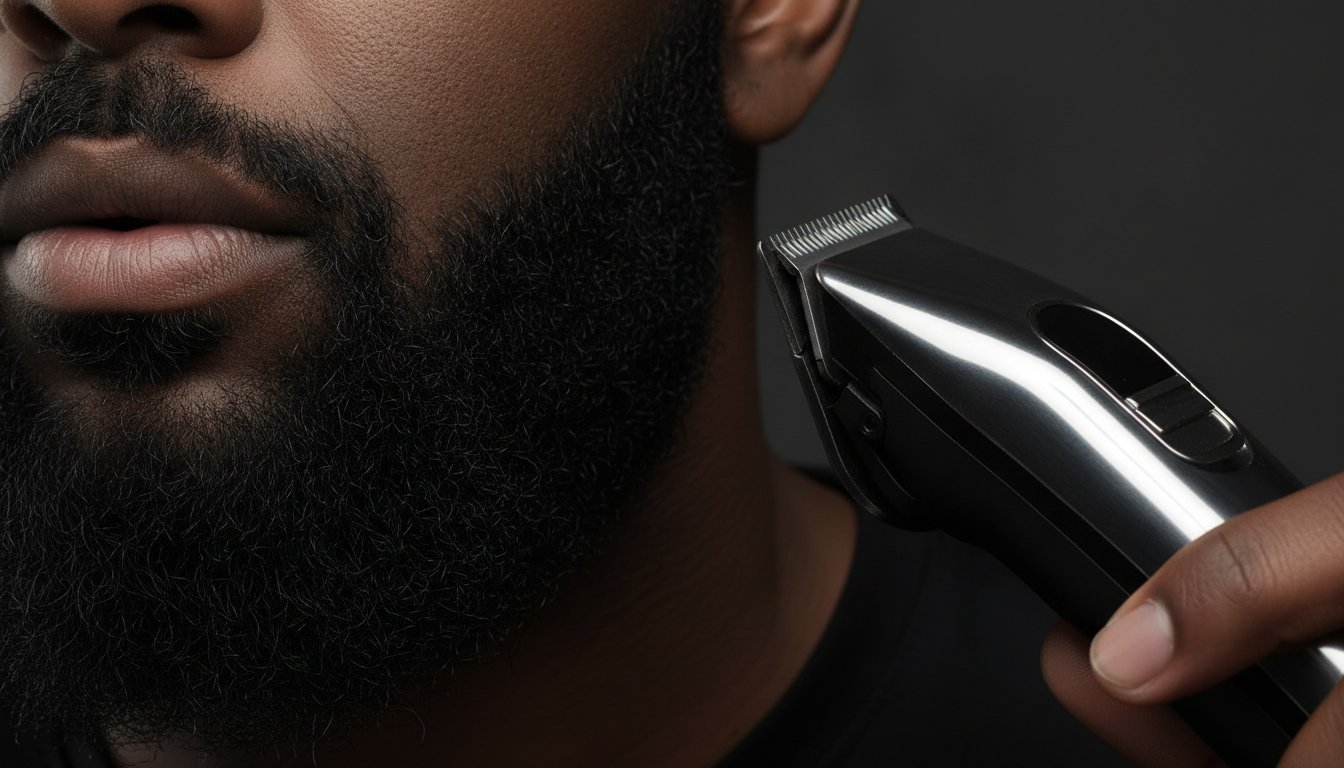
Most men treat a beard trim like mowing a lawn, but for the wavy beard practitioner, it’s more like tactical pruning. You’ve spent weeks dedicated to the brush, perfecting your connectivity and building depth through disciplined wolfing. The fear of a single clipper slip ruining months of progress is real. If you’ve ever walked away from the mirror with a clean edge but a flat, patternless beard, you know the frustration of losing your hard-earned ripples. Learning how to trim beard without losing waves is the difference between a standard grooming chore and a cultural craft.
We agree that your pattern is your pride, and it shouldn’t be the price you pay for a crisp lineup. This master guide promises to teach you the exact sequence for maintaining your beard’s architecture while keeping it professional. We’ll explore why specialized beard oils and butters are essential for a snag-free trim, how to navigate the grain without disrupting the flow, and the critical role of a beard wrap in setting your pattern once the work is done. It’s time to master a repeatable routine that honors your dedication and persistence.
Key Takeaways
- Understand that wave trimming is a tactical process of reducing bulk while preserving the peaks and valleys of your established pattern.
- Master the essential prep work by learning how to trim beard without losing waves, which starts with hydrating your hair using beard oil before the blade ever touches your skin.
- Always utilize the “With the Grain” technique to ensure your clippers follow the natural flow of your waves and prevent pattern disruption or forks.
- Execute a post-trim recovery routine using beard butter and a specialized beard wrap to re-establish compression and lock in your elite connectivity.
- Maintain your results with a dedicated wave kit and a boar bristle brush to keep your topographical definition sharp between your disciplined trimming sessions.
The Waver’s Dilemma: Why Standard Trimming Destroys Pattern Connectivity
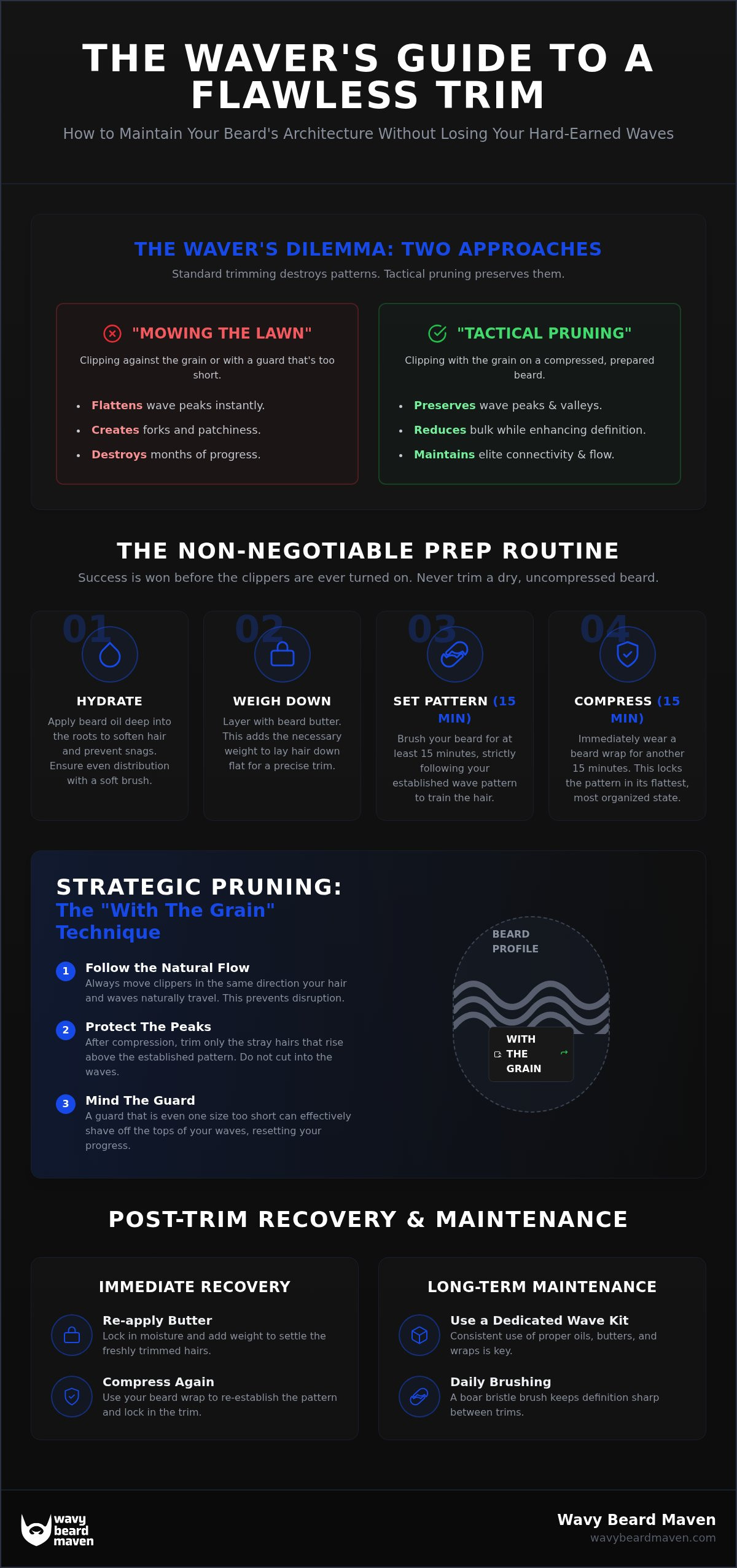
Standard beard trimming is often treated like a simple landscaping project where you mow everything down to a uniform height. For the dedicated waver, this approach is a recipe for disaster. Wave trimming is a specialized art form. It is the disciplined practice of reducing excess bulk while carefully preserving the topographical peaks and valleys of your established pattern. If you approach your facial hair with a standard “against the grain” mindset, you will inevitably create forks and shatter your connectivity. Understanding how to trim beard without losing waves requires a mental shift from mindless clipping to tactical pruning.
Tactical pruning allows you to maintain a crisp, professional edge without resetting your hard-earned progress to zero. You must respect the wolfing threshold. This is the delicate balance where your hair remains long enough to hold deep, defined waves but stays short enough to look sharp. If you cut too deep, you lose the depth of the wave. If you don’t cut enough, the pattern gets lost in the frizz. Success lies in the precision of the cut and the respect for the hair’s natural direction.
The Risk of the “Blind Trim”
Walking into a trim without a strategy is a gamble you will likely lose. Using a guard that is even one size too short can effectively shave off the tops of your wave peaks, leaving you with a flat, fuzzy surface. It is a heavy emotional toll to see weeks of dedicated wolfing and brushing vanish in a single pass of the clippers. Improper blade angles are equally dangerous. When you don’t align your clipper blade with the specific slant of your waves, you cause pattern disruption that takes weeks of corrective brushing to fix.
Understanding Connectivity and Flow
True mastery is found in your connectivity. This is the seamless transition of your wave pattern as it moves from your cheeks down to your chin and across your jawline. Your trim must respect the “360 flow” of your unique growth pattern. Since hair density varies across different parts of your face, some areas may require more length to show the same wave depth as others. Mastering how to trim beard without losing waves means adjusting your technique based on that density to ensure the flow remains consistent and unbroken from every angle.
The Essential “Wave-First” Prep: Setting Your Pattern Before the Blade
Success in wave maintenance is won in the preparation phase. The “Golden Rule” is simple: never trim a dry, uncompressed beard. If you want to master how to trim beard without losing waves, you must treat your beard like a canvas that needs to be primed. Most grooming guides suggest washing and drying your beard to see its “true” length. For a waver, this is sabotage. A dry, fluffy beard hides the pattern you’ve worked so hard to establish. You must trim the beard in its compressed state to ensure every clipper pass respects the topographical layout of your hair.
Hydration and Lubrication
Start by applying a generous amount of beard oil to your palms and working it deep into the roots. Use a soft brush to distribute the oil evenly from the skin to the tips. This process softens the hair cuticle, allowing clipper blades to glide through without snagging or pulling. You want your hair to be “hydrated” rather than “damp.” Damp hair is heavy and can clump unnaturally, while hydrated hair retains its elasticity and responds better to the brush. Follow the oil with a layer of beard butter. Unlike balm, which often contains heavy waxes for styling, butter provides the weight needed to lay the hair down flat for a precise length check.
The Compression Set
Once hydrated, brush your beard for at least 15 minutes in your established pattern. Immediately follow this with a beard wrap for another 15 minutes. This 30-minute “Lay-Down” session is non-negotiable for anyone serious about how to trim beard without losing waves. Compression ensures your hair is at its flattest, most organized state. When the pattern is locked, you can clearly see the peaks of your waves. These are the areas you must protect at all costs. By trimming only the stray hairs that break this compressed flow, you maintain depth while cleaning up the silhouette. You can find the necessary gear for mastering your compression to ensure your prep is elite.
Strategic Pruning: A Step-by-Step Guide to Trimming With the Grain
Precision is the hallmark of a master waver. When you finally pick up the clippers, your first move is selecting the correct guard. Always start at least two sizes higher than your ultimate goal length. If you aim for a #4 finish, start with a #6 to test the resistance. This conservative approach is essential for learning how to trim beard without losing waves because it prevents you from accidentally digging into the depth of your pattern. You can always take more off, but you cannot put it back once the connectivity is broken.
The core of this process is the With the Grain (WTG) technique. You must move the clippers in the exact direction of your hair growth and wave flow. Unlike standard grooming that seeks a flat surface, we are maintaining a topographical landscape. Lining up your cheek and neck requires a steady hand; keep your lines sharp but stay at least a quarter inch away from where your waves begin to peak. This prevents thinning out the very areas that define your depth.
Clipper Mastery for Wavers
Your clipper blade angle must mirror the angle you use during your daily brush sessions. When you reach the jawline, pay close attention to the shift in hair direction. Waves often pivot here, and failing to adjust your clipper path will result in a patchy look that breaks your 360 flow. WTG trimming is the only safe way to reduce bulk for textured beards while keeping your pattern intact. It ensures the blade only catches the hairs that have grown out of alignment rather than the foundation of the wave itself.
Detailing and Scissor Work
Once the bulk is managed, switch to professional grooming scissors for the fringe work. This is where you spot-trim forks, those places where two waves collide or split, to encourage better connectivity in future wolfing sessions. Focus on the mustache transition to ensure it doesn’t look disconnected from the side-waves. We recommend the light touch method: only aim to remove the top 5% of flyaway frizz. This disciplined approach to how to trim beard without losing waves keeps your beard looking crisp and professional without sacrificing the texture you’ve earned through persistence.
The Post-Trim Recovery: Re-establishing Compression and Flow
The final clipper pass is not the end of your session; it is the beginning of the recovery phase. Your pattern is currently vulnerable because the structural integrity of the hair has been altered by the blade. To master how to trim beard without losing waves, you must immediately address the “shock” your hair experiences after a length change. Start with a gentle rinse using cool water to remove loose clippings. Do not scrub your beard with a towel. Instead, pat it dry with a microfiber cloth or an old t-shirt to keep the remaining pattern foundation intact. Scrubbing is a common rookie mistake that creates friction and lifts the hair away from its trained direction.
Re-Hydrating the Pattern
Freshly cut hair ends are naturally more rigid and prone to “standing up” rather than laying flat in a curve. This is why many men notice their waves seem to disappear right after a barber visit. You must counter this by applying a “Heavy Set” of beard butter. Unlike thinner oils, a quality butter provides the weight necessary to seal the cuticle and force the newly shortened ends back into the wave flow. This is a critical step in how to trim beard without losing waves because it provides the lubrication needed for your re-setting brush session. Use a medium brush for surface flow if your hair is short, or a hard brush if you still have significant bulk, ensuring every stroke follows your established 360 pattern. Natural re-training methods rely on this immediate post-trim moisture to prevent the hair from reverting to its untamed state.
The Essential 24-Hour Wrap
The most common mistake wavers make is showing off their fresh trim too soon. You must adhere to the 24-hour compression rule. Following your post-trim butter application and brush session, secure your beard with a specialized beard wrap for an “Overnight Lock.” This extended compression period trains the newly cut hair to accept the pattern and prevents the ends from curling away from the flow. In the morning, remove the wrap and check your connectivity progress. If you see breaks in the pattern, a light hit with a soft brush and a touch more butter will usually fix it. If you are still building your foundation, review How to Get Beard Waves: The Complete 2026 Training Guide to ensure your brushing angles are optimized for maximum depth.
Consistency is the only path to elite results. Grab your professional beard wrap now to ensure your next trim doesn’t set your progress back by weeks.
Master Your Maintenance: Tools to Lock in Your Elite Wave Definition
A standard grooming kit is designed for subtraction, but a waver’s arsenal is built for preservation. While a regular beard kit might prioritize sharp shears and heavy balms, a dedicated wave kit focuses on maintaining the topographical peaks you’ve cultivated. Understanding how to trim beard without losing waves is only half the battle; the other half is the daily discipline of maintenance. Your tools must support the compression and direction required to keep your connectivity sharp between your tactical pruning sessions.
The boar bristle brush is the most critical component of this maintenance phase. Unlike synthetic alternatives, natural boar bristles have the unique ability to distribute your natural sebum and applied beard oils from the root to the tip. This ensures that every strand remains hydrated and pliable. A firm boar bristle brush reaches through the bulk to stimulate the skin, reinforcing the pattern at the base. This consistent reinforcement is what prevents your waves from blurring as your hair grows back after a trim. If you’re wondering how long does it take to get beard waves to fully re-establish after a trim, understanding your specific hair texture and growth timeline will help you set realistic expectations for each recovery cycle.
Selecting Your Wave Arsenal
Your daily routine must center on high-quality beard wraps for consistent compression. Without a wrap, your hair will naturally lift and frizz, leading to the emergency trims that often result in over-cutting. Avoid synthetic brushes at all costs. Their plastic bristles create static and snag the hair, which creates the very frizz you are trying to avoid. Knowing when to transition from a maintenance phase into a new wolfing cycle is also key. If your pattern remains deep but the bulk is becoming unmanageable even with heavy butter, you have reached the peak of your cycle and are ready for a disciplined, tactical trim. If you are new to this process, our complete guide on how to start beard waves will give you the foundational knowledge to build a pattern worth protecting.
The Wavy Beard Maven Philosophy
We believe in consistency over intensity. A common mistake is waiting a full month and then performing a major hack on your beard. Instead, embrace small, bi-weekly trims that focus on stray hairs and edge definition. This methodical approach ensures you never lose your foundation. You are part of a community of disciplined wavers who view grooming as a cultural practice, not a chore. By staying dedicated to the process, you turn a simple routine into a mark of personal pride. To ensure you stay on the right path, download your 7-Day Beard Wave Starter Routine™ Checklist now. This systematic guide provides the framework you need to master how to trim beard without losing waves while building elite depth and connectivity.
Master the Art of the Tactical Trim
Mastering your pattern is a journey of dedication and persistence. You’ve learned that standard grooming habits often destroy the connectivity you’ve worked so hard to build. By prioritizing tactical pruning and the “With the Grain” technique, you ensure your waves remain deep and defined. Remember that preparation is non-negotiable. Using beard oil for lubrication and a beard wrap for compression sets the foundation for a successful session. Learning how to trim beard without losing waves isn’t just about the clippers; it’s about the discipline of the recovery phase. Applying beard butter and committing to the 24-hour wrap rule will lock in your results and keep your flow seamless.
Join a movement that treats grooming as a cultural craft and a path toward self-respect. We provide the master-led instruction and specialized products you need to reach elite status. Start your journey with the 7-Day Beard Wave Starter Routine™ Checklist and take control of your grooming destiny today. You have the tools and the knowledge to maintain a crisp, professional look without sacrificing your hard-earned progress. Keep brushing, stay disciplined, and watch your connectivity reach new heights.
Frequently Asked Questions
Can I use a regular comb while trimming my wavy beard?
You should avoid using a regular comb during the trimming process. Combs are designed to detangle and lift hair away from the skin, which is the opposite of what a waver needs. To maintain your pattern, use a boar bristle brush to keep the hair laid flat against your face. Brushing ensures that the clippers only remove the stray hairs that break the flow rather than the foundation of your waves.
What is the best guard length to keep waves visible?
There is no universal guard length, but most practitioners find success starting with a #4 or #6 guard. The key to learning how to trim beard without losing waves is to keep enough length for the hair to curl back toward the skin. If you cut too short, you remove the peaks of your pattern. Always test a higher guard first to ensure you are only removing bulk while preserving your depth.
How often should I trim my beard when I am wolfing?
When you are in a wolfing cycle, you should minimize trimming to once every four to six weeks. During this period, your goal is to build maximum depth and connectivity by letting the hair grow. You can maintain a professional look by cleaning up your cheek and neck lines every two weeks. Avoid touching the bulk of the beard until you have reached your target thickness and the pattern is fully established.
Will trimming my beard make my waves disappear forever?
Trimming will not make your waves disappear forever, but poor technique can temporarily flatten your pattern. Waves are a result of consistent training and compression. Even if you cut the hair short, your follicles remain trained to grow in that specific direction. You can quickly re-establish your flow by returning to your disciplined brushing routine and using a specialized beard wrap to lock in the compression after your session.
Should I trim my beard wet or dry for the best wave definition?
You should never trim a soaking wet or bone-dry beard. Wet hair stretches and appears longer than it is, leading to over-trimming. Dry hair is prone to frizz and clipper snags. The elite method is trimming hair that is hydrated and compressed. Apply beard oil and butter, then use a beard wrap for 15 minutes before you start. This ensures the hair is in its most natural, laid-down state for an accurate cut.
How do I fix a “fork” in my wave pattern after a bad trim?
Fixing a fork requires targeted brushing and patience. A fork occurs when the hair is trained in two different directions, often caused by improper clipper angles. To correct this, use a medium boar bristle brush to redirect the hair into the desired flow. Apply a heavy layer of beard butter to provide the necessary weight and wear your beard wrap consistently. This disciplined approach will eventually merge the disconnected sections back into a unified pattern.
What is the difference between a beard wrap and a durag for trimming prep?
A beard wrap is specifically engineered to provide 360-degree compression for facial hair, whereas a standard durag is designed for the scalp. For trimming prep, a beard wrap is superior because it applies even pressure across the jawline and chin. This compression is essential for seeing your true wave depth. Using a specialized wrap ensures your hair stays flat, making it much easier to execute a tactical trim without accidentally cutting into your peaks.
Can I trim my own beard, or should I see a professional waver-friendly barber?
You can absolutely trim your own beard if you follow a disciplined routine. Many men prefer self-trimming because it allows for tactical pruning every two weeks rather than a major monthly overhaul. If you choose a barber, ensure they understand how to trim beard without losing waves by requesting a with the grain cut. However, mastering the skill yourself gives you total control over your connectivity and ensures your pattern is never compromised by an outsider.