September 7, 2026
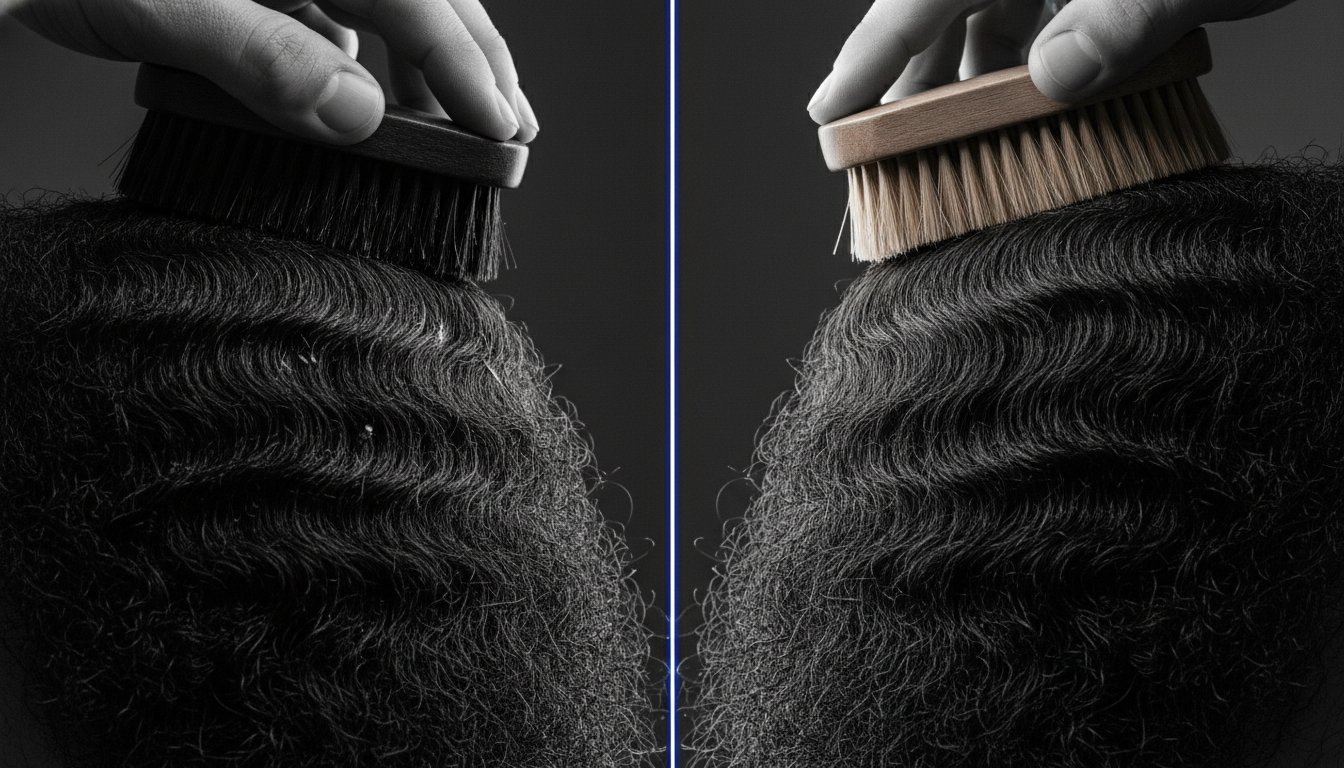
Your beard wave pattern isn’t failing because of your hair texture; it’s stalling because you haven’t mastered the soft vs hard brush for beard waves transition. You’ve likely felt the frustration of inconsistent patterns or that stinging skin irritation that comes from a brush that’s too aggressive for your current length. While 67% of men use a beard brush daily, few understand the tactical shift required for elite definition. If you’re struggling with gaps between your wave tiers, the solution lies in mastering your equipment.
This guide will teach you how to navigate these essential tool differences to achieve deep, 360-degree connectivity. We agree that a patchy or irritated beard is simply a sign of a routine that needs professional refinement. You’ll gain a clear, repeatable brushing routine that prioritizes both skin health and aesthetic precision. We’re moving through a logic-based progression from foundational structural training to the high-level finishing touches that separate the amateurs from the masters of the craft, including how to integrate your tools with a structured starter routine.
Key Takeaways
- Understand how bristle tension dictates wave depth and why choosing the right tool for your specific hair texture is the first step toward elite definition.
- Master the hard brush as your primary tool for penetrating thick layers and training stubborn hair to ensure deep, lasting connectivity.
- Learn the tactical differences of a soft vs hard brush for beard waves to refine your top layer and achieve a perfectly polished lay.
- Implement a disciplined switching framework based on beard growth length and adopt the Double Brush method to maximize your daily routine’s efficiency.
- Discover how specialized tools and structured routines work together to maintain skin health while building professional-grade wave patterns.
The Foundation: Understanding Brush Firmness for Beard Waves
Elite beard waves aren’t an accident. They’re the result of a disciplined routine and the calculated use of your tools. Most beginners make the mistake of picking up a single brush and expecting 360-degree connectivity. This leads to a frustrating plateau where the waves look decent on the surface but lack the depth and flow of a master pattern. To reach the next level, you must understand the soft vs hard brush for beard waves dynamic. Hard brushes act as the foundation builders, while soft brushes serve as the architects of refinement. Choosing the right tool for your current stage of growth is the difference between a messy beard and a masterpiece.
The Anatomy of a Wave Brush
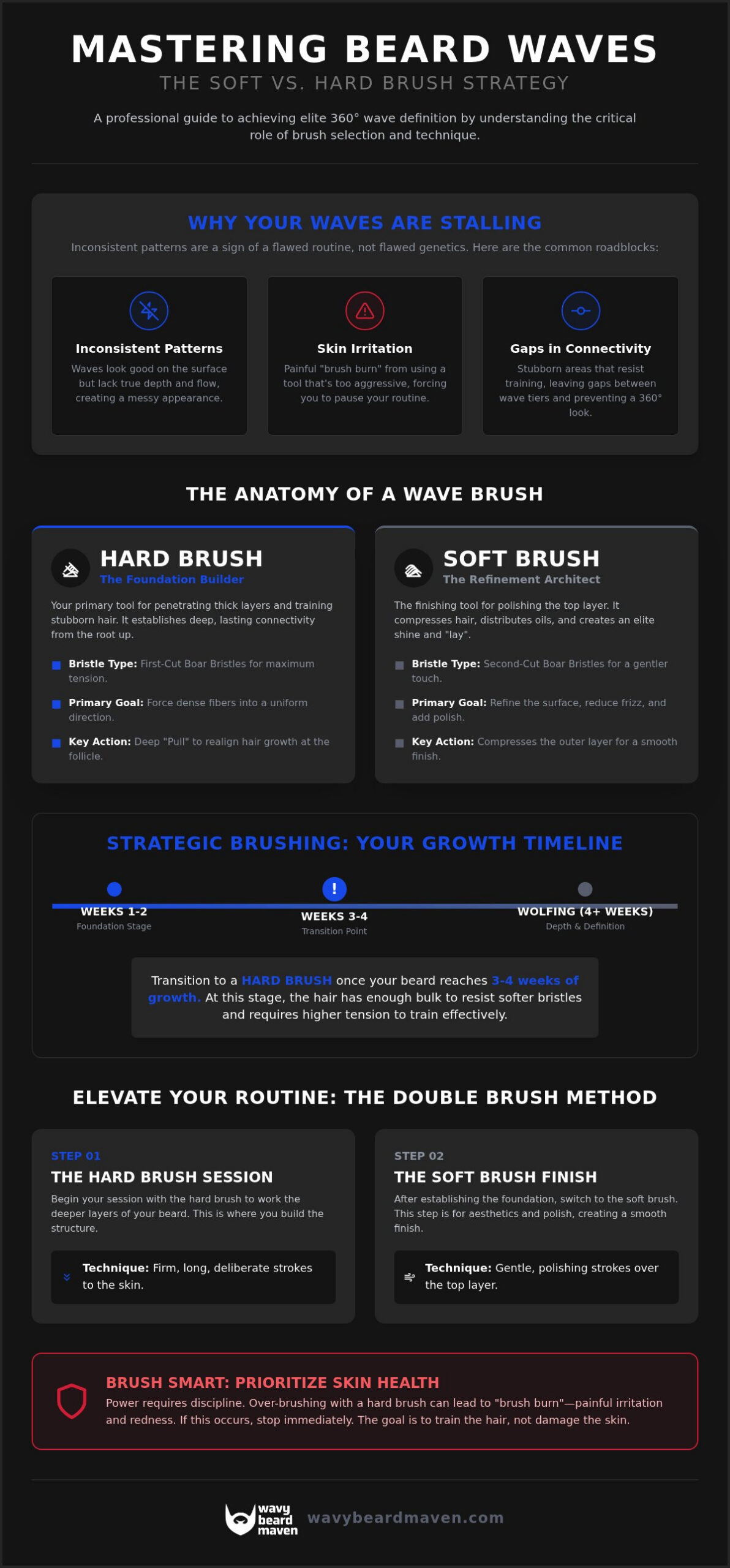
A brush is more than just a handle with bristles; it’s a precision instrument designed for texture management. Boar bristles are the gold standard because they mimic the natural structure of human hair, allowing for superior oil distribution and “pull.” This pull factor is the tension created when the bristles grab your beard fibers to redirect their growth. Consider these elements of brush design:
- Bristle Stiffness: Hard brushes use first-cut boar bristles for maximum tension, while soft brushes use second-cut bristles for a gentler touch.
- The Pull Factor: This determines how effectively the brush can move hair. High-tension bristles are necessary for thick, coarse beards that resist training.
- Handle Ergonomics: Whether you prefer a palm brush or a club handle, the design must allow you to maintain consistent angles. If your grip slips, your wave pattern will suffer.
Why Your Beard Texture Demands a Strategy
Your beard isn’t like the hair on your head. Facial hair is typically coarser, curlier, and grows in varied directions, making it significantly harder to train. Connectivity starts at the root level, not just the surface. This is where the Wavy Beard Maven philosophy comes in: we view grooming as a systematic practice of self-improvement that requires specialized knowledge. Because beard hair is so resilient, you need a strategy that addresses every layer of the follicle. Complementing your brush selection with proven natural beard wave methods ensures that your physical training is supported by the right structural habits from the very beginning.
A hard brush is essential for reaching the skin to exfoliate and train the base of the hair. However, relying solely on a hard brush can lead to skin irritation and a “frizzy” appearance. A soft brush compresses the outer layer to create that elite shine and “lay” that wavers crave. If you don’t balance these two, your progress will stall. Mastery requires knowing when to exert force and when to apply finesse.
The Hard Brush: Mastering Depth and Connectivity
The hard brush is the undisputed heavy lifter of your grooming arsenal. While the debate of soft vs hard brush for beard waves often focuses on comfort, the hard brush prioritizes structural integrity. Its primary role is to penetrate the thickest layers of your beard to reach the root. Without this deep reach, your waves will remain surface-level and disconnected. You aren’t just brushing hair; you’re re-engineering the growth direction of coarse, stubborn fibers.
During the “wolfing” phase, your beard growth reaches a volume where standard bristles simply cannot provide enough tension. You need the firm, first-cut boar bristles of a hard brush to force these dense fibers into a uniform direction. This is where you earn your connectivity. If you aren’t reaching the skin, you aren’t training the hair. However, power requires discipline. The skin on your face is significantly more sensitive than your scalp. Over-brushing with a hard tool can lead to “brush burn,” a painful irritation that forces you to pause your routine. Stop immediately if you see excessive redness. You want to train the hair, not damage the canvas.
When to Reach for the Hard Brush
You should transition to a hard brush once your beard reaches approximately three to four weeks of growth. At this stage, the hair has enough bulk to resist softer bristles. The hard brush breaks through tangles and clears away dead skin cells, ensuring a clean environment for growth. Connectivity is impossible if your brush is only gliding over the top. You need that deep, rhythmic pull to align every tier of your pattern and ensure your waves are established from the bottom up.
Techniques for High-Tension Brushing
Mastering the hard brush involves more than just scrubbing your face. You must apply firm, consistent pressure without dragging the bristles across the jawline in a way that causes abrasion. Focus on long, deliberate strokes that follow your natural growth pattern. This maximizes the “pull” on coarse hair, which is essential for defining the curves of your waves.
For those just starting, understanding how to get beard waves requires a focus on these high-tension angles. Keep your wrist locked and move from the elbow to maintain a steady path. If you find your current tool lacks the necessary bite, exploring the Wavy Beard Maven collection will provide the precision equipment needed for this high-volume phase. Always follow a hard session with a moisturizing agent to soothe the skin and lock in the new direction.
The Soft Brush: Refining Definition and Laying the Pattern
If the hard brush is the architect of depth, the soft brush is the master of the finish. In the soft vs hard brush for beard waves hierarchy, beginners often make the mistake of thinking only tension matters. They focus entirely on the “pull” and ignore the “lay.” This leads to a beard that has deep waves but looks frizzy and unkempt on the surface. The soft brush is your precision tool, designed to address the top layer of your hair fibers and compress them into a uniform, fluid pattern. It is the final, non-negotiable step in every elite 360-wave session.
Soft bristles are typically made from second-cut boar hair or softer synthetic blends. These bristles don’t reach the skin when your beard is at full volume, and that’s intentional. Their job is to grab the stray hairs that the hard brush missed and force them to lie flat. This compression is what creates the “lay” effect, giving your waves that tight, organized appearance that distinguishes a master practitioner from an amateur. Without this refining step, your waves will never reach their full aesthetic potential.
Polishing the Surface Layer
Hard brushes are essential for training, but they can sometimes leave the hair looking “shredded” because of the high tension they apply. The soft brush acts as a polisher, smoothing out frizz and flyaways to create a mirror finish. This is particularly effective after you have applied your topical products. Using a soft brush after applying beard oil for waves ensures that the oil isn’t just sitting on the surface. The dense, soft bristles distribute the nutrients evenly across every fiber, locking in moisture and providing a professional-grade shine.
Safe Brushing for Sensitive Areas
One of the biggest oversights in traditional waving guides is the failure to account for facial skin sensitivity. Unlike the scalp, the skin on your jawline and cheeks is prone to micro-tears and irritation. The soft brush is your primary tool for sensitive areas like the mustache and soul patch. These regions require guidance rather than brute force. If you’ve just had a fresh trim and your hair is short, a hard brush is unnecessary and potentially painful. During these “fresh cut” phases, the soft brush provides enough stimulation to keep the pattern alive while maintaining skin health. It’s about disciplined maintenance, ensuring that your journey toward elite connectivity doesn’t come at the cost of a damaged canvas.
Strategic Brushing: When to Switch Between Hard and Soft
Progress in the waving community is often stalled by a lack of discipline. Many beginners rely on “how it feels” to decide which tool to use, but elite results require a systematic framework. Mastering the soft vs hard brush for beard waves transition is about timing and growth cycles. You don’t just pick a brush; you deploy a tactical instrument based on the current length and density of your beard. This disciplined approach ensures that your connectivity never plateaus and your pattern remains sharp from the root to the surface.
We recommend a “Double Brush” method for every serious session. This involves using your hard brush for 10 minutes to establish foundation and connectivity, followed immediately by a soft brush for 5 minutes to compress the top layer. This sequence ensures you are addressing both structural training and aesthetic refinement in a single sitting. Consistency is your most powerful tool. If you skip the hard brush, you lose depth; if you skip the soft brush, you lose the lay.
The Wolfing Transition
Wolfing is the process of growing your beard beyond its normal length to deepen the wave pattern. As your beard gains volume, you must increase your hard brush usage. There is a specific point of diminishing returns where a soft brush can no longer reach the skin through the dense hair fibers. During weeks four through eight of a wolfing cycle, the hard brush becomes your primary tool. It is the only way to maintain tension at the root level where connectivity is born. Once you eventually trim back to a maintenance length, you must transition back to a softer touch to avoid over-exfoliating the newly exposed skin. Pairing this physical discipline with proven natural beard wave methods will accelerate your pattern development and help you sustain deep connectivity through every phase of the wolfing cycle.
The Daily Routine Flow
To achieve 360-degree definition, follow this three-step progression during your daily sessions. This routine removes the guesswork and replaces it with a repeatable path toward mastery. If your goal is seamless coverage from chin to sideburns, studying how to get 360 beard waves will give you the precise brush angles and compression techniques needed to eliminate disconnected patches across every zone of your beard.
- Step 1: Hard Brush (10 Minutes). Focus on the foundation. Use firm, rhythmic strokes to train the stubborn, coarse fibers at the base of your beard.
- Step 2: Soft Brush (5 Minutes). Switch to soft bristles for compression. This smooths out the surface, eliminates frizz, and distributes your natural oils for a high-definition shine.
- Step 3: Lock-In. Finish your session by applying a beard wrap. This maintains the pressure you just created and protects the pattern while the hair “sets” in its new direction.
Following a structured plan is the only way to guarantee long-term results. To ensure your technique is flawless from day one, download our 7-Day Beard Wave Starter Routine™ Checklist and start your journey toward elite connectivity today.
Elevating Your Routine: The Wavy Beard Maven Mastery Approach
Mastering your pattern is a journey that demands more than casual effort. It requires the tactical precision of knowing exactly when to deploy specific tools to achieve elite definition. The choice of a soft vs hard brush for beard waves isn’t about picking a favorite; it’s about understanding how these two instruments work in unison to create 360-degree connectivity. At Wavy Beard Maven, we view this process as a disciplined cultural practice rather than a simple chore. Your beard is a reflection of your dedication. By integrating both bristle types into a structured, repeatable routine, you move beyond surface-level aesthetics and into the realm of professional grooming mastery.
Consistency is the only path to visible results. When you commit to a systematic approach, you remove the frustration of plateaued progress and inconsistent waves. This mastery approach ensures that every layer of your beard, from the skin to the surface, is trained to follow a fluid, organized direction. It’s about taking pride in the craft and respecting the history of the style by executing it with modern precision.
The Complete Toolset for Connectivity
To achieve professional results, your equipment must match your ambition. A high-quality beard brush for waves should always feature genuine boar bristles. These natural fibers are essential because they possess the unique ability to carry sebum from the root to the tip, nourishing the hair while providing the necessary tension for training. Using inferior synthetic options often leads to hair breakage and inconsistent patterns that lack the “lay” required for elite status. When you use tools designed specifically for texture management, you’re optimizing your routine for long-term success.
To remove the guesswork from your journey, we’ve developed a systematic roadmap. The 7-Day Beard Wave Starter Routine™ Checklist provides the exact framework you need to transition from a beginner to a master waver. It outlines the precise moments to switch your brush stiffness and how to layer your products for maximum impact. Download the checklist today to ensure every stroke of the brush brings you closer to perfect connectivity and a healthier beard.
Join the Movement
Grooming is a shared movement rooted in self-respect and the pursuit of excellence. As you see your waves connect and your pattern deepen, your confidence will naturally elevate. This isn’t just about the results you see in the mirror; it’s about the discipline you build through the daily process of refinement. We encourage you to stay consistent, document your progress, and share your success within the community of dedicated practitioners.
The path to elite waves starts with the right foundation. If you’re ready to stop guessing and start seeing visible results, it’s time to upgrade your arsenal with tools built for the task. Shop the Wavy Beard Maven collection to find the specialized brushes, oils, and wraps that will define your signature style. Join the movement and master your texture with the authority of a specialist.
Command Your Texture and Claim Your Definition
Elite connectivity is a result of calculated discipline. You now understand that the soft vs hard brush for beard waves dynamic is a tactical partnership rather than a choice between two separate tools. Use your hard brush to penetrate thick volume and establish tension at the root. Transition to your soft brush to compress the surface and achieve that signature mirror finish. By following this systematic progression, you eliminate the guesswork that leads to inconsistent patterns and unnecessary skin irritation.
Wavy Beard Maven has trained over 10,000 wavers to master their texture through professional education and precision-engineered boar bristle brushes. We focus on elite connectivity because we know that a well-defined beard is a symbol of dedication. Your grooming routine is an investment in your personal brand; make sure you have the right strategy to see it through. It’s time to move beyond basic maintenance and step into the realm of true mastery.
Grab your 7-Day Beard Wave Starter Routine™ and the right tools here. Commit to the process, trust the tools, and take pride in the masterpiece you’re building every single day.
Frequently Asked Questions
Is a hard brush or a soft brush better for a short beard?
A soft brush is the superior choice for a short beard because the hair lacks the density to require high-tension bristles. Using a hard brush on short growth often leads to skin irritation and micro-tears. Focus on using soft bristles to stimulate the follicles and establish the initial direction of your pattern. As your hair grows longer, you’ll need to re-evaluate the soft vs hard brush for beard waves dynamic to maintain your progress.
Can I get waves with just a soft brush?
You can establish a surface pattern with a soft brush, but you won’t achieve elite connectivity or depth. Soft bristles lack the necessary strength to penetrate thick growth and train the hair at the root level. For professional results, you must eventually incorporate a hard brush to handle the heavy lifting during your growth cycles. Relying only on a soft brush usually results in surface frizz rather than deep, defined waves.
How often should I use a hard brush on my beard?
Use a hard brush once per day during your primary 15-minute grooming session, provided your beard has at least three weeks of growth. We recommend a 10-minute hard brush session followed by a 5-minute soft brush finish to lock in the lay. If you notice skin redness or tenderness, reduce the frequency or the pressure you apply. Consistency matters more than brute force, so focus on rhythmic, intentional strokes every day.
Will a hard brush damage my beard skin?
A hard brush won’t damage healthy skin if you use disciplined technique, but improper use can cause painful brush burn. Always ensure your skin is well-hydrated with beard oil before starting a high-tension session. If you experience persistent irritation, you’re likely applying too much pressure or using the tool on hair that is too short for its stiffness. Mastery involves listening to your body while maintaining the rigorous standards of your routine.
What is the best brush for a coarse wavy beard?
A firm, first-cut boar bristle brush is the best tool for a coarse wavy beard. Coarse hair is naturally resilient and requires the maximum pull that only stiff bristles can provide. This tension is necessary to redirect the curl pattern and force the hair into a uniform flow. Without a high-quality hard brush, coarse textures will often resist training, making it nearly impossible to achieve the 360-degree connectivity that defines an elite waver.
Do I need a medium brush between the hard and soft phases?
A medium brush isn’t strictly necessary if you master the transition between soft and hard tools, but it can provide a useful bridge for those with sensitive skin. Some practitioners find that a medium brush helps manage mid-length growth without the intensity of a hard brush. However, most elite results are achieved by balancing the structural training of a hard brush with the aesthetic compression of a soft brush as outlined in our mastery guide.
How do I clean my wave brushes to maintain bristle firmness?
Clean your brushes every two weeks by removing loose hairs with a comb and washing the bristles with a mild shampoo. Avoid soaking the wooden handle in water, as this can cause the wood to warp or the bristles to loosen over time. Rinse with cool water and let the brush air-dry with the bristles facing down. Proper maintenance ensures that the pull factor remains consistent and your equipment stays in peak condition for years.
Can I use a scalp wave brush for my beard?
You can use a scalp brush, but a specialized beard brush is superior for the unique contours of the face. Scalp brushes are often too large and lack the ergonomics needed for the tight angles of the jawline and chin. Specialized tools like those in the Wavy Beard Maven collection are designed for the specific density of facial hair. Using the wrong tool makes it harder to maintain consistent brushing angles, which is critical for connectivity.