September 8, 2026
Elite beard definition isn’t a gift of genetics or the result of a lucky product find; it’s a craft earned through the relentless application of physical discipline and structural training. You know the frustration of staring in the mirror at a coarse, frizzy beard that resists every attempt at order. Perhaps you’ve seen waves that look like random patches rather than a connected flow and wondered why your hair won’t cooperate. Mastering natural beard wave methods is the only way to achieve that deep, 360-style ripple across your jawline without relying on harsh chemicals that strip your hair of its vitality.
You deserve a grooming routine that yields visible, high-definition results and leaves your facial hair feeling softer and more manageable. We’re moving away from the unkempt styles of the past toward the intentional, structured looks that define 2026. This guide provides a systematic breakdown of how to train your hair’s natural growth pattern into a masterpiece of symmetry. You’ll learn the foundational techniques of compression, moisture management, and precision brushing that turn a standard beard into a cultural statement of self-respect and mastery.
Key Takeaways
- Understand how to leverage your hair’s natural keratin structure to build lasting pattern memory through daily discipline.
- Master natural beard wave methods by treating every brushing session as a physical workout that directs growth and defines ripples.
- Implement the specialized L.O.C. method to keep your facial hair pliable and receptive to directional training.
- Apply compression techniques to flatten the hair cuticle and lock in the high-shine, connected 360-style waves you’ve earned.
- Establish a high-performance grooming routine that yields elite results with a commitment of just fifteen to thirty minutes per day.
The Mechanics of Natural Beard Wave Formation
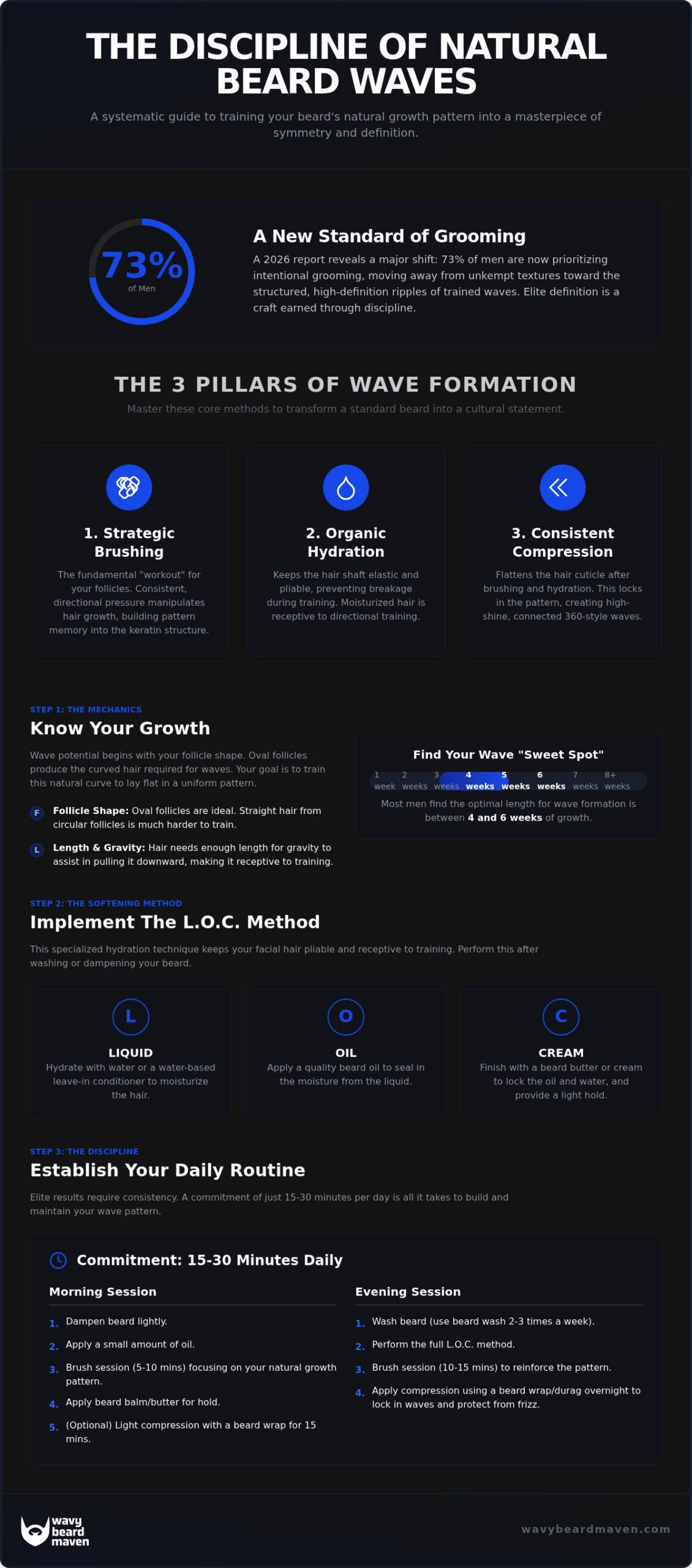
Natural beard waves are not a random occurrence of growth. They are the deliberate result of physical training and an understanding of your hair’s biological structure. Unlike standard curls that spiral away from the face, waves are curls that have been trained to lay flat in a repetitive, rippling pattern. This transformation relies heavily on the keratin structure of your hair. Coarse hair is rich in keratin, which provides the structural integrity needed for pattern memory. When you apply consistent pressure through natural beard wave methods, you’re essentially teaching the protein bonds to hold a new, compressed shape. A 2026 report indicates that 73% of men are now prioritizing this type of intentional grooming, moving away from unkempt textures toward structured ripples.
Timing is everything in this process. You cannot train a stubble beard because the hair lacks the necessary length to bend. Most men find their “Sweet Spot” for wave formation between four and six weeks of growth. At this length, the hair has enough mass to be manipulated by a brush but isn’t so long that it becomes unruly or tangled. Wave connectivity is the seamless transition of patterns across the jawline. Achieving this level of flow requires a deep understanding of how your follicles function beneath the surface.
Follicle Shape and Hair Texture
The foundation of your wave potential lies in the shape of your follicles. Oval-shaped follicles naturally produce the curved hair shafts required for waves, while circular follicles produce straight hair that is significantly harder to train. There is a distinct difference between “naturally wavy” hair and “trained waves.” Natural waves are often chaotic and undefined. Trained waves are disciplined and uniform. To keep the hair shaft elastic enough for this training, you must manage sebum production. Proper moisture levels ensure the hair doesn’t snap under the pressure of the brush. Many of these principles of texture management are mirrored in the Curly Girl Method, which emphasizes maintaining the hair’s natural integrity through hydration and avoiding harsh chemicals that strip the hair of its natural oils.
The Role of Length and Gravity
Physics plays a massive role in your grooming success. Short beard hairs are stiff and tend to curl outward or stand straight up. As the hair gains length, gravity begins to pull it downward. This is the moment where your training becomes effective. You are essentially using a brush to override the hair’s instinct to spiral, forcing it to ripple along the skin instead. Before you begin using natural beard wave methods, you must identify your natural growth direction. Follow these steps to map your beard:
- Let your beard grow for at least two weeks without heavy trimming.
- Use a fine-tooth comb to see which way the hair naturally leans on the cheeks and chin.
- Identify swirls or cowlicks where the direction changes abruptly.
- Commit to brushing in the direction of the lean to build your foundation.
Mastering these mechanics is the first step toward elite definition. Without this knowledge, you’re just moving a brush; with it, you’re engineering a masterpiece. Consistency in these early stages ensures that your pattern develops with order and precision.
Strategic Brushing: The Primary Physical Method
Brushing is the fundamental “workout” of all natural beard wave methods. It isn’t a passive grooming habit; it’s a disciplined structural training session for your follicles. When you brush, you’re applying consistent physical pressure to manipulate the hair’s growth pattern. Hair texture is determined by the shape of the follicle, but your brushing technique determines how that texture lays. Through repetition, your facial hair develops “muscle memory,” a state where the keratin bonds begin to accept the rippled direction as their natural resting position. Consistency is your only path to success here. If you skip sessions, the hair reverts to its chaotic, curly state.
A common debate among elite wavers is “Dry Brushing” versus “Moist Brushing.” Dry brushing can be aggressive and often leads to breakage or split ends, especially on coarse hair. Moist brushing, performed after applying a quality oil or butter, allows the hair to stretch without snapping. This elasticity is vital for training deep, connected ripples. To understand which tool is right for your current stage of growth, refer to our Soft vs Hard Brush for Beard Waves: The 2026 Mastery Guide.
The 3-Angle Brushing Technique
Connectivity is the hallmark of a master waver. You don’t want isolated patches; you want a seamless flow that wraps around your jawline. Achieve this by following the 3-Angle Technique:
- Step 1: The Side Stroke. Brush from the top of your ear diagonally down toward the corner of your chin. This establishes the primary flow on your cheeks.
- Step 2: The Vertical Drop. Use straight downward strokes on the mustache and soul patch area. This prevents the “mustache curl” and integrates the center of your face into the pattern.
- Step 3: The Under-Jaw Sweep. Brush from the neck toward the chin. This creates 360-degree connectivity, ensuring your waves don’t just stop at the jawline but continue into a full, uniform look.
Why Boar Bristles are Non-Negotiable
Synthetic plastic brushes are useless for wave training because they lack “pull.” Pull is the specific tension required to straighten a tight curl into a wave. A high-quality beard brush for waves uses natural boar bristles because they possess a microscopic scale-like surface that grips the hair. This texture allows the brush to distribute natural sebum and added oils from the root to the very tip of the hair shaft, keeping the entire beard hydrated and pliable.
You must vary your tools based on your beard’s length. Use a medium or hard brush during the “wolfing” phase when your hair is at its thickest to ensure the bristles reach the skin. As you finish your session or when your beard is shorter, switch to a soft brush to lay down the top layer and eliminate frizz. To ensure you have the right gear for the job, explore our professional-grade Beard Brush collection. Mastering these natural beard wave methods requires the right equipment and the discipline to use it every single day. For a comprehensive look at how every tool works together to produce elite results, our beard grooming kit for waves 2026 comparison guide breaks down the market leaders so you can build the perfect arsenal for your texture.
Organic Hydration: The Softening Method
Hydration is the silent partner of the brush. You can have the best technique in the world, but if your facial hair is dry and brittle, it will resist every stroke. Brittle hair snaps under tension, while hydrated hair is pliable and receptive to directional training. This is why organic hydration is a cornerstone of effective natural beard wave methods. We move away from the heavy, petroleum-based products of the past that clog pores and suffocate the skin. Instead, we embrace the L.O.C. Method, a systematic approach to layering moisture that ensures your waves remain deep and defined throughout the day.
The L.O.C. Method stands for Liquid, Oil, and Cream. Start with a water-based liquid or leave-in conditioner to hydrate the hair shaft. Follow this with a high-quality oil to seal in that moisture. For a detailed breakdown of which blends work best for your specific texture, see our guide on Beard Oil for Waves: Mastering Texture and Definition. Finally, apply a cream or butter to provide the structural hold needed to lock the pattern in place. This layering process prevents evaporation and keeps the hair soft enough to be molded by your daily brushing routine.
Natural Emollients for Wave Depth
To achieve elite depth, you need ingredients that work with your biology. Jojoba and Argan oils are essential because they closely mimic the molecular structure of natural sebum. This allows them to penetrate the hair shaft rather than simply sitting on the surface. Shea Butter is another non-negotiable tool in your kit. It provides the necessary hold for waves without the artificial crunch associated with synthetic gels. When applying these products, focus on the roots. Softening the new growth ensures that your waves start from the skin and maintain their connectivity as the beard grows longer.
The Steam Method for Coarse Hair
Coarse hair often has a tightly closed cuticle that rejects moisture. The Steam Method is your solution for maximum absorption. Before your main brushing session, apply a warm, damp towel to your face for three minutes. This heat opens the cuticle, allowing your oils and butters to sink in deep. This is the primary difference between surface waves that disappear when you move and deep waves that remain etched into the beard. To maintain this texture, limit your use of harsh soaps. Wash your beard with a dedicated cleanser once or twice a week, but condition it daily to keep the hair soft and ready for training. These natural beard wave methods rely on consistency and the right biological environment to succeed.
Compression: The Definition Method
Compression is the final seal in the hierarchy of natural beard wave methods. If brushing is the workout, compression is the recovery phase where the pattern memory actually sets. By applying a consistent, gentle force against the facial hair, you flatten the hair cuticle. This physical smoothing is what produces that high-shine, rippled look that characterizes elite definition. Without this step, your hair will naturally expand and frizz, losing the progress you made during your brush session. It’s the difference between a beard that just looks curly and one that looks like a masterpiece of engineering.
As your beard enters the “wolfing” phase, usually around weeks six to eight of growth, the hair becomes denser and harder to control. This is the period when the transition from light maintenance to heavy compression becomes mandatory. You need a tool that can handle the increased volume while remaining breathable. Silk and satin are the standard fabrics for this task. They prevent moisture from being leached out of your hair by the fabric, while allowing the skin beneath to breathe. This balance is vital for maintaining skin health and preventing irritation during long periods of wear.
The Science of the Beard Wrap
“Ragging up” is the term for applying your compression garment immediately after you finish brushing. This “cool down” period is critical because your hair is still warm and pliable from the friction of the bristles. A specialized Beard Wrap is superior to a standard head durag because it’s engineered to contour to the jawline and chin specifically. It provides targeted tension where you need it most, ensuring those side-angle ripples stay connected across the face. Follow these steps for a perfect wrap:
- Finish your brush session with a soft brush to lay down any stray hairs.
- Place the wrap centered over your chin, pulling the straps back toward the ears.
- Cross the straps behind the neck and bring them forward to secure them at the front.
- Ensure the fabric is flat against the skin to avoid creating “indentation lines” in your waves.
Nighttime Protection Strategies
Your pillow is the greatest threat to your pattern. Standard cotton pillowcases create friction that lifts the hair cuticle and destroys hours of training. Secure your wrap before bed to eliminate this friction entirely. When tying your wrap, ensure it’s snug enough to stay in place but loose enough to avoid restricting blood flow to the jaw. If you wake up with a sore jaw, your ties are too tight. The “Morning Reveal” is your feedback loop. When you remove the compression, you should see tight, uniform ripples with zero frizz. If the pattern looks blurry, you likely need more tension or a longer compression period during the day. Ready to lock in your progress? Secure your pattern with a professional-grade Beard Wrap designed for elite definition.
The Discipline: A Natural Wave Routine
Elite definition is never a product of luck. It’s the result of a daily commitment to a structured system that favors persistence over shortcuts. While many seek a quick fix through chemical texturizers, true mastery of natural beard wave methods requires you to view grooming as a meditative practice of self-improvement. You’re not just brushing hair; you’re engineering a cultural aesthetic that reflects your personal discipline. Expect to invest fifteen to thirty minutes each day into your craft. This time is a non-negotiable deposit into the bank of your self-image, and the dividends are deep, connected ripples that command respect.
Consistency is the only variable that separates a patchy beard from a masterpiece. If you’re ready to transition from a beginner to a practitioner, you must internalize the rhythm of the work. For a comprehensive roadmap that covers every technical nuance, study our How to Get Beard Waves: The Complete 2026 Training Guide. By following a rigid schedule, you ensure that your hair never has the opportunity to revert to its natural, unkempt state.
The 7-Day Starter Routine™ Breakdown
Your journey begins with a repeatable daily cycle. This sequence ensures your hair remains hydrated, trained, and compressed around the clock:
- Morning: Start with a light hydration layer using beard oil. Execute a ten-minute brush session focusing on your established angles. Follow with light compression using a wrap for at least thirty minutes to set the morning pattern.
- Midday: Perform a quick moisture touch-up with a small amount of beard butter. Use a wide-tooth comb for directional combing to keep the pattern aligned without over-stressing the hair.
- Night: This is your primary training block. Apply a deep conditioning treatment and engage in a focused, fifteen-minute brush session. Immediately “rag up” with an overnight wrap to lock in the day’s progress while you sleep.
Wolfing: The Advanced Natural Method
Wolfing is the ultimate test of a waver’s patience and the most effective of all natural beard wave methods for achieving maximum depth. This technique involves growing your beard beyond its normal maintained length, typically for four to six weeks, without trimming the bulk. By allowing the hair to grow thicker, you create more “room” for the waves to deepen and connect. The extra mass provides the tension necessary for the ripples to stack on top of each other, resulting in a more dramatic 360-degree effect. For a complete breakdown of the precise brush angles and compression secrets that produce seamless chin-to-sideburn flow, see our how to get 360 beard waves professional guide.
Managing the “messy” phase of wolfing is where most men fail. As the beard becomes thick and unruly, the urge to trim is intense. Resist this. Instead, increase your compression time and use a harder brush to penetrate the dense layers of hair. You aren’t letting your beard go wild; you’re training it at a higher level of difficulty. When you finally go for a precision line-up and trim after a wolfing session, you’ll reveal deep, natural ripples that were previously hidden beneath the surface. This reveal is the reward for your discipline and the hallmark of an elite waver. Pairing this advanced phase with a well-curated beard grooming kit for waves ensures you have every specialized tool needed to handle the increased density and maintain elite definition throughout the process.
Claim Your Place Among the Elite Wavers
Mastering natural beard wave methods is a journey of physical discipline and unwavering consistency. You’ve learned that deep, connected ripples aren’t the result of luck but the product of strategic brushing, organic hydration, and the science of compression. By training your follicle memory and respecting the “wolfing” phase, you transform your facial hair into a statement of cultural pride and personal mastery. This is a 100% natural approach to elite grooming that yields results earned through your own dedication rather than chemical shortcuts.
Join thousands of disciplined wavers in our community who have already mastered their texture with our specialist-tested methods. You don’t have to navigate this process alone. Take the first step toward a more defined, manageable, and professional look by establishing a routine that works with your biology. Download the Free 7-Day Beard Wave Starter Routine™ Checklist and start your transformation today. Your masterpiece is waiting beneath the surface; it’s time to reveal it through the power of routine and self-respect.
Frequently Asked Questions
How long does it take to see results from natural beard wave methods?
Initial ripples usually appear within four to six weeks of dedicated training. This timeline depends on your starting length and your commitment to daily brushing and compression. Achieving deep, connected 360-style definition typically requires twelve weeks of consistent application of natural beard wave methods. Patience is your greatest asset during this phase as your hair develops the necessary pattern memory to hold its new shape.
Can I get waves in a patchy beard using natural methods?
You can develop waves in a patchy beard, but the results will be limited by your hair density. Focus on “wolfing,” which involves growing the hair longer to cover thinner areas. By training the surrounding dense hair to ripple over the patches, you create the illusion of a full, connected pattern. Discipline in brushing ensures that every available follicle contributes to the overall flow and symmetry of the style.
Do I really need a durag or wrap to get waves?
A specialized beard wrap is essential for locking in your progress and protecting the hair cuticle. Without compression, the hair naturally expands and loses the rippled shape you’ve earned through brushing. Wearing a wrap at night prevents pillow friction from destroying your pattern and ensures your beard stays laid. It’s the physical lock that preserves your work, making it a non-negotiable tool for anyone serious about elite definition.
Is it possible to get 360 beard waves without using chemicals?
Yes, achieving 360 beard waves without chemicals is entirely possible through physical training and moisture management. By using high-quality boar bristle brushes and consistent compression, you manipulate the hair’s keratin structure naturally. This chemical-free approach preserves the health of your facial hair and skin while yielding deep, authentic ripples. For a step-by-step professional breakdown of the exact techniques involved, refer to our how to get 360 beard waves 2026 professional guide. Success is a matter of technical mastery and daily routine rather than relying on harsh synthetic texturizers or relaxers.
How often should I brush my beard for waves?
Aim for at least two focused brushing sessions per day, totaling fifteen to thirty minutes of active training. Consistency is more important than duration; a shorter, disciplined session every morning and night is more effective than one long, irregular session. Use a medium brush for your primary training and a soft brush to lay down frizz. Frequent brushing reinforces natural beard wave methods by constantly reminding the hair of its new direction.
Why do my waves disappear after I wash my beard?
Waves often blur or disappear after washing because the water causes the hair shaft to swell and revert to its natural state. To prevent this, always follow a wash with a deep conditioning treatment and a vigorous brushing session while the hair is damp. Immediately apply a beard wrap to compress the hair as it dries. This technique resets the pattern and ensures your ripples remain sharp and defined even after a deep cleanse.
What is the best natural oil for beard wave definition?
Jojoba oil is the superior choice for wave definition because it closely mimics the skin’s natural sebum. It penetrates the hair shaft to provide deep hydration without leaving a greasy residue that can weigh down the pattern. Argan oil is also excellent for adding the high-shine finish that makes ripples pop. Using these oils ensures your hair remains pliable enough to respond to the tension of your boar bristle brush without snapping.
Can I get waves if my beard hair is straight?
Straight hair is significantly harder to wave because it lacks the natural curl required to form ripples. Waves are essentially compressed curls; if your follicles are perfectly circular, the hair won’t naturally bend into a pattern. However, most beards that appear straight actually have a slight wave potential that can be enhanced through extreme discipline and heavy compression. If your hair is truly bone-straight, your results will be subtle rather than deep.