September 14, 2026
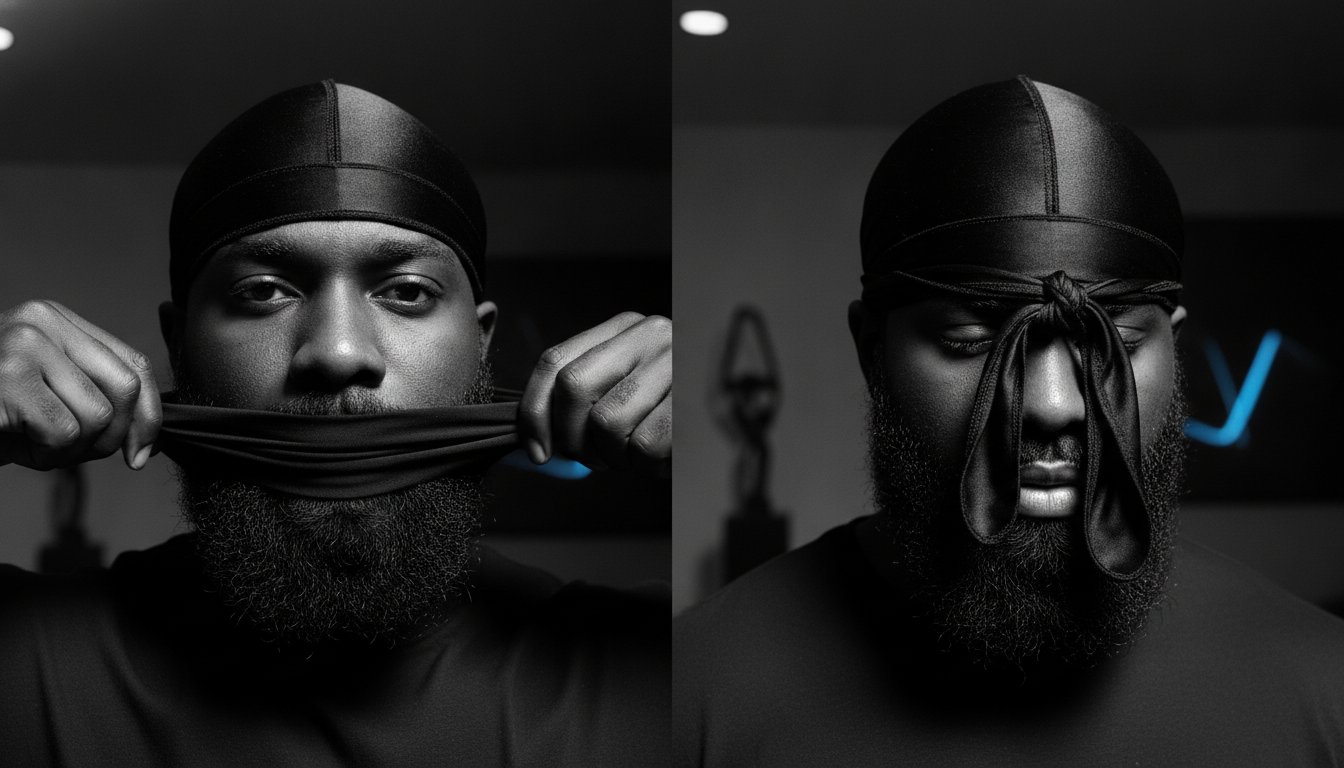
What if the reason your beard waves disappear by breakfast isn’t your brush technique, but the structural tension of your headwear? You’ve likely spent hours putting in work with your boar bristles, only to wake up with a frizzy, undefined mess that lacks the elite connectivity you’re chasing. Settling the beard wrap vs durag for waves debate is essential for any serious waver who wants to see their dedication reflected in deep, crisp rows. You know that without proper compression, your coarse texture won’t lay flat, and your hard-earned progress will simply evaporate overnight.
This comparison will help you master the science of compression by choosing the right headwear to lock in your beard wave pattern and maximize connectivity. We’ll break down how to maintain moisture during the wolfing phase and ensure your gear never slips or causes discomfort. By the end of this guide, you’ll know exactly how to integrate the 7-Day Beard Wave Starter Routine™ into a disciplined nighttime ritual that preserves your progress and keeps your beard soft, defined, and ready for the culture. It’s time to move from luck to logic and ensure your grooming reflects your status and discipline.
Key Takeaways
- Learn how compression trains hair memory and flattens cuticles to produce that elite, light-reflecting shine.
- Evaluate the beard wrap vs durag for waves to determine which tool offers the precision tension your specific facial contours need.
- Explore the “3-Point Tension” framework that allows specialized Beard Wraps to sculpt waves along the jawline and chin.
- Master the “Maven Night Shift” routine to preserve your progress and maintain moisture throughout the entire night.
Understanding Compression: Why Headwear is Essential for Beard Waves
Compression isn’t just about wearing a tight cloth; it’s a technical process designed to flatten hair cuticles. When these cuticles lay flush against one another, they create a smooth surface that reflects light uniformly. This is the source of the “shine” every elite waver seeks. Without this step, your beard hair remains raised and chaotic, diffusing light and looking dull regardless of how much product you apply. Achieving elite connectivity requires you to move beyond simple grooming into the territory of hair training. You must understand that waves are essentially curls that have been forced to lay down through consistent pressure.
Every time you brush, you’re fighting the natural “memory” of your hair. Beard hair is notoriously coarser and more resistant to training than scalp hair. It wants to curl back into its original state almost immediately. Headwear acts as the anchor that holds your hair in the direction you’ve just brushed. Think of it as a cast for a healing bone; it keeps everything in place until the new shape becomes permanent. Choosing between a beard wrap vs durag for waves depends on how much resistance your specific texture provides and where you are in your journey.
The Role of Tension in Pattern Development
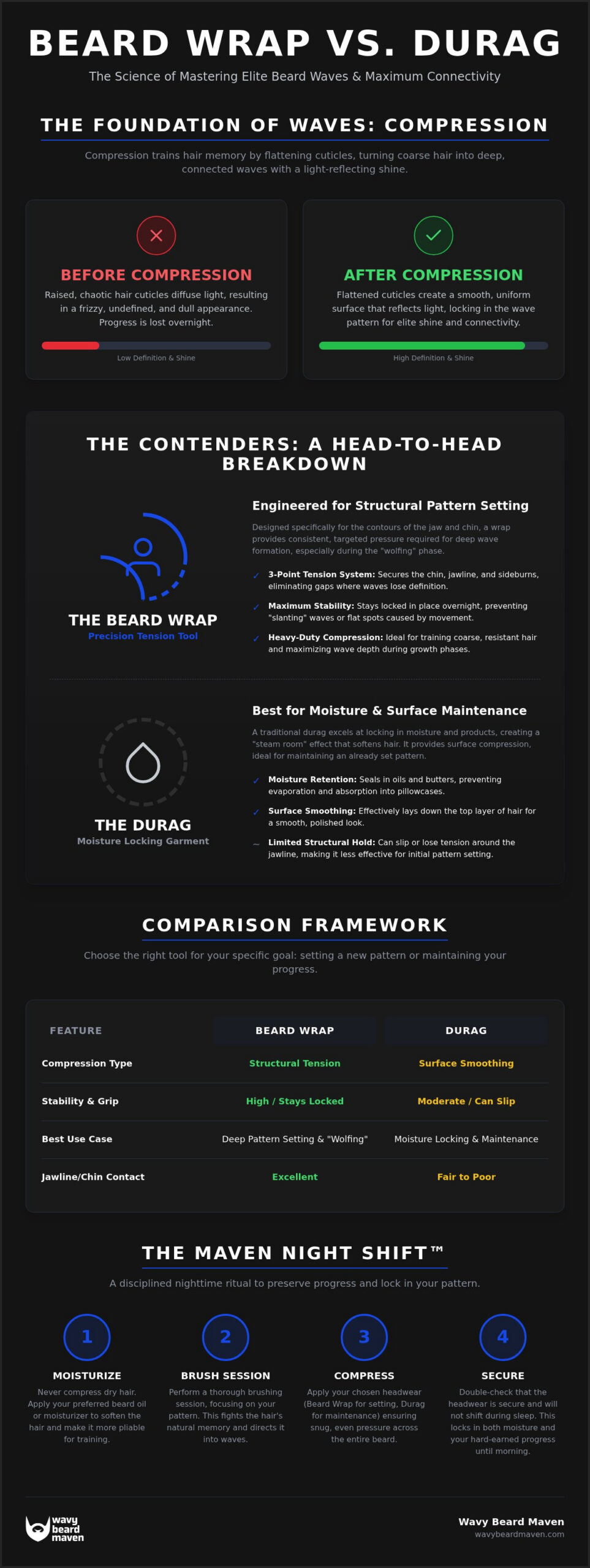
Success in waving depends on your ability to fight gravity and movement while you sleep. Surface compression, typically provided by traditional durags, works well for smoothing the top layer of hair. However, structural tension is what truly sets a pattern. Specialized wraps offer targeted tension that secures the jawline and chin, areas where a standard durag often slips or loses its grip. By applying consistent pressure, the beard compression technique bridges the gap between your heavy brush session and the deep, connected results you see in the mirror. Don’t let your overnight movement ruin hours of work. Secure the pattern with intentional tension.
Moisture vs. Hold: The Dual Purpose of Headwear
Elite wavers never compress dry hair. Doing so leads to friction, snagging, and eventual breakage. Your headwear should act as a seal for your beard oil for waves, preventing it from evaporating or being absorbed by your pillowcase. This creates a “steam room” effect, where body heat is trapped against the skin, softening the hair and making it more pliable for training. While the history and cultural significance of durags centers on this moisture-locking ability, the choice in the beard wrap vs durag for waves comparison often comes down to stability. A wrap ensures that your moisture and your pattern stay locked exactly where you placed them, providing the discipline your beard needs to transition from coarse to waves.
The Beard Wrap: Precision Tension for Master-Level Pattern Setting
Achieving deep, connected waves requires more than just a standard cloth; it requires a tool built for the specific geometry of the face. Unlike the scalp, which is a relatively uniform sphere, the beard area consists of sharp angles at the jawline and soft tissue under the chin. This is where the beard wrap vs durag for waves debate becomes clear. A specialized wrap is engineered to follow these contours. While we respect the cultural history of the durag, the evolution of the beard wave movement has necessitated a shift toward precision tools that don’t slip during the night.
The core of the wrap’s effectiveness lies in its “3-Point Tension” system. By applying simultaneous pressure to the chin, jawline, and sideburns, the wrap eliminates the gaps where waves typically lose their definition. This structural integrity is vital during “wolfing,” the phase where you grow your beard longer to increase wave depth. As the hair becomes thicker and more resistant, you need the consistent, heavy-duty force that only a wrap can provide. It offers a “set and forget” experience, staying locked in place while you move, whereas a traditional durag often shifts, creating “slanting” waves or flat spots.
Anatomy of an Elite Beard Wrap
A beard wrap is a tactical compression tool designed to contour specifically to the male jawline for maximum pattern setting. High-quality versions use breathable, high-compression fabrics that maintain their elasticity over months of use. Unlike generic cotton that stretches out and loses tension, these materials ensure your beard remains compressed from the moment you tie it until you wake up. Adjustable straps are equally essential. They allow you to fine-tune the tension levels, ensuring you have enough pressure to train the hair without causing skin irritation or discomfort. For those serious about their craft, choosing elite compression gear is a non-negotiable step toward mastery.
Mastering the Wrap: Techniques for Success
To maximize your results, align the wrap with your specific brush angles. If your wrap is crooked, your waves will follow that slant, ruining your connectivity. For wavers with stubborn, coarse patches, the “Double-Wrap” method is the ultimate solution. This involves applying a light layer of product, using a thin silk liner for moisture, and then securing the specialized wrap over it for maximum structural hold. This creates a high-pressure environment that forces even the most resistant hair to submit. For a detailed breakdown of these movements, follow our how to use a beard wrap tutorial to ensure your technique matches your ambition.
The Beard Durag: Moisture Locking and Maintenance for Elite Wavers
While specialized wraps are the heavy-hitters for setting patterns, the traditional durag still holds a spot in a waver’s rotation for moisture retention and surface smoothing. In the context of the beard wrap vs durag for waves comparison, you’ve got to understand the mechanical limits of scalp-designed gear. Standard durags lack the vertical pull required to train hair under the jawline. This often results in the “chin gap,” where the fabric drapes loosely instead of applying pressure. Use the durag when you’re in a maintenance phase or need a lightweight daytime option to keep your surface frizz-free. Choosing between a beard wrap vs durag for waves often comes down to your current hair length and the specific goals of your session.
The durag works best as a finisher. Once your connectivity is established, a durag helps preserve that work without the intense pressure of a wrap. It’s a tool for preservation, not necessarily for the aggressive training required to break coarse textures. It keeps your hair laid while you’re active, ensuring that your hard-earned rows don’t lift or frizz as you go about your day. Think of it as the shield that protects the foundation you built with your wrap.
Why Silky Fabrics Reign Supreme
Silky fabrics are the gold standard for technical beard maintenance because they prioritize friction reduction. As you move, the smooth surface glides over your hair rows instead of snagging them. This prevents the “flyaway” hairs that can blur your pattern. Additionally, these materials are non-absorbent. They keep your Beard Oils and Beard Butters on your hair cuticles where they belong, rather than soaking them into the fabric. Keeping that moisture locked in is vital for maintaining the soft, pliable texture needed for deep waves. Choose silky for:
- Frictionless protection: Preserving the alignment of established rows.
- Maximum moisture retention: Preventing dry hair that leads to breakage.
- Fresh-cut phases: Providing light smoothing when hair is short and easily trained.
Adapting a Head Durag for Beard Use
You can still get results from a standard durag if you master the “Tie-Down” technique to fix the lack of tension. Instead of tying the tails at the back of your head, cross them directly over your chin and jawline before securing them at the nape. This adds the manual pressure that the design naturally lacks. You can also turn your durag into a deep conditioning “compression mask.” Apply a generous layer of Beard Balm, brush it through, and tie down for thirty minutes. The fabric traps body heat and forces the balm deep into the hair shaft. For more advanced tying methods, check our guide on the beard durag for waves to keep your routine precise and your pattern locked.
Headwear That Promotes Waves: The Ultimate Comparison Framework
To make an informed decision in the beard wrap vs durag for waves debate, you must evaluate your gear based on three critical pillars: Tension, Moisture, and Stability. Tension refers to the physical force required to lay the hair flat. Moisture involves the ability to seal in natural oils and products. Stability is the gear’s capacity to remain in place throughout a full sleep cycle. While both tools serve a purpose, their effectiveness shifts depending on your current wave stage and hair texture. If you’re chasing elite connectivity, your choice of headwear must match the resistance of your beard.
Texture targeting is the most overlooked aspect of beard training. Wavers with 4C hair deal with extreme curl resistance that requires high-level structural tension to break. A standard durag often fails here because it lacks the vertical pull needed to flatten the hair against the jawline. Conversely, those with softer textures may find a silky durag sufficient for maintenance once their pattern is set. However, the “Wolfing Factor” changes the rules for everyone. Once your beard exceeds two inches in length, the hair becomes too powerful for simple cloth. At this stage, wraps are non-negotiable because they provide the heavy-duty compression required to keep long, thick hair from curling back.
The Waver’s Selection Framework
Use this decision matrix to determine which tool belongs in your current rotation. If you’re a beginner with coarse hair, start with a wrap to establish your rows. If you’ve already achieved deep waves and just need to maintain shine during the day, a silky durag is your best option. The beard wrap is the undisputed winner for structural pattern definition in coarse hair types. Regarding duration of wear, a high-quality wrap remains effective for 8 to 10 hours without shifting, whereas a durag typically requires adjustment after 4 to 6 hours of movement. For those ready to commit to the process, you can find professional-grade tools at Wavy Beard Maven to ensure your compression never falters.
Durability and Maintenance of Gear
Your compression gear is an investment in your aesthetic, and it requires proper maintenance to prevent “elastic fatigue.” Washing your wrap or durag in a machine with hot water destroys the fibers and kills the tension. Instead, hand wash your gear in cold water with a mild detergent and let it air dry. This preserves the stretch and ensures the fabric continues to contour to your face. Retiring your gear is just as important as maintaining it. Most wavers should replace their primary compression tool every three to four months. Watch for these signs of a failing tool:
- Slipping: You wake up and the gear is no longer covering your beard.
- Thinning fabric: You can see light through areas that used to be opaque.
- Lost elasticity: The straps no longer feel “snappy” when you pull them.
Don’t let a worn-out wrap stall your progress. A disciplined routine requires gear that works as hard as you do.
Executing the Routine: How to Integrate Wraps and Durags for Maximum Results
Waves aren’t given; they’re earned through the relentless application of a disciplined routine. While the technical choice in the beard wrap vs durag for waves debate is vital, how you integrate these tools into your daily life determines your level of connectivity. The “Maven Night Shift” is your most critical window for progress. Start by applying Beard Oil or Beard Butter to a clean, slightly damp beard. Follow this with a focused fifteen minute brush session using your boar bristle brush to align your rows. Once the pattern is set, secure your Beard Wrap to lock in that work. This overnight compression ensures your hair cuticles remain flat and disciplined, preventing the “recoil” that happens when coarse hair is left unsecured.
The “Wash and Style” method is your secret weapon for setting deep waves after a shower. When your hair is wet, it’s at its most pliable state. Apply your products and brush until the pattern emerges, then immediately apply your wrap. As your hair dries under the structural tension of the wrap, it “freezes” the wave into place. If you discover a shifting pattern or a “slant” after a bad brush session, don’t panic. Re-brush the area with heavy tension and apply double compression using a silky liner and a wrap for two hours to reset the memory of the hair. Consistency is the only path to mastery.
The 24-Hour Compression Cycle
Transitioning between tools is the mark of a master waver who understands the 2026 standards of grooming. Use the silky durag for daytime maintenance when you need to protect your beard from the elements or keep it smooth at the gym. Reserve the specialized wrap for the heavy lifting: overnight sessions and the peak of your wolfing phase. This cycle ensures you’re never without the necessary pressure to maintain your progress. Integrating the 7-Day Beard Wave Starter Routine™ into this gear usage provides the logical structure needed to move from a beginner to an elite practitioner with deep, light-reflecting rows.
Mastering the ‘Maven’ Look
The “Maven Reveal” requires patience and precision. Don’t rip your headwear off in a hurry. Slide it off gently to avoid creating friction that could cause frizz. Immediately after removal, use a soft beard brush for waves to lay down any stray hairs without disturbing the underlying rows. This final touch ensures your shine is uniform and your connectivity is crisp for the day ahead. Ready to dominate the movement? Elevate your discipline with Wavy Beard Maven’s specialized Beard Wraps and claim the results your hard work deserves.
Secure Your Pattern and Claim Your Shine
Mastering your beard wave pattern is a journey defined by discipline and the tools you choose to trust. By understanding the technical breakdown of a beard wrap vs durag for waves, you’ve moved past the guesswork and into the realm of specialized grooming. Remember that while a durag excels at keeping your surface smooth and moisturized, the specialized Beard Wrap is your primary engine for structural tension. This is especially true during the wolfing phase, where coarse textures require maximum force to remain flat and connected throughout the night.
Elite results aren’t reserved for the lucky; they belong to those who commit to the grind. Use your knowledge of hair memory and the Maven Night Shift to ensure every brush stroke counts. It’s time to join a movement of disciplined wavers who refuse to settle for blurry patterns or lost progress. Through master-led instruction and specialized gear designed for coarse beard textures, you can transform your style into a symbol of pride and deep connectivity.
Upgrade to an Elite Beard Wrap and Lock in Your Waves
Stay focused and stay wavy. Your progress is a reflection of your dedication.
Expert Guidance: Frequently Asked Questions
Can I use a regular durag for my beard waves?
You can use a regular durag, but it often fails to provide the vertical tension required for the jawline and chin. While a durag keeps the surface smooth, it usually leaves a “chin gap” that allows hair to curl back. For serious pattern setting, a specialized wrap is superior because it contours to your face. Use a durag for daytime maintenance once your waves are already established and connected.
How long should I wear a beard wrap to see results?
Wear your compression gear for at least eight to ten hours daily, ideally during your sleep cycle. Consistent overnight wear is the only way to train the memory of coarse beard hair. You’ll start seeing improved definition within the first week of the 7-Day Beard Wave Starter Routine™. Remember that waves are earned through persistence. Skipping even one night of compression can cause your progress to revert.
Is it better to sleep in a beard wrap or a durag?
A specialized wrap is the better choice for sleeping because it offers superior stability and targeted tension. Standard durags frequently shift or fall off during the night, which ruins your pattern and leaves your hair unprotected. In the beard wrap vs durag for waves comparison, the wrap wins for overnight sessions. It ensures your jawline and chin remain compressed regardless of how much you move while you’re asleep.
Do beard wraps cause beard breakage or hair loss?
Compression gear doesn’t cause breakage if you maintain a proper moisture routine. Breakage typically occurs from “dry compression,” where the hair is brittle and lacks lubrication. Always apply Beard Oils or Beard Butters before putting on your wrap to create a protective barrier. This keeps the hair pliable and soft. Avoid tying your gear so tight that it pulls at the skin, as this can lead to follicle stress.
How tight should my beard compression gear be?
Your gear should be snug enough to flatten the hair cuticles without causing pain or restricting blood flow. If you wake up with deep, painful indentations or skin irritation, you’ve tied it too tight. The goal is consistent pressure, not extreme force. A high-quality wrap with adjustable straps allows you to find the “sweet spot” where the hair is held firmly against the jawline while you remain comfortable throughout the night.
What is the best material for a beard wrap?
The best material is a breathable, high-compression synthetic blend that maintains its elasticity over time. Look for fabrics that won’t absorb your Beard Oils, as you want the moisture to stay in your hair rather than the cloth. Silky or satin-lined interiors are also excellent for reducing friction and preventing frizz. Avoid generic cotton, which stretches out quickly and lacks the structural integrity needed to train stubborn, coarse beard textures effectively.
Can I wear headwear while my beard is wet?
Wearing a wrap on a damp beard is a core part of the “Wash and Style” method. As your hair dries under compression, it “freezes” the wave pattern into place, making it easier to train. However, never compress a soaking wet beard, as this can trap too much moisture against the skin and lead to irritation. Ensure your beard is about eighty percent dry and well-moisturized with balm before securing your compression gear.
How often should I wash my beard durag or wrap?
Wash your compression gear every three to five days to remove buildup from oils, butters, and sweat. Dirty gear can lead to skin breakouts and lose its effectiveness. Hand wash your wraps in cold water with a mild detergent to preserve the elastic fibers. Avoid using a dryer, as high heat destroys the tension required for pattern setting. Air drying is the only way to ensure your gear stays tactical and ready for work.