September 5, 2026
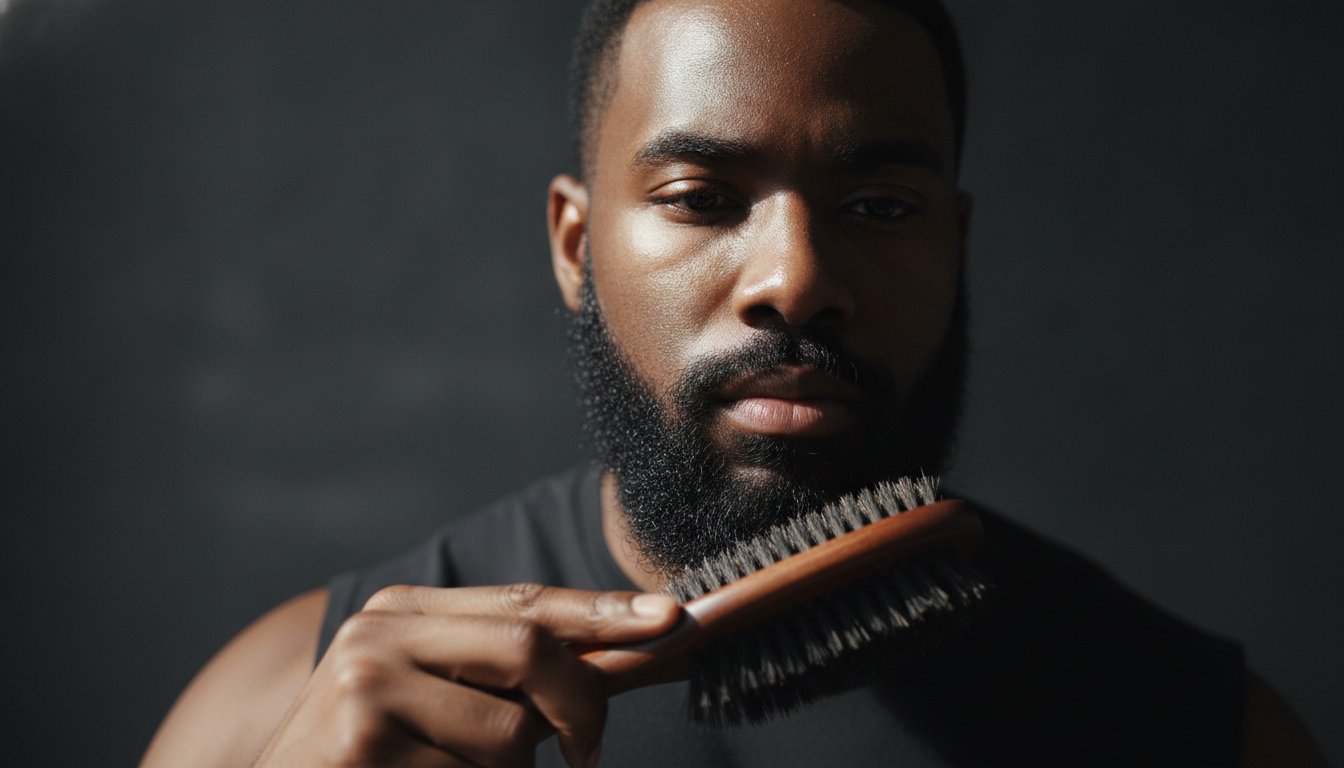
Your beard isn’t refusing to wave because of your genetics; it’s failing because your technique lacks discipline. You might find yourself staring in the mirror asking, “why won’t my beard wave up” after weeks of effort, only to see patchy connections and frizzy hair that refuses to lay flat. It’s a common frustration that makes many men feel like they’re wasting time on an ineffective routine. We understand that achieving that elite look is about more than just luck. It’s a craft that requires the right tools and a systematic approach to hair texture management.
You’ve put in the work, and you deserve to see those deep, connected 360 waves that project confidence and self-respect. In this article, we’ll dive into the technical reasons your pattern is stalling and how to master the mechanics of compression and brushing. You will discover five common myths holding you back and learn how to implement a repeatable grooming system. From proper wolfing techniques to the essential 7-Day Beard Wave Starter Routine™ Checklist, we’re providing the blueprint to turn your grooming into a cultural statement of excellence.
Key Takeaways
- Learn how to shift your hair from vertical growth to horizontal layers by understanding the mechanics of a trained curl pattern.
- Stop wondering why won’t my beard wave up and start using the “Master Angle” brushing system to ensure elite 360 connectivity.
- Master the use of a specialized beard brush to develop the muscle memory required for deep, fluid wave patterns.
- Protect your daily progress and eliminate the “Compression Gap” by using beard wraps to lock your pattern in place while you sleep.
- Follow a structured path to success with the 7-Day Beard Wave Starter Routine™ Checklist to move from patchy results to deep definition.
Understanding the Mechanics: What Are Beard Waves?
Why won’t my beard wave up? This is the question that haunts every waver who puts in the hours but fails to see the ridges. The answer lies in the mechanics of hair training. You aren’t just combing your beard; you’re re-engineering how it sits on your face. Beard waves are a flattened, trained curl pattern that replaces chaotic growth with architectural order. This process involves shifting the hair from its natural vertical growth to sleek, horizontal layers. It demands a level of discipline that standard grooming simply doesn’t require because you’re essentially overriding the biological anatomy of the hair follicle to create a cultural aesthetic. A wavy beard is a series of consistent, repeating ridges formed through compression and directional brushing.
The Difference Between Natural Curls and Trained Waves
Your natural curls are the raw material for your waves. If you simply let your beard grow, those curls will spiral outward, leading to a frizzy, unkempt appearance rather than a defined pattern. Training is the act of “laying the hair” against the skin. This forces the curl to stretch out and connect with the hairs around it. While a standard beard routine focuses on volume, wave training focuses on compression and alignment. If you don’t actively direct the hair to lay flat, the natural tension of the curl will always win, leaving you with a round afro-beard instead of the sharp ridges you’re chasing. You must master the art of laying the hair to achieve true connectivity.
Why Your Current Routine is Failing Your Pattern
If you’re still asking “why won’t my beard wave up,” your mechanics are likely broken. The most common mistake is random brushing. When you brush in different directions every day, you’re constantly undoing your previous work. Connectivity is built through repetition. Every stroke must follow the same path to build hair memory. Additionally, many men over-wash their beards. This strips away the sebum that provides the hair with the elasticity needed to bend into a wave. Without that flexibility, your hair stays stubborn and vertical. To fix these foundational errors, it’s essential to follow a structured beginner’s guide 2026. Consistency isn’t just about how often you brush; it’s about the precision of every single stroke.
The Brushing Blueprint: Why Directional Consistency is King
Precision is the difference between a messy beard and a masterpiece. If you find yourself asking “why won’t my beard wave up,” the answer is usually found in your brush mechanics. You can’t simply move hair around and expect a pattern to emerge. You must implement the “Master Angle” system. This involves identifying specific paths from your cheekbones down toward your chin and sticking to them with military precision. Blind brushing, or brushing without a mirror, is the fastest way to ruin your connectivity. Without a visual guide, your angles shift, creating “forks” in your pattern that are difficult to correct later. Commit to at least 100 strokes per side every single day to set the foundation for your ridges.
The Science of Directional Brushing
Every time you brush, you’re training your hair to remember a new position. This is known as building hair memory. While the genetics of hair texture dictate how tightly your hair curls, your brush strokes dictate where those curls lay. You are essentially forcing a vertical to horizontal transition in the hair’s growth path. To maximize this effect, always brush from the cheekbone down toward the chin in a steady, diagonal motion. This consistent tension flattens the hair follicle over time, making the wave pattern permanent. If you skip a day, the hair’s natural elasticity will pull it back toward its vertical, frizzy state.
Choosing the Right Brush for Your Stage
A standard plastic comb is the enemy of the waver. It detangles, but it doesn’t provide the surface tension needed to lay hair flat. You need a medium-soft boar bristle brush to effectively train your texture. Boar bristles are unique because they distribute natural oils while grabbing every individual strand to pull it into alignment. As your beard gets longer, a process known as wolfing, you may need to transition to a harder bristle to reach the layers closest to the skin. You can find more advanced techniques in our complete 2026 training guide. Using the right tool ensures you aren’t just grooming, but actively sculpting your appearance. To get started with the right equipment, consider investing in a high-quality specialized beard brush designed for high-definition connectivity.
Compression Secrets: Why You Can’t Wave Without a Wrap
A beard wrap isn’t an accessory; it’s a structural necessity for any man serious about his pattern. Many beginners ask “why won’t my beard wave up” while neglecting the most critical phase of the training process: the hold. If you spend thirty minutes brushing but go to bed without a wrap, you’re effectively undoing all your hard work. This is the “Compression Gap.” While you sleep, the friction of your pillow and the natural elasticity of your hair work together to pull your curls back into their vertical, frizzy state. Compression locks the hair in the horizontal position you’ve spent the day training. It flattens the hair against the jawline, forcing the ridges to connect and stay put.
A scientific discovery on hair texture recently highlighted how specific genes control the density and curl of your hair. Because your hair is biologically programmed to curl, you need the physical force of a wrap to override that programming. Beyond just laying the hair flat, a quality wrap traps natural heat and moisture against the skin. This environment softens the hair shaft, making it more pliable and receptive to the training process. Without this controlled environment, your hair remains stubborn and resistant to the brush. Discipline in your compression routine is what separates elite wavers from amateurs.
How to Use a Beard Wrap for Maximum Pattern Depth
Applying your wrap is the final, non-negotiable step of your session. After you finish your brush routine, immediately secure your wrap to “lock in” the progress while the hair is still warm and manipulated. If you still find yourself wondering why won’t my beard wave up, check your compression time. For those with particularly stubborn or coarse textures, the “double compression” method is a game-changer. This involves wearing a thin silk liner under a standard wrap to provide extra tension without irritation. You must commit to the “overnight lock.” Six to eight hours of consistent compression is required for the hair to truly set. If you’re inconsistent with your wrap, your waves will never reach the depth you’re chasing.
Moisture vs. Hold: The Role of Beard Balms
Think of your beard balm as the “glue” that keeps your pattern from shifting throughout the day. While oils provide the necessary nutrients, a balm contains beeswax or shea butter to provide the structural hold your waves need. Apply a small amount of balm after your brush session but before you put on your wrap. This creates a deep set that lasts throughout the following day. To enhance the final look, using a specialized beard oil for waves will give your ridges the necessary shine and definition. This combination of moisture and hold ensures your pattern looks sharp and well-maintained from the moment you wake up. Brush. Balm. Wrap. Follow this order every night to see your connectivity transform.

Texture Troubleshooting: Coarse Hair vs. Straight Hair Challenges
Coarse hair is the gold standard for wave definition. Many men frustratedly ask “why won’t my beard wave up” because they believe their thick, coily texture is a barrier. In reality, the tighter your curl pattern, the deeper your waves can become. The challenge isn’t your hair type; it’s your lack of length and moisture. Straight hair wavers face the opposite struggle. Because their hair lacks natural tension, they require significantly more length for a single wave to “turn” and connect. Regardless of your starting point, you must stop treating your texture as an obstacle and start using it as a blueprint for your specific routine.
The Wolfing Phase: Growing for Depth
Wolfing is the intentional period of abstaining from a trim to force your hair to lay down under its own weight. This is a disciplined practice, not an excuse to be lazy. For those with medium or straight textures, wolfing is the only way to see a visible pattern. The extra length provides the hair with enough “real estate” to complete a full rotation of the curl pattern. During this phase, your brushing and compression must be more intense to manage the bulk. You must also learn how to trim without losing waves so you can keep your lines sharp without cutting into the ridges you’ve worked so hard to build. If you cut your hair too short before the pattern is set, you’ll be right back at square one asking why won’t my beard wave up.
Hydration: The Secret to Softening Coarse Textures
A “crunchy” beard is a wave killer. Dry hair is brittle and resistant to training; it will snap or frizz before it ever lays flat. You must prioritize elasticity through deep hydration. Incorporate a high-quality beard butter into your daily regimen. Unlike balms that offer hold, butters are designed to penetrate the hair shaft and soften the core of the follicle. To maximize absorption, use a hot towel treatment before your main brush session. The steam opens the hair cuticles, allowing the butter to soak in deeply. Once the hair is pliable, your brush strokes will have a much greater impact on the pattern. This softening process is essential for making stubborn, coarse hair obey your directional brushing.
Mastering your specific texture is the final hurdle in your journey toward elite connectivity. If you’re ready to stop guessing and start seeing results, invest in a specialized beard brush and wrap kit to ensure your tools match the intensity of your training.
The Disciplined Routine: Your 7-Day Path to Connectivity
Discipline is the foundation of every elite pattern. If you’re still stuck asking why won’t my beard wave up, you likely lack a structured system. Mastery isn’t found in a single marathon brush session; it’s earned through a daily, three-part cycle. Your “Morning Brush-and-Lock” sequence starts with a focused 15-minute brush session to wake up the follicles and reinforce your Master Angle. Follow this immediately with a light application of beard balm to provide the necessary hold. This morning lock ensures your pattern remains stable as you move through your day.
The “Mid-Day Refresh” is your secret weapon for maintaining connectivity. Apply a few drops of beard oil and use a soft-bristle brush for five minutes to restore shine and polish the ridges. This prevents the hair from becoming brittle and snapping out of alignment. Finally, your “Nightly Compression” ritual is the non-negotiable conclusion to your day. Consistency beats intensity every time. Every single day of training builds hair memory; skipping just 24 hours allows the natural curl to regain its vertical tension, undoing your hard-earned progress.
Tracking Your Progress: What to Expect in Week 1
What does success look like in the early stages? In your first seven days, you won’t see deep ridges. Instead, look for “ripples”, subtle, faint lines that indicate your hair is finally beginning to lay flat against the skin. Refer to our reality guide to manage your expectations based on your specific hair texture. Take a “Day 1” photo before you start. When you feel like your progress is stalling, comparing your current state to that first image will provide the motivation needed to stay the course.
The 7-Day Beard Wave Starter Routine™ Checklist
We developed the 7-Day Beard Wave Starter Routine™ Checklist to serve as the ultimate blueprint for the community. It removes the guesswork and provides a logical progression from foundational brushing to advanced compression. This checklist is your daily accountability partner in the pursuit of elite definition. It transforms a complex process into a manageable, step-by-step system that delivers results. Download the checklist today and commit to the movement. Your connectivity is not a matter of luck; it’s a matter of following the plan with unwavering discipline.
Master Your Pattern and Claim Your Connectivity
Elite beard waves are the result of disciplined mechanics rather than genetic luck. By mastering directional brushing and eliminating the compression gap, you take control of your hair texture. You now understand that shifting from vertical growth to horizontal layers requires a systematic approach to daily maintenance. If you’re still wondering why won’t my beard wave up, the solution is to trade random effort for a repeatable grooming system that prioritizes connectivity over speed.
You don’t have to navigate this journey alone. Join a community of thousands of elite wavers who use our proven technical training methods to achieve high-definition results. It’s time to master the discipline of the 360 pattern and elevate your appearance with precision. Download the Free 7-Day Beard Wave Starter Routine™ Checklist and start your path toward elite connectivity today. Your dedication to the craft is what creates the movement. Keep brushing, stay compressed, and watch your ridges connect.
Frequently Asked Questions
Can any beard texture get waves?
Most men with at least a slight curl pattern can achieve waves through disciplined training. Coarse and medium textures typically see results the fastest because their natural curl is tighter and easier to manipulate. If you have straighter hair, you will need to grow your beard longer to allow the hair to complete a full turn. While dead straight hair cannot wave, the majority of textures can be trained into horizontal layers with the right tools and consistency.
How many times a day should I brush my beard for waves?
Commit to at least two dedicated brush sessions every single day to build hair memory. A fifteen minute morning session sets your pattern for the day, while a nightly session before wrapping locks in your progress. Consistency is the primary factor in your success. If you find yourself asking why won’t my beard wave up, check your stroke count. Aim for 100 to 150 strokes per side per session to force the hair to lay flat.
Do I really need to wear a beard wrap to sleep?
Wearing a beard wrap is a non-negotiable requirement for pattern retention. Without compression, your hair will return to its natural vertical state as you move during sleep. The friction from your pillow creates frizz and breaks the connectivity you worked for during your brush sessions. A wrap provides six to eight hours of consistent hold, ensuring your hair stays laid flat and protected. This overnight lock is what separates elite wavers from beginners.
Is it possible to get waves in a patchy beard?
You can develop waves in the areas where hair grows, but patches will naturally disrupt your 360 connectivity. The most effective strategy is to maximize the pattern in your thickest areas while using wolfing techniques to grow hair over the thinner spots. As the hair gets longer and lays flatter, it can often mask smaller patches. This creates the illusion of a more connected and uniform wave pattern while you work on overall beard density.
What is the best product to make my beard hair lay flat?
A high quality beard balm or beard butter is the most effective tool for laying hair flat against the jawline. Balms provide a beeswax based hold that locks the pattern in place, while butters provide the elasticity required for the training process. Applying these products before a brush session creates the necessary tension to override the hair’s natural tendency to curl outward. Use these tools in combination with a specialized beard brush for maximum definition.
How long does it take for beard waves to start showing?
Most men see initial ripples within two to four weeks of disciplined training. However, deep and connected waves usually require six to eight weeks of consistent brushing and compression. Coarse textures often see results faster than medium or straight textures because the curl pattern is tighter and more responsive. If you are still wondering why won’t my beard wave up after a month, evaluate your brush angles and ensure you are not skipping your nightly wrap.
Should I wash my beard every day while training waves?
Avoid washing your beard every day as it strips away the natural sebum needed for hair elasticity. Wash your beard two to three times per week using a gentle cleanser to maintain health without drying out the follicles. Between washes, use a co-wash method or simply rinse with warm water to keep the hair pliable. Stripping the hair of its natural moisture makes it brittle and resistant to laying flat, which stalls your wave progress.
Why are my waves only showing on one side of my face?
Uneven waves are usually caused by inconsistent brush angles or sleeping on one side of your face more than the other. Most men have a strong side where their arm movement feels more natural. You must use a mirror during every session to ensure your brush strokes are identical on both sides of your face. If one side is lagging, increase your stroke count on that specific area and ensure your beard wrap is secured tightly every night.